
Key takeaways
Business analysis turns business needs into clear requirements and evidence-based decisions.
- Business analysis aligns strategic goals with delivery by bridging stakeholders and technical teams.Give us a call
- Clear requirements and validation reduce project risk and improve solution fit, cost and feasibility.
- Techniques like SWOT, gap analysis, process modelling and data analysis expose opportunities and bottlenecks.
- Embedding analysis in governance strengthens planning, transparency and measurable outcomes.+44 (0)207 148 5985
- Rigour can be maintained alongside speed by using consistent standards, templates and lightweight frameworks.
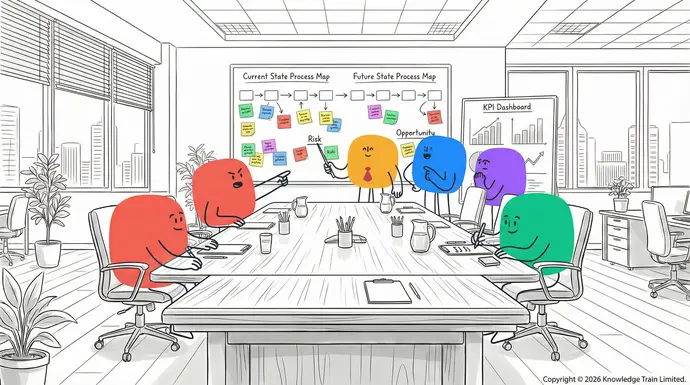
- Process mapping and business process modelling :Search Visualising workflows for process improvement opportunities
- Solution assessment and validation: Reviewing proposals to ensure solutions address documented requirements and deliver value
- Change management : Supporting the transition of solutions into the business and managing effects on people and processes
Main business analysis processes
| ProcessRequest a quote | Description |
|---|---|
| Requirements elicitation | Gathering information from stakeholders using interviews, workshops, observation, and document analysis |
| Requirements documentation | Capturing business and technical requirements in written formats, such as user stories , use cases, or requirement specifications |
FAQsDeny
What is business analysis?
Business analysis is the systematic investigation and evaluation of business needs to recommend solutions that achieve organisational objectives. It includes requirements gathering, stakeholder engagement, and process optimisation.View preferences
What does a business analyst do?
A business analyst identifies business problems, elicits requirements, engages stakeholders, and ensures that proposed solutions align with business goals. They act as a bridge between business and IT functions.Save preferences
What are the key techniques in business analysis?
Common View preferencesbusiness analysis techniques{title} include {title}SWOT analysis{title}, gap analysis, requirements elicitation, process mapping, use case modelling, and stakeholder analysis.Manage Consent
What are the main types of requirements in business analysis?
Business analysts work with To provide the best experiences, we use technologies like cookies to store and/or access device information. Consenting to these technologies will allow us to process data such as browsing behavior or unique IDs on this site. Not consenting or withdrawing consent, may adversely affect certain features and functions.business requirements (organisational goals), stakeholder requirements , and technical requirementsFunctional (system or IT needs).
What is the BABOK?
BABOK refers to the Business Analysis Body of Knowledge, a globally-accepted standard containing best practices, techniques, and competencies for business analysis, maintained by IIBA.
What qualifications or certification should a business analyst have?
Common Functionalcertifications include BCS’s Business Analysis Foundation certificate, Always active International Diploma in Business Analysis , and Practitioner certificates in Business Analysis Practices, Requirements Engineering, and Modelling Business Processes.
In addition, there are IIBA’s ECBA, CCBA, and CBAP, which validate knowledge of BABOK and proficiency in requirements elicitation, stakeholder engagement, and process improvement.
How does business analysis differ from project management?
Business analysis focuses on defining requirements and recommending solutions, while project management is concerned with planning, executing, and The technical storage or access is strictly necessary for the legitimate purpose of enabling the use of a specific service explicitly requested by the subscriber or user, or for the sole purpose of carrying out the transmission of a communication over an electronic communications network.delivering projects within scope, time, and budget constraints.