What is business analysis?

Key takeaways
Business analysis turns business needs into clear requirements and evidence-based decisions.
- Business analysis aligns strategic goals with delivery by bridging stakeholders and technical teams.
- Clear requirements and validation reduce project risk and improve solution fit, cost and feasibility.
- Techniques like SWOT, gap analysis, process modelling and data analysis expose opportunities and bottlenecks.
- Embedding analysis in governance strengthens planning, transparency and measurable outcomes.
- Rigour can be maintained alongside speed by using consistent standards, templates and lightweight frameworks.
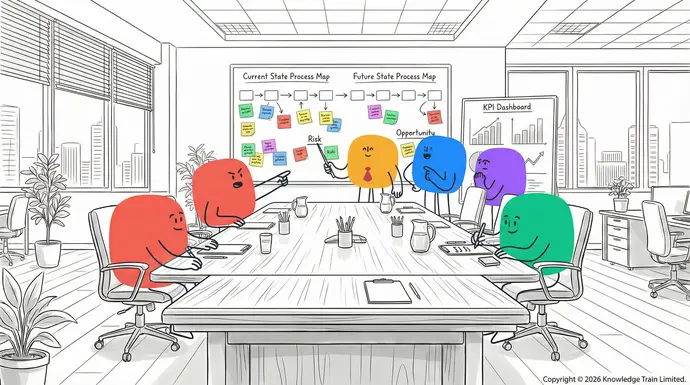
Business analysis: definition and overview
Business analysis is a professional discipline that involves understanding business needs and problems, eliciting and documenting requirements, and proposing solutions that drive process improvement and deliver value. It acts as a bridge between stakeholders and technical teams, ensuring that strategic objectives are aligned with operational execution. Reputable bodies such as the International Institute of Business Analysis (IIBA) define business analysis as the practice of enabling change in an organisational context by defining needs and recommending solutions that yield benefits for key stakeholders.
The objectives and value of business analysis
- Identifying business needs and opportunities for improvement
- Supporting stakeholders in achieving strategic goals
- Facilitating Request a quotechange management processes
- Reducing project risk through clear requirements and solution assessment[email protected]
- Ensuring solutions are feasible, cost-effective, and aligned with business requirements
Business analysts enable informed decision-making, increase process efficiency, and help organisations remain competitive. +44 (0)207 148 5985
Key responsibilities of a business analystCourses
The PROJECT MANAGEMENTbusiness analystPRINCE2 plays a critical role throughout project lifecycles and change initiatives. Their main responsibilities include:®
- Requirements elicitation:Foundation Facilitating workshops, interviews, and surveys to gather needs from stakeholdersLearn the fundamentals of the PRINCE2 method.
- Requirements documentation:Practitioner Creating clear business and technical requirements using various formats (e.g., Includes Foundation & Practitioner combined option.user storiesAssociation for Project Management (APM), use cases)Project Fundamentals Qualification (PFQ)
- Gap analysis and feasibility studies:Start your APM project management career. Assessing current and desired future states to highlight improvements and evaluate solution viabilityProject Management Qualification (PMQ)
- Stakeholder engagement:Advance your APM project management expertise. Communicating with diverse stakeholders to ensure requirements are validated and alignedProject Risk Single Certificate Level 1
- Process mapping and Enhance your project risk management skills.business process modellingAgilePM:® Visualising workflows for process improvement opportunities – Agile Project Management
- Solution assessment and validation:Foundation Reviewing proposals to ensure solutions address documented Learn the key principles of Agile Project Management.requirementsPractitioner and deliver valueIncludes Foundation & Practitioner combined option.
- Change managementPRINCE2:® Supporting the transition of solutions into the business and managing effects on people and processes Agile
Main business analysis processesFoundation
| ProcessLearn the fundamentals of the PRINCE2 Agile method. | DescriptionPractitioner |
|---|---|
| Requirements elicitationIncludes Foundation & Practitioner combined option. | Gathering information from stakeholders using interviews, workshops, observation, and document analysisAI Project Governance Framework (AIPGF) |
| Requirements documentationFoundation | Capturing business and technical requirements in written formats, such as Learn the fundamentals of the governance framework.user storiesPractitioner , use cases, or requirement specificationsIncludes Foundation & Practitioner combined option. |
| Requirements validationBetter Business Cases | Ensuring requirements are accurate, feasible, and aligned with business goals™ |
| Stakeholder engagementFoundation | Building relationships with all parties affected by the change to ensure their needs are metLearn the fundamentals of Better Business cases. |
| Process improvementPractitioner | Analysing existing workflows and recommending enhancements for efficiencyIncludes Foundation & Practitioner combined option. |
| Solution assessmentP3O | Evaluating potential solutions against requirements® |
| Change managementFoundation | Supporting successful adoption of new processes or systemsLearn the fundamentals of the P3O project management office. |
Common business analysis techniquesPractitioner
- SWOT analysisIncludes Foundation & Practitioner combined option.:Workshops Identifying strengths, weaknesses, opportunities, and threats related to a business area or solutionIntroduction to Project Management
- Gap analysis:1-day workshop to learn the basics of project management. Comparing current and target states to identify improvement areasProject Management Essentials
- Use case modelling:2-day workshop to learn how to manage projects without getting certified. Mapping user interactions with systems to define requirementsWriting Business Cases
- Business process modelling:Half-day workshop to learn to write robust business cases. Creating diagrams (such as BPMN) to visualise business processesAI in Project Management
- Stakeholder analysis:Learn how to use AI tools in everyday project work. Identifying stakeholder interests, influence, and engagement needsARTIFICIAL INTELLIGENCE (AI)
- User storiesBCS AI:Foundation Documenting concise functional requirements, typically in Agile projectsLearn the fundamentals of artificial intellegence.
- Feasibility study:AI Project Governance Framework (AIPGF) Analysing proposed solutions for practicality and viabilityFoundation
- Data analysis:Learn the fundamentals of the governance framework. Using quantitative and qualitative data to inform decision-makingPractitioner
Business analysis tools and methodologiesIncludes Foundation & Practitioner combined option.
Key toolsWorkshops
- Requirements management software (for example, Jira, Confluence, or Azure AI in Project Management DevOpsLearn how to use AI tools in everyday project work.)AGILE
- Process mapping tools (such as Visio, Lucidchart)AgilePM
- Mind mapping and collaboration software®
- Data analysis tools (for example, Excel, Power BI) – Agile Project Management
MethodologiesFoundation
- BABOK (Business Analysis Body of Knowledge):Learn the key principles of Agile Project Management. The leading global standard published by Practitioner IIBAIncludes Foundation & Practitioner combined option., outlining best practices and techniques for business analysisPRINCE2
- Agile®: Agile An iterative methodology focusing on flexibility, frequent delivery, and collaboration (often using user stories)Foundation
- Waterfall methodologyLearn the fundamentals of the PRINCE2 Agile method.:Practitioner A linear, phased project approach suitable for well-defined requirementsIncludes Foundation & Practitioner combined option.
Choosing the right methodology depends on project size, risk, stakeholder needs, and desired adaptability.Scrum
Essential skills and competencies for business analystsScrum Essentials
- Analytical and critical thinkingSelf-paced training course to learn the essentials of Scrum.
- Effective communication and stakeholder engagementScrum Master
- Attention to detail in requirements documentationChoose Scrum Alliance or Scrum.org Scrum Master training courses.
- Problem-solving and solution assessmentScrum Product Owner
- Knowledge of business and technical requirementsChoose Scrum Alliance or Scrum.org Product Owner training courses.
- Proficiency in process improvement and data analysisAgileBA
Certification and career progression®
BCS – Agile Business Analysis Foundation offers globally recognised certifications, such as Learn the fundamentals of Agile Business Analysis.Business Analysis FoundationPractitioner , 4-day course including Foundation.International Diploma in Business AnalysisLean Six Sigma, Practitioner certificates in Yellow Belt Requirements EngineeringSelf-paced training course to gain LSS Yellow Belt., PMIModelling Business Processes®, and PMI-ACP Business Analysis PracticesSelf-paced course to prepare you for the exam (exam not included)..Kanban
The Estimating for Agile FoundationInternational Institute of Business Analysis (IIBA)Agile Learning Library (ALL)™ offers globally recognised certifications, such as ECBA, CCBA, and CBAP, based on the BUSINESS ANALYSISBABOK GuideBCS Business Analysis. Business Analysis Foundation CertificationsLearn the fundamentals of business analysis. demonstrate expertise in requirements elicitation, stakeholder management, and business analysis best practices. Aspiring business analysts may also pursue Modelling Business Processes project managementGain practitioner certificate in modelling business processes. or Business Analysis Practices change management qualificationsGain practitioner certificate in business analysis practices. to support broader career progression.Requirements Engineering