FAQs

to implement changeSuccess criteria
Reinforcement
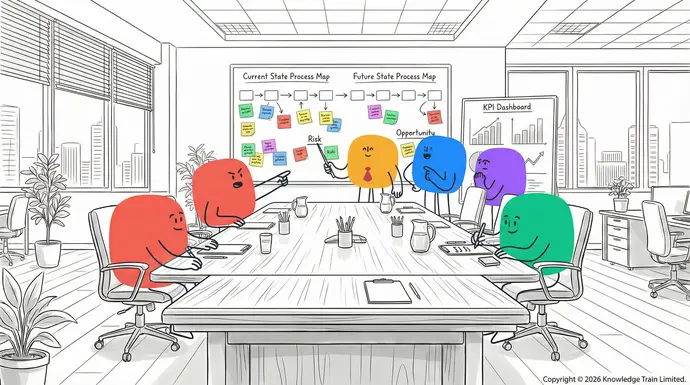
Organisational development
: Change management techniques are often a core part of organisational development, aiming for long-term improvement in effectiveness.Project management: Integrating change management with project management ensures project deliverables are adopted and sustained.Business transformation
: Large-scale initiatives such as mergers or digitalisation depend on robust change management for success.
- Stakeholder engagement
- : Identifying and actively involving key stakeholders is crucial in minimising resistance and ensuring buy-in.
- Leadership: Strong, credible leadership drives the success of change initiatives through clear direction and support.Change management best practices
- Establish clear communication strategies
- tailored to different stakeholder groups.
Appoint dedicated change agents
Stakeholder engagement
| : The ongoing process of involving those impacted by change in planning and implementation. | Leadership in change management |
|---|---|
| : The role of leaders in inspiring, directing, and supporting people through transitions. | Risk management |
| : Identifying, analysing, and mitigating risks that arise during change initiatives. | Process improvement: Reviewing and enhancing business processes to align with new goals.FAQs |
| What is change management and why is it important? | Change management is the process of guiding organisations, individuals, or teams through transitions. It is important because it enables smoother implementation of change, reduces resistance, and ensures that strategic objectives are achieved efficiently. |
| What are common change management frameworks? | The most common frameworks are Kotter’s 8-Step Process, Lewin’s Change, and the |
| ADKAR | framework. Each provides a structured approach to planning and implementing change. |
| How do you overcome resistance to change? | Overcome resistance by communicating benefits clearly, involving stakeholders, offering support and training, addressing concerns promptly, and recognising employee contributions throughout the transition. |
| What role do leaders play in change management? | Leaders set the direction, communicate the vision, build trust, allocate resources, and provide motivation and support to drive successful change. |
How can employees be engaged during change initiatives?
- Engage employees by involving them early, asking for input, addressing worries, providing training, celebrating successes, and continuously seeking feedback to make improvements.Subscribe to our exclusive offers and promotions
- Subscribe now
ProjectsAn example of programme management in the public sector is the delivery of a national digital health initiative. Here, multiple ITSimon Buehring, training, and policy projects are coordinated to improve patient care, achieve compliance, and realise lasting healthcare benefits, with programme managers ensuring strategic alignment, stakeholder collaboration, and robust governance throughout the life cycle.19 Feb 2026
FAQs What is the main purpose of programme management?Understand what defines projects within organizations and why they are crucial for business success. Learn about future trends in project management by reading further.The main purpose of programme management is to align multiple related projects with organisational strategy, deliver integrated benefits, and achieve strategic objectives through coordinated planning, governance, and oversight. How does a programme manager’s role differ from a project manager’s? Programme managers focus on strategic alignment, benefits realisation, and oversight of several related projects. Project managers are responsible for the delivery of specific project outputs within set constraints. Which methodologies are used in programme management? Common methodologies include Managing Successful ProgrammesWhat is PMP Certification? | How to Get Project Management Professional Certified (MSP), the PMI Standard for Program Management,
How does portfolio management relate to programme management?
Portfolio management
is the practice of selecting and prioritising
programmes
and projects based on organisational goals. Programme management is focused on the coordinated delivery and realisation of benefits for selected programmes within the wider portfolio.
Subscribe to our exclusive offers and promotionsProject management apprenticeships
Subscribe nowKnowledge Train 19 Feb 2026 Seeking a project management apprenticeship? This guide details the leading five apprenticeship programmes and providers across the UK. Acquire essential skills and start your professional journey while earning money.
APM Body of Knowledge (BoK)
Knowledge Train
19 Feb 2026
Learn about the APM Body of Knowledge which an important guide for project managers. This guide provides insights and useful tools for advancing your career and producing great project results.