Expert, experienced trainers to support youWhat is business analysis?

Business analysis turns business needs into clear requirements and evidence-based decisions.CONTACT US
- Business analysis aligns strategic goals with delivery by bridging stakeholders and technical teams.
- Clear requirements and validation reduce project risk and improve solution fit, cost and feasibility.
- Techniques like SWOT, gap analysis, process modelling and data analysis expose opportunities and bottlenecks.
- Embedding analysis in governance strengthens planning, transparency and measurable outcomes.
- Rigour can be maintained alongside speed by using consistent standards, templates and lightweight frameworks.
Name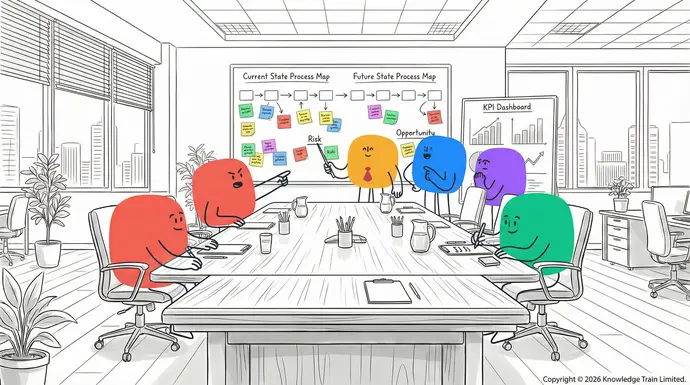
- Requirements elicitation: Facilitating workshops, interviews, and surveys to gather needs from stakeholders
- Requirements documentation: Creating clear business and technical requirements using various formats (e.g., user storiesUnited Kingdom, use cases)
- Gap analysis and feasibility studies: Assessing current and desired future states to highlight improvements and evaluate solution viability
- Stakeholder engagement: Communicating with diverse stakeholders to ensure requirements are validated and aligned
- Process mapping and business process modellingSearch: Visualising workflows for process improvement opportunities
- Solution assessment and validation: Reviewing proposals to ensure solutions address documented requirements and deliver valueUnited Kingdom
- Change managementAustria:Belgium Supporting the transition of solutions into the business and managing effects on people and processesBulgaria
Main business analysis processesCroatia
| ProcessCyprus | DescriptionCzech Republic |
|---|---|
| Requirements elicitationDenmark | Gathering information from stakeholders using interviews, workshops, observation, and document analysisEstonia |
| Requirements documentationFinland | Capturing business and technical requirements in written formats, such as Franceuser storiesGermany, use cases, or requirement specificationsGreece |
| Requirements validationIreland | Ensuring requirements are accurate, feasible, and aligned with business goalsItaly |
| Stakeholder engagementLatvia | Building relationships with all parties affected by the change to ensure their needs are metLithuania |
| Process improvementLuxemburg | Analysing existing workflows and recommending enhancements for efficiencyMalta |
| Solution assessmentNetherlands | Evaluating potential solutions against requirementsPoland |
| Change managementPortugal | Supporting successful adoption of new processes or systemsRomania |
Common business analysis techniquesSlovakia
- SWOT analysisSlovenia:Spain Identifying strengths, weaknesses, opportunities, and threats related to a business area or solutionSweden
- Gap analysis:Other countries Comparing current and target states to identify improvement areasHome
- Use case modelling:Business analysis Mapping user interactions with systems to define requirements
- Business process modelling: Creating diagrams (such as BPMN) to visualise business processesWhat is business analysis?
- Stakeholder analysis: Identifying stakeholder interests, influence, and engagement needsSimon Buehring
- User stories28 Apr 2026: Documenting concise functional requirements, typically in Agile projects
- Feasibility study: Analysing proposed solutions for practicality and viability
- Data analysis: Using quantitative and qualitative data to inform decision-making
Business analysis tools and methodologies
Key tools
- Requirements management software (for example, Jira, Confluence, or Azure DevOps )
- Process mapping tools (such as Visio, Lucidchart)
- Mind mapping and collaboration software
- Data analysis tools (for example, Excel, Power BI)