Waterfall method

: Enter your personal details, education, and project management training.Maintenance and support
After the system is deployed, ongoing activities include:Pay the fee
- Monitoring system performance: Pay the CAPM exam fee (PMI membership is optional but can change pricing).
- Addressing user-reported issuesSchedule the exam
- Implementing minor enhancements: Book via PMI’s instructions and take the exam through
- Providing technical support to users.Pearson VUE (exam delivery/testing)
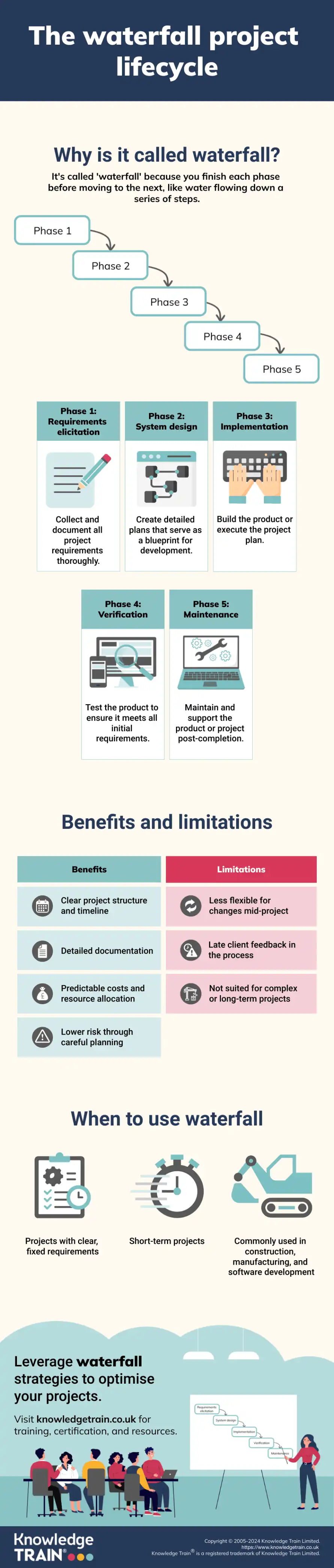
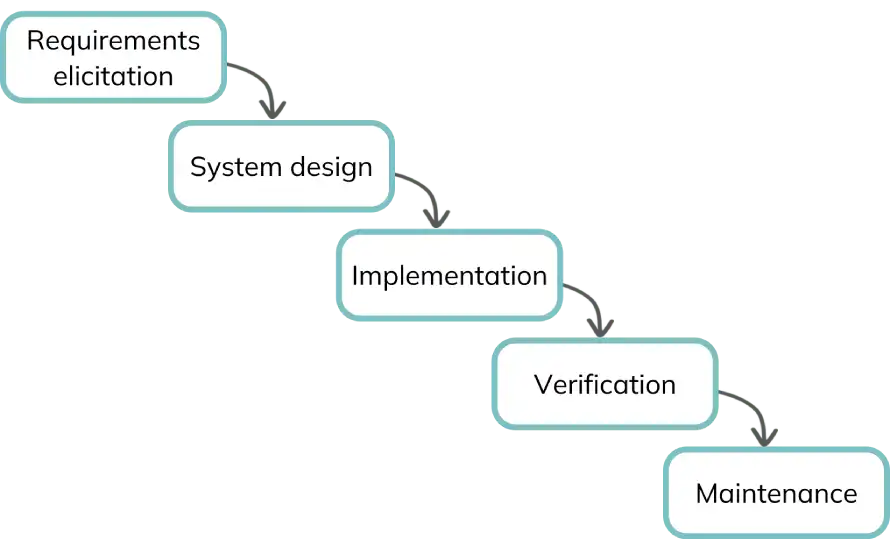
Each phase in the waterfall process must be completed before the next phase can begin. This approach ensures that all necessary documentation is created and minimises the risk of overlooking important requirements. It can be inflexible if requirements change mid-project. The at a test centre or as an sequential natureonline proctored exam of waterfall requires meticulous planning and clear communication throughout the development lifecycle. where available.
Benefits of the waterfall methodPrepare
Waterfall project management is a sequential and linear approach to executing tasks, and it has several advantages. Let’s discuss each one of them:: Study the CAPM ECO domains and revise PMBOK Guide aligned concepts, then practise with timed questions.
Clear project structure and timelineTake the exam
The : Follow test day rules for ID and online proctoring setup if relevant.sequential natureReceive results and digital credential of waterfall provides:: View your result per PMI’s process and access your digital badge if issued.
- Phases with clearly defined start and end pointsExam format and domains
- A planned structure with a timeline for when the work is to be completedThe CAPM exam blueprint is governed by the
- Milestones that are easily communicated to stakeholders.CAPM Exam Content Outline (ECO)
Comprehensive documentation. Exam delivery is handled via
Waterfall methodology advocates comprehensive documentation, leading to well-defined project requirements and specifications, detailed design documents for future reference and valuable historical records for similar projects.Pearson VUE
Predictable costs and resource allocation according to PMI policy.
The upfront planning involved in the waterfall model allows for accurate budget estimation, efficient resource allocation throughout the project lifecycle and minimised unexpected expenses.See:
Easier tracking and progress assessmentPMI CAPM certification
Waterfall’s structured approach facilitates easy tracking of progress with clear indicators at each phase, simplified reporting to stakeholders and easy identification of bottlenecks or delays.PMI CAPM exam preparation and ECO access
Reduced risk through upfront planningPearson VUE PMI programme page
Upfront planning in waterfall can help:What you need to know
- Identify potential risks early in the projectDetails (verify with PMI)
- Develop mitigation strategies before the work commencesDomains and topic coverage
- Minimise costly changes during the later stages of the project.Defined by the
These strengths make waterfall ideal for projects with clearly defined requirements and relatively few changes expected. The methodology’s robustness is also very appropriate to the complexity of the work and the need for strict and complete control of change for medical device software development.CAPM ECO
Fast track plan (2 to 6 weeks)Agile methodsWeek 1 are the most popular software development techniques. To decide which one is best for you, it’s important to understand their main differences. So, let’s compare two methods based on the most important aspects:: Read the ECO end to end. Build notes on project lifecycle, roles, and key documents. Start light practice questions.
Key differences in approachWeek 2
Career path example: Predictive (waterfall) methodologies focus: schedule management, cost management, quality management. Do 2 timed practice sets.:Week 3
| Waterfall: Agile project management focus: agile roles, planning cadence, and delivery concepts. Add stakeholder management scenarios. | AgileWeek 4 |
| Linear, sequential: Business analysis fundamentals: requirements, traceability, and change control linkages. Add risk management and issue handling questions. | Iterative, incrementalWeek 5 |
| Fixed scope: Mixed review by ECO domains. Take 1 full mock exam under time pressure and analyse errors. | Flexible scopeWeek 6 |
| Long-term planning: Final revision: formulae and terminology refresh, targeted drills for weak topics, then one final timed set 48 to 72 hours before exam day. | Short-term planningSteady plan (8 to 12 weeks) |
| Comprehensive documentationWeeks 1 to 2 | Minimal documentation: Foundations. Learn project management fundamentals and the project lifecycle. Create a glossary and flashcards. |
Flexibility and adaptabilityWeeks 3 to 4
Waterfall: Predictive focus. Deepen schedule management and cost management, then quality management and stakeholder management. Weekly quiz and review log.
- Rigid structure with defined phasesWeeks 5 to 6
- Difficult to accommodate changes once a phase is complete: Risk management and communications related scenarios. Build a one page summary per ECO domain.
- Best for Weeks 7 to 8projects: Agile project management. Compare agile vs predictive (waterfall) approaches and practise situational questions. with stable requirements.Weeks 9 to 10
Agile: Business analysis fundamentals. Requirements concepts, validation, and change impacts. Add mixed domain practice sets.
- Highly flexible, embracing change throughout the projectWeeks 11 to 12
- Adapts easily to evolving requirements: Exam readiness. Take 2 full mock exams, review wrong answers by domain, and finalise test day plan for Pearson VUE (test centre or online proctored exam).
- Suitable for projects in dynamic environments.CAPM vs PMP vs PRINCE2
Customer involvement and feedbackIf you are comparing credentials, choose based on your experience level, the methodologies used in your organisation, and role expectations. CAPM is usually positioned before PMP because PMP requires substantial project management experience.
WaterfallCredential
- Limited customer involvement after initial requirements gatheringBest fit audience
- Feedback primarily at project completion.Typical prerequisites
AgileDifficulty (relative)
- Continuous customer collaboration throughout the projectTypical roles
- Regular feedback and adjustments based on customer input.CAPM (PMI)
Team structure and collaborationEntry level and early career
WaterfallEducation plus PMI required project management training hours
Waterfall best practices
To enhance the success rate of waterfall project management, consider the following best practices:
Thorough requirements gathering and documentation
To set a solid foundation for the project, gather and document all requirements comprehensively. This includes conducting detailed stakeholder interviews, creating a comprehensive functional specification, develop clear and measurable acceptance criteria and utilise formal sign-off processes for requirements documentation.
Effective communication and stakeholder managementHM Treasury Green Book – what is it?
To ensure a project stays on track, ensure clear and regular communication with all stakeholders. This includes establishing regular status meetings and progress reports, clearly define roles and responsibilities for team members, maintain open channels for stakeholder feedback and utilise visual tools like Gantt charts to communicate project timelines and milestones.
Rigorous testing and quality assuranceSimon Buehring
To deliver a high-quality product, it is essential to implement a comprehensive testing strategy early in the project, conduct multiple levels of testing (unit, integration, system, user acceptance), allocate sufficient time and resources for thorough quality assurance activities and document and track all defects and their resolutions.19 Feb 2026
Change management and scope control
To maintain project scope and control Discover the HM Treasury Green Book's guidelines for evaluating policies and projects. Read on to understand its monitoring and evaluation directives.changes , implement a formal change request process, assess the impact of proposed changes on the timeline, budget, and resources, maintain a change log to track all approved changes and communicate changes and their impacts to all stakeholders.
Continuous monitoring and reporting
- Regularly track progress against the project plan
- Use earned value management to assess project performance
- Conduct periodic risk assessments and mitigation planning
- Provide timely and accurate reports to stakeholders.Managing small projects
Following these best practices and tips will ensure greater chances of successful project deliverySimon Buehring through the waterfall model. Adhering to these tips will assist you to keep your project organised and executed, excellent communication with stakeholders, as well as quality of deliverables.19 Feb 2026
Waterfall tools and techniques
Waterfall projects benefit from a range of specific tools and techniques to support effective project management and execution:Can large project management practices be scaled down? Explore the application of these practices in smaller projects by reading further.
Gantt charts and project timelines
- Visual representation of project phases, dependencies, and timelines
- Tracking of progress against planned schedules and milestones
- Identification of potential bottlenecks or resource conflicts.
Work Breakdown Structures (WBS)
- Hierarchical decomposition of complex projects into manageable tasks
- Definition of clear deliverables, scope, and milestones
- Facilitating accurate resource allocation and estimation.Project manage your life – Webinar with Bina Champaneria
Critical path analysis
- Identification of the sequence of critical tasks that determine project durationSevcan Yasa
- Calculation of the minimum time required to complete the project19 Feb 2026
- Focus on activities that directly impact the project timeline.