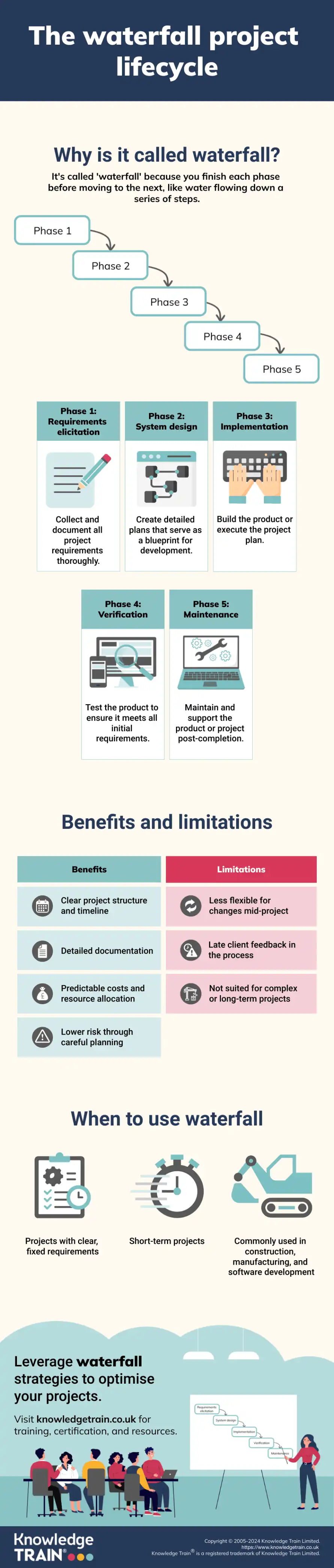
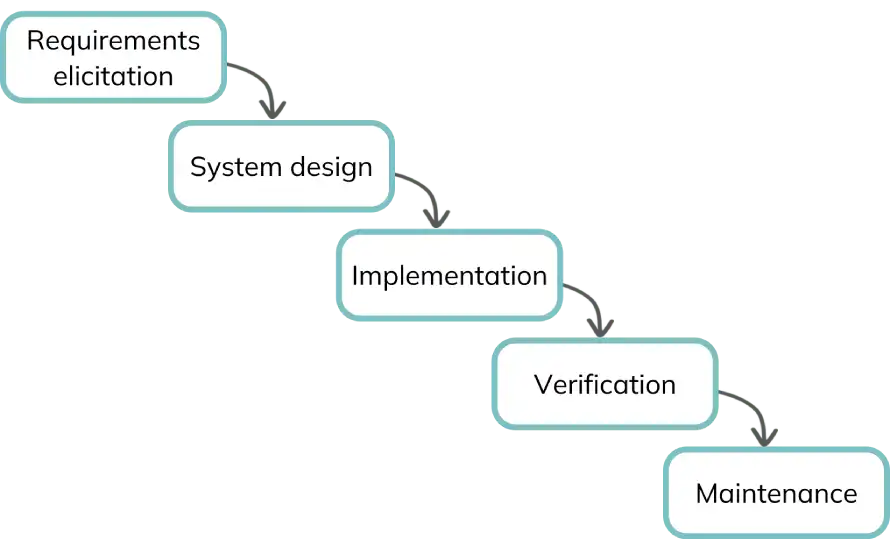
Waterfall method

Predictable costs and resource allocationService Offerings and Agreements (SOA).
The upfront planning involved in the waterfall model allows for accurate budget estimation, efficient resource allocation throughout the project lifecycle and minimised unexpected expenses.ITIL intermediate certifications are a stepping stone from either Foundation or Practitioner and enable you to get sufficient credit points to gain Expert certification.
Easier tracking and progress assessment4. ITIL v3 Expert certification
Waterfall’s structured approach facilitates easy tracking of progress with clear indicators at each phase, simplified reporting to stakeholders and easy identification of bottlenecks or delays.You can earn ITIL Expert certification after gaining 22 credit points. The way to do that is to sit a MALC (Managing Across the Lifecycle) Exam. MALC tests your ability to integrate your ITIL knowledge in real-world settings.
Reduced risk through upfront planningPassing the MALC exam is worth 5 credit points. The MALC exam’s prerequisite is 17 credit points gained from either Lifecycle, Capability or Practitioner modules. 2 of the credit points must come from Foundation certification.
Upfront planning in waterfall can help:5. ITIL v3 Master certification
- Identify potential risks early in the projectThis certification shows that you can apply ITIL in an organisation. Every ITIL Master candidate will select a different range of personal experiences. That’s why there is no fixed syllabus for this qualification.
- Develop mitigation strategies before the work commencesIn the exam, you must explain and justify:
- Minimise costly changes during the later stages of the project.How you would select and apply elements of the ITIL Framework such as:
These strengths make waterfall ideal for projects with clearly defined requirements and relatively few changes expected. The methodology’s robustness is also very appropriate to the complexity of the work and the need for strict and complete control of change for medical device software development.ITIL knowledge; or,
Limitations of the waterfall method
The waterfall method is a structured approach to project managementInstructor-led that follows a linear sequence of phases. However, it has some limitations.ITIL 4 Strategist Direct, Plan & Improve (DPI)
Limited flexibility for changes
The £1,799 +vatstructured approach of waterfall can make changes challenging once a phase is completed. This rigidity can lead to difficulties in adapting to new requirements, costly revisions if requirements change mid-project and can inhibit creativity and innovation during the development process.See all dates
Delayed feedback and product validationTransition from ITIL v3 to ITIL 4
The linear nature of the waterfall methodology means that user feedback and validation of the product often come late in the process. This delay can result in missed opportunities to address market needs, reduced chances of early validation of the product and increased risk of developing features that users don’t want.There is no transition module to
Potential for longer delivery timesITIL 4 Foundation
Waterfall methodology can result in longer delivery times due to the extensive upfront planning. This approach can lead to delays in delivering working software to end-users and slower time-to-market compared to more iterative approaches. if you are already an ITIL v3 Foundation certificate holder. You must study ITIL 4 Foundation to become familiar with the new version.
Challenges with customer collaborationAXELOS has designed an ITIL Managing Professional Transition Module. It is designed for ITIL v3 candidates who are ITIL Experts. Candidates who have achieved 17 credits from across the v3 scheme are included too.
Waterfall may present obstacles by restricting customer collaboration after the requirements phase. This can lead to limited stakeholder input and a potential mismatch between the final product and the evolving needs of the customer.What’s the cost of ITIL v3 certification?
Subscribe now to make informed decisions on when to explore alternative approaches or adapt the waterfall model to mitigate these risks.
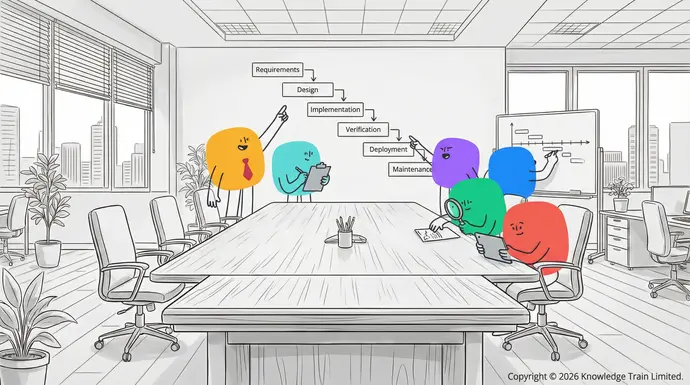
Waterfall vs Agile methods
Waterfall and {"@context":"https://schema.org","@type":"ImageObject","contentUrl":"https://www.knowledgetrain.co.uk/training-courses/itil-v3-certification-890x501.webp","description":"ITIL v3 Certification | ITIL 3 Certification","license":"https://www.knowledgetrain.co.uk/license","acquireLicensePage":"https://www.knowledgetrain.co.uk/license","creditText":"Knowledge Train","uploadDate":"2023-05-16T23:41:00.000Z","copyrightNotice":"© 2023 Knowledge Train Limited. All rights reserved.","creator":{"@type":"Organization","name":"Knowledge Train","url":"https://www.knowledgetrain.co.uk"}}Agile methods are the most popular software development techniques. To decide which one is best for you, it’s important to understand their main differences. So, let’s compare two methods based on the most important aspects:{"@context":"https://schema.org","@type":"ImageObject","contentUrl":"https://www.knowledgetrain.co.uk/training-courses/res/images/it/itil/itil-v3-certification-path-infographic-800x4282.webp","description":"ITIL v3 Certification | ITIL 3 Certification","license":"https://www.knowledgetrain.co.uk/license","acquireLicensePage":"https://www.knowledgetrain.co.uk/license","creditText":"Knowledge Train","uploadDate":"2023-05-16T23:41:00.000Z","copyrightNotice":"© 2023 Knowledge Train Limited. All rights reserved.","creator":{"@type":"Organization","name":"Knowledge Train","url":"https://www.knowledgetrain.co.uk"}}
Key differences in approach
Career path exampleRelated articles:
| Waterfall | Agile |
| Linear, sequential | Iterative, incremental |
| Fixed scope | Flexible scope |
| Long-term planning | Short-term planning |
| Comprehensive documentation | Minimal documentation |
Flexibility and adaptability
Waterfall
- Rigid structure with defined phasesWhat is an IT course?
- Difficult to accommodate changes once a phase is complete
- Best for Simon Buehringprojects29 Apr 2026 with stable requirements.
AgileAn IT course introduces learners to the fundamentals of Information Technology, covering core areas such as AI, programming, networking, cybersecurity and software development. These courses help you gain essential technical skills for IT careers in today’s digital economy.
- Highly flexible, embracing change throughout the project
- Adapts easily to evolving requirements
- Suitable for projects in dynamic environments.
Customer involvement and feedback
Waterfall
- Limited customer involvement after initial requirements gathering
- Feedback primarily at project completion.
Agile
- Continuous customer collaboration throughout the projectOctober is cyber security awareness month
- Regular feedback and adjustments based on customer input.
Team structure and collaborationSimon Buehring
Waterfall19 Feb 2026
- Hierarchical team structure
- Specialised roles with limited cross-functional work.Learn about the origins of Cyber Security Awareness Month and its global significance. Discover more about the initiative by scrolling down.
Agile
- Self-organising, cross-functional teams
- Emphasises collaboration and shared responsibility.
Risk management and quality control
Waterfall
- Upfront risk identification and mitigation planning
- Quality control primarily at project end.
AgileCyber Security Awareness in Organisations
- Continuous risk assessment and mitigation
- Ongoing quality control through regular testing and reviews.Simon Buehring
Each has its advantages and disadvantages. Waterfall provides structure and predictability, making it well-suited for projects with well-defined requirements and stable environments. 19 Feb 2026Agile offers flexibility and adaptability, making it ideal for projects with evolving requirements or uncertain outcomes. The decision to use Cyber security awareness encompasses not only knowledge but also the crucial attitudes and behaviours needed to safeguard information assets. Read on to enhance your strategies and secure your data effectively.waterfall or Agile depends on several factors, such as project complexity, team dynamics, and organisational culture.
When to use the waterfall method
Agile methodologies have become popular in recent years, but the waterfall approach still has its place in certain situations. Let’s explore how and when waterfall can be successfully used.
Rigorous testing and quality assurance
To deliver a high-quality product, it is essential to implement a comprehensive testing strategy early in the project, conduct multiple levels of testing (unit, integration, system, user acceptance), allocate sufficient time and resources for thorough quality assurance activities and document and track all defects and their resolutions.
Change management and scope control
To maintain project scope and control DevOps is shaping modern IT careers. Download our free ebook to understand DevOps job roles, qualifications, and salary expectations.changes , implement a formal change request process, assess the impact of proposed changes on the timeline, budget, and resources, maintain a change log to track all approved changes and communicate changes and their impacts to all stakeholders.
Continuous monitoring and reporting
- Regularly track progress against the project plan
- Use earned value management to assess project performance
- Conduct periodic risk assessments and mitigation planning
- Provide timely and accurate reports to stakeholders.ITIL v4 certification
Following these best practices and tips will ensure greater chances of successful project deliverySimon Buehring
- Centralised project documentation, communication, and collaboration
- Automation of task assignments, progress tracking, and reporting
- Generation of reports and analytics for informed decision-making.
These tools and techniques provide visibility into project progress, facilitate communication among stakeholders, and enable better ITIL certification pathcontrol over project activities. By utilising these resources, project managers can effectively manage and execute waterfall projects within the structured framework of the methodology.Simon Buehring
Conclusion6 Mar 2026
Recap of key points
Advantages of waterfall project management:Discover the ITIL certification path and how it can enhance your IT service management career. Scroll down for an overview and infographic.
- Crisp process and timelines
- Vast documentation
- Predictable costs and resource needs.
Drawbacks of waterfall project management:
- Inflexibility to change
- Late feedback and product validation.
Final thoughts on relevance
The traditional waterfall methodology still has relevance
FAQsCustomer Support
What are the main differences between waterfall and agile methodologies?
Waterfall is a linear and sequential approach, while [email protected]AgileJoin Our Team is iterative and flexible. Waterfall emphasises upfront planning, while Agile embraces change and feedback throughout the development process.
Can waterfall and agile methodologies be combined?[email protected]
Yes, hybrid approaches exist that blend elements of both methodologies to suit specific project requirements and team preferences. Copyright © 2005-2026 Knowledge Train Limited.
How long does a typical waterfall project take? Registered in UK: 5566983.
Project duration can vary widely, from a few months to several years, depending on the scope, complexity, and resources available. Registered VAT: GB872413526.
What are the biggest challenges in waterfall project management? Knowledge Train
Challenges include handling changes and late-stage issues, maintaining stakeholder engagement, and ensuring that requirements are accurately captured and understood from the outset.®
Is waterfall still relevant in today’s fast-paced software development environment? is a registered trademark of Knowledge Train Limited.
Yes, for projects with well-defined requirements, strict regulatory requirements, or where changes are expensive or impractical, waterfall remains a viable approach. 20 Old Bailey, London, EC4M 7AN, England, United Kingdom.
Infographic Knowledge Train are experts in project management, PRINCE2, agile and change management training and certification. Choose from a full range of instructor-led and self-paced