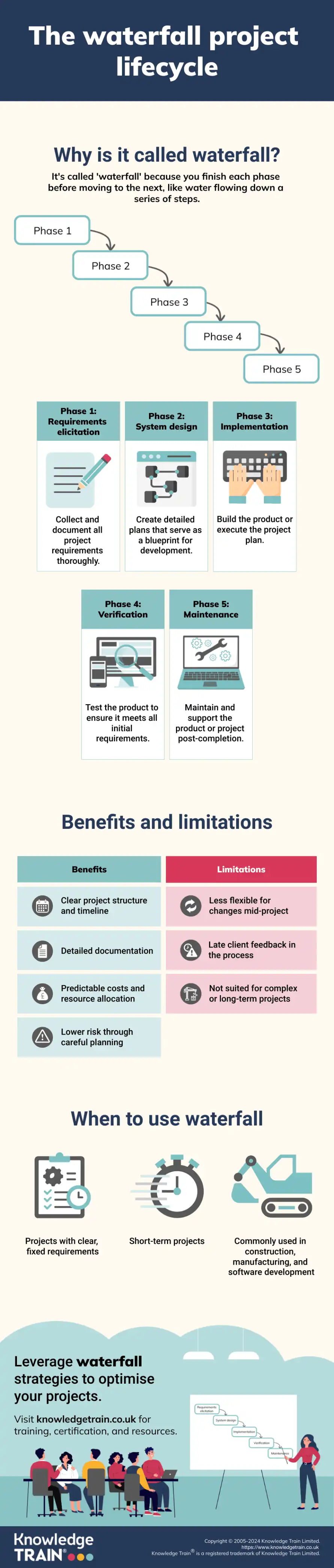
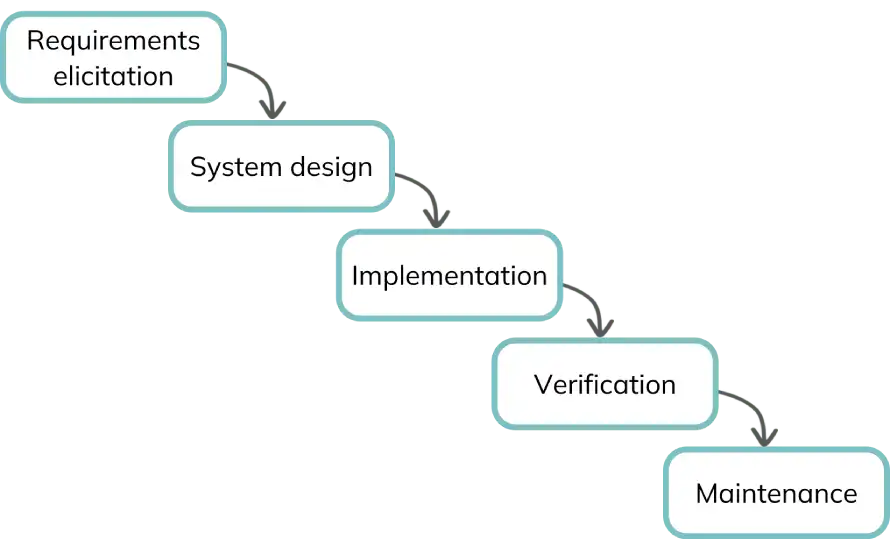
Based on the requirements, the team designs the system architecture, user interface, database schemas, and detailed technical specifications.
Implementation
During this phase, developers write code according to the design specifications, adhere to coding standards and best practices, and create unit tests for individual components.
Verification
The upfront planning involved in the waterfall model allows for accurate budget estimation, efficient resource allocation throughout the project lifecycle and minimised unexpected expenses.
Easier tracking and progress assessment
Waterfall’s structured approach facilitates easy tracking of progress with clear indicators at each phase, simplified reporting to stakeholders and easy identification of bottlenecks or delays.
Reduced risk through upfront planning
Upfront planning in waterfall can help:
- Identify potential risks early in the project
- Develop mitigation strategies before the work commences
- Minimise costly changes during the later stages of the project.
These strengths make waterfall ideal for projects with clearly defined requirements and relatively few changes expected. The methodology’s robustness is also very appropriate to the complexity of the work and the need for strict and complete control of change for medical device software development.
Limitations of the waterfall method
The waterfall method is a structured approach to project management that follows a linear sequence of phases. However, it has some limitations.
Limited flexibility for changes
The structured approach of waterfall can make changes challenging once a phase is completed. This rigidity can lead to difficulties in adapting to new requirements, costly revisions if requirements change mid-project and can inhibit creativity and innovation during the development process.
Delayed feedback and product validation
The linear nature of the waterfall methodology means that user feedback and validation of the product often come late in the process. This delay can result in missed opportunities to address market needs, reduced chances of early validation of the product and increased risk of developing features that users don’t want.
Potential for longer delivery times
Waterfall methodology can result in longer delivery times due to the extensive upfront planning. This approach can lead to delays in delivering working software to end-users and slower time-to-market compared to more iterative approaches.
Challenges with customer collaboration
Waterfall may present obstacles by restricting customer collaboration after the requirements phase. This can lead to limited stakeholder input and a potential mismatch between the final product and the evolving needs of the customer.
Risk of late-stage issues and rework
Waterfall best practicesLean Six Sigma
To enhance the success rate of waterfall project management, consider the following best practices:Yellow Belt
Thorough requirements gathering and documentationSelf-paced training course to gain LSS Yellow Belt.
To set a solid foundation for the project, gather and document all requirements comprehensively. This includes conducting detailed stakeholder interviews, creating a comprehensive functional specification, develop clear and measurable acceptance criteria and utilise formal sign-off processes for requirements documentation.PMI
Effective communication and stakeholder management
To ensure a project stays on track, ensure clear and regular communication with all stakeholders. This includes establishing regular status meetings and progress reports, clearly define roles and responsibilities for team members, maintain open channels for stakeholder feedback and utilise visual tools like Gantt charts to communicate project timelines and milestones.®
Rigorous testing and quality assurancePMI-ACP
To deliver a high-quality product, it is essential to implement a comprehensive testing strategy early in the project, conduct multiple levels of testing (unit, integration, system, user acceptance), allocate sufficient time and resources for thorough quality assurance activities and document and track all defects and their resolutions.Self-paced course to prepare you for the exam (exam not included).
Change management and scope controlKanban
To maintain project scope and control Estimating for Agile FoundationchangesAgile Learning Library (ALL)™, implement a formal change request process, assess the impact of proposed changes on the timeline, budget, and resources, maintain a change log to track all approved changes and communicate changes and their impacts to all stakeholders.BUSINESS ANALYSIS
Continuous monitoring and reportingBCS Business Analysis