IntroductionBUSINESS ANALYST COURSES
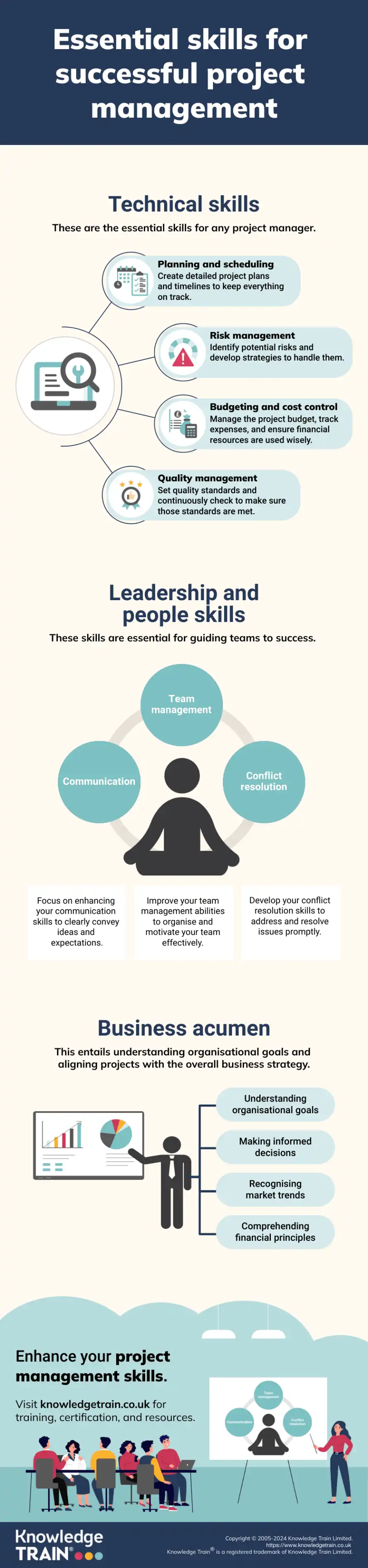
Project management skillsSelect your self-paced training course topic. are increasingly in demand in the modern business world. Organisations are becoming more projectised, with more senior stakeholders relying on professionals to drive successful outcomes. In fact, the demand for capable project managers is on the rise across a range of sectors. Companies are on the lookout for individuals with a wide variety of skills to handle increasingly complex initiatives.
Key project management capabilities include:BCS BUSINESS ANALYST COURSES
- Technical skillsSelect your preferred training course below:
- Leadership skills
- Business skills.CHANGE MANAGEMENT COURSES
In combination, these traits allow project managers to:Select your self-paced training course topic.
- Plan and implement projectsAPMG CHANGE MANAGEMENT COURSES
- Lead team membersSelect your preferred training course below:
- Deliver value and business objectives.
Monitoring and controlling expenses
Monitor expenses to stay within budget:
- Use Earned Value Management (EVM)Knowledge Train is a Change Management Accredited Training Organization.
- Review costs regularly
- Leverage Knowledge Train is an MSP Accredited Training Organization.project management software for real-time trackingKnowledge Train is a PRINCE2 Accredited Training Organization.
- Act quickly on variances to avoid overruns.
Leadership and interpersonal skillsSelf-paced online training courses (e-learning) include:
Project managers need to have Certification exam(s) where applicablestrong leadershipAccredited training course materials and interpersonal skills, apart from the hard-core technical skills.Support from expert, experienced trainers
CommunicationLatest educational technology.
Verbal and written communication techniques
Effective communication is the foundation of successful project management. Enhance your verbal and written communication techniques by:BUSINESS SOLUTIONS
- Tailoring your message to your audience and purpose
- Utilising concise language and avoiding jargon or technical terms
- Incorporating visual aids or graphics to emphasise key pointsTO HELP ORGANISATIONS IMPROVE
- Practising public speaking and presentation skills to deliver information clearly and confidently.We offer solutions to help improve team performance including:
Active listening and feedbackConsultancy services
Communication is a two-way process, and active listening plays a vital role in effective communication. Hone your active listening and feedback skills by:Staff development
- Paying attention to the speaker without interruptionsCompliance training
- Asking clarifying questions to ensure understandingApprenticeship training
- Summarising the main points to confirm comprehensionCustom e-Learning development
- Providing constructive feedback in a timely manner to facilitate improvement.
Team management
Delegation and task assignmentFind out more
Efficient team management often involves delegating tasks and responsibilities. Master the art of delegation and task assignment by:
- Evaluating team members’ strengths, weaknesses, and workloads
- Aligning tasks with individual skills and expertise
- Providing clear instructions, deadlines, and expectations
- Establishing accountability and setting up follow-up mechanisms for progress monitoring.
Motivating and inspiring team membersCONTACT US
A motivated team is more likely to be productive and engaged. Learn how to motivate and inspire team members by:
- Recognising and celebrating individual and team achievements
- Offering opportunities for professional growth and development
- Encouraging open communication, collaboration, and idea-sharing
- Leading by example with enthusiasm, commitment, and a positive attitude.
Conflict resolutionName
Identifying and addressing conflicts
Conflicts are inevitable in teams, but effective conflict resolution can prevent them from escalating. Develop your conflict resolution skills by:
- [email protected]project plans as necessary when business strategies change.
Decision-making and problem-solving
Adaptability and change managementSearch
In a dynamic business environment, adaptability is key:
- Anticipate and prepare for potential changes in the business landscape
- Develop contingency plans for various scenarios
- Foster a culture of flexibility and innovation within project teams
- Implement change managementUnited Kingdom strategies to support organisational transitions.Austria
Developing these skills in business acumen and strategic thinking can help project managers:Belgium
- Make better-informed decisionsBulgaria
- Align projects more effectively with organisational goalsCroatia
- Adapt to changing business conditionsCyprus
- Drive meaningful value for their organisations.Czech Republic
By honing these skills, project managers become strategic partners in their organisations, significantly enhancing their contribution to overall business success.Denmark
Technical proficiencyHome
To efficiently work on projects as well as to effectively lead and manage teams, project managers need to have technical skills that are relevant to the digital world of today.Project Management
Project management software and toolsProject management roles
Popular project management software options
Familiarise with the top software tools used for project management. Some of the most popular ones are:{"@context":"http://schema.org","@type":"BreadcrumbList","itemListElement":[{"@type":"ListItem","position":1,"name":"Home","item":"https://www.knowledgetrain.co.uk/"},{"@type":"ListItem","position":2,"name":"Project Management","item":"https://www.knowledgetrain.co.uk/project-management"},{"@type":"ListItem","position":3,"name":"Project management roles","item":"https://www.knowledgetrain.co.uk/project-management/project-management-roles"}]}
- Microsoft Project : Use Microsoft Project to plan, schedule, and monitor project tasks and resources
- Jira : Master Jira for 10 essential project management rolesAgile project management and issue trackingKnowledge Train
- Trello19 Feb 2026: Learn Trello for visual task management using boards and cards
- Asana : Get proficient in Asana for team collaboration and workflow management.
Collaboration and communication tools
Equip yourself with tools that enhance communication and collaboration within your team and with stakeholders. Some of the most essential tools are:
- Slack : Use Slack for real-time messaging, file sharing, and team collaboration
- Microsoft Teams : Learn Microsoft Teams for video conferencing and document collaboration
- Zoom : Get familiar with Zoom for virtual meetings and webinars
- Google Workspace : Become proficient in Google Workspace for cloud-based document creation and sharing.
Data analysis and reporting
Creating and interpreting project reports
Gain the ability to create and interpret project reports. Here are some of the essential skills:
- Generating project status reports using project management software
- Creating visual representations of data (charts, graphs)
- Customising reports for different stakeholders
- Interpreting Key Performance Indicators (KPIs) and metrics.
Data-driven decision-makingCopied!
Develop skills to make data-informed decisions to guide projects towards success. Here are some steps to achieve that:Key takeaways
- Collect and analyse project performance dataClear role boundaries and strong collaboration improve delivery, governance, and outcomes.
- Use statistical tools to identify trends and patternsThe project manager integrates scope, budget, schedule, risks, and communication to keep delivery on track.
- Employ predictive analytics for risk assessmentThe project sponsor secures funding, removes obstacles, and owns accountability for business value.
- Present data-driven recommendations to stakeholders.Team members deliver quality work and share progress early to prevent issues compounding.
Project managers can enhance their ability to streamline processes, improve communication, and make informed decisions based on accurate data analysis by developing proficiency in these technical skills.Assistant PMs, coordinators, and administrators reduce operational load through delegation, tracking, and documentation.
Developing your project management skillsSenior PMs and project directors align initiatives to strategy, optimise resources, and manage cross-project risk.
As a project manager, you may wish to build or enhance your knowledge of this valuable role. There are several ways in which this can be achieved:Consultants and governance frameworks strengthen standards, oversight, and continuous improvement.
Formal education and training
Enrol in advanced degrees or specialised courses in project management :Contents
- A master’s degree in project management
- Specialised courses or workshops on a particular methodology (such as AgileContents or PRINCE2Introduction)
- Upon online learning platforms like GainCert.Core project management roles
Professional certifications
Certifications are industry-recognised credentials that validate your knowledge and skills in project management. Some examples of project manager certifications include:Supporting project management roles
- Project Management Professional (PMP)Senior project management roles by the Project Management Institute ( PMISpecialised project management roles)
- PRINCE2 PractitionerConclusion
- Certified ScrumMaster (CSM).
On-the-job experience and mentoringFAQs
Hands-on experience is one of the most effective ways of building and honing your skills as a project manager. You can gain experience by:
- Taking on challenging projectsInfographic
- Learning from others with experienceIntroduction
- Working on cross-functional projectsProject management
- Seeking out a mentor to help you grow. plays a crucial role in the success of organisational initiatives. It involves the efficient coordination of resources, tasks, and people to achieve specific goals within defined constraints.
Continuous learning and self-improvementCentral to effective project management is the understanding of the diverse roles that contribute to the project’s success. From
The field of project management is constantly evolving, so it’s important to keep up with the latest trends and best practices. To do this, you can:project managers
- Read books, blogs, and other project management publications and team members to stakeholders and sponsors, each position holds unique responsibilities and expectations.
- Attend conferences and networking eventsThis article delves into ten essential
- Join professional associations such as project management rolesPMI, their key responsibilities, and their impact on project outcomes. Gaining a clear grasp of these roles will empower professionals to: and Strengthen collaboration within teamsAPMEnhance project efficiency.Increase overall project success rates.
Incorporate a combination of these strategies to continuously develop your project management skills and advance your career in this ever-evolving field.Whether you are a seasoned project management professional or new to the field, this article will provide valuable insights into the diverse roles that drive project excellence.
- CommunicationProvides political support
- LeadershipEliminates organisational barriers.
- Planning and organisationThis strong partnership guarantees that the project is on track, has enough resources and is well aligned with business goals. By actively engaging with and supporting project sponsors, the PM increases the likelihood of project success and stakeholder satisfaction.
- Risk managementProject team members
- Problem-solvingProject team members are a collection of skilled and experienced professionals who apply their specialised knowledge to help projects meet their goals. These team members can take on many different titles or roles, including:
- Technical proficiencyDevelopers and engineers
- Adaptability.Designers and other creative specialists
A combination of these skills allows project managers to lead teams and deliver successful projects.Quality assurance (QA) testers
How can I improve my project management skills?Business analysts
To improve your project management skills, you can:Subject matter experts.
- Take formal education or training coursesProject team members’ primary responsibilities include:
- Obtain professional certificationsCompleting the tasks assigned to them within the specified timelines
- Seek mentorship from experienced project managersMaintaining quality standards throughout the project
- Volunteer for challenging projects to gain practical experienceReporting progress and any challenges encountered to the PM
- Stay updated on industry trends and best practicesContributing ideas to problem-solving and innovative solutions.
- Continuously reflect on and learn from your experiences.Collaboration
What software tools are essential for project managers? plays a significant role in the success of any project. Team members are expected to:
Essential Communicate effectively and consistently with all stakeholders and team membersproject management toolsShare knowledge and resources include:Help their colleagues succeed
- Planning and scheduling software, such as Microsoft Project or PrimaveraBe adaptable to the changing project requirements.
- Collaboration platforms like Slack or Microsoft TeamsBy promoting open communication, trust, and respect, project team members can overcome project challenges more effectively. This kind of collaboration boosts productivity, creativity, and ultimately, the success of the project, thereby contributing to the achievement of the organisation’s strategic goals.
- Task management tools, like Trello or AsanaEnhance your skills with our expert-led courses
- Data analysis and reporting software like Excel or Power BI.
The exact tools you need will depend on your project and organisation.
How do project management skills differ across industries?
While many project management skills are transferable, some industry-specific knowledge is usually required. For example:Instructor-led
- Supporting project management rolesITIL Foundation.Assistant PM
Choose An certificationsAssistant PM that align with your career goals and industry requirements. is a second manager or someone who is directly underneath the main PM and they help them out; they do the same job as a regular PM but on smaller or less important projects.
InfographicFor example, if you are working on a huge project and it’s starting to get a lot of tasks, you may ask an Assistant PM to take over and get it done and they will, if it’s small enough! In summary, the assistant is a great help and acts as a mini PM. The responsibilities of an assistant include: