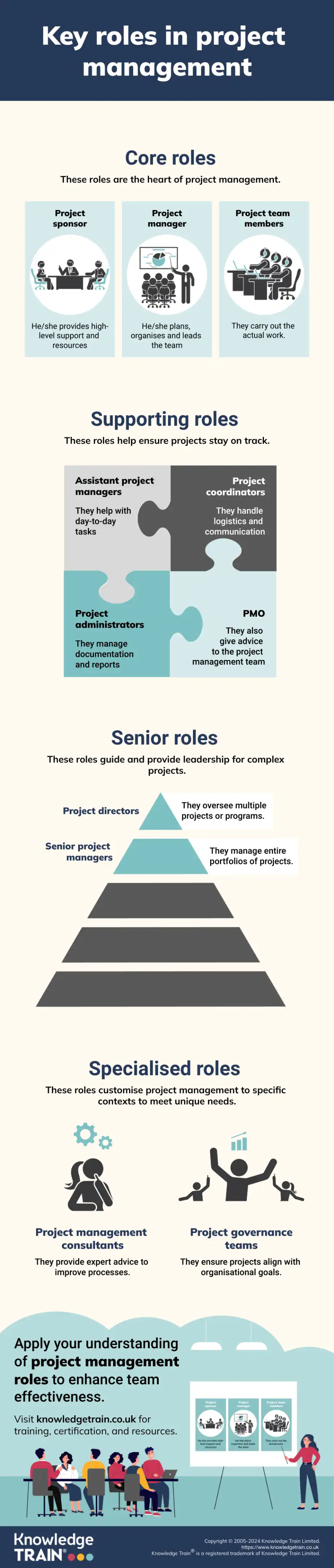
<, their key responsibilities, and their impact on project outcomes. Gaining a clear grasp of these roles will empower professionals to:span data-mce-type="bookmark" style="display: inline-block; width: 0px; overflow: hidden; line-height: 0;" class="mce_SELRES_start">
- Enhance project efficiencyCore project management roles
- Increase overall project success rates.Project manager (PM)
Whether you are a seasoned project management professional or new to the field, this article will provide valuable insights into the diverse roles that drive project excellence.This role serves as the central hub of any project, assuming responsibility for its successful execution. This pivotal role involves the coordination of resources, people, and tasks to ensure that the project stays on track and meets its predefined objectives. Some of the core responsibilities that fall under this role include:
Supporting project management rolesPlanning the project
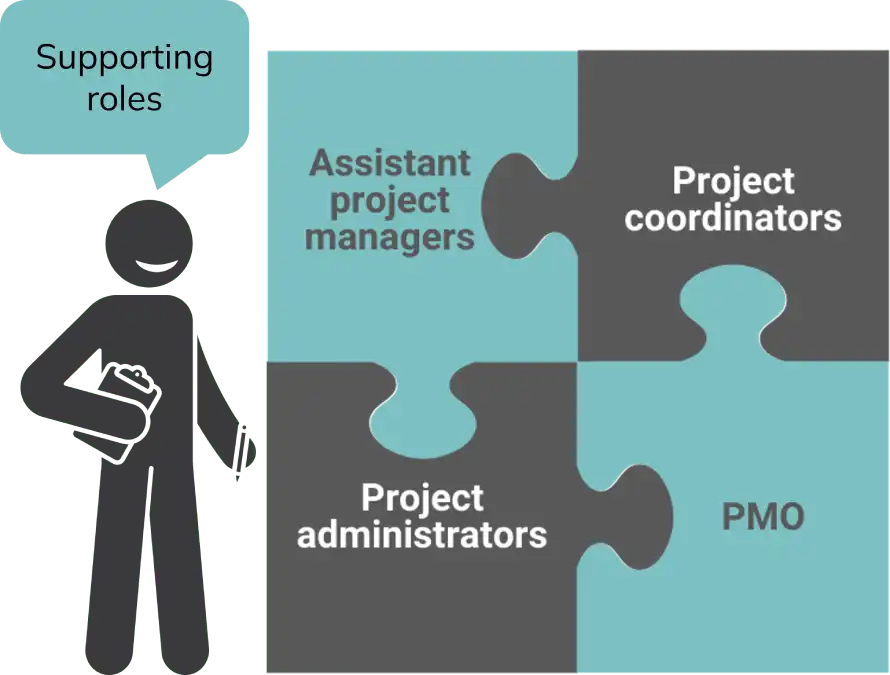
Assistant PMMonitoring the project and its work
An Overseeing the allocated budgetAssistant PMCommunicating with the stakeholders is a second manager or someone who is directly underneath the main PM and they help them out; they do the same job as a regular PM but on smaller or less important projects.Assisting the PM.
For example, if you are working on a huge project and it’s starting to get a lot of tasks, you may ask an Assistant PM to take over and get it done and they will, if it’s small enough! In summary, the assistant is a great help and acts as a mini PM. The responsibilities of an assistant include:Working under the PM, the assistant:
- Planning the projectLearns high-level
- Monitoring the project and its workproject management skills
- Overseeing the allocated budgetGets first-hand experience of making top-level decisions
- Communicating with the stakeholdersBuilds leadership experience for his/her own future career development.
- Assisting the PM.This relationship enables effective delegation of tasks as well as broader project supervision. The role of Assistant PM is particularly important for big or complex projects, offering extra management resources and helping to ensure that no detail is missed.
Working under the PM, the assistant:Project coordinator
- Learns high-level A project management skillsproject coordinator
- Gets first-hand experience of making top-level decisions
- Builds leadership experience for his/her own future career development., or as we will be using to describe it, a coordinator. They work on the team as a supporting role. Some of the responsibilities of a coordinator include:
This relationship enables effective delegation of tasks as well as broader project supervision. The role of Assistant PM is particularly important for big or complex projects, offering extra management resources and helping to ensure that no detail is missed.Meeting and calendar management
Project coordinatorProject record keeping
A Project logisticsproject coordinatorProject tracking and reporting., or as we will be using to describe it, a coordinator. They work on the team as a supporting role. Some of the responsibilities of a coordinator include:Project coordinators, supporting the PM and team, may:
- Meeting and calendar managementServe as a central point of communication
- Project record keepingSupport resource allocation and management
- Project logisticsMonitor and control project budgets and expenses
- A history of successful project deliveries
- Designing and implementing strategic Advanced project management methodologiescertifications
- Mentoring and developing junior PMs and team members (e.g. PMP,
- Managing high-level stakeholder relationships.PRINCE2 Practitioner
Such professionals typically have:)
- A history of successful project deliveriesDeep industry-specific knowledge.
- Advanced In leading certificationscomplex initiatives (e.g. PMP, , Senior PMs:PRINCE2 PractitionerAlign projects with organisational goals)Oversee significant budgets and resources
- Deep industry-specific knowledge.Address risks across diverse project domains
In leading Promote innovation and process improvements.complex initiativesTheir strategic vision and leadership enable them to navigate intricate project landscapes effectively. By prioritising tasks, balancing competing interests, and optimising resource allocation, Senior PMs significantly contribute to enhancing an organisation’s project management capabilities and overall performance., Senior PMs:Project director
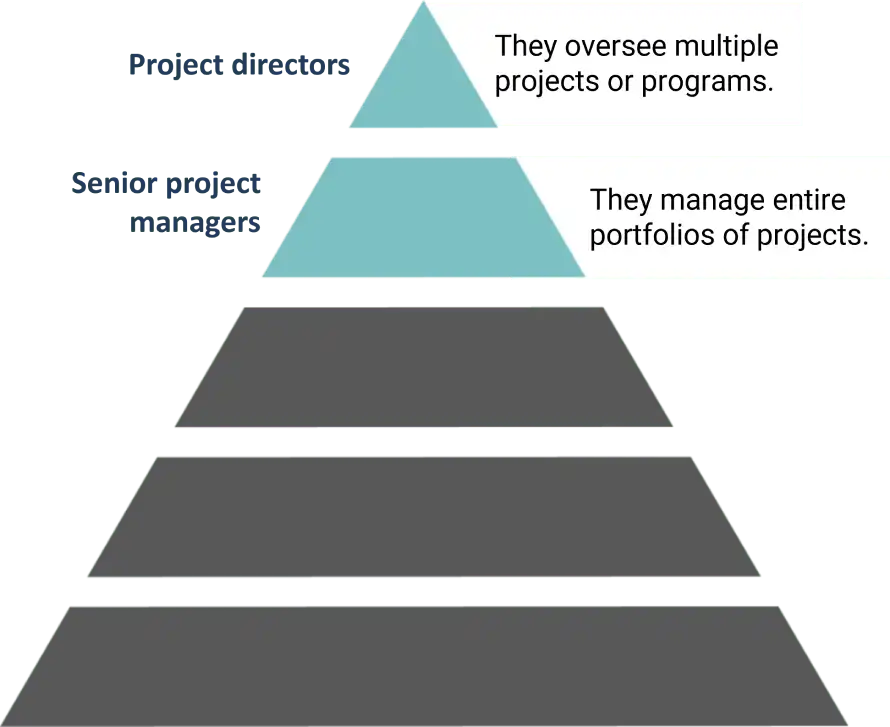
- Align projects with organisational goalsProject directors
- Oversee significant budgets and resources hold senior leadership roles and are responsible for managing entire project portfolios within an organisation. Key responsibilities include:
- Address risks across diverse project domainsAligning project portfolios with strategic business objectives
- Promote innovation and process improvements.Optimising resource allocation across multiple projects
Their strategic vision and leadership enable them to navigate intricate project landscapes effectively. By prioritising tasks, balancing competing interests, and optimising resource allocation, Senior PMs significantly contribute to enhancing an organisation’s project management capabilities and overall performance.Establishing project management standards and methodologies
Project directorEvaluating and reporting on overall portfolio performance.
Project directorsProject directors play a critical role in managing resources and stakeholder relationships: hold senior leadership roles and are responsible for managing entire project portfolios within an organisation. Key responsibilities include:Coordinating cross-functional teams and departments
- Aligning project portfolios with strategic business objectivesNegotiating with senior executives and external partners
- Optimising resource allocation across multiple projectsBalancing competing priorities and resource demands
- Establishing project management standards and methodologiesIdentifying and mitigating portfolio-wide risks.
- Evaluating and reporting on overall portfolio performance.Project directors contribute to:
Project directors play a critical role in managing resources and stakeholder relationships:Maximising return on investment for project initiatives
- Coordinating cross-functional teams and departmentsFostering a culture of continuous improvement
- Negotiating with senior executives and external partnersMentoring and developing project management talent.
- Balancing competing priorities and resource demandsTheir strategic vision and leadership skills are essential for driving organisational success through effective project portfolio management. By optimising resource utilisation and stakeholder engagement, project directors significantly enhance an organisation’s project delivery capabilities.
- Identifying and mitigating portfolio-wide risks.Enhance your skills with our expert-led courses
Project directors contribute to:
- Maximising return on investment for project initiatives
- Fostering a culture of continuous improvement
- Mentoring and developing project management talent.Instructor-led
Their strategic vision and leadership skills are essential for driving organisational success through effective project portfolio management. By optimising resource utilisation and stakeholder engagement, project directors significantly enhance an organisation’s project delivery capabilities.Introduction to Project Management course
- Project management consultantSetting realistic deadlines that allow for creativity
- Managing budgets without compromising qualityProject management consultants
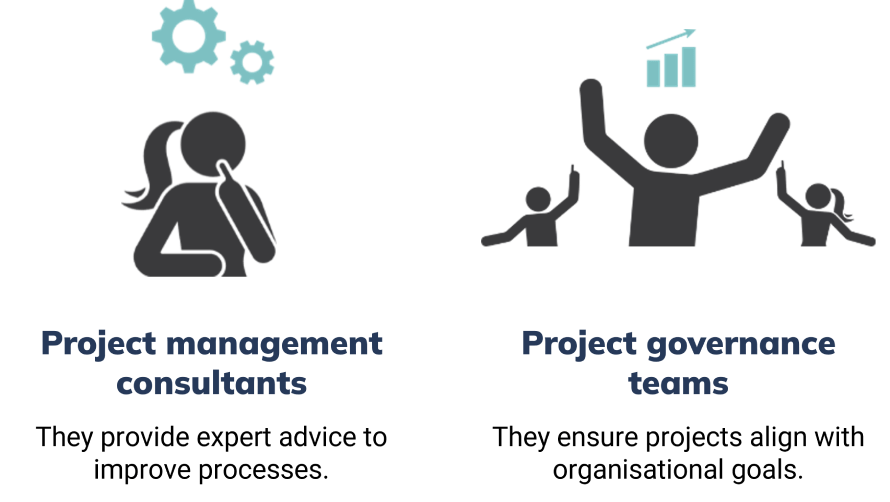
- Shielding the creative team from distractions are specialised advisors who provide guidance and expertise to organisations in effectively managing their projects. They offer a fresh perspective and industry knowledge to help businesses optimise project planning, execution, and delivery.
- Adapting project management methodologies to creative workflows.Project management
Creative PMs play a crucial role in ensuring that the creative aspects of a project are effectively managed and executed within the project’s constraints, delivering innovative and impactful results. consultants offer:
Project management consultantIn-depth analysis of current
Project management consultantsproject management practices are specialised advisors who provide guidance and expertise to organisations in effectively managing their projects. They offer a fresh perspective and industry knowledge to help businesses optimise project planning, execution, and delivery. .Project managementIdentification of areas for improvement and development of action plans consultants offer:Implementation of best practices and methodologies
- In-depth analysis of current Capacity building through training and knowledge sharing.project management practicesTypical responsibilities include:.Conducting project audits and health checks
- Identification of areas for improvement and development of action plansDeveloping customised
- Implementation of best practices and methodologiesproject management frameworks
- Capacity building through training and knowledge sharing.Guiding organisations through complex project challenges
Typical responsibilities include:Mentoring internal PMs.
- Conducting project audits and health checksCommon tasks for a project management consultant involve:
- Developing customised Assessing project plans and deliverablesproject management frameworksDeveloping customised
- Guiding organisations through complex project challengesproject management frameworks
- Mentoring internal PMs. and methodologies
Common tasks for a project management consultant involve:Providing guidance and support in overcoming project challenges
- Assessing project plans and deliverablesTraining and coaching internal PMs and teams.
- Developing customised Advantages of hiring a project management frameworksproject management consultant and methodologies include:
- Providing guidance and support in overcoming project challengesGaining access to industry expertise and best practices.
- Training and coaching internal PMs and teams.Improved project success rates and efficiency
Advantages of hiring a Enhanced risk management and mitigation strategiesproject management consultantFaster adoption of effective include:project management techniques
- Gaining access to industry expertise and best practices..
- Improved project success rates and efficiencyProject management consultants bring valuable experience from working with diverse organisations, helping companies refine their project management processes and achieve their objectives more effectively.
- Enhanced risk management and mitigation strategiesProject governance
- Faster adoption of effective Project governance refers to the framework and processes that ensure effective oversight and strategic alignment of projects within an organisation. Components include:project management techniquesSteering committee.:
Project management consultants bring valuable experience from working with diverse organisations, helping companies refine their project management processes and achieve their objectives more effectively.High-level direction and decision-making
Project governanceApproving major project changes and resource allocation
Project governance refers to the framework and processes that ensure effective oversight and strategic alignment of projects within an organisation. Components include:Ensuring projects align with organisational objectives.
Steering committeeProject Management Office (:PMO
- High-level direction and decision-making)
- Approving major project changes and resource allocation:
- Ensuring projects align with organisational objectives.Develops and maintains project management standards and practices
Project Management Office (Provides support and guidance to project teamsPMOMonitors project performance and portfolio health.)Key benefits of project governance include::Maintaining consistency across
- Develops and maintains project management standards and practicesprojects
- Provides support and guidance to project teamsFacilitating informed decision-making