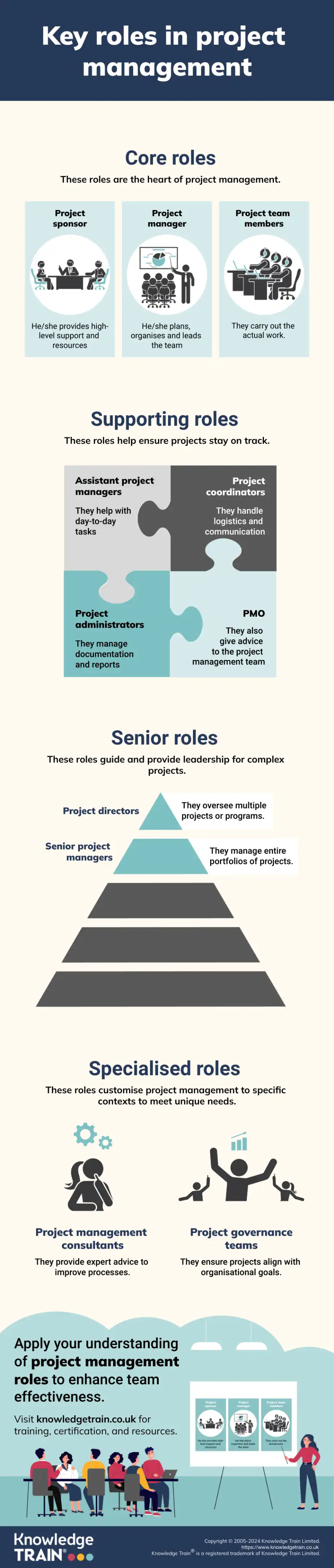
10 essential project management roles

Introduction
Project managementView preferences plays a crucial role in the success of organisational initiatives. It involves the efficient coordination of resources, tasks, and people to achieve specific goals within defined constraints.PRINCE2 Foundation Training and Online Courses with Exam
Core project management roles
- : Managing multiple tasks and priorities simultaneously without losing focus.
This role is crucial to the success of any project. It acts as the glue that holds the project together and maintain the entire process moving in the right direction. This role keeps the project aligned with organisational goals, ensure deadlines are met, and foster collaboration and communication among team members. By expertly balancing constraints such as time, budget, and scope, this role significantly increase the chances of achieving the desired project outcomes and delivering value to all stakeholders.
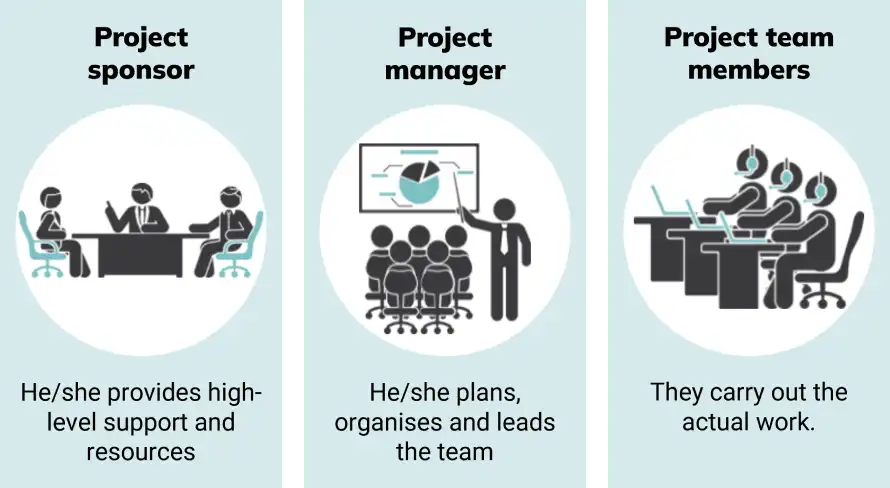
Project sponsor
The project sponsor plays an important part in starting and supporting projects from initiation through completion. This role, typically held by someone at an executive or senior management level, champions the project and ensures it is in alignment with organisational objectives. Some of the key responsibilities that fall under the project sponsor’s domain include:
- Approving the project charter and project scope
- Making high-level decisions related to the project
- Providing resolution to any escalated issues.
Project sponsors act as the connection between the project team and senior-level stakeholders. They are responsible for clearly communicating the value and progress of the project to these stakeholders. The project sponsor is also the final person with accountability for the project budget and results.
The relationship between the sponsor and the PM is vital to the success of the project. This role oversees the day-to-day operations of the project, while the sponsor provides strategic guidance and support by:
- Offers strategic direction
- Provides political support
- Eliminates organisational barriers.
This strong partnership guarantees that the project is on track, has enough resources and is well aligned with business goals. By actively engaging with and supporting project sponsors, the PM increases the likelihood of project success and stakeholder satisfaction.
Project team members
Project team members are a collection of skilled and experienced professionals who apply their specialised knowledge to help projects meet their goals. These team members can take on many different titles or roles, including:
- Developers and engineers
- Designers and other creative specialists
- Quality assurance (QA) testers
- Business analysts
- Subject matter experts.
Project team members’ primary responsibilities include:
- Completing the tasks assigned to them within the specified timelines
- Maintaining quality standards throughout the project
- Reporting progress and any challenges encountered to the PM
- Contributing ideas to problem-solving and innovative solutions.
Collaboration plays a significant role in the success of any project. Team members are expected to:
- Communicate effectively and consistently with all stakeholders and team members
- Share knowledge and resources
- Help their colleagues succeed
- Be adaptable to the changing project requirements.
By promoting open communication, trust, and respect, project team members can overcome project challenges more effectively. This kind of collaboration boosts productivity, creativity, and ultimately, the success of the project, thereby contributing to the achievement of the organisation’s strategic goals.
Supporting project management roles
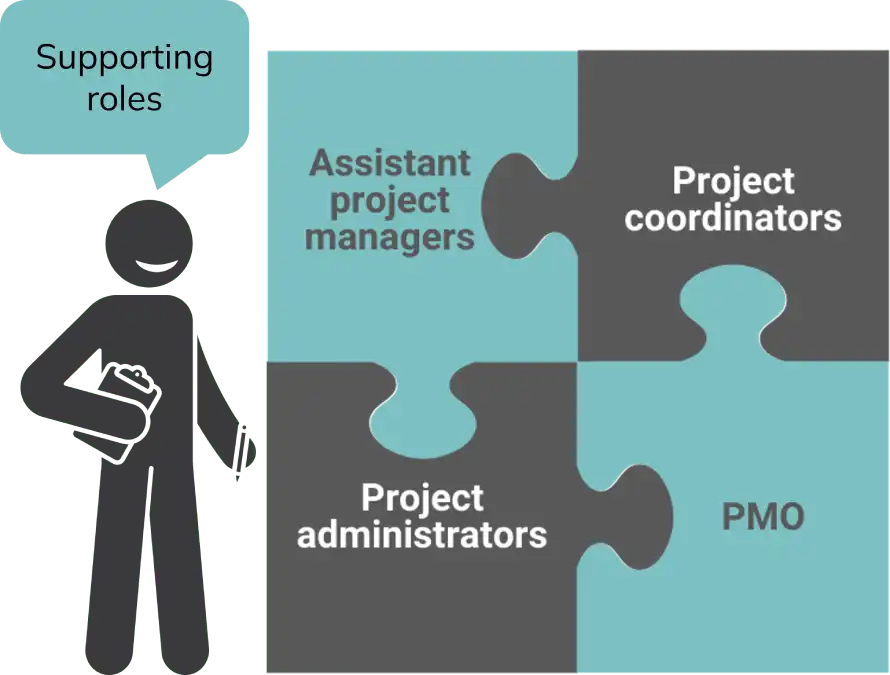
Assistant PM
An Assistant PM is a second manager or someone who is directly underneath the main PM and they help them out; they do the same job as a regular PM but on smaller or less important projects.
For example, if you are working on a huge project and it’s starting to get a lot of tasks, you may ask an Assistant PM to take over and get it done and they will, if it’s small enough! In summary, the assistant is a great help and acts as a mini PM. The responsibilities of an assistant include:
- Planning the project
- Monitoring the project and its work
- Overseeing the allocated budget
- Communicating with the stakeholders
- Assisting the PM.
Working under the PM, the assistant:
- Learns high-level project management skills
- Gets first-hand experience of making top-level decisions
- Builds leadership experience for his/her own future career development.
This relationship enables effective delegation of tasks as well as broader project supervision. The role of Assistant PM is particularly important for big or complex projects, offering extra management resources and helping to ensure that no detail is missed.
Project coordinator
A project coordinator , or as we will be using to describe it, a coordinator. They work on the team as a supporting role. Some of the responsibilities of a coordinator include:
- Meeting and calendar management
- Project record keeping
- Project logistics
- Project tracking and reporting.
Project coordinators, supporting the PM and team, may:
- Serve as a central point of communication
- Support resource allocation and management
- Monitor and control project budgets and expenses
- Support risk identification and mitigation.
Project coordinators help with administrative support, allowing the PM to focus on decision-making and leading the project. Their organisational skills and eye for detail allows for a smoother and more effective project workflow.
Project administrator
The project administrator plays another important support role, providing administrative support. The project administrator’s key tasks include:
- Managing paperwork and digital files related to the project
- Updating and maintaining project management software
- Supporting financial tracking and budget reports
- Helping to coordinate team schedules and resource allocation.
Documentation is the heart of a project administrator’s job. This includes:
- Developing and organising project plans
- Compiling progress reports and status updates
- Archiving important communications and decisions
- Ensuring compliance with organisational policies.
Administrators leave a paper trail and detailed record of project actions and decisions. This documentation is a valuable tool for decision-making, performance reviews, and sharing knowledge for future projects . It also contributes to the organisation’s long-term success and efficiency.
Senior project management roles
Senior PM
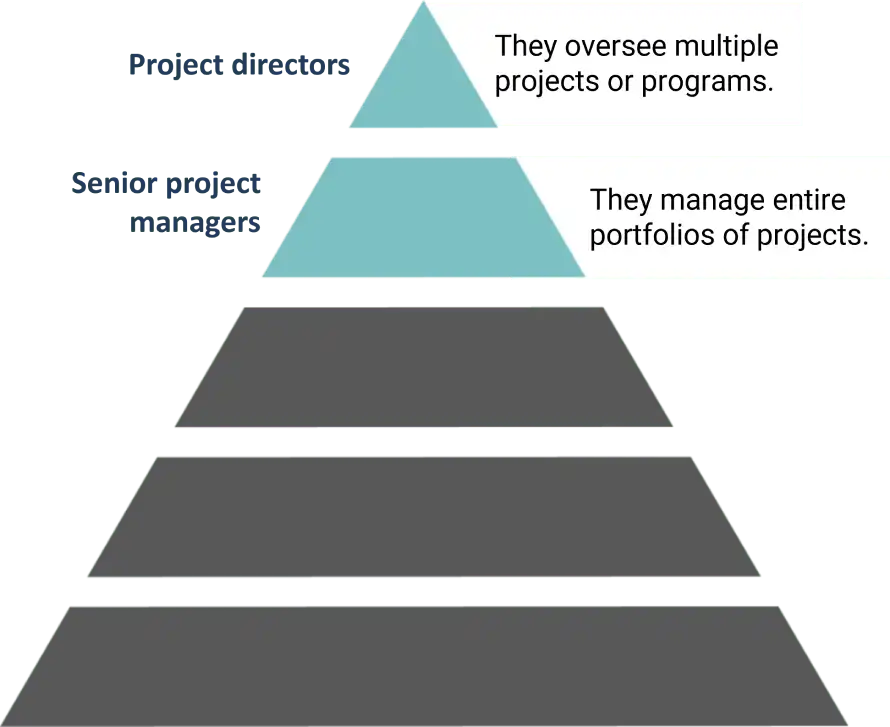
A Senior PM takes on more senior and advanced project management responsibilities, often based on extensive experience and a proven track record in handling complex initiatives. Their role may include:
- Managing multiple interconnected projects or programmes
- Designing and implementing strategic project management methodologies
- Mentoring and developing junior PMs and team members
- Managing high-level stakeholder relationships.
Such professionals typically have:
- A history of successful project deliveries
- Advanced certifications (e.g. PMP, PRINCE2 Practitioner )
- Deep industry-specific knowledge.
In leading
- Oversee significant budgets and resources
- Address risks across diverse project domains
- Promote innovation and process improvements.
Their strategic vision and leadership enable them to navigate intricate project landscapes effectively. By prioritising tasks, balancing competing interests, and optimising resource allocation, Senior PMs significantly contribute to enhancing an organisation’s project management capabilities and overall performance.
Project director
Project directors hold senior leadership roles and are responsible for managing entire project portfolios within an organisation. Key responsibilities include:
- Aligning project portfolios with strategic business objectives
- Optimising resource allocation across multiple projects
- Establishing project management standards and methodologies
- Evaluating and reporting on overall portfolio performance.
Project directors play a critical role in managing resources and stakeholder relationships:
- Coordinating cross-functional teams and departments
- Negotiating with senior executives and external partners
- Balancing competing priorities and resource demands
- Identifying and mitigating portfolio-wide risks.
Project directors contribute to:
- Maximising return on investment for project initiatives
- Fostering a culture of continuous improvement
- Mentoring and developing project management talent.
Their strategic vision and leadership skills are essential for driving organisational success through effective project portfolio management. By optimising resource utilisation and stakeholder engagement, project directors significantly enhance an organisation’s project delivery capabilities.
Specialised project management roles
Creative PM
Creative PMs are responsible for leading projects that have a creative or design component. Special considerations for this type of PM include:
- Managing brainstorming and idea generation
- Handling creative workflows and approvals
- Maintaining brand consistency
- Negotiating between client expectations and creative vision.
Skills and qualities important for managing creative projects include:
- Strong visual and design sensibilities
- Excellent communication skills
- Flexibility and adaptability
- Ability to translate client needs into a creative brief.
Balancing creativity and project constraints can be achieved by:
- Setting realistic deadlines that allow for creativity
- Managing budgets without compromising quality
- Shielding the creative team from distractions
- Adapting project management methodologies to creative workflows.
Creative PMs play a crucial role in ensuring that the creative aspects of a project are effectively managed and executed within the project’s constraints, delivering innovative and impactful results.
Project management consultant
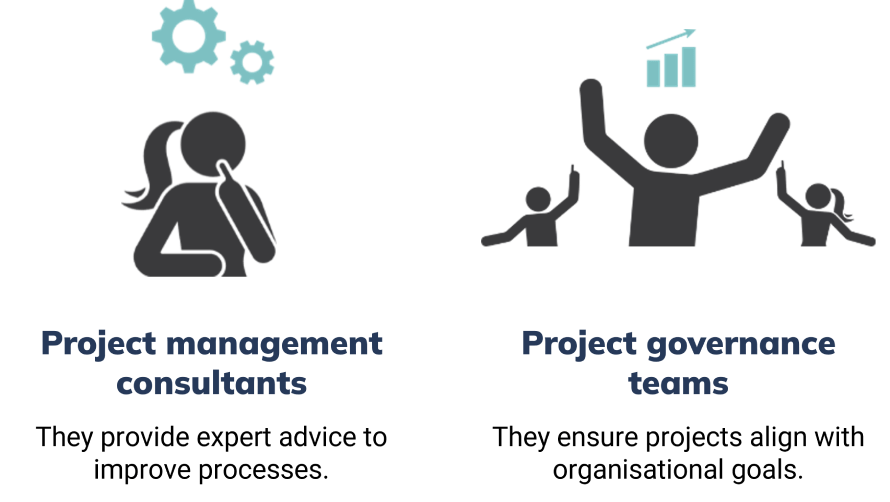
Project management consultants are specialised advisors who provide guidance and expertise to organisations in effectively managing their projects. They offer a fresh perspective and industry knowledge to help businesses optimise project planning, execution, and delivery. Project management consultants offer:
- In-depth analysis of current project management practices .
- Identification of areas for improvement and development of action plans
- Implementation of best practices and methodologies
- Capacity building through training and knowledge sharing.
Typical responsibilities include:
- Providing guidance and support in overcoming project challenges
- Training and coaching internal PMs and teams.
Advantages of hiring a project management consultant include:
- Gaining access to industry expertise and best practices.
- Improved project success rates and efficiency
- Enhanced risk management and mitigation strategies
- Faster adoption of effective project management techniques .
Project management consultants bring valuable experience from working with diverse organisations, helping companies refine their project management processes and achieve their objectives more effectively.
Project governance
Project governance refers to the framework and processes that ensure effective oversight and strategic alignment of projects within an organisation. Components include:
Steering committee : Request a quote
- High-level direction and decision-making
- Approving major project changes and resource allocation
- Ensuring projects align with organisational objectives.[email protected]
Project Management Office ( PMO +44 (0)207 148 5985)Courses:PROJECT MANAGEMENT
- Develops and maintains project management standards and practicesPRINCE2
- Provides support and guidance to project teams®
- Monitors project performance and portfolio health.Foundation
Key benefits of project governance include:Learn the fundamentals of the PRINCE2 method.
- Maintaining consistency across Practitioner projectsIncludes Foundation & Practitioner combined option.
- Facilitating informed decision-makingAssociation for Project Management (APM)
- Optimising resource utilisationProject Fundamentals Qualification (PFQ)
- Ensuring regulatory compliance.Start your APM project management career.
Effective project governance improves project success rates, enhances stakeholder satisfaction, and maximises the value delivered by project initiatives.Project Management Qualification (PMQ)
ConclusionAdvance your APM project management expertise.
Project management rolesProject Risk Single Certificate Level 1 vary and are essential to a successful project and organisational success. We’ve provided an overview of 25 key project management roles, each with distinct responsibilities and skills. We invite you to evaluate your own skills and interests to see where you might fit in this spectrum. Understanding these roles will help you contribute effectively and advance in the field of project management.Enhance your project risk management skills.
FAQsBetter Business Cases
What’s the difference between a project manager and coordinator?™
A PM is responsible for the overall planning, execution, and closure of a project. They make strategic decisions and manage the team. A project coordinator, on the other hand, primarily handles administrative tasks and supports the PM in their duties.Foundation
How does a project sponsor contribute to success?Learn the fundamentals of Better Business cases.
A project sponsor provides resources for the project, removes organisational obstacles, and ensures the project aligns with the company’s strategic goals. They also champion the project at executive levels, influencing its success.Practitioner
What skills are essential for becoming a successful project manager?Includes Foundation & Practitioner combined option.
Successful PMs typically possess leadership, communication, problem-solving, organisation, and adaptability skills. Technical knowledge relevant to the project’s field is also important.P3O
How can I start a career in project management?®
You can start with entry-level roles such as a project coordinator or assistant. Acquiring certifications like PRINCE2 or PMP can also be beneficial. Gain experience in project-based work and continue to develop both technical and soft skills.Foundation
InfographicLearn the fundamentals of the P3O project management office.