10 essential project management roles{"@context":"http://schema.org","@type":"BreadcrumbList","itemListElement":[{"@type":"ListItem","position":1,"name":"Home","item":"https://www.knowledgetrain.co.uk/"},{"@type":"ListItem","position":2,"name":"Business Analysis","item":"https://www.knowledgetrain.co.uk/business-analysis"},{"@type":"ListItem","position":3,"name":"Business analysis","item":"https://www.knowledgetrain.co.uk/business-analysis"}]}

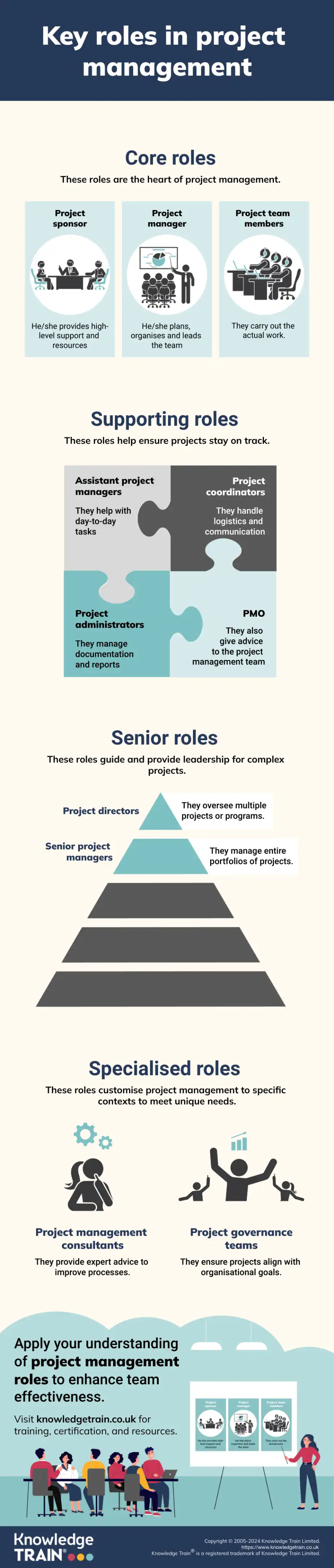
Core project management rolesFacilitating
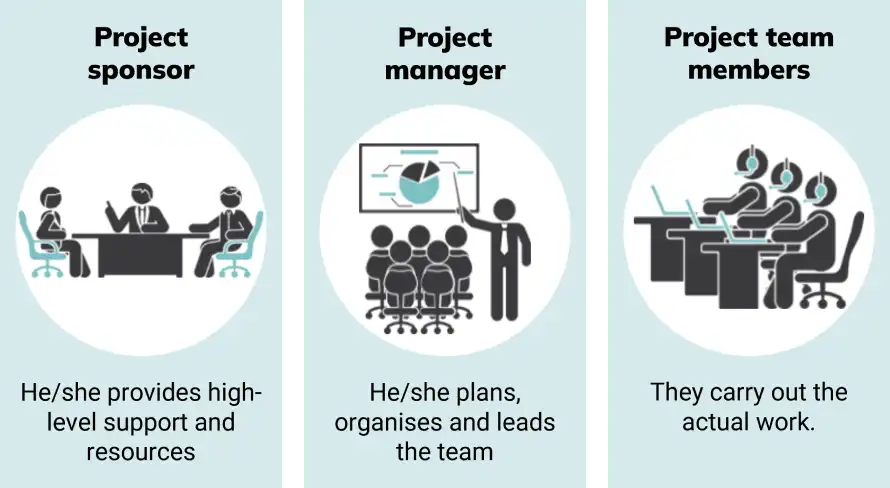
Project manager (PM)change management
This role serves as the central hub of any project, assuming responsibility for its successful execution. This pivotal role involves the coordination of resources, people, and tasks to ensure that the project stays on track and meets its predefined objectives. Some of the core responsibilities that fall under this role include: processes
- Planning and defining the project scopeReducing project risk through clear requirements and solution assessment
- Creating and managing budgetsEnsuring solutions are feasible, cost-effective, and aligned with business requirements
- Developing schedules and timelinesBusiness analysts enable informed decision-making, increase process efficiency, and help organisations remain competitive.
- Allocating resources efficientlyKey responsibilities of a business analyst
- Mitigating risks and resolving issuesThe
- Communicating with stakeholders.business analyst
Successful plays a critical role throughout project lifecycles and change initiatives. Their main responsibilities include:PMsRequirements elicitation: possess a unique set of technical and interpersonal skills: Facilitating workshops, interviews, and surveys to gather needs from stakeholders
- LeadershipRequirements documentation:: Inspiring and motivating team members to perform at their best Creating clear business and technical requirements using various formats (e.g.,
- Communicationuser stories: Clearly conveying ideas, expectations, and instructions to all parties involved, use cases)
- Problem-solvingGap analysis and feasibility studies:: Addressing and resolving challenges and obstacles efficiently Assessing current and desired future states to highlight improvements and evaluate solution viability
- AdaptabilityStakeholder engagement:: Adjusting strategies and plans as necessary to meet changing circumstances Communicating with diverse stakeholders to ensure requirements are validated and aligned
- OrganisationProcess mapping and : Managing multiple tasks and priorities simultaneously without losing focus.business process modelling
This role is crucial to the success of any project. It acts as the glue that holds the project together and maintain the entire process moving in the right direction. This role keeps the project aligned with organisational goals, ensure deadlines are met, and foster collaboration and communication among team members. By expertly balancing constraints such as time, budget, and scope, this role significantly increase the chances of achieving the desired project outcomes and delivering value to all stakeholders.:
Project sponsor Visualising workflows for process improvement opportunities
The Solution assessment and validation:project sponsor Reviewing proposals to ensure solutions address documented plays an important part in starting and supporting requirementsprojects and deliver value from initiation through completion. This role, typically held by someone at an executive or senior management level, champions the project and ensures it is in alignment with organisational objectives. Some of the key responsibilities that fall under the project sponsor’s domain include:Change management
- Securing funding and resources for the project:
- Approving the project charter and project scope Supporting the transition of solutions into the business and managing effects on people and processes
- Making high-level decisions related to the projectMain business analysis processes
- Providing resolution to any escalated issues.Process
Project sponsors act as the connection between the project team and senior-level stakeholders. They are responsible for clearly communicating the value and progress of the project to these stakeholders. The project sponsor is also the final person with accountability for the project budget and results.Description
The relationship between the sponsor and the PM is vital to the success of the project. This role oversees the day-to-day operations of the project, while the sponsor provides strategic guidance and support by:Requirements elicitation
- Offers strategic directionGathering information from stakeholders using interviews, workshops, observation, and document analysis
- Provides political supportRequirements documentation
- Eliminates organisational barriers.Capturing business and technical requirements in written formats, such as
This strong partnership guarantees that the project is on track, has enough resources and is well aligned with business goals. By actively engaging with and supporting project sponsors, the PM increases the likelihood of project success and stakeholder satisfaction.user stories
Project team members, use cases, or requirement specifications
Project team members are a collection of skilled and experienced professionals who apply their specialised knowledge to help projects meet their goals. These team members can take on many different titles or roles, including:Requirements validation
- Developers and engineersEnsuring requirements are accurate, feasible, and aligned with business goals
- Designers and other creative specialistsStakeholder engagement
- Quality assurance (QA) testersBuilding relationships with all parties affected by the change to ensure their needs are met
- Business analystsProcess improvement
- Subject matter experts.Analysing existing workflows and recommending enhancements for efficiency
Project team members’ primary responsibilities include:Solution assessment
- Completing the tasks assigned to them within the specified timelinesEvaluating potential solutions against requirements
- Maintaining quality standards throughout the projectChange management
- Reporting progress and any challenges encountered to the PMSupporting successful adoption of new processes or systems
- Contributing ideas to problem-solving and innovative solutions.Common business analysis techniques
CollaborationSWOT analysis plays a significant role in the success of any project. Team members are expected to::
- Communicate effectively and consistently with all stakeholders and team members Identifying strengths, weaknesses, opportunities, and threats related to a business area or solution
- Share knowledge and resourcesGap analysis:
- Help their colleagues succeed Comparing current and target states to identify improvement areas
- Be adaptable to the changing project requirements.Use case modelling:
By promoting open communication, trust, and respect, project team members can overcome project challenges more effectively. This kind of collaboration boosts productivity, creativity, and ultimately, the success of the project, thereby contributing to the achievement of the organisation’s strategic goals. Mapping user interactions with systems to define requirements
Supporting project management rolesMethodologies
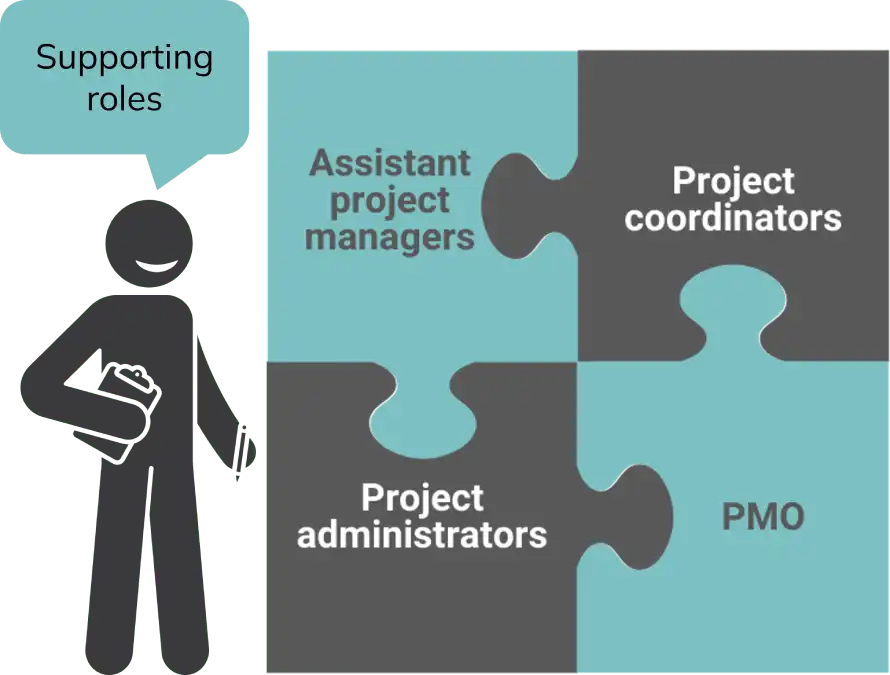
Assistant PMBABOK (Business Analysis Body of Knowledge):
An The leading global standard published by Assistant PMIIBA is a second manager or someone who is directly underneath the main PM and they help them out; they do the same job as a regular PM but on smaller or less important projects., outlining best practices and techniques for business analysis
For example, if you are working on a huge project and it’s starting to get a lot of tasks, you may ask an Assistant PM to take over and get it done and they will, if it’s small enough! In summary, the assistant is a great help and acts as a mini PM. The responsibilities of an assistant include:Agile
- Planning the project:
- Monitoring the project and its work An iterative methodology focusing on flexibility, frequent delivery, and collaboration (often using user stories)
- Overseeing the allocated budgetWaterfall methodology
- Communicating with the stakeholders:
- Assisting the PM. A linear, phased project approach suitable for well-defined requirements
Working under the PM, the assistant:Choosing the right methodology depends on project size, risk, stakeholder needs, and desired adaptability.
- Learns high-level Essential skills and competencies for business analystsproject management skillsAnalytical and critical thinking
- Gets first-hand experience of making top-level decisionsEffective communication and stakeholder engagement
- Builds leadership experience for his/her own future career development.Attention to detail in requirements documentation
This relationship enables effective delegation of tasks as well as broader project supervision. The role of Assistant PM is particularly important for big or complex projects, offering extra management resources and helping to ensure that no detail is missed.Problem-solving and solution assessment
Project coordinatorKnowledge of business and technical requirements
A Proficiency in process improvement and data analysisproject coordinatorCertification and career progression, or as we will be using to describe it, a coordinator. They work on the team as a supporting role. Some of the responsibilities of a coordinator include:BCS
- Meeting and calendar management
- Project record keeping offers globally recognised certifications, such as
- Project logisticsBusiness Analysis Foundation
- Project tracking and reporting.,
Project coordinators, supporting the PM and team, may:International Diploma in Business Analysis
- Serve as a central point of communication, Practitioner certificates in
- Support resource allocation and managementRequirements Engineering
- Monitor and control project budgets and expenses,
- Support risk identification and mitigation.Modelling Business Processes
Project coordinators help with administrative support, allowing the PM to focus on decision-making and leading the project. Their organisational skills and eye for detail allows for a smoother and more effective project workflow., and
Project administratorBusiness Analysis Practices
The .project administratorThe plays another important support role, providing administrative support. The project administrator’s key tasks include:International Institute of Business Analysis (IIBA)
- Managing paperwork and digital files related to the project offers globally recognised certifications, such as ECBA, CCBA, and CBAP, based on the
- Updating and maintaining BABOK Guideproject management software.
- Supporting financial tracking and budget reportsCertifications
- Helping to coordinate team schedules and resource allocation. demonstrate expertise in requirements elicitation, stakeholder management, and business analysis best practices. Aspiring business analysts may also pursue
Documentationproject management is the heart of a project administrator’s job. This includes: or
- Developing and organising change management qualificationsproject plans to support broader career progression.
- Compiling progress reports and status updatesFAQs
- Archiving important communications and decisionsWhat is business analysis?
- Ensuring compliance with organisational policies.Business analysis is the systematic investigation and evaluation of business needs to recommend solutions that achieve organisational objectives. It includes requirements gathering, stakeholder engagement, and process optimisation.
Administrators leave a paper trail and detailed record of project actions and decisions. This documentation is a valuable tool for decision-making, performance reviews, and sharing knowledge for future What does a business analyst do?projectsA business analyst identifies business problems, elicits requirements, engages stakeholders, and ensures that proposed solutions align with business goals. They act as a bridge between business and IT functions.. It also contributes to the organisation’s long-term success and efficiency.What are the key techniques in business analysis?
Senior project management rolesCommon
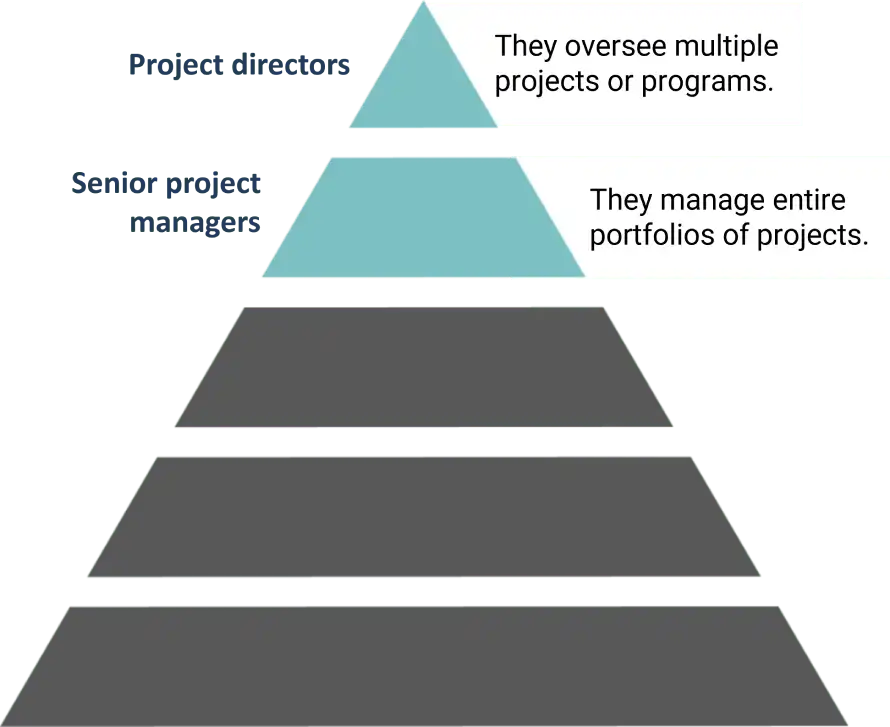
Senior PMbusiness analysis techniques
A include Senior PMSWOT analysis takes on more senior and advanced project management responsibilities, often based on extensive experience and a proven track record in handling complex initiatives. Their role may include:, gap analysis, requirements elicitation, process mapping, use case modelling, and stakeholder analysis.
- Managing multiple interconnected What are the main types of requirements in business analysis?projectsBusiness analysts work with or business requirementsprogrammes (organisational goals),
- Designing and implementing strategic stakeholder requirementsproject management methodologies, and
- Mentoring and developing junior PMs and team memberstechnical requirements
- Managing high-level stakeholder relationships. (system or IT needs).
Such professionals typically have:What is the BABOK?
- A history of successful project deliveriesBABOK refers to the Business Analysis Body of Knowledge, a globally-accepted standard containing best practices, techniques, and competencies for business analysis, maintained by IIBA.
- Advanced What qualifications or certification should a business analyst have?certificationsCommon (e.g. PMP, certificationsPRINCE2 Practitioner include BCS’s Business Analysis Foundation certificate, )International Diploma in Business Analysis
- Deep industry-specific knowledge., and Practitioner certificates in Business Analysis Practices, Requirements Engineering, and Modelling Business Processes.
In leading In addition, there are IIBA’s ECBA, CCBA, and CBAP, which validate knowledge of BABOK and proficiency in requirements elicitation, stakeholder engagement, and process improvement.complex initiativesHow does business analysis differ from project management?, Senior PMs:Business analysis focuses on defining requirements and recommending solutions, while
- Align projects with organisational goalsproject management
- Oversee significant budgets and resources is concerned with planning, executing, and
- Address risks across diverse project domainsdelivering projects
- Promote innovation and process improvements. within scope, time, and budget constraints.
Their strategic vision and leadership enable them to navigate intricate project landscapes effectively. By prioritising tasks, balancing competing interests, and optimising resource allocation, Senior PMs significantly contribute to enhancing an organisation’s project management capabilities and overall performance.Subscribe to our exclusive offers and promotions
Project director
Project directorsSubscribe now hold senior leadership roles and are responsible for managing entire project portfolios within an organisation. Key responsibilities include:
- Aligning project portfolios with strategic business objectives
- Optimising resource allocation across multiple projects{"@context":"http://schema.org","@type":"WebPage","headline":"What is Business Analysis? Key Techniques & Analyst Role","url":"https://www.knowledgetrain.co.uk/business-analysis","significantLink":"https://en.wikipedia.org/wiki/Business_analysis","about":[{"@type":"Thing","name":"business analysis","sameAs":["http://en.wikipedia.org/wiki/Business_analysis","https://www.google.com/search?&kgmid=/m/07764x","https://www.wikidata.org/wiki/Q1518232"]}],"mentions":[{"@type":"Thing","name":"Business analysis","sameAs":["https://en.wikipedia.org/wiki/Business_analysis","https://www.google.com/search?&kgmid=/m/07764x"]},{"@type":"Thing","name":"Use case","sameAs":["https://en.wikipedia.org/wiki/Use_case","https://www.google.com/search?&kgmid=/m/01rs9z"]},{"@type":"Thing","name":"Project management","sameAs":["https://en.wikipedia.org/wiki/Project_management","https://www.google.com/search?&kgmid=/m/05_p2"]},{"@type":"Thing","name":"Agile software development","sameAs":["https://en.wikipedia.org/wiki/Agile_software_development","https://www.google.com/search?&kgmid=/m/02zhbn"]},{"@type":"Thing","name":"Business process modeling","sameAs":["https://en.wikipedia.org/wiki/Business_process_modeling","https://www.google.com/search?&kgmid=/m/04bxyt"]},{"@type":"Thing","name":"British Computer Society","sameAs":["https://en.wikipedia.org/wiki/British_Computer_Society","https://www.google.com/search?&kgmid=/m/02p7dl"]},{"@type":"Thing","name":"Feasibility study","sameAs":["https://en.wikipedia.org/wiki/Feasibility_study","https://www.google.com/search?&kgmid=/m/05gcp6"]},{"@type":"Thing","name":"Business analyst","sameAs":["https://en.wikipedia.org/wiki/Business_analyst","https://www.google.com/search?&kgmid=/m/05czsl"]},{"@type":"Thing","name":"Critical thinking","sameAs":["https://en.wikipedia.org/wiki/Critical_thinking","https://www.google.com/search?&kgmid=/m/01pfjq"]},{"@type":"Thing","name":"SWOT analysis","sameAs":["https://en.wikipedia.org/wiki/SWOT_analysis","https://www.google.com/search?&kgmid=/m/01q_dt"]},{"@type":"Thing","name":"Problem solving","sameAs":["https://en.wikipedia.org/wiki/Problem_solving","https://www.google.com/search?&kgmid=/m/053w_z"]},{"@type":"Thing","name":"User story","sameAs":["https://en.wikipedia.org/wiki/User_story","https://www.google.com/search?&kgmid=/m/07vtf7"]},{"@type":"Thing","name":"Business process","sameAs":["https://en.wikipedia.org/wiki/Business_process","https://www.google.com/search?&kgmid=/m/01ybqv"]},{"@type":"Thing","name":"Waterfall model","sameAs":["https://en.wikipedia.org/wiki/Waterfall_model","https://www.google.com/search?&kgmid=/m/0867l"]},{"@type":"Thing","name":"Change management","sameAs":["https://en.wikipedia.org/wiki/Change_management","https://www.google.com/search?&kgmid=/m/05qb9n6"]},{"@type":"Thing","name":"Strategic management","sameAs":["https://en.wikipedia.org/wiki/Strategic_management","https://www.google.com/search?&kgmid=/m/01jqpl"]},{"@type":"Thing","name":"Professional certification","sameAs":["https://en.wikipedia.org/wiki/Professional_certification","https://www.google.com/search?&kgmid=/m/01vt2"]},{"@type":"Thing","name":"Management","sameAs":["https://en.wikipedia.org/wiki/Management","https://www.google.com/search?&kgmid=/m/04_tv"]},{"@type":"Thing","name":"Quality assurance","sameAs":["https://en.wikipedia.org/wiki/Quality_assurance","https://www.google.com/search?&kgmid=/m/01sf4b"]},{"@type":"Thing","name":"Goal","sameAs":["https://en.wikipedia.org/wiki/Goal","https://www.google.com/search?&kgmid=/m/03g_1kv"]},{"@type":"Thing","name":"Risk","sameAs":["https://en.wikipedia.org/wiki/Risk","https://www.google.com/search?&kgmid=/m/06d5f"]},{"@type":"Thing","name":"Collaboration","sameAs":["https://en.wikipedia.org/wiki/Collaboration","https://www.google.com/search?&kgmid=/m/01s560"]},{"@type":"Thing","name":"Communication","sameAs":["https://en.wikipedia.org/wiki/Communication","https://www.google.com/search?&kgmid=/m/01lhf"]},{"@type":"Thing","name":"Systems analysis","sameAs":["https://en.wikipedia.org/wiki/Systems_analysis","https://www.google.com/search?&kgmid=/m/0c7z0"]},{"@type":"Thing","name":"Strategic planning","sameAs":["https://en.wikipedia.org/wiki/Strategic_planning","https://www.google.com/search?&kgmid=/m/01h2x3"]},{"@type":"Thing","name":"Gap analysis","sameAs":["https://en.wikipedia.org/wiki/Gap_analysis","https://www.google.com/search?&kgmid=/m/085szz"]}]}
- Establishing project management standards and methodologies
- Evaluating and reporting on overall portfolio performance.{"@context":"https://schema.org","@type":"ImageObject","contentUrl":"https://www.knowledgetrain.co.uk/training-courses/business-analysis.webp","description":"What is business analysis?","license":"https://www.knowledgetrain.co.uk/license","acquireLicensePage":"https://www.knowledgetrain.co.uk/license","creditText":"Knowledge Train","uploadDate":"2025-09-02T03:48:32.000Z","copyrightNotice":"© 2025 Knowledge Train Limited. All rights reserved.","creator":{"@type":"Organization","name":"Knowledge Train","url":"https://www.knowledgetrain.co.uk"}}
Project directors play a critical role in managing resources and stakeholder relationships:
- Coordinating cross-functional teams and departmentsRelated articles
- Managing brainstorming and idea generation
- Handling creative workflows and approvals
- Maintaining brand consistency
- Negotiating between client expectations and creative vision.
Skills and qualities important for managing creative projects include:
- Strong visual and design sensibilities
- Excellent communication skills
- Flexibility and adaptabilityUnlock your creative and organisational potential with mind maps
- Ability to translate client needs into a creative brief.
Balancing creativity and project constraints can be achieved by:Simon Buehring
- Setting realistic deadlines that allow for creativity19 Feb 2026
- Managing budgets without compromising quality
- Shielding the creative team from distractionsExplore the potential of mind maps to enhance your creativity and organisational skills. Scroll down to learn practical tips and techniques that you can start using today.
- Adapting project management methodologies to creative workflows.
Creative PMs play a crucial role in ensuring that the creative aspects of a project are effectively managed and executed within the project’s constraints, delivering innovative and impactful results.
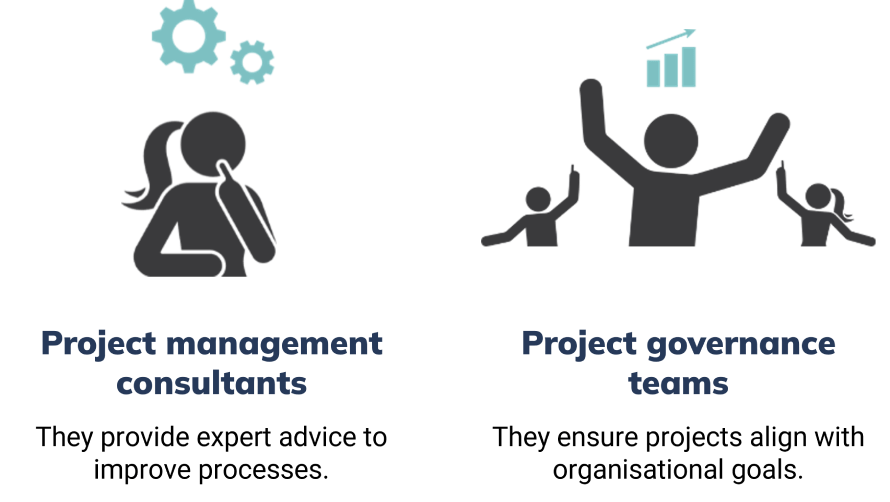
Project management consultant
Project management consultants are specialised advisors who provide guidance and expertise to organisations in effectively managing their projects. They offer a fresh perspective and industry knowledge to help businesses optimise project planning, execution, and delivery. Project management consultants offer:
- In-depth analysis of current What is a business analyst?project management practices .Simon Buehring
- Identification of areas for improvement and development of action plans19 Feb 2026
- Implementation of best practices and methodologies
- Capacity building through training and knowledge sharing.Discover what a business analyst does and how they are pivotal in achieving company goals. Learn more about the role's importance here.
Typical responsibilities include:
- Conducting project audits and health checks
- Developing customised project management frameworks
- Guiding organisations through complex project challenges
- Mentoring internal PMs.
Common tasks for a project management consultant involve:Business analyst certification: What it is and how to get certified
- Assessing project plans and deliverables
- Developing customised Simon Buehringproject management frameworks30 Apr 2026 and methodologies
- Providing guidance and support in overcoming project challengesDiscover the essentials of business analyst certification, from leading qualification types to preparation, costs, and career benefits. Start your path to professional recognition and new business analysis opportunities.
- Training and coaching internal PMs and teams.
Advantages of hiring a project management consultant
A project sponsor provides resources for the project, removes organisational obstacles, and ensures the project aligns with the company’s strategic goals. They also champion the project at executive levels, influencing its success.Discover CATWOE and transform your approach to problem-solving
What skills are essential for becoming a successful project manager?
Successful PMs typically possess leadership, communication, problem-solving, organisation, and adaptability skills. Technical knowledge relevant to the project’s field is also important.Simon Buehring
How can I start a career in project management?19 Feb 2026
You can start with entry-level roles such as a project coordinator or assistant. Acquiring certifications like PRINCE2 or PMP can also be beneficial. Gain experience in project-based work and continue to develop both technical and soft skills.
InfographicDiscover how CATWOE can transform your problem-solving approach. Learn its components and see real-world applications. Scroll down to enhance your decision-making skills.