10 essential project management rolesAdvance your APM project management expertise.

Key takeawaysIncludes Foundation & Practitioner combined option.
Clear role boundaries and strong collaboration improve delivery, governance, and outcomes.P3O
- The project manager integrates scope, budget, schedule, risks, and communication to keep delivery on track.®
- The project sponsor secures funding, removes obstacles, and owns accountability for business value.Foundation
- Team members deliver quality work and share progress early to prevent issues compounding.Learn the fundamentals of the P3O project management office.
- Assistant PMs, coordinators, and administrators reduce operational load through delegation, tracking, and documentation.Practitioner
- Senior PMs and project directors align initiatives to strategy, optimise resources, and manage cross-project risk.Includes Foundation & Practitioner combined option.
- Consultants and governance frameworks strengthen standards, oversight, and continuous improvement.Workshops
Introduction – Agile Project Management
Project managementFoundation plays a crucial role in the success of organisational initiatives. It involves the efficient coordination of resources, tasks, and people to achieve specific goals within defined constraints.Learn the key principles of Agile Project Management.
Central to effective project management is the understanding of the diverse roles that contribute to the project’s success. From Practitioner project managersIncludes Foundation & Practitioner combined option. and team members to stakeholders and sponsors, each position holds unique responsibilities and expectations.PRINCE2
This article delves into ten essential ®project management roles Agile, their key responsibilities, and their impact on project outcomes. Gaining a clear grasp of these roles will empower professionals to:Foundation
Core project management rolesScrum Product Owner
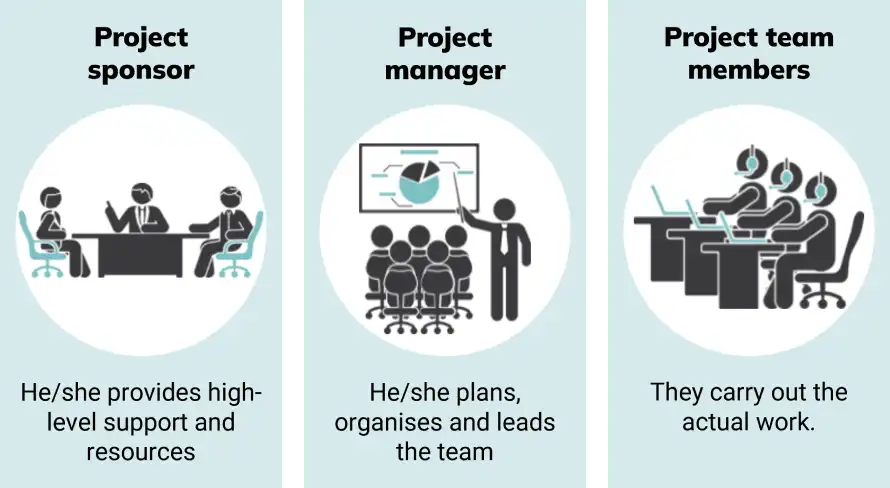
Project manager (PM)Choose Scrum Alliance or Scrum.org Product Owner training courses.
This role serves as the central hub of any project, assuming responsibility for its successful execution. This pivotal role involves the coordination of resources, people, and tasks to ensure that the project stays on track and meets its predefined objectives. Some of the core responsibilities that fall under this role include:AgileBA
- Planning and defining the project scope®
- Creating and managing budgets – Agile Business Analysis
- Developing schedules and timelinesFoundation
- Allocating resources efficientlyLearn the fundamentals of Agile Business Analysis.
- Mitigating risks and resolving issuesPractitioner
- Communicating with stakeholders.4-day course including Foundation.
Successful Lean Six SigmaPMsYellow Belt possess a unique set of technical and interpersonal skills:Self-paced training course to gain LSS Yellow Belt.
- LeadershipPMI: Inspiring and motivating team members to perform at their best
- Communication: Clearly conveying ideas, expectations, and instructions to all parties involved
- Requirements Engineering Approving the project charter and project scope
- Making high-level decisions related to the projectGain practitioner certificate in requirements engineering.
- Providing resolution to any escalated issues.Business Analysis International Diploma
®
The relationship between the sponsor and the PM is vital to the success of the project. This role oversees the day-to-day operations of the project, while the sponsor provides strategic guidance and support by: – Agile Business Analysis
- Offers strategic directionFoundation training
- Provides political supportLearn the fundamentals of Agile Business Analysis.
- Eliminates organisational barriers.Practitioner
This strong partnership guarantees that the project is on track, has enough resources and is well aligned with business goals. By actively engaging with and supporting project sponsors, the PM increases the likelihood of project success and stakeholder satisfaction.4-day course including Foundation.
Project team membersPMI
Project team members are a collection of skilled and experienced professionals who apply their specialised knowledge to help projects meet their goals. These team members can take on many different titles or roles, including:®
- Developers and engineersPMI-PBA
- Designers and other creative specialistsSelf-paced course to prepare you for the exam (exam not included).
- Quality assurance (QA) testersBusiness Analysis Learning Library (BALL)™
- Business analystsCHANGE MANAGEMENT
- Subject matter experts.APMG Change Management
Project team members’ primary responsibilities include:Foundation
- Completing the tasks assigned to them within the specified timelinesLearn the fundamentals of enterprise change management.
- Maintaining quality standards throughout the projectPractitioner
- Reporting progress and any challenges encountered to the PMIncludes Foundation & Practitioner combined option.
- Contributing ideas to problem-solving and innovative solutions.PROGRAMME MANAGEMENT
CollaborationMSP plays a significant role in the success of any project. Team members are expected to:®
- Communicate effectively and consistently with all stakeholders and team membersFoundation
- Includes Foundation & Practitioner combined option.
- Help their colleagues succeedINFORMATION TECHNOLOGY (IT)
- Be adaptable to the changing project requirements.ITIL
By promoting open communication, trust, and respect, project team members can overcome project challenges more effectively. This kind of collaboration boosts productivity, creativity, and ultimately, the success of the project, thereby contributing to the achievement of the organisation’s strategic goals.®
Supporting project management rolesBlog
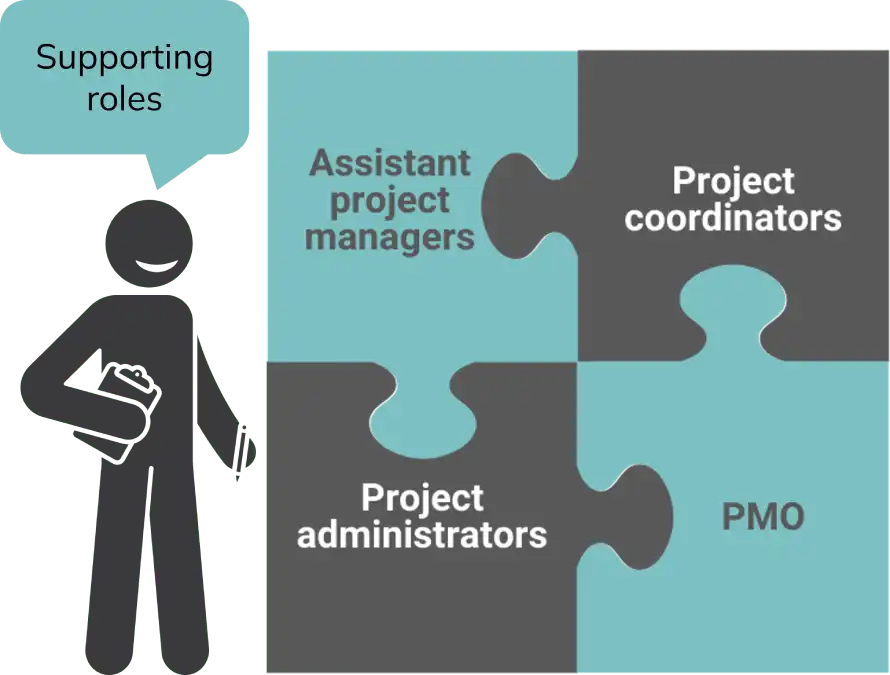
Assistant PM
An EXPLORE SUBJECTSAssistant PMSelect your preferred subject. is a second manager or someone who is directly underneath the main PM and they help them out; they do the same job as a regular PM but on smaller or less important projects.
For example, if you are working on a huge project and it’s starting to get a lot of tasks, you may ask an Assistant PM to take over and get it done and they will, if it’s small enough! In summary, the assistant is a great help and acts as a mini PM. The responsibilities of an assistant include:PROJECT MANAGEMENT QUALIFICATIONS & WORKSHOPS
- Planning the projectSelect your preferred qualification or workshop.
- Monitoring the project and its work
- Overseeing the allocated budgetPRINCE2 COURSES
- Communicating with the stakeholdersSelect your preferred training course below:
- Assisting the PM.
Working under the PM, the assistant:APM COURSES
- Learns high-level Select your preferred training course below:project management skills
- Gets first-hand experience of making top-level decisionsAGILE PROJECT MANAGEMENT COURSES
- Builds leadership experience for his/her own future career development.Select your preferred training course below:
This relationship enables effective delegation of tasks as well as broader project supervision. The role of Assistant PM is particularly important for big or complex projects, offering extra management resources and helping to ensure that no detail is missed.
Project coordinatorPRINCE2 AGILE COURSES
A Select your preferred training course below:project coordinator , or as we will be using to describe it, a coordinator. They work on the team as a supporting role. Some of the responsibilities of a coordinator include:BETTER BUSINESS CASES COURSES
- Meeting and calendar managementSelect your preferred training course below:
- Project record keeping
- Project logisticsP3O COURSES
- Project tracking and reporting.Select your preferred training course below:
Project coordinators, supporting the PM and team, may:
- Serve as a central point of communicationWORKSHOPS
- Support resource allocation and managementSelect your preferred workshop below:
- Monitor and control project budgets and expenses
- Support risk identification and mitigation.AGILE QUALIFICATIONS
Project coordinators help with administrative support, allowing the PM to focus on decision-making and leading the project. Their organisational skills and eye for detail allows for a smoother and more effective project workflow.Select your preferred qualification.
Project administrator
The AGILE PROJECT MANAGEMENT COURSESproject administratorSelect your preferred training course below: plays another important support role, providing administrative support. The project administrator’s key tasks include:
- Managing paperwork and digital files related to the projectPRINCE2 AGILE COURSES
- Updating and maintaining Select your preferred training course below:project management software
- Supporting financial tracking and budget reportsSCRUM COURSES
- Helping to coordinate team schedules and resource allocation.Select your preferred training course below:
Documentation is the heart of a project administrator’s job. This includes:AGILE BUSINESS ANALYSIS COURSES
- Developing and organising Select your preferred training course below:project plans
- Compiling progress reports and status updatesBUSINESS ANALYSIS QUALIFICATIONS
- Archiving important communications and decisionsSelect your preferred qualification.
- Ensuring compliance with organisational policies.
Administrators leave a paper trail and detailed record of project actions and decisions. This documentation is a valuable tool for decision-making, performance reviews, and sharing knowledge for future BCS BUSINESS ANALYSIS COURSESprojectsSelect your preferred training course below:. It also contributes to the organisation’s long-term success and efficiency.
Senior project management rolesAGILE BUSINESS ANALYSIS COURSES
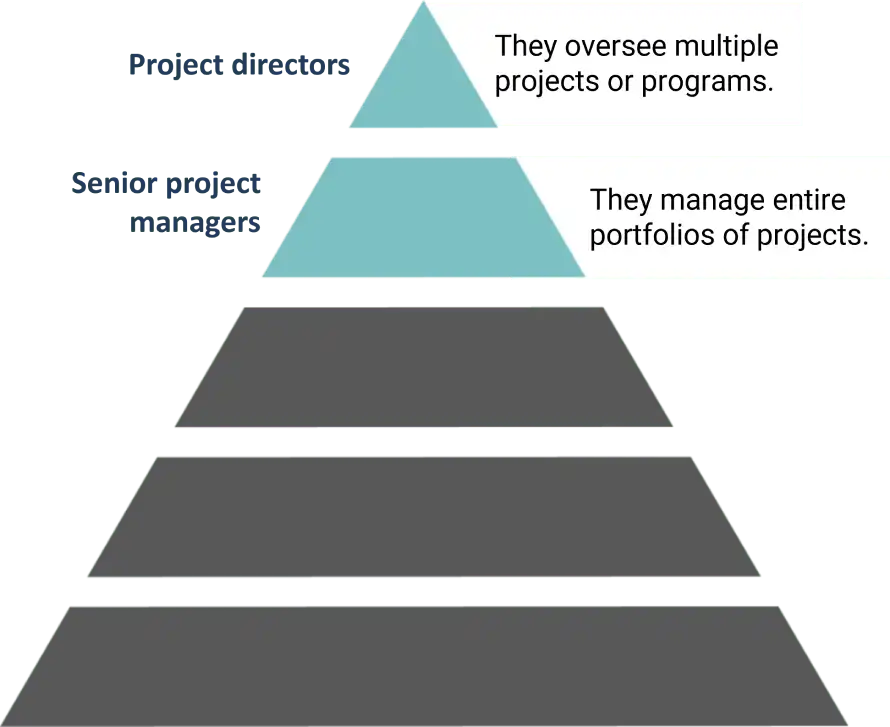
Senior PMSelect your preferred training course below:
A Senior PMCHANGE MANAGEMENT QUALIFICATIONS takes on more senior and advanced project management responsibilities, often based on extensive experience and a proven track record in handling complex initiatives. Their role may include:Select your preferred qualification.
- Managing multiple interconnected projectsAPMG CHANGE MANAGEMENT COURSES or Select your preferred training course below:programmes
- Designing and implementing strategic PROGRAMME MANAGEMENT QUALIFICATIONSproject management methodologiesSelect your preferred qualification.
- Mentoring and developing junior PMs and team members
- Managing high-level stakeholder relationships.MSP COURSES
Such professionals typically have:Select your preferred training course below:
- A history of successful project deliveries
- Advanced PMI COURSEScertificationsSelect your preferred training course below: (e.g. PMP, PRINCE2 PractitionerPMI COURSES)Select your preferred training course below:
- Deep industry-specific knowledge.
In leading PRINCE2 COURSEScomplex initiativesSelect your preferred training course below:, Senior PMs:
- Align projects with organisational goalsAPM COURSES
- Oversee significant budgets and resourcesSelect your preferred training course below:
- Address risks across diverse project domains
- Promote innovation and process improvements.AGILE PROJECT MANAGEMENT COURSES
Their strategic vision and leadership enable them to navigate intricate project landscapes effectively. By prioritising tasks, balancing competing interests, and optimising resource allocation, Senior PMs significantly contribute to enhancing an organisation’s project management capabilities and overall performance.Select your preferred training course below:
Project director
Project directorsPRINCE2 AGILE COURSES hold senior leadership roles and are responsible for managing entire project portfolios within an organisation. Key responsibilities include:Select your preferred training course below:
Specialised project management rolesMSP COURSES
Creative PMSelect your preferred training course below:
Creative PMs are responsible for leading IT QUALIFICATIONSprojectsSelect your preferred qualification. that have a creative or design component. Special considerations for this type of PM include:
- Managing brainstorming and idea generationITIL COURSES
- Handling creative workflows and approvalsSelect your preferred training course below:
- Maintaining brand consistency
- Negotiating between client expectations and creative vision.IT QUALIFICATIONS
Skills and qualities important for managing creative projects include:Select your preferred qualification.
- Strong visual and design sensibilities
- Excellent communication skillsITIL COURSES
- Flexibility and adaptabilitySelect your preferred training course below:
- Ability to translate client needs into a creative brief.
Balancing creativity and project constraints can be achieved by:LEARNING LIBRARIES
- Setting realistic deadlines that allow for creativitySelect your preferred training course topic.
- Managing budgets without compromising quality
- Shielding the creative team from distractionsAI QUALIFICATIONS & WORKSHOPS
- Adapting project management methodologies to creative workflows.Select your preferred qualification or workshop.
Creative PMs play a crucial role in ensuring that the creative aspects of a project are effectively managed and executed within the project’s constraints, delivering innovative and impactful results.
Project management consultantAIPGF COURSES
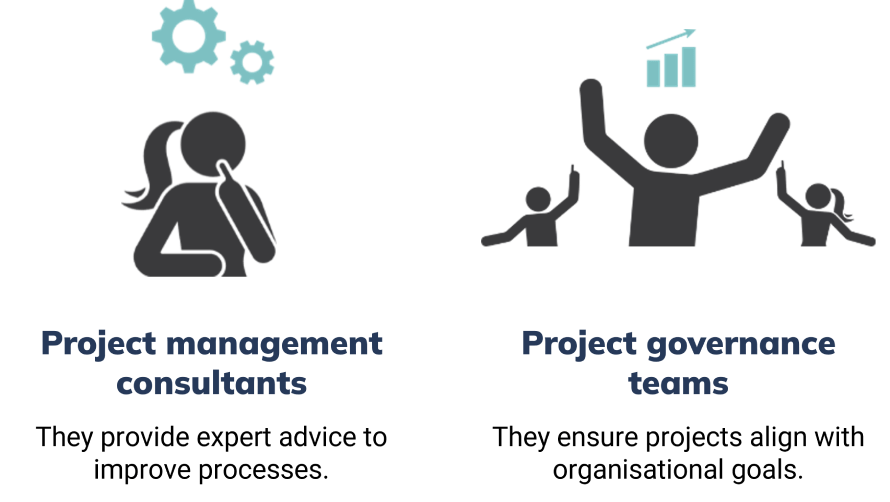
Project management consultantsSelect your preferred training course below: are specialised advisors who provide guidance and expertise to organisations in effectively managing their projects. They offer a fresh perspective and industry knowledge to help businesses optimise project planning, execution, and delivery. Project managementBCS AI COURSES consultants offer:Select your preferred training course below:
- In-depth analysis of current project management practicesAIPGF COURSES.Select your preferred training course below:
- Identification of areas for improvement and development of action plans
- Implementation of best practices and methodologiesAI WORKSHOPS
- Capacity building through training and knowledge sharing.Select your preferred workshop below:
Typical responsibilities include:
- Conducting project audits and health checksKnowledge Train is a PRINCE2 Accredited Training Organization.
- Developing customised project management frameworksKnowledge Train is an AgilePM Accredited Training Organization.
- Guiding organisations through complex project challenges
- Mentoring internal PMs.Knowledge Train is a PRINCE2 Agile Accredited Training Organization.
Common tasks for a project management consultant involve:
- Assessing project plans and deliverablesKnowledge Train is a Better Business Cases Accredited Training Organization.
- Developing customised project management frameworksKnowledge Train is a P3O Accredited Training Organization. and methodologies
- Providing guidance and support in overcoming project challengesKnowledge Train is an AgilePM Accredited Training Organization.
- Training and coaching internal PMs and teams.
- Faster adoption of effective project management techniques.
Project management consultants bring valuable experience from working with diverse organisations, helping companies refine their project management processes and achieve their objectives more effectively.
Project governance
Project governance refers to the framework and processes that ensure effective oversight and strategic alignment of projects within an organisation. Components include:
Steering committeeKnowledge Train is an Agile BA Accredited Training Organization.:
- High-level direction and decision-makingKnowledge Train is a Change Management Accredited Training Organization.
- Approving major project changes and resource allocation
- Ensuring projects align with organisational objectives.Knowledge Train is an MSP Accredited Training Organization.
Project Management Office ( PMOKnowledge Train is a PRINCE2 Accredited Training Organization.) :Knowledge Train is an AgilePM Accredited Training Organization.
- Develops and maintains project management standards and practices
- Provides support and guidance to project teamsKnowledge Train is a PRINCE2 Agile Accredited Training Organization.
- Monitors project performance and portfolio health.
Key benefits of project governance include:Knowledge Train is a Better Business Cases Accredited Training Organization.
- Maintaining consistency across projectsKnowledge Train is an AgilePM Accredited Training Organization.
- Facilitating informed decision-making
- Optimising resource utilisationKnowledge Train is a PRINCE2 Agile Accredited Training Organization.
- Ensuring regulatory compliance.
Effective project governance improves project success rates, enhances stakeholder satisfaction, and maximises the value delivered by project initiatives.Knowledge Train is a Lean Six Sigma Accredited Training Organization.
Conclusion
Project management rolesBCS accredited training partner for Business Analysis. vary and are essential to a successful project and organisational success. We’ve provided an overview of 25 key project management roles, each with distinct responsibilities and skills. We invite you to evaluate your own skills and interests to see where you might fit in this spectrum. Understanding these roles will help you contribute effectively and advance in the field of project management.
FAQsCourse manual where applicable.
What’s the difference between a project manager and coordinator?
A PM is responsible for the overall planning, execution, and closure of a project. They make strategic decisions and manage the team. A project coordinator, on the other hand, primarily handles administrative tasks and supports the PM in their duties.SELF-PACED ONLINE TRAINING COURSES
How does a project sponsor contribute to success?Self-paced online training courses (e-learning) include:
A project sponsor provides resources for the project, removes organisational obstacles, and ensures the project aligns with the company’s strategic goals. They also champion the project at executive levels, influencing its success.Certification exam(s) where applicable
What skills are essential for becoming a successful project manager?Accredited training course materials
Successful PMs typically possess leadership, communication, problem-solving, organisation, and adaptability skills. Technical knowledge relevant to the project’s field is also important.Support from expert, experienced trainers
How can I start a career in project management?Latest educational technology.
You can start with entry-level roles such as a project coordinator or assistant. Acquiring certifications like PRINCE2 or PMP can also be beneficial. Gain experience in project-based work and continue to develop both technical and soft skills.
InfographicBUSINESS SOLUTIONS