How they work together
Measuring success
Introduction
Project management and product management
- are two essential aspects of any business that are often used interchangeably, even though they are distinct from each other. Both play a critical role in the success of any organisation, but they have different functions and responsibilities.Project managers are typically responsible for the successful delivery of specific projects within a defined timeframe. Product managers, on the other hand, oversee the entire lifecycle of a product, from inception to delivery, and are responsible for driving its success.
- It is important to understand the differences between the two to make informed decisions regarding resource allocation, optimise decision-making processes, and foster effective collaboration across teams.As
- project and product management become increasingly important in today’s business environment, it is critical to understand their respective roles and how they complement each other to tackle complex challenges effectively. This article will explore the key differences between the two, including specific responsibilities, skills and traits required, career paths, and other aspects.
| By understanding these distinctions, individuals and organisations can make informed decisions about how to best leverage both disciplines to achieve their objectives and drive success. | Defining project management and product management |
| What is project management? | Project management |
| is a discipline of planning, implementing, and controlling a project with specific goals and a timeline. | Project managers |
| oversee various tasks, including planning and scheduling the project tasks, allocating resources, | risk |
and issue management
, and ensuring the project is delivered on time and within budget. The key objectives of project management are to meet the project’s deadlines and milestones, ensure quality control, promote team collaboration, and report on the progress to stakeholders.
- What is product management?Product management, on the other hand, is responsible for the entire lifecycle of a product, from its initial concept to its retirement. The role of a
- product manager includes defining the product’s vision and strategy, conducting market research and analysis, prioritising product features and improvements, and working with cross-functional teams to ensure the successful delivery of the product. Product management’s main objectives are to understand customer needs and pain points, align product development with business objectives, optimise product value and market fit, and drive product adoption and revenue growth.
- Common misconceptions and overlapsWhile project and product management serve different functions, there are overlaps that can lead to misunderstandings. Some common misconceptions include believing that
project managers have authority over product decisions, expecting product managers to handle day-to-day project tasks, and assuming the roles are interchangeable.Both roles are distinct but complementary. Project managers are often focused on execution and delivery, while product managers provide strategic guidance and have a long-term vision for the product. The two roles need to work together in successful organisations to leverage their unique skill sets and achieve the best outcomes.
Enhance your skills with our expert-led courses
- when applicableAffinity diagrammingProduct management tools and frameworks
- Conduct regular project reviews: Group related lessons to identify common themes.Product managers
- Maintain open communication. utilise specialised tools to define and communicate product strategy effectively. Some tools and frameworks commonly used by product managers include:
Balancing change and stabilitySWOT analysis diagramProduct road mapping software
Finding a balance between adaptability and project stability is important.Identifying trends and patterns: Tools like ProductPlan or Aha! help create visual roadmaps that outline product vision, features, and timelines. These tools are used to align stakeholders and guide development efforts.
| AspectSearch for recurring themes across several projects or stages. This can include comparing lessons from similar project types, looking at lessons across different timeframes, or analysing lessons by project role or department.User story mapping and prioritisation | StrategyConsider using data visualisation tools like charts or heat maps to make these patterns more visible.: Techniques such as the |
| ScopeGenerating actionable insightsMoSCoW | Prioritise changes based on value and impactOnce you’ve done the analysis, turn those insights into actionable recommendations: method or story mapping workshops can assist product managers in organising and prioritising features based on user needs and business value. These approaches ensure that product development focuses on delivering maximum value to customers. |
| SchedulePrioritise insights based on potential impact and ease of implementation.Shared tools and methodologies | Build buffer time into project timelinesCreate specific, measurable actions to address issues or replicate successes.Project managers and product managers both rely on collaboration and communication platforms such as Slack, Microsoft Teams, or Zoom to facilitate real-time communication and information sharing among team members and stakeholders. These tools allow both types of managers to keep everyone aligned and informed, and to quickly address any issues that may arise. |
| ResourcesMap the insights to existing processes or methodologies in your organisation.Data analysis and reporting tools such as Tableau or Power BI are also valuable for both project managers and product managers. These tools allow managers to analyse performance metrics, create visualisations, and generate reports for stakeholders. They help both types of managers to make data-driven decisions and to demonstrate the impact of their work. | Cross-train team members for versatilitySet up a feedback loop to monitor how effective the implemented recommendations are.By leveraging the appropriate tools and methodologies, both project and product managers can enhance their effectiveness, improve team collaboration, and drive successful outcomes in their respective domains. |
| BudgetRemember that the point of the analysis is not just to understand what happened, but to shape future decisions. By using these techniques, you can take lessons learned from past projects and turn them into tools for improvement. This level of analysis and critical thinking will allow your organisation to continually adapt its Enhance your skills with our expert-led courses | Allocate contingency funds for unforeseen changesproject management approach |
By carefully controlling scope and changes, project managers can keep based on real-life experiences. projectsStoring and retrieving lessons learned on track while allowing for necessary adjustments. This balance is key to project success and stakeholder satisfaction.To effectively use lessons learned, you must have a system for storing and retrieving them. This section provides guidance on setting up an efficient process.Instructor-led
Risk management and mitigationCreating a centralised lessons learned repositoryIntroduction to Project Management course
Successful project management also relies heavily on A risk managementcentral repository£499 +vat and mitigation strategies. Let’s talk about how to recognise, assess, and reduce risks. should be the single source of truth for all lessons learned in your organisation. When building this repository, it’s important to choose a platform that works well with your existing
Identifying and assessing risksproject management toolsSee all dates
Risk categories. Use a consistent structure and categorisation system, so the lessons are well-organised. Plan for the repository to be scalable so you can add new projects and insights over time.
The following are some of the most common risk categories:Implementing effective search and retrieval systems
- Technical risksMake sure that lessons are easily discoverable. This can be done by implementing a good search function with filters based on project type, date, and category. Use a tagging system to identify key themes and topics, which will allow users to find relevant information quickly. You can also add an option for users to rate the usefulness of a lesson to help surface the most valuable insights. These features will help increase the accessibility and usefulness of the stored knowledge.
- Financial risksEnsuring accessibility and usability of stored lessonsInstructor-led
- Operational risksEncourage everyone to use the lessons learned repository by making it accessible and easy to use. This includes creating user-friendly interfaces on both desktop and mobile platforms. Role-based access control can help protect sensitive information while still providing appropriate access. Regularly curate the content to keep it up-to-date and valuable. Conduct training sessions on how to use the repository so that everyone can get the most out of this resource.Project Management Essentials
- External risks (market, regulatory, etc.).Creating a well-organised, easily searchable, and accessible repository will ensure your organisation can effectively leverage past experiences. This will turn lessons learned from being static records into resources that actively improve decision-making and project outcomes across your organisation.
Risk assessment techniquesLeveraging lessons learned for future projects£999 +vat
Use these techniques to identify and evaluate risks:The real power of lessons learned lies in how they are applied to future projects. In this part, we’ll explore strategies and techniques for leveraging lessons learned effectively to improve project outcomes and drive organisational success.
- Risk probabilityIncorporating lessons learned into project planningSee all dates Incorporating lessons learned into your Career paths and progressionand impact matrixproject planningProject management career trajectory
- SWOT analysis process is a crucial step in ensuring that past experiences inform future work. To do this, review relevant lessons learned when starting a new project. Make a Project management (Strengths, Weaknesses, Opportunities, Threats)lessons learned review careers
- Delphi technique (expert consensus)a standard part of project kick-off meetings and assign team members to research and present applicable lessons to the group. This practice ensures that lessons learned are not just documented but actively inform your project strategies. often start with entry-level positions like project coordinator or project assistant. In these roles, individuals could learn the basics of project execution and team coordination. As they gain experience, project managers can progress to managing more complex and high-stakes projects.
- Fault tree analysis.Update project templates and checklists based on lessons learned to embed these insights into your standard operating procedures.Senior project managers are responsible for overseeing multiple projects or programs and may also take on mentoring roles for junior team members. Career advancement opportunities include roles such as portfolio manager or director of
Developing risk mitigation strategiesSharing lessons learned across the organisationproject management
Preventive measuresMaximising the value of lessons learned involves creating a culture that values . These positions involve more strategic planning and the allocation of organisational resources.
Take the following proactive actions to reduce the likelihood of risk occurrence:knowledge sharingProduct management career trajectory
- Regular risk reviews and continuous learning. Establish regular forums or platforms for teams to exchange and disseminate key lessons learned. Integrate lessons learned into training programmes and new employee onboarding processes to spread valuable insights across the organisation.Product management
- Clear communication channelsEncourage and reward individuals and teams that actively apply and share lessons learned to reinforce their importance. careers typically begin with associate product manager or junior product manager positions. These roles are focused on supporting senior product managers and gaining experience with market research and product development processes. As professionals develop their skills, they can advance to product manager positions, where they take ownership of specific products or features.
- Quality assurance processesContinuous improvement through lessons learnedSenior product managers often have responsibility for leading product lines or portfolios. Career advancement may lead to roles like director of product management or chief product officer. These executive positions are focused on shaping the overall product strategy and contributing to company-wide decision-making.
- Ongoing staff training.Continuous improvement is key to organisational growth and development. Implement a feedback loop to track the effectiveness of applied lessons learned. Regularly review and update your lessons learned repository to ensure it remains relevant and useful. Encourage teams to challenge existing practices and standards based on new insights and insights to promote innovation and adaptation.Transitioning between project and product management
Contingency planningOrganisationally, use lessons learned data to inform strategic decision-making, ensuring that the company’s direction is shaped by real-world experiences and outcomes.Transitioning between project and product management is possible and can open additional career opportunities.
Develop By actively leveraging lessons learned, you can turn past experiences into valuable assets for future success. This proactive approach to project management not only improves individual project outcomes but also cultivates a culture of continuous learning and improvement throughout the organisation.Project managerscontingency plansRemember, collecting lessons is just the first step; the real value lies in how you apply them systematically to drive tangible improvements in looking to move into product roles should emphasise their strategic thinking abilities and customer-focused skills. Product managers transitioning into project management should highlight their organisational and execution capabilities. for the following identified risks:project practicesBoth career paths offer opportunities for professional growth and leadership development, with success in either field depending on continuous learning, adaptability, and a strong understanding of business objectives.
| Ensuring the effectiveness of your lessons learned process requires you to measure its impact on project performance and organisational growth. This section will focus on key performance indicators and evaluation methods for assessing the value of your lessons learned initiatives. | |
| Key performance indicators for lessons learned processes | Consider tracking the following |
| KPIs | to measure the success of your lessons learned efforts: |
| Number of lessons captured per project | Percentage of lessons applied to subsequent projectsReduction in recurring issues across projectsImprovement in project success rates |
Time saved through application of lessons learned.
Methods for evaluating the effectiveness of lessons learned initiatives
- To evaluate the impact of your lessons learned programme, try the following techniques:
- Conduct surveys to measure team members’ perceived value of the process
- Compare project outcomes before and after implementing lessons learned initiatives£499 +vat
- Assess change requests.Track the frequency of accessed lessons in your repository
Setting clear KPIs and performance baselines enables project managers to track progress and make data-driven decisions.Analyse the correlation between applied lessons and project success metricsSee all dates
Effective communication and collaborationAPM PFQ blended onlinevirtual teams
Communication and and £749 +vatdata analysiscollaboration . Additionally, they will need to be proficient in integrating AI-driven project management tools into their workflows. Product managers, on the other hand, will need to develop a deeper are key success factors in project management. In this section, we will discuss how to develop communication plans and utilise collaboration tools. technical literacy
Communication plan development , particularly in AI and data science. They will also require more advanced skills in
Stakeholder communication needsSelf-paceduser experience design
Identify and meet different stakeholder needs:PRINCE2 Agile Practitioner (with Foundation) self-paced online and
- Executive sponsors: Executive updates ethical product development
- Team members: Detailed tasks£1,399 +vat.
- Clients: Progress and milestones It is expected that there will be an increased overlap between the skills required for both project and product managers. Professionals in both roles will need to possess a cross-functional expertise that enables them to adapt to the rapidly changing business environment. Adaptability, continuous learning, and technological proficiency will be crucial for success in both project and product management. The ability to navigate complex digital ecosystems while focusing on human-centric outcomes will be a key success factor for both roles.
- External partners: Relevant project details. Conclusion
Communication channels and frequency Project management and product management are two different but equally important skills and roles for any organisation.
Define appropriate channels and cadence:Self-pacedProject managers
| StakeholderAgilePM Practitioner (with Foundation) self-paced online are focused on execution, timeline, and resource management, while | Channel product managers | Frequency£1,299 +vat are focused on strategy, market fit, and long-term vision for a product. Both roles require strong communication skills and the ability to manage stakeholders. |
| ExecutivesFAQsWhile project and product managers have different responsibilities, they work towards the same goal of delivering value to the organisation. Collaboration between project and product managers is essential to ensure that the product vision is translated into a successful outcome. In today’s fast-paced and complex digital landscape, the importance of both project and product management is becoming increasingly critical, and organisations that can effectively leverage the strengths of both roles are more likely to innovate, adapt, and succeed in competitive markets. | Email reportsHow often should lessons learned sessions be conducted?FAQs | MonthlyIdeally, at the end of each project phase and upon project completion. For longer projects, consider quarterly sessions to capture insights while they’re fresh.Can a project manager become a product manager? |
| TeamWhat’s the difference between lessons learned and project post-mortems?Yes. With additional training in market analysis, strategy, and user experience, project managers can transition into product management roles. Their organisational and leadership skills are valuable assets in product management. | Stand-up meetingsLessons learned focus on ongoing improvement throughout the project lifecycle. Post-mortems typically occur at project end and may have a broader scope, including overall project performance evaluation.What are the main challenges faced by project managers and product managers? | DailyHow can we encourage team members to actively participate in lessons learned sessions?Project managers commonly face challenges such as scope creep and resource constraints. Product managers often grapple with prioritising features and balancing stakeholder expectations with user needs. |
| ClientsCreate a blame-free environment, emphasise the value of learning, and demonstrate how insights are applied. Consider using anonymous submission methods for sensitive topics.How do Agile methodologies impact the roles of project and product managers? | Video conferencesWhat are some effective tools for capturing lessons learned in real-time?Agile methodologies | FortnightlyProject management software blur the traditional boundaries of project and product managers. Project managers may take on the role of Scrum Masters, focusing on team processes. Product managers often assume the responsibilities of Product Owners, managing the product backlog. |
| Partners with built-in features, dedicated mobile apps, or simple shared documents. The key is accessibility and ease of use for team members.What industries typically employ both project managers and product managers? | Shared dashboardsHow can we ensure lessons learned are actually applied to future projects?Technology, software development, manufacturing, and finance are common industries that hire both roles. Any industry with complex products or services can benefit from having both project and product managers. | As neededIntegrate lessons review into project kick-off meetings, update project templates based on learnings, and assign responsibility for implementing specific lessons.How do project managers and product managers handle conflicts in priorities? |
Collaboration tools and techniquesWhat role does leadership play in promoting a culture of lessons learned?Open communication and data-driven decision-making are essential. They should align on overall goals, negotiate trade-offs, and escalate to senior leadership when necessary.
Project management softwareLeaders should actively participate in sessions, allocate resources for the process, and visibly apply insights in decision-making to demonstrate the value of lessons learned.What certifications are valuable for project managers and product managers?
Use comprehensive project management tools that offer features such as:How can we make lessons learned sessions more engaging and productive?For project managers,
- Gantt chartsUse varied formats like workshops or gamification, focus on specific themes, and ensure sessions result in actionable outcomes to maintain engagement.APM PMQ for visual timeline managementWhat are some common pitfalls to avoid when implementing a lessons learned process? (Project Management Qualification) is highly respected in the UK. Product managers can benefit from certifications such as AIPMM (Association of International Product Marketing and Management) or Pragmatic Institute’s product management certifications.
- Task assignment and tracking capabilitiesAvoid treating it as a checkbox exercise, neglecting to follow up on actions, or allowing sessions to become blame games. Ensure the process is consistently applied across all projects.How do project managers and product managers collaborate on a product launch?
- Resource allocation and budget managementInfographicProduct managers define launch requirements and success criteria, while project managers create and execute the launch plan, coordinating cross-functional teams. Both roles work closely to ensure timely delivery and alignment with the product vision.
- Document management and version control.Subscribe to our exclusive offers and promotionsSubscribe to our exclusive offers and promotions
Team collaboration platforms
Implement team collaboration platforms that support features like:Subscribe nowSubscribe now
- Real-time messaging and chat
- Virtual whiteboards and brainstorming tools Related articles
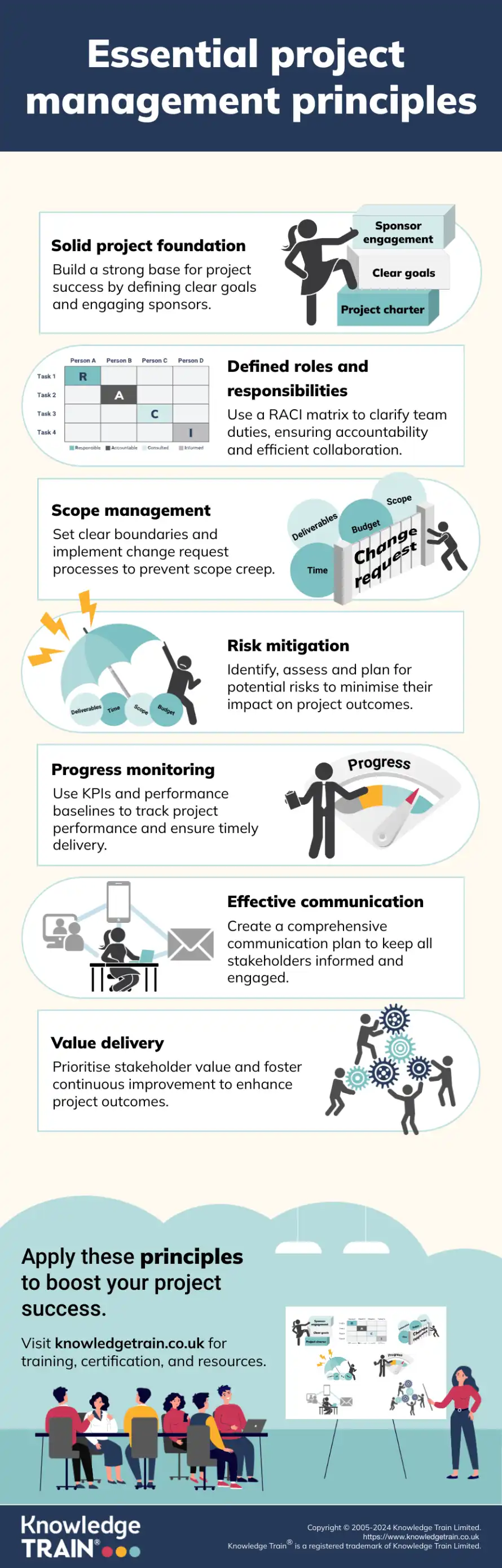
- Simultaneous document editing and collaboration{"@context":"https://schema.org","@type":"ImageObject","contentUrl":"https://www.knowledgetrain.co.uk/training-courses/project-management-lessons-learned-infographic-v1.0.webp ","description":"Project management lessons learned infographic","license":"https://www.knowledgetrain.co.uk/license","acquireLicensePage":"https://www.knowledgetrain.co.uk/license","creditText":"Knowledge Train","uploadDate":"2024-11-01T09:00:26.000Z","copyrightNotice":"© 2024 Knowledge Train Limited. All rights reserved.","creator":{"@type":"Organization","name":"Knowledge Train","url":"https://www.knowledgetrain.co.uk"}}
- Integrated video conferencing and meetings.
Effective communication plans and collaboration tools not only facilitate team communication and increase efficiency but also contribute to project success through strategic stakeholder engagement.Related articles
Value delivery and continuous improvement
Focus on stakeholder value
Prioritising value-driven tasks
Prioritise tasks that deliver the most value to stakeholders. This includes conducting regular stakeholder interviews, mapping value streams, and implementing Agile methodologies to accelerate value delivery.
Aligning deliverables with stakeholder expectations
Align project deliverables with stakeholder needs and expectations. Develop clear acceptance criteria, conduct regular stakeholder reviews, and be flexible to adapt the project scope based on feedback.
Lessons learned and project evaluation
Post-project review process
Conduct a comprehensive project retrospective, which includes analysing project successes and challenges. Gather feedback from team members and stakeholders and document key learnings and recommendations. Project manager: Key responsibilities, skills, and career prospects
Implementing improvements in future projects
Apply the Knowledge Trainlessons learnedInterview with Elizabeth Moon19 Feb 2026 to future projects to improve performance. Establish a knowledge repository, update project management processesSevcan YasaLearn all about the key roles and skills you need to be a successful project manager. This article will provide an overview of important duties, essential abilities, and exciting career opportunities in project management., and incorporate key insights into training programmes.19 Feb 2026
Conclusion
Project management principles are the guiding concepts that contribute to successful project delivery. Some of the most important principles include setting up a strong project foundation, defining roles and responsibilities, and managing the project scope and changes. Effective risk management, KPI and baseline tracking, communication and collaboration, and a focus on value delivery and continuous improvement are also crucial. These principles are not exhaustive, and as the field of project management continues to evolve, it is important to remain committed to ongoing learning and improvement. By consistently applying these principles and continuously enhancing In this video, Elizabeth Moon describes her experience of taking a PRINCE2 Foundation and Practitioner course with Knowledge Train. project management skills and knowledge, practitioners can successfully overcome challenges and achieve exceptional outcomes in an ever-changing business environment.
FAQsDive into the differences between project and programme management to determine which is best suited for your organisation and can improve your project delivery. Read on to find out more.
What are the most important project management principles?
Some of the most important principles include clear goal setting, effective communication, risk management, and stakeholder engagement.
How can I improve communication in my project team?
Implement a structured communication plan, utilise collaboration tools, and foster a culture of open feedback and active listening.
What’s the difference between Agile and traditional project management? How PRINCE2 qualifications can help your career
Agile is iterative and flexible, with an emphasis on collaboration, while traditional methods are linear and follow a planned approach.
How do I handle scope creep in my projects? Simon Buehring
Define clear project boundaries, implement a change control process, and maintain regular communication and alignment with stakeholders.Kanban management – from chaos to clarity when transforming projects19 Feb 2026
What are some common project management challenges and how can I overcome them?
Common challenges include resource constraints, unclear objectives, and poor communication. Overcome them through careful planning, stakeholder engagement, and a focus on continuous improvement.Knowledge TrainPRINCE2 is a project management methodology used widely in the public, private, and third sectors.
Infographic19 Feb 2026