
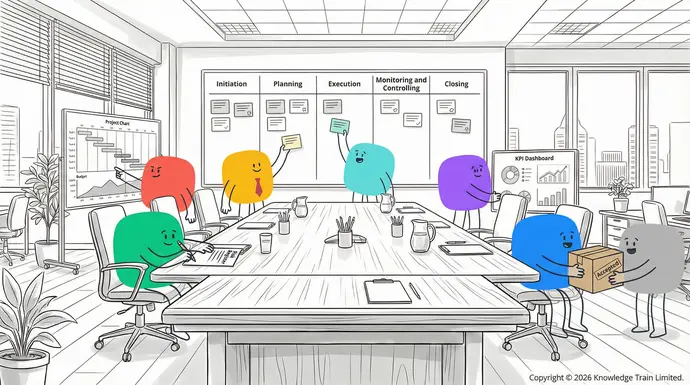

At the core of effective project management are five distinct phases:
- Initiation
- Planning
- Execution
- Monitoring and controlling
- Closing
Each of these phases plays a crucial role in a project’s lifecycle and contributes to its overall success. Understanding the purpose and activities associated with each phase is fundamental for project managers and their teams to navigate challenges and lead their projects to fruition. In this comprehensive article, we will delve into each project management phase, providing insights and best practices to ensure effective and efficient project management.
The five phases of project management
The project lifecycle is essential in project management. The five phases of the project lifecycle provide a framework for organising and executing projects from start to finish.
Brief overview of each phase
- Initiation : Identify the project’s goals, scope, and feasibility. Document them in a project charter and identify key stakeholders.
- Planning : Plan the project in detail, including the timeline, budget, and resources needed. Communication and risk management strategies should also be developed.
- Execution : Execute the project plan, manage team workflows, and ensure effective communication among stakeholders.
- Monitoring and controlling : Measure and track project progress, performance, and quality to ensure they align with the plan. Adjust as necessary to keep the project on track.
- Closing : Deliver the final product or service, conduct a project review, document lessons learned , and archive project documents.
Importance of understanding the project lifecycle
Understanding the project lifecycle can help project managers to:
- Plan for potential problems and stay one step ahead
- Manage resources effectively during the project
- Keep stakeholders informed throughout the project
- Respond to changes in the project without losing control
- Uphold quality standards throughout the project.
Project managers can do all these things when they become familiar with the phases in the project lifecycle.
1. Project initiation
Project initiation phase is important for the success of a project. During this stage, the ideas start to take shape, and the vision and purpose of the project are established.
Developing a business case
The business case is a justification for a project and a description of the benefits the project will bring. To develop a business case :
- Identify the problem/opportunity the project is solving
- Consider different solutions and evaluate their feasibility
- Calculate the cost, benefit and return on investment
- List the risks and mitigation measures.
Defining project goals and scope
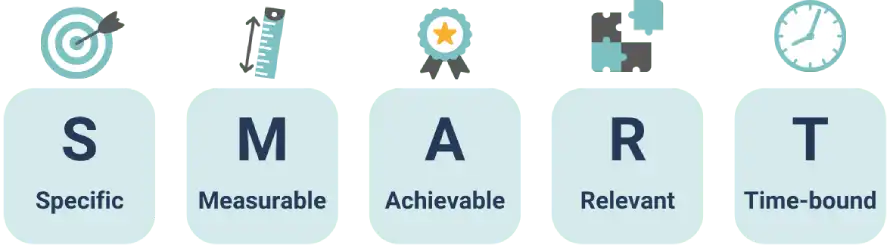
Project goals and scope need to be well-defined to have a successful project. To define the goals and the scope:
- Set SMART (Specific, Measurable, Achievable, Relevant, Time-bound) goals
- List the deliverables and the project boundaries
- Identify constraints and assumptions.
Creating a project charter
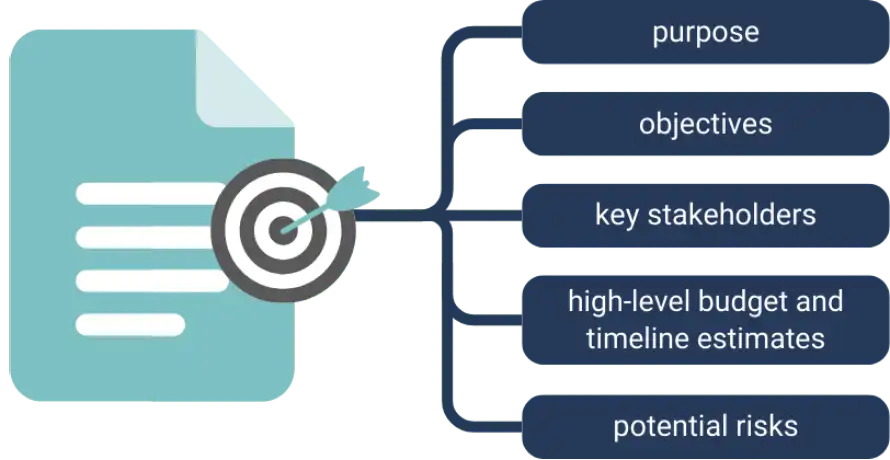
The project charter serves as the project’s formal authorisation document. It should include:
| Key Elements | Description |
|---|---|
| Project purpose | Clear statement of the project’s objectives |
| Scope | High-level description of what’s included and excluded |
| Timelines | Estimated start and end dates |
| Budget | Initial cost estimates |
| Key stakeholders | List of individuals or groups with vested interest |
Identifying key stakeholders
Stakeholder identification is an important part of the successful project. To manage your stakeholders, first make a stakeholder register of all the parties involved and then map out their interests, influence, and impact on the project. Lastly, create a communication strategy for each stakeholder.
When each of these components has been properly considered during the initiation phase, a project manager has set the stage for the rest of the project lifecycle.
2. Project planning
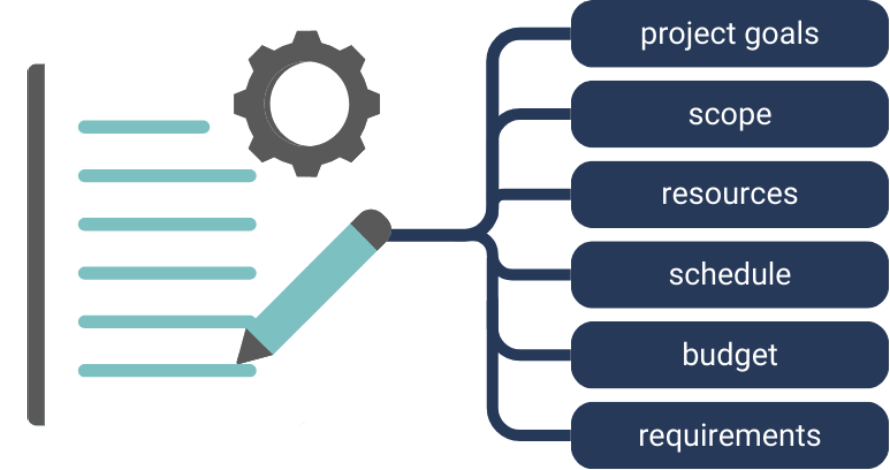
The planning process is vital in ensuring that a project will be successful. It involves the development of a project plan .
The project plan elaborates on the project charter. It includes the following major components: the technical requirements, the work breakdown structure (which outlines the work to be performed), the resource management plan, and the schedule for the work and major milestones.
Managing team workflows
Efficient workflow management is crucial for maintaining productivity. Consider the following strategies:
- Set clear processes for handoffs between team members
- Use Agile approaches such as Scrum or Kanban to manage projects Request a quote
- Hold regular stand-up meetings to discuss progress and challenges
- Encourage communication so that bottlenecks can be addressed quickly.
Ensuring effective collaboration[email protected]
Collaboration is key to project success. To foster a collaborative environment: +44 (0)207 148 5985
| StrategyCourses | DescriptionPROJECT MANAGEMENT |
|---|---|
| Clear rolesPRINCE2 | Define responsibilities for each team member® |
| Open communicationFoundation | Encourage sharing of ideas and concernsLearn the fundamentals of the PRINCE2 method. |
| Shared goalsPractitioner | Align team efforts towards common objectivesIncludes Foundation & Practitioner combined option. |
| Conflict resolutionAssociation for Project Management (APM) | Address disagreements promptly and constructivelyProject Fundamentals Qualification (PFQ) |
Utilising project management toolsStart your APM project management career.
Project management toolsProject Management Qualification (PMQ) can be leveraged to improve execution efficiency. Task management software can be used to track progress and deadlines. Collaboration platforms can centralise communication and file sharing. Time-tracking tools can be implemented to monitor resource allocation and productivity. Reporting dashboards can be utilised to provide real-time project status updates.Advance your APM project management expertise.
By effectively implementing these strategies during the execution phase, project managers can ensure smooth project progression and maintain team momentum towards achieving project goals.Project Risk Single Certificate Level 1
4. Project monitoring and controllingFoundation
Monitoring and controlling involves keeping a check on all activities that are being executed to ensure that they are following the project plan.Learn the fundamentals of Better Business cases.
Tracking progress against goalsPractitioner
Effective Includes Foundation & Practitioner combined option.progress trackingP3O involves:®
- Regularly compare actual performance to planned objectivesFoundation
- Identify variances and their causesLearn the fundamentals of the P3O project management office.
- Take corrective action to address any deviations from the planPractitioner
- Update stakeholders on the project’s status and any major changes.Includes Foundation & Practitioner combined option.
Establishing Critical Success Factors (CSF) and Key Performance Indicators (KPI)Workshops
CSFsIntroduction to Project Management and 1-day workshop to learn the basics of project management.KPIsProject Management Essentials are essential for measuring project success:2-day workshop to learn how to manage projects without getting certified.
| MetricWriting Business Cases | DescriptionHalf-day workshop to learn to write robust business cases. |
|---|---|
| CSFsAI in Project Management | High-level goals that must be achieved for project successLearn how to use AI tools in everyday project work. |
| KPIsARTIFICIAL INTELLIGENCE (AI) | Quantifiable measurements that indicate progress towards CSFsBCS AI |
You can follow these best practices to implement effective progress tracking strategies; first, you must identify CSFs that are aligned with your project goals. Once you have identified CSFs develop KPIs for each CSF that can effectively track the progress towards them and periodically review and update your KPIs as the project progresses.Foundation
Managing budget and resourcesLearn the fundamentals of artificial intellegence.
To manage budget and resources effectively, it is important to track spending against budget, monitor resource allocation to ensure they are being used efficiently, identify potential resource bottlenecks or shortages early on and implement cost-saving measures where necessary.AI Project Governance Framework (AIPGF)
Adjusting plans as necessaryFoundation
Project plans may need to be adjusted to overcome unforeseen obstacles, to do this effectively, regularly review the project to identify areas that may need to be changed, evaluate the potential impact of proposed changes on the project scope, timeline and budget, communicate any changes to all relevant stakeholders and update project documentation to reflect approved changes.Learn the fundamentals of the governance framework.
By carefully monitoring and controlling these aspects, project managers can ensure their projects stay on track and adapt to changes as needed.Practitioner
5. Project closingIncludes Foundation & Practitioner combined option.
Project closing is the phase that formally completes the WorkshopsprojectAI in Project Management . It’s when you finalise project deliverables, review performance, and document learnings for future reference.Learn how to use AI tools in everyday project work.
Delivering final project outcomesAGILE
Final deliveryAgilePM involves:®
- Validating that all project deliverables meet the agreed-upon specifications – Agile Project Management
- Seeking formal acceptance from stakeholdersFoundation
- Transferring project outputs to the relevant teams or clientsLearn the key principles of Agile Project Management.
- Closing any remaining contracts or agreements.Practitioner
Conducting project review meetingsIncludes Foundation & Practitioner combined option.
Project PRINCE2review meetings® allow you to assess how well the project has performed: Agile
- Convene all key stakeholders to review the project’s outcomesFoundation
- Assess the project’s success against the initial goalsLearn the fundamentals of the PRINCE2 Agile method.
- Identify areas of excellence and opportunities for improvementPractitioner
- Seek feedback from team members and stakeholders.Includes Foundation & Practitioner combined option.
Documenting lessons learntScrum
Capturing Scrum Essentials lessons learntSelf-paced training course to learn the essentials of Scrum. is vital for organisational growth:Scrum Master
| AspectChoose Scrum Alliance or Scrum.org Scrum Master training courses. | |
|---|---|
ITIL successful outcomes.®
To implement project management best practices, organisations should consider incorporating strategies such as adopting Foundation Agile methodologiesLearn the fundamentals of ITIL service management., leveragingStrategist DPI project management software3-day ITIL Strategist: Direct, Plan & Improve (DPI) course., and emphasising clear communication and continuous learning.Specialist: DSV
These practices not only improve project success rates but also foster a more efficient and effective project management team. Following the 3-day ITIL Specialist: Drive Stakeholder Value (DSV) course.phases of project management Specialist: CDS provides a roadmap for teams to navigate challenges, optimise resources, and meet stakeholder expectations. By consistently applying these principles, organisations can enhance their project delivery capabilities and achieve successful results across all projects.3-day ITIL Specialist: Create, Deliver and Support (CDS) course.
FAQsAPM COURSES
What is the most crucial phase of project management?Select your preferred training course below:
The planning phase is arguably the most important phase of project management. This is when you set your goals, resources, and timelines.
How can I prevent scope creep in my projects?AGILE PROJECT MANAGEMENT COURSES
To avoid scope creep, be sure to clearly define the boundaries of your project, implement a change control process, and regularly review the project scope with stakeholders.Select your preferred training course below:
What’s the difference between traditional and Agile project management?
The key difference between traditional and Agile project management is the approach to the development process. Traditional project management is more linear and sequential. Agile methodologies focus on flexibility, iterative development, and continuous stakeholder feedback.PRINCE2 AGILE COURSES
How often should I conduct project status meetings?Select your preferred training course below:
The frequency of project status meetings will vary depending on the complexity and duration of your project. Weekly meetings are the norm, but you can adjust as needed to find a balance between communication and productivity.
Select your preferred training course below:
Some common project management mistakes to avoid include inadequate stakeholder communication, poor risk management, setting unrealistic timelines or budgets, lack of clear objectives, and insufficient resource allocation.
To avoid these mistakes, it is important to carefully plan, monitor, and proactively solve problems throughout the project lifecycle.P3O COURSES
