Project management stepsAnother tangible benefit is reduced errors and rework. It is achieved by implementing robust quality control measures, encouraging continuous feedback and improvement, and utilising lessons learned from previous


IntroductionTools and technology
Project managementSelecting the right is a vital process for turning ideas into reality. It provides a structured framework that guides teams from planning to execution and, ultimately, to the successful delivery of a project’s objectives. By following the different softwareproject management phases is critical to successful implementation. Modern options offer features such as task tracking, resource management, and real-time collaboration. Key factors to consider include ease of use, scalability, and integration., organisations can streamline their processes, optimise resource allocation, and increase the chances of achieving their desired outcomes.Integration with existing systems is vital for a smooth transition. Choose tools that can integrate with current enterprise software, such as CRM or ERP. This will ensure data flow and avoid double data entry.

The significance of Training and skill developmentproject managementCertifications in any organisation or initiative cannot be overstated. Effective such as PMP (project managementProject Management Professional allows for better control over resources, minimisation of risks and uncertainties, improved communication among stakeholders, and the timely delivery of projects.) or
At the core of effective project management are five distinct phases:PRINCE2
- Initiation can significantly enhance team skills. They provide a strong foundation in
Overcoming common challenges provide a framework for organising and executing projectsThere are many challenges that organisations face when implementing project management. from start to finish.One common challenge is
Brief overview of each phaseresistance to change
- Initiation, as staff may be reluctant to adopt new methodologies. To overcome this, organisations should communicate the benefits of project management and involve staff in the implementation process.: Identify the project’s goals, scope, and feasibility. Document them in a project charter and identify key stakeholders.Another challenge is
- Planningresource constraints: . Limited budgets or staff may prevent organisations from adopting comprehensive tools or training programmes. Prioritising key components and implementing changes incrementally can help address this issue.Plan the projectFinally, finding the right in detail, including the timeline, budget, and resources needed. Communication and risk management strategies should also be developed.balance between rigour and flexibility
- Execution is critical for effective project management. Too much rigidity can stifle creativity and flexibility, while too little structure can lead to chaos. Organisations should aim for a middle ground, establishing core processes while allowing for adjustments based on the needs of each project.: Execute the project plan, manage team workflows, and ensure effective communication among stakeholders.By acknowledging and addressing these challenges, organisations can navigate the transition to effective
- Monitoring and controllingproject management practices: Measure and track project progress, performance, and quality to ensure they align with the plan. Adjust as necessary to keep the project on track. and reap the associated benefits.
- ClosingEnhance your skills with our expert-led courses: Deliver the final product or service, conduct a project review, document lessons learned , and archive project documents.
Importance of understanding the project lifecycleSelf-paced
Understanding the project lifecycle can help project managers to:APM PFQ blended online
- Plan for potential problems and stay one step ahead
- Manage resources effectively during the project£749 +vat
- Keep stakeholders informed throughout the project
- Respond to changes in the project without losing control
- Uphold quality standards throughout the project.
Project managers can do all these things when they become familiar with the phases in the project lifecycle.Self-paced
1. Project initiation manage resources for specific goals, while general managers oversee daily business operations.
Project initiation phase is important for the success of a project. During this stage, the ideas start to take shape, and the vision and purpose of the project are established.How can small businesses benefit from project management?
Developing a business caseSmall businesses can improve efficiency, save money, and enhance customer satisfaction through project management. It helps to prioritise tasks, manage resources effectively, and deliver products or services on time. Project management also supports growth by providing a structured approach to new initiatives.
The What are the essential skills for effective project managers?business caseKey skills include communication, leadership, problem-solving, and time management. Technical knowledge, risk management skills, and adaptability are also important. Successful project managers are skilled at managing stakeholders and possess strong analytical and organisational skills. is a justification for a project and a description of the benefits the project will bring. To develop a How does project management contribute to risk mitigation?business caseProject management includes risk assessment and mitigation. It identifies potential risks early on, develops contingency plans, and monitors risks throughout the project life cycle. This approach reduces the impact of unforeseen events on project outcomes.:Can project management principles be applied to non-traditional industries?
- Identify the problem/opportunity the project is solvingYes, project management principles can be applied to various industries. Industries such as healthcare, education, and creative fields can adapt
- Consider different solutions and evaluate their feasibilityproject management methodologies
- Calculate the cost, benefit and return on investment to improve processes and outcomes.
- List the risks and mitigation measures.What are the key metrics for measuring project management success?
Defining project goals and scopeKey metrics include on-time delivery, adherence to budget, scope fulfilment, and stakeholder satisfaction. Quality metrics, team productivity, and return on investment are also valuable measures of project management success.
Project goalsHow often should project management processes be reviewed and updated? and Processes should be reviewed regularly, typically annually or bi-annually. Organisations should also review processes after significant scopeprojects need to be well-defined to have a successful project. To define the goals and the scope: or changes in the market. Continual improvement ensures that project management processes are aligned with business goals and industry standards.
- Set SMART (Specific, Measurable, Achievable, Relevant, Time-bound) goalsInfographic
- List the deliverables and the project boundariesSubscribe to our exclusive offers and promotions
- Identify constraints and assumptions.
Creating a project charterSubscribe now
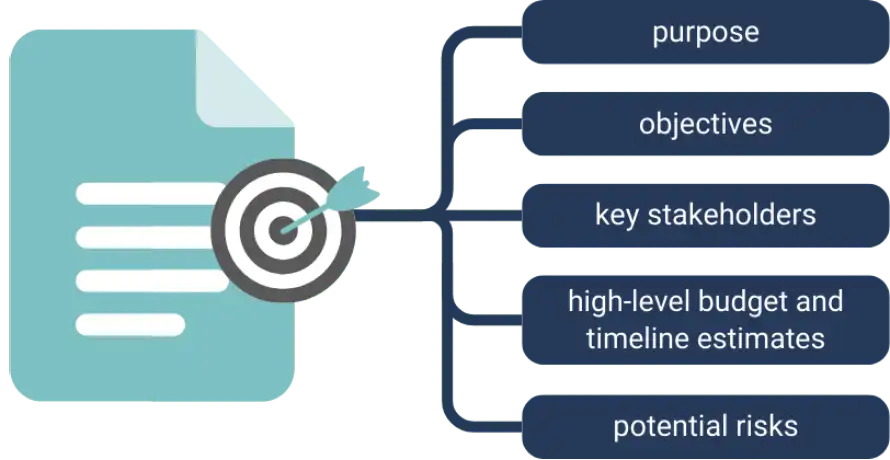
The project charter serves as the project’s formal authorisation document. It should include:{"@context":"https://schema.org","@type":"ImageObject","contentUrl":"https://www.knowledgetrain.co.uk/training-courses/project-management-benefits-infographic-v1.0.webp ","description":"Project management benefits infographic","license":"https://www.knowledgetrain.co.uk/license","acquireLicensePage":"https://www.knowledgetrain.co.uk/license","creditText":"Knowledge Train","uploadDate":"2024-10-29T09:00:59.000Z","copyrightNotice":"© 2024 Knowledge Train Limited. All rights reserved.","creator":{"@type":"Organization","name":"Knowledge Train","url":"https://www.knowledgetrain.co.uk"}}
| Key Elements | DescriptionRelated articles |
|---|---|
| Project purpose | Clear statement of the project’s objectives |
| Scope | High-level description of what’s included and excluded |
| Timelines | Estimated start and end dates |
| Budget | Initial cost estimates |
| Key stakeholders | List of individuals or groups with vested interest |
Identifying key stakeholders
Stakeholder identification is an important part of the successful project. To manage your stakeholders, first make a stakeholder register of all the parties involved and then map out their interests, influence, and impact on the project. Lastly, create a communication strategy for each stakeholder.
When each of these components has been properly considered during the initiation phase, a project manager has set the stage for the rest of the project lifecycle.
2. Project planning
The planning process is vital in ensuring that a project will be successful. It involves the development of a project plan
- RAID in project management
- Task Dependencies : Identify and document dependencies between tasksKnowledge Train
- Resource Allocation19 Feb 2026: Allocate resources to tasks efficiently
- MilestonesEnter the world of RAID in project management. Explore how this approach helps teams identify potential challenges and make informed decisions, leading to project success.: Define significant points of progress or project phases to be achieved.
Setting SMART and CLEAR goals
Combine SMART (Specific, Measurable, Achievable, Relevant, Time-bound) and CLEAR (Collaborative, Limited, Emotional, Appreciable, Refinable) goal-setting methods for comprehensive project objectives.

Project planPRINCE2 practices: Free ebook
In this phase a project plan captures the project goals, scope, resources, schedule, budget, and main requirements for the project. The initial version of the project plan needs to be approved by the project sponsor before proceeding to the next phase and will be updated regularly as the project proceeds.
Simon Buehring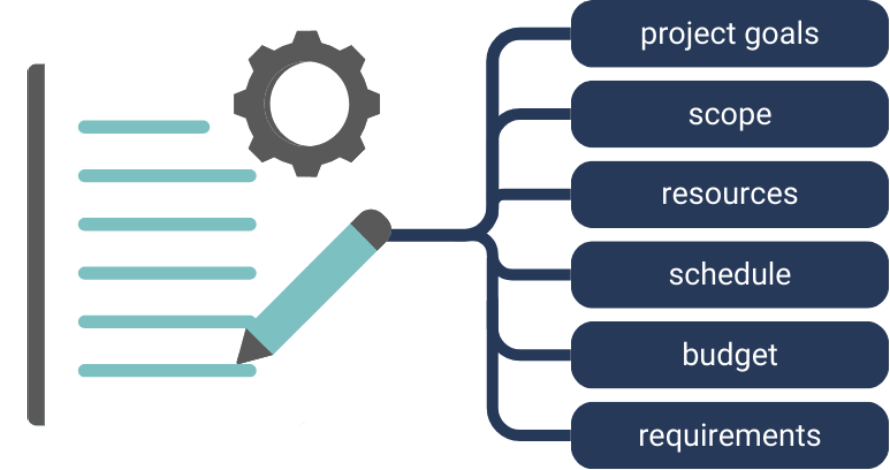
Creating a communication plan19 Feb 2026
Effective communicationGet a free ebook on PRINCE2 practices to prepare for your PRINCE2 Foundation exam. Discover the integrated elements of PRINCE2 by reading further. is vital for project success. A comprehensive plan should:
| Key Elements | Description |
|---|---|
| Stakeholders | Identify all parties involved in communication |
| Frequency | Determine how often updates will be shared |
| ChannelsInterview with Rosie Boxall | Specify methods of communication (e.g., emails, meetings) |
| ContentSevcan Yasa | Outline what information will be shared19 Feb 2026 |
| Responsibilities | Assign roles for creating and disseminating informationIn this video, Rosie Boxall describes how her career was boosted by taking a PRINCE2 training course with Knowledge Train. |
Risk assessment and mitigation strategies
Successful risk management includes:
- Identifying potential risksProject management vs programme management
- Determining their likelihood and impact
- Developing mitigation strategies for the highest priority risksKnowledge Train
- Continuously monitoring and updating the risk assessments throughout the project.19 Feb 2026
Change management planning
Change managementDive into the differences between project and programme management to determine which is best suited for your organisation and can improve your project delivery. Read on to find out more. planning should include establishing a process for proposing and approving changes to the project scope, schedule, or budget, defining roles and responsibilities in the change management process, establishing criteria for evaluating the impact of proposed changes, and creating a system for documenting and communicating approved changes.
By carefully considering each of these aspects during the planning phase, project managers can set the stage for a successful project execution and delivery.
3. Project execution
This is the stage where planning turns into action. The work must be supervised and managed at this point in time.
Implementing the project plan
Executing the project plan involves:Understanding PMO roles
- Delegate tasks to team members based on their skills and availability
- Ensure they have the resources they need to complete their tasksKnowledge Train
- Track progress against the schedule23 Feb 2026
- Resolve issues as they occur.
Managing team workflowsLearn about crucial positions in a Project Management Office (PMO). The article presents important PMO positions together with their impact on successful project management. Continue reading to fully understand the organisational frameworks of PMOs.
Efficient workflow management is crucial for maintaining productivity. Consider the following strategies:
- Set clear processes for handoffs between team members
- Use Agile approaches such as Scrum11 essential project management techniques or Kanban to manage projects
- Hold regular stand-up meetings to discuss progress and challengesKnowledge Train
- Encourage communication so that bottlenecks can be addressed quickly.19 Feb 2026
Ensuring effective collaboration
CollaborationEnhance your project management skills with these 11 essential techniques. From project planning and visualisation to quality assurance and risk assessment, our ultimate guide will help you learn the art of managing projects for excellent results. is key to project success. To foster a collaborative environment:
| Strategy | Description |
|---|---|
| Clear roles | Define responsibilities for each team member |
| Open communication | Encourage sharing of ideas and concerns |
| Shared goalsPRINCE2 management products | Align team efforts towards common objectives |
| Conflict resolutionSimon Buehring | Address disagreements promptly and constructively19 Feb 2026 |
Utilising project management tools
Project management toolsLearn about PRINCE2 management products and how they assist in planning, managing, and controlling projects. Scroll down for a detailed guide. can be leveraged to improve execution efficiency. Task management software can be used to track progress and deadlines. Collaboration platforms can centralise communication and file sharing. Time-tracking tools can be implemented to monitor resource allocation and productivity. Reporting dashboards can be utilised to provide real-time project status updates.
By effectively implementing these strategies during the execution phase, project managers can ensure smooth project progression and maintain team momentum towards achieving project goals.
4. Project monitoring and controlling
Monitoring and controlling involves keeping a check on all activities that are being executed to ensure that they are following the project plan.
Tracking progress against goals
Effective progress tracking involves:
- Regularly compare actual performance to planned objectives
- Identify variances and their causes
- Take corrective action to address any deviations from the plan
- Update stakeholders on the project’s status and any major changes.
Establishing Critical Success Factors (CSF) and Key Performance Indicators (KPI)
CSFs and KPIsGive us a call are essential for measuring project success:
| Metric | |
|---|---|
FAQs
What is the most crucial phase of project management?The technical storage or access that is used exclusively for statistical purposes.
The planning phase is arguably the most important phase of project management. This is when you set your goals, resources, and timelines.
How can I prevent scope creep in my projects?The technical storage or access that is used exclusively for anonymous statistical purposes. Without a subpoena, voluntary compliance on the part of your Internet Service Provider, or additional records from a third party, information stored or retrieved for this purpose alone cannot usually be used to identify you.
To avoid scope creep, be sure to clearly define the boundaries of your project, implement a change control process, and regularly review the project scope with stakeholders.
What’s the difference between traditional and Agile project management?
The key difference between traditional and Agile project management is the approach to the development process. Traditional project management is more linear and sequential. Agile methodologies focus on flexibility, iterative development, and continuous stakeholder feedback.
How often should I conduct project status meetings?
The frequency of project status meetings will vary depending on the complexity and duration of your project. Weekly meetings are the norm, but you can adjust as needed to find a balance between communication and productivity.
What are some common project management pitfalls to avoid?Marketing
Some common project management mistakes to avoid include inadequate stakeholder communication, poor risk management, setting unrealistic timelines or budgets, lack of clear objectives, and insufficient resource allocation.
To avoid these mistakes, it is important to carefully plan, monitor, and proactively solve problems throughout the project lifecycle.
