Project management lessons learned

Key takeaways
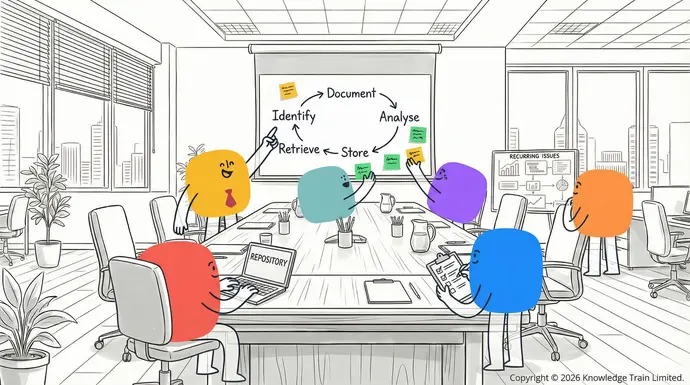
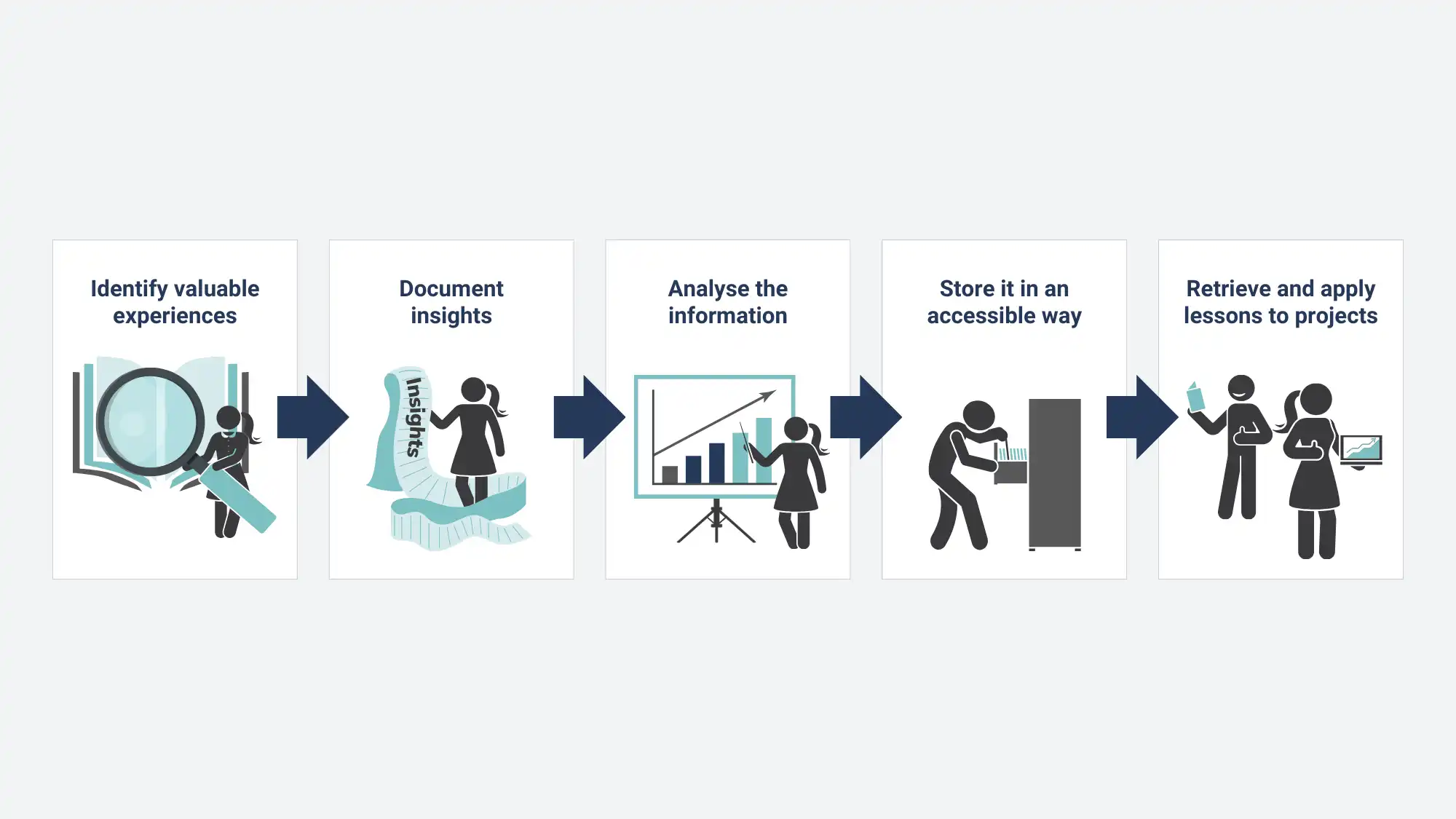
A structured lessons learned cycle turns project experience into repeatable improvements.
- Capture lessons in real time, at phase ends, and at project close to avoid losing detail.
- Use neutral facilitation, surveys, and focused questions to surface honest insights without blame.
- Standardise documentation with templates, input forms, and executive summaries so lessons stay usable.
- Analyse for root causes and patterns, then convert findings into specific, measurable actions.
- Store lessons in a central, searchable repository and review them at project kick-off to ensure reuse.
- Track impact with KPIs such as reuse rates, fewer repeat issues, and improved delivery outcomes.
Preparing for lessons learned sessions
Project surveys
Before the session, team members should be asked to complete project surveys . These surveys are designed to encourage reflection on project experiences and gather initial thoughts on successes, challenges, and other aspects of the project. They will also provide a foundation for more in-depth conversations during the lessons learned session.
Categorising lessons learned
Lessons should be organised into specific categories to help with analysis and future retrieval. Common lesson categories include:
- Project management processes
- Technical challenges
Key questions to ask
Facilitating deliberations can be guided by using the following essential questions:
Templates and checklistsFoundation
Templates and checklists ensure consistency in documentation across projects. Provide team members with a template for the detailed report structure, a checklist of key areas to cover during lessons learned sessions, and a standardised format for documenting recommendations.Learn the fundamentals of the PRINCE2 method.
By implementing these tools and techniques, you can develop a streamlined approach to documenting lessons learned. This system will help you capture valuable insights effectively and ensure they can be easily accessed and applied to future Practitioner projectsIncludes Foundation & Practitioner combined option..Association for Project Management (APM)
Remember, the key is to create documentation that is both comprehensive and user-friendly to facilitate knowledge transfer throughout your organisation.Project Fundamentals Qualification (PFQ)
Analysing lessons learnedStart your APM project management career.
ating recommendations for future use.Enhance your project risk management skills.
Techniques for analysing lessons learned dataAgilePM
There are various approaches to maximise the value from your lessons learned data. Consider these techniques:®
- Root cause analysis – Agile Project Management: Delve deep to uncover the underlying reasons for successes and failures.Foundation
- SWOT analysisLearn the key principles of Agile Project Management.: Identify Strengths, Weaknesses, Opportunities, and Threats that the lessons highlight.Practitioner
- Pareto analysisIncludes Foundation & Practitioner combined option.: Prioritise the 20% of factors that led to 80% of results.PRINCE2
- Affinity diagramming®: Group related lessons to identify common themes. Agile
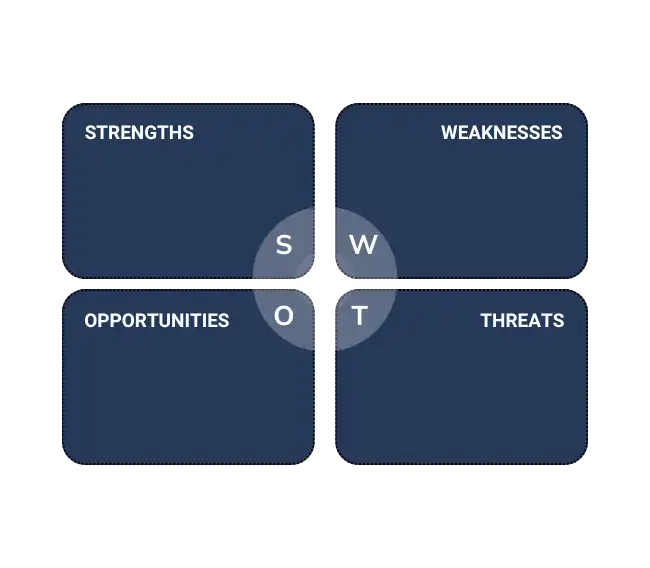
Foundation SWOT analysis diagramLearn the fundamentals of the PRINCE2 Agile method.
Identifying trends and patternsPractitioner
Search for recurring themes across several projects or stages. This can include comparing lessons from similar project types, looking at lessons across different timeframes, or analysing lessons by project role or department.Includes Foundation & Practitioner combined option.
Consider using data visualisation tools like charts or heat maps to make these patterns more visible.AI Project Governance Framework (AIPGF)
Generating actionable insightsFoundation
Once you’ve done the analysis, turn those insights into actionable recommendations:Learn the fundamentals of the governance framework.
- Prioritise insights based on potential impact and ease of implementation.Practitioner
- Create specific, measurable actions to address issues or replicate successes.Includes Foundation & Practitioner combined option.
- Map the insights to existing processes or methodologies in your organisation.Better Business Cases
- Set up a feedback loop to monitor how effective the implemented recommendations are.™
Remember that the point of the analysis is not just to understand what happened, but to shape future decisions. By using these techniques, you can take lessons learned from past projects and turn them into tools for improvement. This level of analysis and critical thinking will allow your organisation to continually adapt its Foundation project management approachLearn the fundamentals of Better Business cases. based on real-life experiences.Practitioner
Storing and retrieving lessons learnedIncludes Foundation & Practitioner combined option.
To effectively use lessons learned, you must have a system for storing and retrieving them. This section provides guidance on setting up an efficient process.P3O
Creating a centralised lessons learned repository®
A Foundation central repositoryLearn the fundamentals of the P3O project management office. should be the single source of truth for all lessons learned in your organisation. When building this repository, it’s important to choose a platform that works well with your existing Practitioner project management toolsIncludes Foundation & Practitioner combined option.. Use a consistent structure and categorisation system, so the lessons are well-organised. Plan for the repository to be scalable so you can add new projects and insights over time.Workshops
Implementing effective search and retrieval systemsIntroduction to Project Management
Make sure that lessons are easily discoverable. This can be done by implementing a good search function with filters based on project type, date, and category. Use a tagging system to identify key themes and topics, which will allow users to find relevant information quickly. You can also add an option for users to rate the usefulness of a lesson to help surface the most valuable insights. These features will help increase the accessibility and usefulness of the stored knowledge.1-day workshop to learn the basics of project management.
Ensuring accessibility and usability of stored lessonsProject Management Essentials
Encourage everyone to use the lessons learned repository by making it accessible and easy to use. This includes creating user-friendly interfaces on both desktop and mobile platforms. Role-based access control can help protect sensitive information while still providing appropriate access. Regularly curate the content to keep it up-to-date and valuable. Conduct training sessions on how to use the repository so that everyone can get the most out of this resource.2-day workshop to learn how to manage projects without getting certified.
Creating a well-organised, easily searchable, and accessible repository will ensure your organisation can effectively leverage past experiences. This will turn lessons learned from being static records into resources that actively improve decision-making and project outcomes across your organisation.Writing Business Cases
Leveraging lessons learned for future projectsHalf-day workshop to learn to write robust business cases.
The real power of lessons learned lies in how they are applied to future projects. In this part, we’ll explore strategies and techniques for leveraging lessons learned effectively to improve project outcomes and drive organisational success.AI in Project Management
Incorporating lessons learned into project planningLearn how to use AI tools in everyday project work.
Incorporating lessons learned into your ARTIFICIAL INTELLIGENCE (AI)project planningBCS AI process is a crucial step in ensuring that past experiences inform future work. To do this, review relevant lessons learned when starting a new project. Make a Foundation lessons learned review Learn the fundamentals of artificial intellegence.
Sharing lessons learned across the organisationFoundation
Maximising the value of lessons learned involves creating a culture that values Learn the fundamentals of the governance framework.knowledge sharing and continuous learning. Establish regular forums or platforms for teams to exchange and disseminate key lessons learned. Integrate lessons learned into training programmes and new employee onboarding processes to spread valuable insights across the organisation.Practitioner
Encourage and reward individuals and teams that actively apply and share lessons learned to reinforce their importance.Includes Foundation & Practitioner combined option.
Continuous improvement through lessons learnedWorkshops
Continuous improvement is key to organisational growth and development. Implement a feedback loop to track the effectiveness of applied lessons learned. Regularly review and update your lessons learned repository to ensure it remains relevant and useful. Encourage teams to challenge existing practices and standards based on new insights and insights to promote innovation and adaptation.AI in Project Management
Organisationally, use lessons learned data to inform strategic decision-making, ensuring that the company’s direction is shaped by real-world experiences and outcomes.Learn how to use AI tools in everyday project work.
By actively leveraging lessons learned, you can turn past experiences into valuable assets for future success. This proactive approach to project management not only improves individual project outcomes but also cultivates a culture of continuous learning and improvement throughout the organisation.AGILE
Remember, collecting lessons is just the first step; the real value lies in how you apply them systematically to drive tangible improvements in AgilePMproject practices® and outcomes. – Agile Project Management
Self-paced course to prepare you for the exam (exam not included).lessons learned process is a vital component for organisational improvement and project success. By implementing a structured approach to identifying, documenting, analysing, storing, and retrieving valuable insights, organisations can significantly enhance their Business Analysis Learning Library (BALL)™project management practicesCHANGE MANAGEMENT and drive continuous improvement.APMG Change Management
A culture of Foundation continuous learningLearn the fundamentals of enterprise change management. is paramount for the success of lessons learned activities. Cultivating an environment that encourages open communication, values experiential knowledge, and promotes sharing and applying insights across Practitioner projectsIncludes Foundation & Practitioner combined option. and teams will maximise the potential benefits of this process.PROGRAMME MANAGEMENT
To unlock the full power of lessons learned, organisations must commit to making these activities an integral part of the project lifecycle and create a blame-free environment where team members feel safe to reflect honestly. Additionally, investing in user-friendly systems for capturing and accessing lessons, as well as regularly measuring and evaluating the effectiveness of lessons learned initiatives, will ensure the sustainability and continuous improvement of this valuable practice.MSP
By embracing the principles and implementing effective lessons learned processes discussed in this guide, organisations can drive continuous improvement, reduce the recurrence of issues, and ultimately achieve greater project success. Start improving your lessons learned practices today to secure a more efficient and effective ®project managementFoundation future.Learn the fundamentals of programme management.
Ideally, at the end of each project phase and upon project completion. For longer projects, consider quarterly sessions to capture insights while they’re fresh.
What’s the difference between lessons learned and project post-mortems?
Lessons learned focus on ongoing improvement throughout the project lifecycle. Post-mortems typically occur at project end and may have a broader scope, including overall project performance evaluation.
How can we encourage team members to actively participate in lessons learned sessions?
Create a blame-free environment, emphasise the value of learning, and demonstrate how insights are applied. Consider using anonymous submission methods for sensitive topics.
How can we ensure lessons learned are actually applied to future projects?PROJECT MANAGEMENT QUALIFICATIONS & WORKSHOPS
Integrate lessons review into project kick-off meetings, update project templates based on learnings, and assign responsibility for implementing specific lessons.Select your preferred qualification or workshop.
What role does leadership play in promoting a culture of lessons learned?
Leaders should actively participate in sessions, allocate resources for the process, and visibly apply insights in decision-making to demonstrate the value of lessons learned.PRINCE2 COURSES
How can we make lessons learned sessions more engaging and productive?Select your preferred training course below:
Use varied formats like workshops or gamification, focus on specific themes, and ensure sessions result in actionable outcomes to maintain engagement.
What are some common pitfalls to avoid when implementing a lessons learned process?APM COURSES
Avoid treating it as a checkbox exercise, neglecting to follow up on actions, or allowing sessions to become blame games. Ensure the process is consistently applied across all projects.Select your preferred training course below:
Infographic
