Project management lessons learned

Key takeaways
A structured lessons learned cycle turns project experience into repeatable improvements.
- Capture lessons in real time, at phase ends, and at project close to avoid losing detail.
- Use neutral facilitation, surveys, and focused questions to surface honest insights without blame.
- Standardise documentation with templates, input forms, and executive summaries so lessons stay usable.Copied!
- Analyse for root causes and patterns, then convert findings into specific, measurable actions.Key takeaways
- Store lessons in a central, searchable repository and review them at project kick-off to ensure reuse.Programmes coordinate related projects to deliver strategic outcomes and sustained benefits.
- Track impact with KPIs such as reuse rates, fewer repeat issues, and improved delivery outcomes.Programmes bridge organisational strategy and project delivery by aligning work to measurable outcomes.
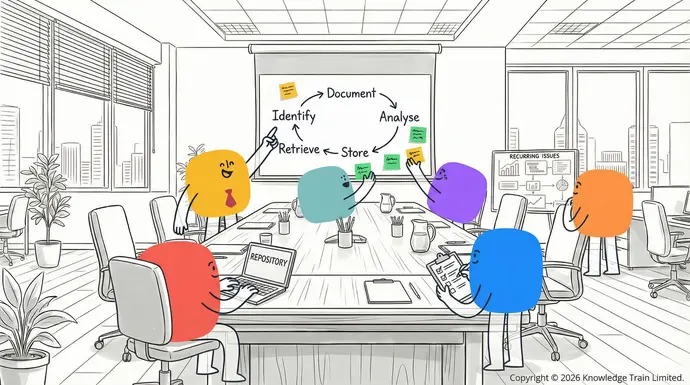
Five steps of the lessons learned process portfolio
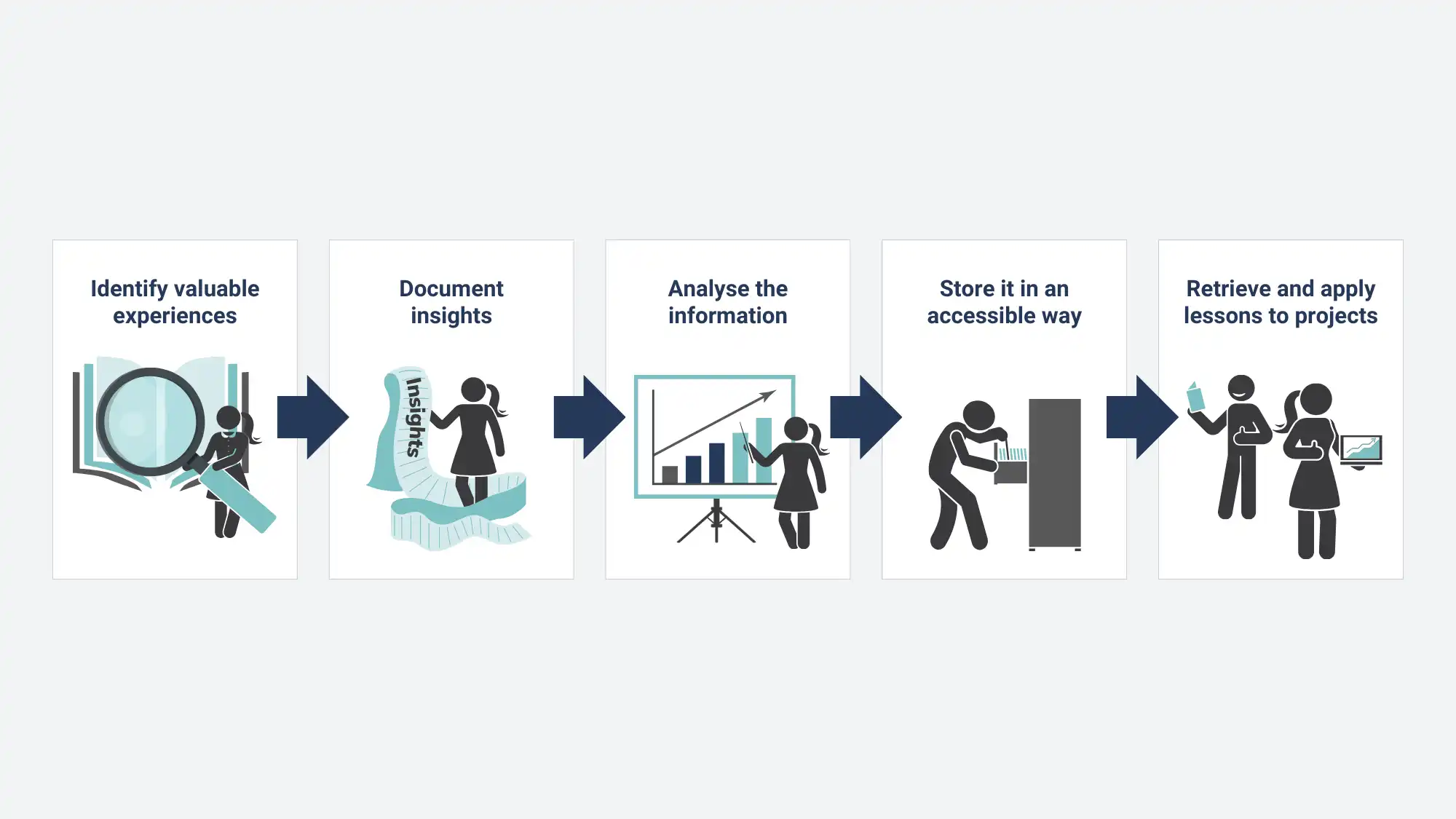
.Lessons learned process diagram Enhance your skills with our expert-led courses
- Identify : The first step in the process involves recognising and pinpointing valuable experiences and insights throughout the project life cycle. It is crucial to encourage team members to note successes and challenges as they occur.
- Document : Once identified, these lessons must be recorded in a clear, concise, and accessible manner, usually by using standardised templates or forms. Instructor-led
- Analyse MSP Practitioner (with Foundation) course: The documented lessons should then be examined to understand the root causes, identify patterns, and determine potential implications for future projects £1,899 +vat.
- StoreSee all dates : The analysed lessons should be stored in a centralised, easily accessible location, such as a database, shared drive, or specialised knowledge management system.
- Retrieve : Finally, the lessons should be retrieved and applied to current or future projects as needed. This step is essential to ensure the full value of the lessons learned process is realised.
When to capture lessons learnedSelf-paced
Capturing lessons learned is most effective when done at the following times:MSP Practitioner (with Foundation) self-paced online
- End of project : Conducting a comprehensive review at the conclusion of the project allows for a holistic evaluation of the entire project life cycle. This timing can provide valuable insights into overall project performance and outcomes.£1,399 +vat
- End of each phase : Reviews at the end of each project phase enable teams to capture fresh insights and lessons while the information is still clear in everyone’s minds.
- Real-time learning : Encouraging the ongoing capture of lessons as they occur can help prevent valuable insights from being lost due to time lapses or fading memories.Instructor-led
By adhering to this structured approach and capturing lessons at these strategic moments, project teams can establish a robust knowledge base. This resource will be invaluable for improving project management practices, enhancing decision-making, and increasing the likelihood of project success.MSP Foundation course
Remember, the lessons learned process is not a one-time event but a continuous cycle of improvement. Regularly practising and refining this process can lead to substantial advancements in project management capabilities£1,299 +vat and overall organisational performance.
Identifying lessons learnedSee all dates
Effective identification of lessons learned is a crucial step in capitalising on the value of project experiences. This process requires careful preparation and skilled facilitation of lessons learned sessions. Differences between programmes and projects
Preparing for lessons learned sessions Table showing the differences between programmes and projects.
Project surveys Projects
Before the session, team members should be asked to complete Programmesproject surveys Purpose and objectives. These surveys are designed to encourage reflection on project experiences and gather initial thoughts on successes, challenges, and other aspects of the project. They will also provide a foundation for more in-depth conversations during the lessons learned session. Deliver specific, outputs within a set time and cost.
Categorising lessons learned Achieve a broader set of strategic outcomes by managing a group of interrelated projects.
Lessons should be organised into specific categories to help with analysis and future retrieval. Common lesson categories include: Scope and timeframe
- Project management processes Have a defined scope and timescale.
- Technical challenges Have a broader scope, comprising multiple related projects. Their timescale continues until all the desired outcomes are achieved.
- CommunicationManagement approach
- Resource allocationFocuses on the delivery of specific outputs,
- Recommendations for future projectsSelf-paced .MSP Practitioner (with Foundation) self-paced online
These reports should be well-organised, concise, and easily searchable.
Executive summaries£1,399 +vat
Executive summaries provide a concise overview of key lessons. They should highlight significant findings, present actionable recommendations, and be tailored to the needs of senior management and decision-makers.
Tools for documenting lessons learned
Lessons learned input forms
Input formsInstructor-led help standardise lessons collection. Design a form that captures:MSP Foundation course
- Project name and date
- Category of the lesson£1,299 +vat
- Description of the situation or issue
- Impact on the projectSee all dates
- Recommendations for future reference.Summary
Templates and checklistsProgrammes represent unique yet interrelated aspects of strategic organizational management. Managing and integrating programmes within broader
Templates and checklists ensure consistency in documentation across projects. Provide team members with a template for the detailed report structure, a checklist of key areas to cover during lessons learned sessions, and a standardised format for documenting recommendations.portfolios
By implementing these tools and techniques, you can develop a streamlined approach to documenting lessons learned. This system will help you capture valuable insights effectively and ensure they can be easily accessed and applied to future provides organizations with a competitive edge, amplifying benefits realization and enhancing investment returns. projectsEnterprises that prioritize .programme management
Remember, the key is to create documentation that is both comprehensive and user-friendly to facilitate knowledge transfer throughout your organisation. and adopt standardized methodologies are best positioned to garner superior advantages in a progressively competitive landscape.
Analysing lessons learnedSubscribe to our exclusive offers and promotions
ating recommendations for future use.Subscribe now
Techniques for analysing lessons learned data
There are various approaches to maximise the value from your lessons learned data. Consider these techniques:
- Root cause analysis : Delve deep to uncover the underlying reasons for successes and failures.{"@context":"http://schema.org","@type":"WebPage","headline":"Programmes | Programme Definition | What is Programme?","url":"https://www.knowledgetrain.co.uk/programme-management/programmes","significantLink":"https://www.apm.org.uk/resources/what-is-project-management/what-is-programme-management/","about":[{"@type":"Thing","name":"programmes","sameAs":["http://en.wikipedia.org/wiki/Program_management","https://www.google.com/search?&kgmid=/m/01pqtb"]}],"mentions":[{"@type":"Thing","name":"governance","sameAs":["https://en.wikipedia.org/wiki/Governance","https://www.google.com/search?&kgmid=/m/02_tns","https://www.wikidata.org/wiki/Q1553864"]},{"@type":"Thing","name":"programme management","sameAs":["https://en.wikipedia.org/wiki/Program_management","https://www.google.com/search?&kgmid=/m/01pqtb","https://www.wikidata.org/wiki/Q603948"]},{"@type":"Thing","name":"project management","sameAs":["https://en.wikipedia.org/wiki/Project_management","https://www.google.com/search?&kgmid=/m/05_p2","https://www.wikidata.org/wiki/Q179012"]},{"@type":"Thing","name":"public policy","sameAs":["https://en.wikipedia.org/wiki/Public_policy","https://www.google.com/search?&kgmid=/m/01400v","https://www.wikidata.org/wiki/Q546113"]},{"@type":"Thing","name":"change management","sameAs":["https://en.wikipedia.org/wiki/Change_management","https://www.google.com/search?&kgmid=/m/05qb9n6","https://www.wikidata.org/wiki/Q116348"]},{"@type":"Thing","name":"leadership","sameAs":["https://en.wikipedia.org/wiki/Leadership","https://www.google.com/search?&kgmid=/m/025rt2s","https://www.wikidata.org/wiki/Q484275"]},{"@type":"Thing","name":"risk management","sameAs":["https://en.wikipedia.org/wiki/Risk_management","https://www.google.com/search?&kgmid=/m/06k_y","https://www.wikidata.org/wiki/Q189447"]},{"@type":"Thing","name":"management","sameAs":["https://en.wikipedia.org/wiki/Management","https://www.google.com/search?&kgmid=/m/04_tv","https://www.wikidata.org/wiki/Q2920921"]},{"@type":"Thing","name":"managers","sameAs":["https://en.wikipedia.org/wiki/Management","https://www.google.com/search?&kgmid=/m/04_tv","https://www.wikidata.org/wiki/Q2920921"]},{"@type":"Thing","name":"training","sameAs":["https://en.wikipedia.org/wiki/Training","https://www.google.com/search?&kgmid=/m/014jg3","https://www.wikidata.org/wiki/Q918385"]},{"@type":"Thing","name":"stakeholder engagement","sameAs":["https://en.wikipedia.org/wiki/Stakeholder_engagement","https://www.google.com/search?&kgmid=/m/0fpjz9q","https://www.wikidata.org/wiki/Q2930198"]},{"@type":"Thing","name":"cmi","sameAs":["https://en.wikipedia.org/wiki/Chartered_Management_Institute","https://www.google.com/search?&kgmid=/m/01x_ff","https://www.wikidata.org/wiki/Q5086844"]},{"@type":"Thing","name":"work programme","sameAs":["https://en.wikipedia.org/wiki/Work_Programme","https://www.google.com/search?&kgmid=/m/0n4cjyg","https://www.wikidata.org/wiki/Q8034586"]},{"@type":"Thing","name":"resource allocation","sameAs":["https://en.wikipedia.org/wiki/Resource_allocation","https://www.google.com/search?&kgmid=/m/01njxn","https://www.wikidata.org/wiki/Q287260"]}]}
- SWOT analysis : Identify Strengths, Weaknesses, Opportunities, and Threats that the lessons highlight.{"@context":"https://schema.org","@type":"ImageObject","contentUrl":"https://www.knowledgetrain.co.uk/training-courses/pmp-vs-prince2.png","description":"Relationships between projects, programs, and portfolios.","license":"https://www.knowledgetrain.co.uk/license","acquireLicensePage":"https://www.knowledgetrain.co.uk/license","creditText":"Knowledge Train","uploadDate":"2023-10-16T06:32:55.000Z","copyrightNotice":"© 2023 Knowledge Train Limited. All rights reserved.","creator":{"@type":"Organization","name":"Knowledge Train","url":"https://www.knowledgetrain.co.uk"}}
- Pareto analysis : Prioritise the 20% of factors that led to 80% of results.Some related articles
- Affinity diagramming : Group related lessons to identify common themes.
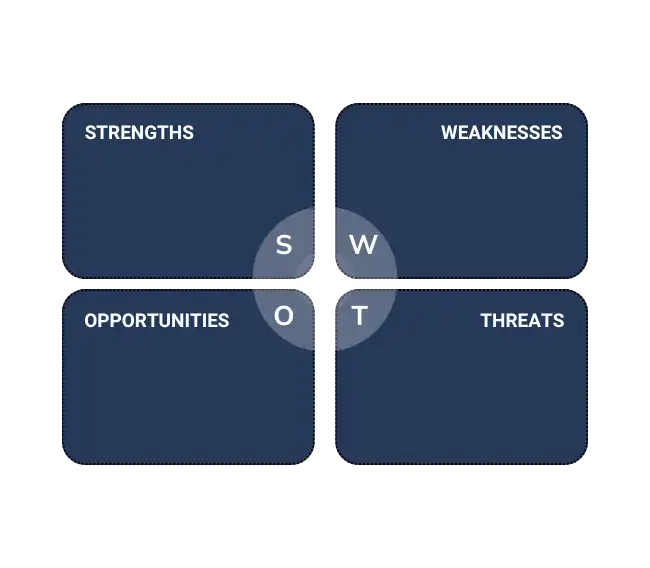
SWOT analysis diagram
Identifying trends and patterns
Search for recurring themes across several projects or stages. This can include comparing lessons from similar project types, looking at lessons across different timeframes, or analysing lessons by project role or department.
Consider using data visualisation tools like charts or heat maps to make these patterns more visible.
Generating actionable insights
Once you’ve done the analysis, turn those insights into actionable recommendations:
- Prioritise insights based on potential impact and ease of implementation.
- Create specific, measurable actions to address issues or replicate successes.
- Map the insights to existing processes or methodologies in your organisation.
- Set up a feedback loop to monitor how effective the implemented recommendations are.
Remember that the point of the analysis is not just to understand what happened, but to shape future decisions. By using these techniques, you can take lessons learned from past projects and turn them into tools for improvement. This level of analysis and critical thinking will allow your organisation to continually adapt its Portfolio management – Interview with Ipek Sahra Özgüler Simon Buehring
Give us a call
- +44 (0)207 148 5985
- Or chat with us using the link at the bottom of the screen.
Contact us with questions about the courses on this page, or about which project management certification or training is best for you.
Finance FAQsCourses
The ContactPROJECT MANAGEMENTlessons learned processCookiesPRINCE2 is a vital component for organisational improvement and project success. By implementing a structured approach to identifying, documenting, analysing, storing, and retrieving valuable insights, organisations can significantly enhance their Privacy®project management practicesTermsFoundation and drive continuous improvement.Customer SupportLearn the fundamentals of the PRINCE2 method.
A culture of Practitioner continuous learning[email protected]Includes Foundation & Practitioner combined option. is paramount for the success of lessons learned activities. Cultivating an environment that encourages open communication, values experiential knowledge, and promotes sharing and applying insights across Join Our TeamAssociation for Project Management (APM)projects Project Fundamentals Qualification (PFQ) and teams will maximise the potential benefits of this process.[email protected]Start your APM project management career.
To unlock the full power of lessons learned, organisations must commit to making these activities an integral part of the project lifecycle and create a blame-free environment where team members feel safe to reflect honestly. Additionally, investing in user-friendly systems for capturing and accessing lessons, as well as regularly measuring and evaluating the effectiveness of lessons learned initiatives, will ensure the sustainability and continuous improvement of this valuable practice. Copyright © 2005-2026 Knowledge Train Limited. Project Management Qualification (PMQ)
By embracing the principles and implementing effective lessons learned processes discussed in this guide, organisations can drive continuous improvement, reduce the recurrence of issues, and ultimately achieve greater project success. Start improving your lessons learned practices today to secure a more efficient and effective Registered in UK: 5566983. Advance your APM project management expertise.project management Registered VAT: GB872413526.Project Risk Single Certificate Level 1 future. Knowledge TrainEnhance your project risk management skills.
