
- : Larger and more complex projects are simplified when broken into a set of smaller, well-defined tasks.Quality
- Resource optimisationInnovation: It allows managers to evaluate if the allocated time and budget were spent properly, which can be used to drive resource optimisation in future projects.Social responsibility
- Better communication : The regular meetings mandated by the chosen frameworks make for better communication of information to the team members.SOCIAL RESPONSIBILITY
By using these three components, organisations can ensure that their Some of the charities we have helped over the years:project management processes are effective, efficient and appropriate for their needs.
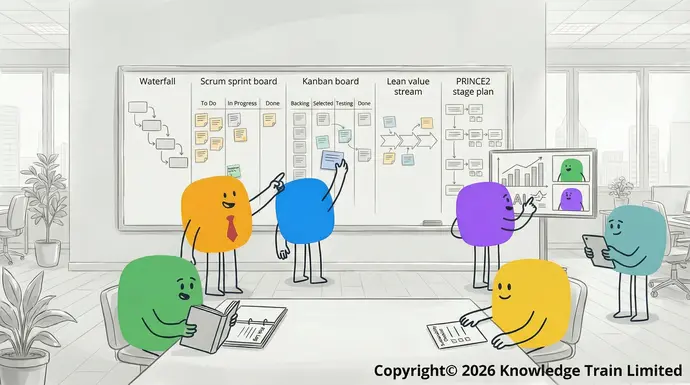
Popular project management frameworks
Traditional frameworks
Waterfall
Definition and key characteristics
- WaterfallAWARDS is a sequential project management framework that progresses through a series of phases, such as requirements, design, implementation, verification, and maintenance. In the waterfall framework, each phase must be completed before the next one can begin, and testing is performed at the end of the project.We don’t go seeking awards, but here are two of the awards we have received for our training.
Pros and cons
- Pros: Easy to understand, well documented
- Cons: Inflexible, difficult to change requirements, testing is performed too late. Request a quote
Best use cases
- Waterfall can be used for software development projects , where the requirements are well-understood and unlikely to change during the project, or for hardware development projects, such as those in the automotive industry.
Agile frameworks+44 (0)207 148 5985
Scrum
Definition and key characteristics[email protected]
- Scrum is an iterative Agile framework for developing and delivering products. In Scrum, projects are divided into sprints, typically lasting two to four weeks, during which a minimum viable product (MVP) is developed and delivered.
Pros and cons
- Pros: Flexible, focuses on collaboration, fast delivery of working products
- Cons: Requires skilled and experienced team members, difficult to scale.
Best use cases
- Scrum can be used in software development projects, product development projects, and other projects where the requirements are not well-defined or where there is a need for frequent updates and client feedback.
KanbanUnited Kingdom
Definition and key characteristics
- Kanban is an Agile framework that visualises the workflow and helps teams optimise work in progress (WIP) by using a board with cards representing tasks or work items.
Pros and cons
- Pros: Visualise workflow, reduce WIP, increase efficiency
- Cons: May lack structure for complex projects , requires discipline to maintain.Search
Best use cases
- Kanban can be used in projects where work is continuous and there is a steady stream of tasks to be completed, such as support or maintenance work, or in projects where teams are trying to improve their current processes and workflows.
Lean
Definition and key characteristics
- Lean is a framework that aims to optimise value while minimising waste in project processes, with a focus on streamlining and simplifying the project workflow.
Pros and consUnited Kingdom
- Pros: Increases efficiency, reduces costs, improves qualityAustria
- Cons: Requires cultural shift, can be difficult to implement in some industries.Belgium
Best use casesBulgaria
- Lean can be used in manufacturing or production projects, as well as in healthcare or service industries where there is a need to improve efficiency and reduce waste.Croatia
Popular frameworksCyprus
PRINCE2Czech Republic
Definition and key characteristicsDenmark
- PRINCE2Estonia is a structured project management method that provides processes and principles for managing a project in a controlled environment.Finland
Pros and consFrance
- Pros: Highly structured, scalable, business justification is emphasisedGermany
- Cons: Can be bureaucratic, requires a lot of documentation.Greece
Best use casesIreland
- PRINCE2 can be used for large, complex projects, especially in government or highly regulated industries, or for projects where there is a need for a high degree of control and governance.Italy
It’s important to note that these are just some of the most popular LatviaprojectLithuania management frameworks, and that there are many other frameworks available that may be more suitable for your specific project or organisation.Luxemburg
- Leadership and interpersonal skills: Overcome resistance by clearly communicating the benefits of the new framework and involving team members in the decision-making process.
- Lack of alignment with existing processes : Carefully map out how the new framework integrates with existing processes and address any conflicts.Business acumen and strategic thinking
- Inadequate resources or support : Ensure that the implementation is adequately resourced and supported by the organisation’s leadership.Technical proficiency
Implementing a project management framework requires careful planning and execution. By addressing these key areas, you can increase the chances of successful adoption and reap the benefits of improved
Future trends in project management frameworksTechnical skills are project management skills that relate to the execution and control of projects. Some of the key technical project management skills are as follows:
As the field of Planning and schedulingproject managementCreating comprehensive project plans continues to evolve, several emerging trends are expected to shape the future of project management frameworks. Here are three key trends to watch out for:Project plans
Artificial intelligence and machine learning integration are a vital tool for ensuring that initiatives are completed on time and on budget. A well-designed plan should include:
Artificial intelligenceProject objectives (AI) and Scope of the workmachine learningWork Breakdown Structure (ML) are increasingly being integrated into (project management toolsWBS and platforms. These technologies can automate resource allocation, perform risk assessments, and provide predictive analytics, leading to better decision-making and project outcomes.)
Increased focus on remote and distributed teamsResource plan
The shift towards remote work and the rise of Milestones and deliverables.distributed teamsUse a recognised have prompted the development of frameworks that support these new working arrangements. This includes the use of collaboration tools, virtual project rooms, and asynchronous communication methods to ensure effective teamwork. project management approaches
Emphasis on sustainability and social responsibility, like
Project management frameworks are also beginning to incorporate principles of Agilesustainability or and social responsibility. This trend reflects a growing awareness of the environmental and social impact of projects. Frameworks may include guidelines for measuring and reducing a project’s carbon footprint and social impact.waterfall
Conclusion, to inform the structure of your plan.
Project management frameworks provide structure and guidance for managing projects effectively. We have discussed various factors to consider when selecting a framework and provided a six-step process to help you choose the right one. We have also covered the key aspects of implementing a project management approach, future trends in the field, and the differences between frameworks and methodologies.Effective time management techniques
Remember that the process of selecting and implementing a project management framework is not set in stone. You should Effective time management is crucial to maintaining control over a continually assessproject its effectiveness and make adjustments as necessary. As your organisation grows and . Here are some techniques that you may want to utilise:adaptsCritical Path Method (CPM) to new trends, be open to refining your approach to project management. By doing so, you can ensure that your chosen framework continues to serve your team’s needs and contributes to successful project outcomes.Gantt charts
FAQsGet stakeholder approval for the budget
What is the difference between a project management framework and a methodology?Set a baseline for future comparisons.
A project management framework is an overarching structure that guides you through the various stages of a project, while a methodology refers to a specific set of practices, processes, and tools used to manage Monitoring and controlling expensesprojectsMonitor expenses to stay within budget:. A framework can incorporate one or more methodologies.Use Earned Value Management (EVM)
Can I use multiple project management frameworks within my organisation?Review costs regularly
Yes, you can use multiple project management frameworks in your organisation. In fact, many organisations use a combination of frameworks to suit different types of projects or team preferences.Leverage
How often should I review and update our project management framework?project management software
It is recommended to review and update your project management framework annually or after major projects. However, you may need to adjust more frequently if you encounter recurring issues or changes in your organisation’s needs. for real-time tracking
Are there any industry-specific project management frameworks?Act quickly on variances to avoid overruns.
Yes, some project management frameworks are tailored to specific industries. For example, the construction industry often uses the Quality managementConstruction ExtensionImplementing quality assurance processes to the Ensure project deliverables meet required standards by:PMBOK GuideDefining clear quality metrics. Research to see if there are any industry-specific frameworks that may benefit your organisation.Performing regular quality audits
How can I measure the effectiveness of a project management framework?Conducting peer reviews and inspections
You can measure the effectiveness of a project management framework by tracking key performance indicators (KPIs) such as project success rates, adherence to project timelines and budgets, stakeholder satisfaction, and team productivity.Using quality control tools (e.g., Pareto charts, control charts).
What role does technology play in implementing a project management framework?Continuous improvement strategies
Technology plays a crucial role in implementing a project management framework. Promote a culture of continuous enhancement:Project management softwarePerform post-project reviews can help automate processes, facilitate communication, and provide real-time data for better decision-making. Choose software that aligns with your chosen framework and meets your organisation’s needs.Encourage team feedback and