Project management frameworksDenmark

Key takeaways
Choose and run frameworks as adaptable structures that fit your project and organisation, not as rigid rules.Simon Buehring
- A framework brings consistency, clarity, and simpler delivery by breaking work into defined lifecycle stages with controls and templates.28 Apr 2026
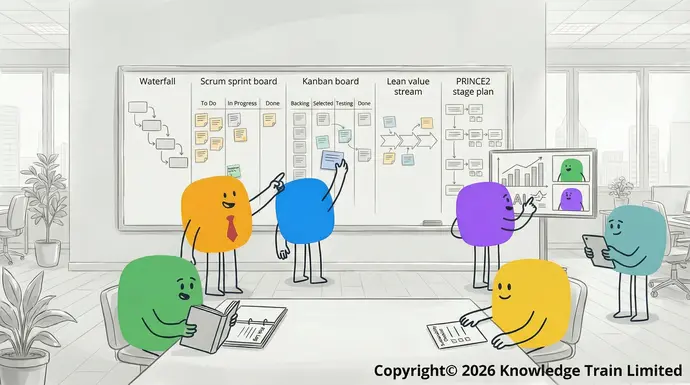
- Waterfall suits stable requirements, while Scrum and Kanban suit change and flow, and Lean targets waste reduction.
- PRINCE2 fits complex or regulated work where governance and business justification matter.
- Select a framework by weighing complexity, industry demands, team capability, stakeholder needs, and constraints, then pilot and refine.
- Successful rollout needs training, the right tools, active change management, and ongoing monitoring and adjustment.
- s with their working style.projects
- Stakeholder requirements aligning with organisational strategy.: Understand the needs and expectations of key stakeholders. Some frameworks, like PRINCE2, place a strong emphasis on stakeholder engagement and communication.Comparing project, programme, product management
- Project goals and constraintsProject management: Consider the objectives, timeline, and budget of your projects. Certain frameworks may better align with your project’s goals and constraints.: Focuses on delivering a unique, timebound outcome.
Five steps to select a frameworkProgramme management
- : Oversees a group of related projects aligned to strategic objectives.: Evaluate the project’s objectives, scope, and limitations. This will help narrow down the frameworks that are a good fit.
- Evaluate team capabilitiesProduct management: Assess your team’s skills and experience. Determine if they have prior exposure to any frameworks or if training will be necessary.: Manages the lifecycle, strategy and development of a product.
- Consider organisational cultureOperations management: Choose a framework that aligns with your organisation’s culture and values. An approach that complements your culture will be more readily adopted.: Manages ongoing processes for continuous delivery of products or services.
- Analyse available resourcesBest practices: Look at the tools, software, and resources available to your team. Some frameworks may require specific tools or software.PMBOK
- Pilot test and gather feedback (: Implement the chosen framework on a small scale or for a short period. Collect feedback from the team and stakeholders to gauge its effectiveness.Project Management Body of Knowledge
Following these steps and considering the listed factors will guide you in selecting a project management framework that best suits your organisation’s needs. It is important to remember that the chosen framework may evolve over time, and flexibility is key.): Comprehensive global standard for project management processes.
Implementing a project management frameworkPRINCE2
Preparation phase: Process-based methodology emphasising control and organisation.
- Training and educationBest practices: Ensure that team members receive comprehensive training on the selected framework. This includes understanding its principles, processes, and tools.: Align with global standards, stakeholder engagement, clear documentation, regular reviews, and continuous improvement.
- Tool selection and setupRefer to the : Choose Project Management Institutesoftware tools and that are compatible with the framework. Set up the tools to mirror your organisation’s unique processes and workflows.other authoritative sources
Rollout strategy for further study.
- Phased approach vs full implementationProject management certifications: Decide whether to implement the framework gradually (phased approach) or all at once (full implementation). Consider your organisation’s size and project complexity.Professional
- Monitoring and adjustingcertifications: Continuously monitor the framework’s effectiveness and make necessary adjustments based on feedback and results. validate project management knowledge and competence:
Common challenges and solutionsPMP
- Resistance to change (Project Management Professional), : Overcome resistance by clearly communicating the benefits of the new framework and involving team members in the decision-making process.CAPM
- Lack of alignment with existing processes (Certified Associate in Project Management) from : Carefully map out how the new framework integrates with existing processes and address any conflicts.
- Inadequate resources or supportPMI: Ensure that the implementation is adequately resourced and supported by the organisation’s leadership.Foundation
Implementing a project management framework requires careful planning and execution. By addressing these key areas, you can increase the chances of successful adoption and reap the benefits of improved and project management practicesPractitioner. level
Future trends in project management frameworksThe five standard stages are Initiating, Planning, Executing, Monitoring and Controlling, and Closing. Each phase plays a vital role in ensuring project objectives are met efficiently.
As the field of What does a project manager do?project managementA continues to evolve, several emerging trends are expected to shape the future of project management frameworks. Here are three key trends to watch out for:project manager
Artificial intelligence and machine learning integration is responsible for planning, executing, and closing
Artificial intelligenceprojects (AI) and . They coordinate tasks, manage the project team, oversee scheduling and budgeting, handle risks, and communicate with stakeholders to ensure successful delivery.machine learningWhat is the difference between Agile and waterfall in project management? (ML) are increasingly being integrated into Agileproject management tools is an iterative approach that emphasises flexibility, frequent feedback and continuous improvement, best for evolving projects. and platforms. These technologies can automate resource allocation, perform risk assessments, and provide predictive analytics, leading to better decision-making and project outcomes.Waterfall
Increased focus on remote and distributed teams is a linear, sequential model suited to projects with well-defined requirements.
The shift towards remote work and the rise of How do I become a project manager?distributed teamsStart by gaining experience in team-based roles, develop relevant skills, and pursue have prompted the development of frameworks that support these new working arrangements. This includes the use of collaboration tools, virtual project rooms, and asynchronous communication methods to ensure effective teamwork.project management certifications
Emphasis on sustainability and social responsibility such as
or CAPM. Practical experience and networking are valuable for career advancement.and social responsibility. This trend reflects a growing awareness of the environmental and social impact of projects. Frameworks may include guidelines for measuring and reducing a project’s carbon footprint and social impact.What are effective project management tools?
ConclusionPopular tools include
Project management frameworks provide structure and guidance for managing projects effectively. We have discussed various factors to consider when selecting a framework and provided a six-step process to help you choose the right one. We have also covered the key aspects of implementing a project management approach, future trends in the field, and the differences between frameworks and methodologies.project management software
Remember that the process of selecting and implementing a project management framework is not set in stone. You should (Microsoft Project, Asana), Gantt charts, continually assessWBS its effectiveness and make adjustments as necessary. As your organisation grows and , and CPM – all of which assist in planning, scheduling, allocating resources, and communication.adaptsSubscribe to our exclusive offers and promotions to new trends, be open to refining your approach to project management. By doing so, you can ensure that your chosen framework continues to serve your team’s needs and contributes to successful project outcomes.
FAQs
What is the difference between a project management framework and a methodology?These project management examples cover a range of industries and situations, showing you what effective project management looks like and highlighting some common project management pitfalls to avoid in your own project management career.
A project management framework is an overarching structure that guides you through the various stages of a project, while a methodology refers to a specific set of practices, processes, and tools used to manage projects . A framework can incorporate one or more methodologies.
Can I use multiple project management frameworks within my organisation?
Yes, you can use multiple project management frameworks in your organisation. In fact, many organisations use a combination of frameworks to suit different types of projects or team preferences.
How often should I review and update our project management framework?
It is recommended to review and update your project management framework annually or after major projects. However, you may need to adjust more frequently if you encounter recurring issues or changes in your organisation’s needs.
Are there any industry-specific project management frameworks?PRINCE2 Agile book review
Yes, some project management frameworks are tailored to specific industries. For example, the construction industry often uses the Construction ExtensionSimon Buehring to the 19 Feb 2026PMBOK Guide . Research to see if there are any industry-specific frameworks that may benefit your organisation.Read our review of the official PRINCE2 Agile guidance manual and understand how it combines structured project management with Agile flexibility.
How can I measure the effectiveness of a project management framework?
You can measure the effectiveness of a project management framework by tracking key performance indicators (KPIs) such as project success rates, adherence to project timelines and budgets, stakeholder satisfaction, and team productivity.
What role does technology play in implementing a project management framework?
Technology plays a crucial role in implementing a project management framework. Project management software can help automate processes, facilitate communication, and provide real-time data for better decision-making. Choose software that aligns with your chosen framework and meets your organisation’s needs.