IntroductionWho uses a business case?
What are soft skills?Business cases can be used by many different levels of management within an organisation. Not only are they used to justify the investment in an individual project, but also they are typically used by a
Soft skills help you work effectively with other people. The soft skills required by a portfolio managementproject manager office to help it decide which projects will contribute to the organisation’s strategic goals. That way, they can filter out the bad ideas for projects, and only fund projects which will contribute to strategic goals.In all cases, the business case must be written and approved prior to any major commitment of resources.
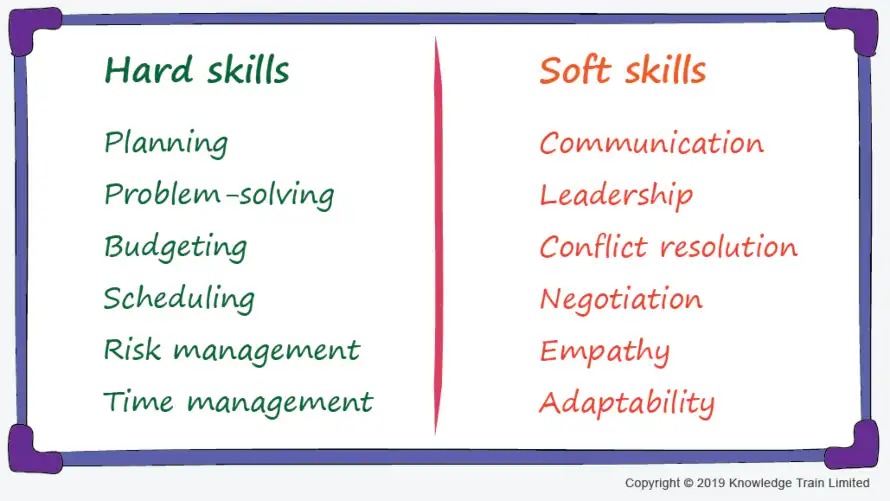
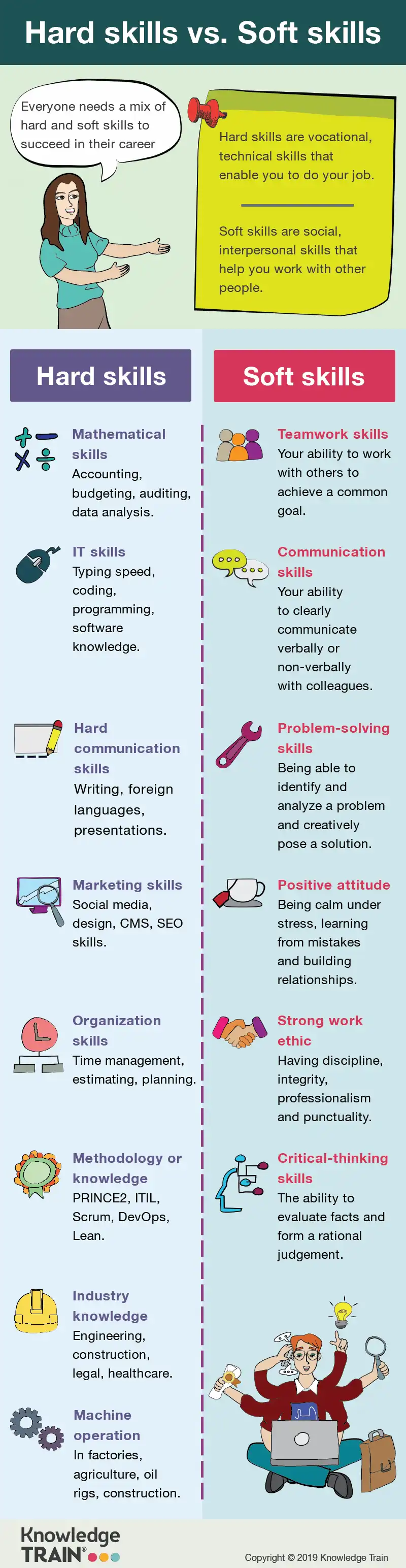
For success in What form does a business case take?project managementBusiness cases can take many forms – digital or analogue. The tools you use to create one are also many and varied. Common business tools such as Microsoft Office might be used. Rather than being a document or slide deck however, it could equally be in the form of an email., possessing a combination of project management soft skills and hard skills is recommended.Equally, a business case could be written by hand on a whiteboard or flipchart, or on the back of a cigarette packet!
Wikipedia defines soft skills as:What you should always remember is that a business case does not have to be a huge long document. In fact, it should be as short as possible, and only include the most important information. That way it cuts out the noise and provides decision-makers with just the right information to enable them to take sensible decisions.
Some examples of focuses its decision-making on a project on having a viable business case.soft skills for project managersBusiness case examples are:We will now give you 2 business case examples. The first example is one which you might find useful for taking decisions in your personal life. The 2nd business case example is more business focused project.
- TeamworkBusiness case example 1: Moving home – your ability to work with other project team members to achieve a common goal.Suppose you and your spouse are considering moving to a new home. You will need to weigh up the pros and cons of moving. This is done using a business case. You might not call it that, but that’s what it is. Let’s look at an example.
- CommunicationReason – your ability to clearly communicate verbally or non-verbally with all project stakeholders.As you can see from the example, the first thing to be clear about in a business case is the reason for doing the project or activity. In this example, the couple has answered the question
- Problem-solvingWhy? – being able to identify and analyze a problem on a project and creatively pose a solution. In fact, there are two problems here – the local school and John’s long commute.
- Positive attitudeOptions considered – being calm under stress, learning from mistakes, and building relationships.A business case should weigh up the competing options which have been considered. After all, there is usually more than one option. Perhaps an alternative option would have been for John to change his job to one nearer their current house. However, this wouldn’t solve the issue with the school.
- Strong work ethicBenefits – having discipline, integrity, professionalism, and punctuality.The benefits of a project or activity are the positive things you’re going to get back in return for your investment of time and money. In this case, the kids will get a better education, and John will save time each day.
- LeadershipTimescales – guiding teams to achieve project goals through vision, direction, and effective decision-making.It’s also important to understand how long the investment of resources will take. This is so that the organisation (or family in this case) knows when the resources will be freed up to work on other
- Critical-thinkingprojects – the ability to evaluate facts and form a rational judgement. or activities.
In contrast, project management hard skills are the technical skills and knowledge required to perform your job as a project manager. These skills are normally industry-specific and can be acquired through There are usually 2 timescales to consider. First, the timescale of the project or activity – in this case 3 months to find a new house and move there. Second, the time over which the benefits shall be realized. In this case it’s 5 years until the kids leave school.project management coursesCosts or on-the-job experience.The costs of doing the project or activity is the next important bit of information. On this project, the costs of moving to a new house will be £5,000. These are the project costs.
Here are some examples:However, the couple will spend an additional £2,000/year for every year over which the business case is calculated. For a project in an organisation, this is usually referred to as the operational costs of maintaining and operating the projects outputs e.g. an IT system. At this point, the couple knows the total costs over the timescales when the benefits shall be realized.
- Mathematic skills – accounting, budgeting, auditing, data analysis.Risks
- IT skills – typing speed, coding, programming, software knowledge.For any activity or project, it’s also important to understand the major risks involved. Risks are the uncertain things which may or may not happen during the period of the investment. There is only one risk identified here, which is the risk that the couple might lose touch with friends who live close to them right now.
- Hard communication skills – writing, foreign languages, presentations.Investment appraisal
- Marketing skills – social media, design, CMS, SEO skills.The next section is where the costs and timescales and risks are weighed up. For this project, it’s a simple decision for the couple to decide if it’s worth spending money over the next 5 years to give their kids better schooling and to save John 2 hours a day commuting.
- Organization skills – time management, estimating, planning.For an organisation to decide if an investment is worthwhile, however, there are several different ways in which it can decide about the investment.
- Industry knowledge – engineering, construction, legal, healthcare.Often in organisations there are rules defined to help business analysts or
Both hard and soft skills are desired by employers when hiring project managers. Hard skills can be proved with a degree, diploma, apprenticeship, professional project managerscertification write what’s called an investment appraisal. In the next example, we’ll look at one example known as net benefits. or other Business case example 2: Handheld device projectqualificationImagine a heating repair services company that uses a paper-based set of forms filled in by an engineer during site visits. The spare parts required to fix the heater are recorded on a form which is given to staff to process back in the office. They then order the parts, and schedule a follow-up visit for the engineer to fix the heater.. However, project manager soft skills can be difficult to prove, so it’s essential to show-off such skills at interview and provide examples on your CV.Enhance your skills with our expert-led courses
Project management soft skills
The work of project managers involves not only managing teams, and ensuring deadlines and budgets are met, but also working with stakeholders. When engaging with stakeholders, project manager soft skills will be sorely tested especially when dealing with senior people across functional boundaries. This can be extremely challenging when such senior people have a much higher level of authority than the project manager.
The Association for Project Management (APM) in the UK recommends project managers have the soft skills listed below as core competencies.
Communication
Communication means relaying information or instructions to other people. It is a vital skill for project managers. Communication can be verbal or non-verbal but must be regular and accurate. The language used should be clear, objective and non-emotive. Listening is also a crucial part of communication.
Conflict management
Conflicts arise due to disagreement, conflicting values, and miscommunication. It causes teams to lack morale, productivity, and harmony. This can cause project failure, so conflict must be dissipated quickly. Conflict can be reduced by setting clear expectations at the start of the project.
DelegationInstructor-led
This is the act of giving team members responsibilities. It can be a way of motivating people to reach their full potential. Better Business Cases Practitioner (with Foundation) courseProject managers must know who has the correct skills, working style and knowledge for the work. Feedback and reward mechanisms should be implemented.£2,400 +vat
Influencing
Leaders must be good influencers. This skill involves affecting the behaviours and actions of the team and stakeholders. It’s better to influence rather than authoritative, so people become willing rather than obedient. This requires empathy and understanding. Influencers must also communicate their vision and generate positivity for the project.See all dates
Leadership
Project managers are leaders. They must inspire, direct, empower and influence their team. Transformational leadership is recommended. This is where leaders help the team succeed and become leaders themselves. They help the team transform and achieve more than was intended. They should mentor their team, celebrate success and constructive feedback should be a two-way thing.
Negotiation
This is when two parties try to reach an agreement. Negotiation usually occurs when agreeing project time, cost, quality, and scope with stakeholders, or signing contracts with suppliers. It also happens when resolving conflict. Good negotiators communicate well, control their emotions, set limits, listen to the other party, and know when to close the deal. They come prepared and know when to walk away.Self-paced
TeamworkBetter Business Cases Practitioner (with Foundation) self-paced online
Teamwork is when a group work together towards a common goal. It works best when people with complementary skills, personalities and different strengths/weaknesses commit to an objective. Project managers must keep the team together via motivation, support, and communication of project goals.
Timescales
Proactive leaders make things happen. They’re positive and learn from mistakes. They stay in control, even in stressful situations, and make rational decisions that help the project move forward. They give praise and deal with criticism constructively.One major risk has been identified in this example, but on your project, there could be many risks.
Reactive leaders are the opposite. They have a lack of control and wait for things to happen. They have no foresight and have a negative outlook. This type of attitude is useless on Investment appraisalprojectsThe final section is the investment appraisal. The investment technique used in this example is called net benefits. As you can see from the table, the project and operational costs are recorded for each year of the investment., where planning, control and decisiveness are vital.The project lasts 1 year which is why the project costs are zero after year 1. Of course, the benefits won’t be realized until the solution is in place and the company starts to use the handheld devices.
How should project managers communicate?The net benefits are simply the total benefits minus the total costs. This shows that the company will start to get a return on its investment sometime towards the end of year 2. This knowledge is vital if the decision-makers are to take a sensible decision about whether to invest in the project.
Communication is the number one core responsibility for project managers. Team members need clear directions and guidance. Stakeholders need regular progress updates. Miscommunication leads to confusion, mistakes, and project failure. Project managers must therefore be clear, confident, and direct.Business case template
Nicci Beacham, Project Manager at Liberty Marketing, believes communication is key:This simple
Keeping communication open is vital. Building rapport with the team and stakeholders helps achieve this. Let people know they can come to you. If people feel unable to approach you with issues, they’ll keep information from you. This causes a breakdown in communication and damages the project.
Learning project manager soft skills
Some project managers seem born with the right skills for the job. They might naturally be more extroverted or adept at leadership. It’s true that being a more naturally outgoing or empathetic person makes you perfect for this role. But this doesn’t mean such skills can’t be learned.
You can learn soft skills with:Instructor-led
- Books or articlesBetter Business Cases Practitioner (with Foundation) course
- Training or coaching£2,400 +vat
- Team-building exercises
- On the job experienceSee all dates
- TED Talks videos on YouTube
Some of the soft skills required for project management are briefly covered on courses like Self-pacedAPM PFQBetter Business Cases Practitioner (with Foundation) self-paced online. This course is a great choice for anyone just starting a project-based career. It is recognized in all industries as proof of project management skills£1,199 +vat.
Dale Carnegie’s two bestselling books How to Win Friends and Influence People and How to Stop Worrying and Start Living are ideal for developing your influencing and communication skills, as well as your attitude to work. The latter will help you become more proactive.
Other recommended books include Leaders Eat Last by Simon Sinek, The 7 Habits of Highly Effective People by Stephen R. Covey and Nonviolent Communication: A Language of Life by Marshall B. Rosenberg and Deepak Chopra.
These days, so much help is available online and offline. If you need to improve your soft skills to become a better Self-pacedproject managerBetter Business Cases Foundation self-paced online, help is out there.
View soft skills infographicIf the project requires external procurement, is the preferred sourcing option stated, and why?

Is it clearly stated how any necessary funding will be obtained?Mariana Magalhães Project Manager at Forty8CreatesDoes the business case include non-financial, as well as financial criteria?