What is the best project management certification in 2026?{"@context":"http://schema.org","@type":"BreadcrumbList","itemListElement":[{"@type":"ListItem","position":1,"name":"Home","item":"https://www.knowledgetrain.co.uk/"},{"@type":"ListItem","position":2,"name":"Project Management","item":"https://www.knowledgetrain.co.uk/project-management"},{"@type":"ListItem","position":3,"name":"Project management principles","item":"https://www.knowledgetrain.co.uk/project-management/project-management-principles"}]}

- Copied!Intermediate certifications test practical application in scenario-based projects and often require earlier certificates or experience.
- Agile-focused options are best when projects run in an agile environment rather than traditional delivery models.Key takeaways
- Some qualifications are regionally stronger, with PRINCE2 widely recognised in the UK and CAPM more common outside it.Strong delivery comes from clear foundations, disciplined control, and continuous learning.
- Expert awards are rare and mainly validate long-term competence through evidence and assessment, not classroom learning.Start with a formal project structure, agreed objectives, and an engaged sponsor who removes roadblocks.
IntroductionManaging project scope and changes
While any project management certification is good to have, some are more specialized than others. It pays to know which project manager certification can be applied to your work, and which are tailored to suit specific industries or work environments. A PRINCE2 Agile certificationRisk management and mitigation for example, is aimed at those who already have a PRINCE2 certificationMonitoring and measuring project progress and what to adapt what they know to suit an Agile environment.
Every certification has a different purpose, different prerequisites, and tests different criteria. So, what you really must ask is: “What project management certification is best for me?”Effective communication and collaboration
What is the best project management certification for me?
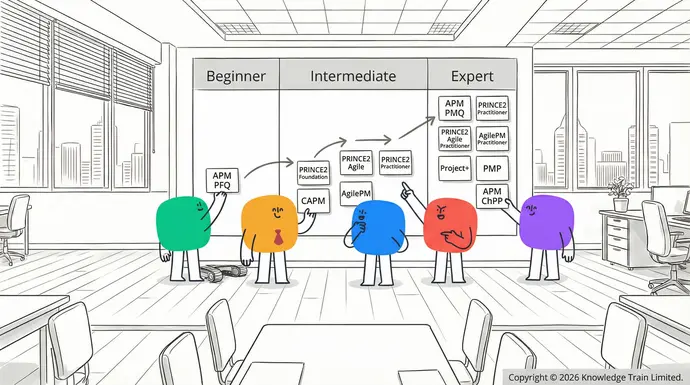
A project manager certification can be put into one of three categories: beginner certification, intermediate certification and expert certification.Value delivery and continuous improvement
A beginner certification is one that has no prerequisites (i.e. it requires no previous experience or knowledge). If you’re new to project management, or if you don’t have any other accreditation, you’ll want to start here.
An intermediate certification is a bit of a mixed bag. Some are just extensions of beginner certifications, while others are aimed at working professionals with at least a few months of project management experience. For this article, we’ll consider intermediate certifications as those that have some entry requirements but don’t require you to be an expert in project management.Conclusion
Expert certifications are still rare. There are only a handful, and those that do exist are less of a learning opportunity and more a badge of excellence rewarded to project managers who take a keen interest in project management theory.
Flexibility in project lifecycle®Flexibility should be built into the project lifecycle to allow for necessary changes: certification is the most challenging one on this list. To be eligible for this certification you must have 3 years of project management experience and a 4-year college/university degree. Without a degree you require 5 years of project management experience. In both cases you also need at least 35 hours of project management education completed before the exam.Use
The PMI PMPiterative methods® when applicable exam covers every aspect of project management from your ability to plan projects to monitoring and controlling project tasks.Conduct regular project reviews
Maintaining your PMI PMPMaintain open communication.®Balancing change and stability qualification requires you continuously accumulate Professional Development Units (PDUs), which are one-hour blocks of time that you spend learning, teaching others, or volunteering.Finding a balance between adaptability and project stability is important.
The following certification tests your in-depth knowledge of project management but is really only valuable if you are already an expert with many years’ experience.
APM ChPPand impact matrix
The APM’s own Project Management Chartered Standard (ChPP) examination similarly takes place over 3 days. In the first 2 days you’ll be given coaching by a ChPP professional and get your paperwork in order. On the final day, interviewed a board and will have to provide comprehensive documentation of your work over the past several years.SWOT analysis
The board will be looking to see that you’ve not only encountered several setbacks in your project management career, but that you’ve also overcome these challenges with a little ingenuity and out-the-box thinking. (Strengths, Weaknesses, Opportunities, Threats)
ConclusionDelphi technique (expert consensus)
This list of the top project management certifications is by no means complete. There are other project management accreditations out there, these just happen to be the most widely recognized certifications in the UK and EU.Fault tree analysis.
No matter how much experience you have, or what you’re looking for a project management certification, there’s likely a certificate out there.Take the following proactive actions to reduce the likelihood of risk occurrence:
If you you’d like to gain any of the certifications listed in this article, why not look at some of the Regular risk reviewsproject management certification coursesClear communication channels offered by Knowledge Train.Quality assurance processes