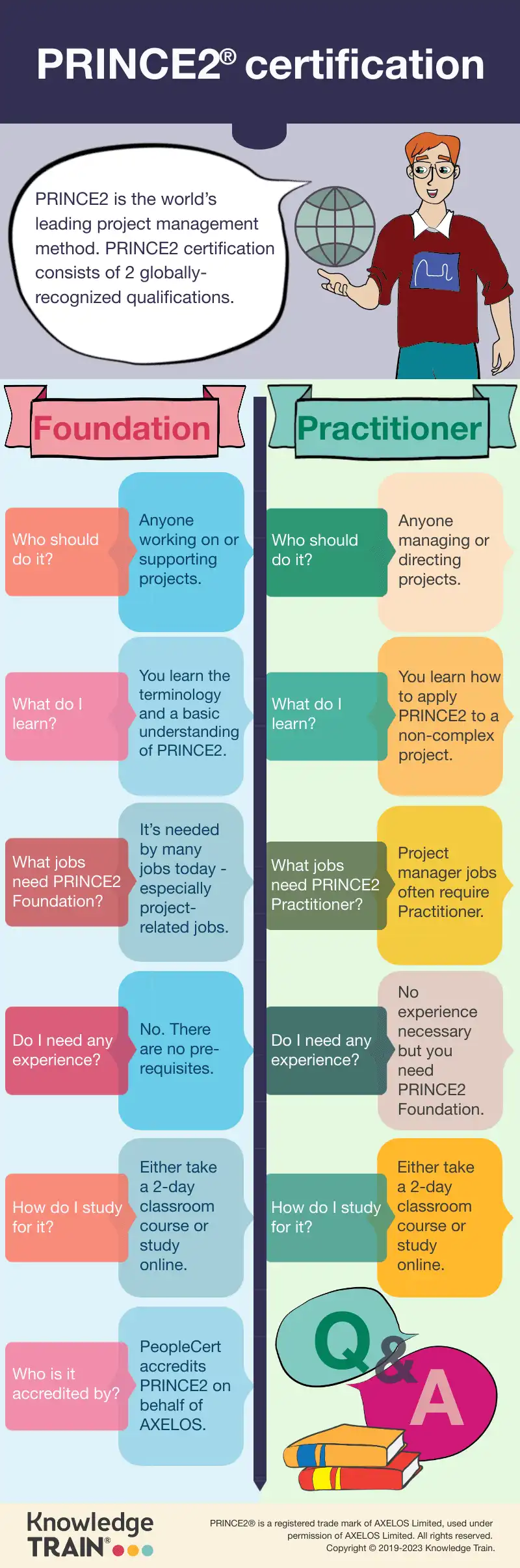
serve as physical representations of each work item and task displayed on the board.

- Give us a call
- +44 (0)207 148 5985
Knowledge Train are experts in project management, PRINCE2, agile and change management training and certification. Choose from a full range of instructor-led and self-paced
project management courses, a PRINCE2 course, or an agile project management course to boost your career. PRINCE2
®, MSP®
, ITIL
®
, P3O
Agile, RESILIA
®, and the Swirl logo are registered trademarks of the PeopleCert group. Used under licence from PeopleCert. All rights reserved. AgilePM
®
and AgileBA
®
are registered trademarks of Agile Business Consortium Limited. All rights reserved. The APMG International AgilePM and Swirl Device logo, APMG International AgileBA and Swirl Device Logo, APMG International Change Management and APMG International Better Business Cases and Swirl Device logo are trademarks of The APM Group Limited, used under permission of The APM Group Limited. All rights reserved. Better Business Cases™ is a trademark of Her Majesty’s Treasury. All rights reserved. DevOps Foundation
®
Establish a basis for resource allocation and scheduling. is a registered mark of the DevOps Institute. “PMI”, “PMBOK Creating a WBS helps to ensure that all aspects of the project are considered and nothing is overlooked.®{"@context":"https://schema.org","@type":"FAQPage","mainEntity":[{"@type":"Question","name":"What is change management?","acceptedAnswer":{"@type":"Answer","text":"Change management is the process of helping people and businesses adapt to new changes. It involves managing change in a way that ensures smooth transitions. This means using best practices to tackle challenges and guide teams through changes."}},{"@type":"Question","name":"Why do businesses need change management courses?","acceptedAnswer":{"@type":"Answer","text":"Businesses need change management courses to handle changes well. These courses teach effective ways for managing change and making sure transitions go smoothly. By learning proven methods, businesses can deal with changes without disrupting their work."}},{"@type":"Question","name":"What are the different types of change management programs?","acceptedAnswer":{"@type":"Answer","text":"Change management programs come in many forms to fit different learning needs. These courses can be for beginners or those looking for advanced skills. They include: Foundation and Practitioner courses: These cover both basic and intermediate change management skills. Training courses: Short-term courses that focus on specific parts of change management. They are good for focused learning. Management certification: These programs offer formal qualifications to show your expertise in change management."}},{"@type":"Question","name":"How do in-person and online change management courses compare?","acceptedAnswer":{"@type":"Answer","text":"When picking between online and in-person change management courses, think about what fits your learning style and schedule best. In-person courses: Allow face-to-face interaction with teachers and peers. Offer a structured environment, which helps in understanding and remembering information. Provide real-time feedback and quick answers to questions. Online courses: Let you learn at your own pace. Use formats like e-learning modules and virtual classrooms. Often have the latest materials and updates in programme management."}},{"@type":"Question","name":"How does certification impact career growth?","acceptedAnswer":{"@type":"Answer","text":"Having a certification can help you grow in your career faster. Certifications add important qualifications to your profile, making you look better on your business card. They boost your resume by showing you can use proven principles to manage and expand changes in an organisation. Finding the right certification can open new doors and chances for advancement."}},{"@type":"Question","name":"What are the recognised certifications in change management?","acceptedAnswer":{"@type":"Answer","text":"Here are some well-known certifications to help you become a skilled change manager: APMG International: Provides change management certification. These certifications are the best and most popular in change management. They each have a proven history of improving practitioner skills across different fields."}},{"@type":"Question","name":"What are the benefits of enrolling in change management courses for managers?","acceptedAnswer":{"@type":"Answer","text":"Change management courses help managers learn how to guide their teams through changes. They teach skills for handling staff behaviour, emotions, and values during changes. These courses also cover new technologies like AI and digital tools to make the process smoother."}},{"@type":"Question","name":"Can I study change management online through self-study options?","acceptedAnswer":{"@type":"Answer","text":"Yes, you can study change management online. We offer eBooks, digital badges, and other resources so you can learn at your own speed. You can also find relevant courses on platforms like Coursera and Google."}},{"@type":"Question","name":"Are there any professional bodies that recognise your change management courses?","acceptedAnswer":{"@type":"Answer","text":"Yes, our courses are recognised by various professional bodies. We align with standards set by Ofqual and other organisations to ensure high-quality education."}},{"@type":"Question","name":"What qualifications do I need to attend a change management foundation course?","acceptedAnswer":{"@type":"Answer","text":"No prior qualifications are usually needed for our foundation course in change management. However, having some understanding of HRM or managing roles can be helpful."}},{"@type":"Question","name":"How does neuroscience play a role in change management?","acceptedAnswer":{"@type":"Answer","text":"Neuroscience helps managers understand how people's brains react to change. This knowledge makes it easier to reduce resistance and stress among employees, improving overall leadership and transition processes."}},{"@type":"Question","name":"Do you offer classroom-based change management training?","acceptedAnswer":{"@type":"Answer","text":"Yes, we provide both classroom-based and virtual classroom training. You can choose the type that fits your learning style and schedule. Our training includes practical activities and real-world scenarios."}},{"@type":"Question","name":"Is there a focus on agile project management in your courses?","acceptedAnswer":{"@type":"Answer","text":"Yes, our courses include principles of agile project management. Managers learn how to use agile methods like Scrum to adapt quickly and improve project outcomes."}},{"@type":"Question","name":"Can HR managers benefit from change management courses?","acceptedAnswer":{"@type":"Answer","text":"Yes, HR managers can benefit a lot. These courses teach skills for managing workforce changes, understanding employment laws, and creating a supportive work culture."}},{"@type":"Question","name":"What kind of support can I expect during the course?","acceptedAnswer":{"@type":"Answer","text":"You will get full support during your training. This includes access to FAQs, discussions, and one-on-one sessions with instructors. We also offer eBooks and access to a knowledge base for continued learning."}},{"@type":"Question","name":"How do change management courses address issues in the digital age?","acceptedAnswer":{"@type":"Answer","text":"Our courses focus on adapting to the digital age. You will learn about using AI, data analytics, and other digital tools to manage change effectively."}},{"@type":"Question","name":"Do you offer qualifications that are recognised globally?","acceptedAnswer":{"@type":"Answer","text":"Yes, the qualifications from our courses are recognised worldwide. We work with accredited universities and professional bodies to ensure our certifications meet international standards."}},{"@type":"Question","name":"What kind of practical experience will I gain?","acceptedAnswer":{"@type":"Answer","text":"You will engage in case studies, simulations, and gap analysis. These activities help you use what you learn in real-world situations, improving your problem-solving and decision-making skills."}},{"@type":"Question","name":"Can I earn digital badges or other credentials upon completion?","acceptedAnswer":{"@type":"Answer","text":"Yes, after completing our courses, you can earn digital badges and other credentials. These badges show your skills and can be shared on professional platforms like LinkedIn."}},{"@type":"Question","name":"Do your courses cover risk management in change initiatives?","acceptedAnswer":{"@type":"Answer","text":"Yes, our courses include modules on risk management. You will learn how to identify, assess, and reduce risks linked to change initiatives to ensure smoother processes."}},{"@type":"Question","name":"How does change management impact organisational values?","acceptedAnswer":{"@type":"Answer","text":"Change management aligns organisational values with new goals. Our courses teach how to communicate effectively, manage staff behaviours, and support positive changes within the organisation."}},{"@type":"Question","name":"What industries can benefit from change management training?","acceptedAnswer":{"@type":"Answer","text":"Many industries like aerospace, healthcare, and IT can benefit. Our courses are designed to address the unique challenges and needs of different sectors."}},{"@type":"Question","name":"Are there any prerequisites for advanced change management courses?","acceptedAnswer":{"@type":"Answer","text":"For advanced courses, it's good to have some foundational knowledge or experience in managing teams or projects. Prior training in Agile project management or Business Analysis can also help."}},{"@type":"Question","name":"Can I customise the training for in-company sessions?","acceptedAnswer":{"@type":"Answer","text":"Yes, we offer customised in-company training sessions. These sessions ensure that the content is relevant and useful for your organisation's specific needs."}}]}Project timeline and milestones Guide”, “PMP” and “CAPM” are registered marks of Project Management Institute, Inc. Knowledge Train Scrum Essentials™, Business Learning Library (BLL)™, Business Analysis Learning Library (BALL)™, Agile Learning Library (ALL)™, IT Learning Library (ITLL)™, and Compliance Learning Library (CLL)™ are trademarks of Knowledge Train Limited. All rights reserved.
The Knowledge Train Ltd is an Introducer Appointed Representative of NewDay Cards Ltd for the Newpay finance product provided by NewDay Ltd. NewDay Cards Ltd acts as a credit broker, not a lender. We will introduce you exclusively to Newpay finance products provided by NewDay Limited under this Introducer Appointed Representative arrangement. Finance available from other lenders is not covered by this arrangement. NewDay Ltd and Newday Cards Ltd are authorised and regulated by the Financial Conduct Authority (ref nos 690292 and 682417 respectively).
{"@context":"http://schema.org","@type":"WebPage","headline":"Change Management Training Courses and Online Training","url":"https://www.knowledgetrain.co.uk/change-management/change-management-courses","significantLink":"https://apmg-international.com/product/change-management","about":[{"@type":"Thing","name":"training","sameAs":["http://en.wikipedia.org/wiki/Training","https://www.google.com/search?&kgmid=/m/014jg3","https://www.wikidata.org/wiki/Q918385"]},{"@type":"Thing","name":"change management","sameAs":["http://en.wikipedia.org/wiki/Change_management","https://www.google.com/search?&kgmid=/m/05qb9n6","https://www.wikidata.org/wiki/Q116348"]}],"mentions":[{"@type":"Thing","name":"Professional certification","sameAs":["https://en.wikipedia.org/wiki/Professional_certification","https://www.google.com/search?&kgmid=/m/01vt2"]},{"@type":"Thing","name":"Educational technology","sameAs":["https://en.wikipedia.org/wiki/Educational_technology","https://www.google.com/search?&kgmid=/m/067_f8"]},{"@type":"Thing","name":"Distance education","sameAs":["https://en.wikipedia.org/wiki/Distance_education","https://www.google.com/search?&kgmid=/m/02h32"]},{"@type":"Thing","name":"Change management","sameAs":["https://en.wikipedia.org/wiki/Change_management","https://www.google.com/search?&kgmid=/m/05qb9n6"]},{"@type":"Thing","name":"Training","sameAs":["https://en.wikipedia.org/wiki/Training","https://www.google.com/search?&kgmid=/m/014jg3"]},{"@type":"Thing","name":"Leadership","sameAs":["https://en.wikipedia.org/wiki/Leadership","https://www.google.com/search?&kgmid=/m/025rt2s"]}]}project timeline
- provides a visual representation of the project’s duration and key events. It should include:
- Start and end dates for each task
- Important milestones and deadlines
- Task dependencies and critical path.
Using visual tools like Gantt charts can effectively illustrate the project timeline and make it easier for stakeholders to understand the project’s schedule.Search
Resource allocation
List the resources
needed to complete the project, including:
- Manage Consent
- Functional
- Describe the communication methods and frequency Always active Establish reporting structures and escalation procedures Specify the tools and platforms for information sharing. Effective communication is key to project success, and a well-defined
- communication plan can help to ensure that all stakeholders are informed and engaged throughout the project lifecycle. Steps to create a project plan How to write a project plan in 6 stepsThe technical storage or access is strictly necessary for the legitimate purpose of enabling the use of a specific service explicitly requested by the subscriber or user, or for the sole purpose of carrying out the transmission of a communication over an electronic communications network.A good project plan is a project manager’s best friend. Follow these six steps to write a comprehensive project plan.
Step 1: Start with an executive summary
An executive summary is a brief overview of the main points covered in the rest of the project plan. It is usually the first section to be read by stakeholders, which makes it an important one as well.
Key points to cover
Project purpose and objectivesPreferences
A high-level overview of scope, timeline, and budget Learn more: Key deliverables and milestones ScrumPotential risks and mitigation strategies. ,
Tips for an effective summaryPreferencesKanban in project management
Keep it short (1-2 pages maximum) Explore: Use clear, concise language Agile vs waterfall modelsFocus on the most important information
Customise content to your audience.
Step 2: Define the project scope Defining a clear project scope is crucial for successful project execution. It sets the boundaries for what needs to be done and prevents scope creep (expansion of the project after its start). Setting project boundaries Define project constraints (time, budget, resources)The technical storage or access is necessary for the legitimate purpose of storing preferences that are not requested by the subscriber or user.Clearly state what is and is not part of the project
Outline any assumptions and dependencies.
Identifying deliverables and expectations
List all the deliverables of the project Define acceptance criteria for each deliverableStatisticsState stakeholder expectations clearly.
Addressing potential risks
Do a preliminary risk assessment List potential risks and obstaclesStatisticsProvide a high-level overview of how to mitigate them.
Step 3: Structure your project
Organising your project helps ensure that everything is in the right place and in the right order. Choosing a framework Select an appropriate project management framework (
Waterfall