
- . It is an organisational function responsible for standardising governance processes, sharing methodologies,
- tools
- , and
- techniques
- , and improving overall project success.
Quality
InnovationSocial responsibility SOCIAL RESPONSIBILITYSome of the charities we have helped over the years:
AWARDSWe don’t go seeking awards, but here are two of the awards we have received for our training.
Request a quote
| +44 (0)207 148 5985 | [email protected] | ||
| United Kingdom |
Developing your project management career takes strategic planning. Discover actionable strategies to advance in the field by reading this article.
The technical storage or access that is used exclusively for statistical purposes.
The technical storage or access that is used exclusively for anonymous statistical purposes. Without a subpoena, voluntary compliance on the part of your Internet Service Provider, or additional records from a third party, information stored or retrieved for this purpose alone cannot usually be used to identify you.
Women in project management
Simon Buehring
19 Feb 2026
Explore challenges and opportunities for women in project management through our interview series. Gain insights into industry experiences and advice.Marketing
Marketing
Project controls – your driver to project success Knowledge Train 19 Feb 2026
Project controls are an essential part of project management. Find out how you can use them to measure project progress, predict outcomes and steer projects on the right course.
Strategies for balancing constraints
Tools for managing the project triangle
Common challenges and solutions
Project management triangle best practices
Applying the project management triangle
Conclusion
- Knowledge Train are experts in project management, PRINCE2, agile and change management training and certification. Choose from a full range of instructor-led and self-paced project management courses
- , a
- PRINCE2 course
- , or an agile project management course to boost your career.
PRINCE2
®, MSP®
, ITIL
®
, P3O
®
, PRINCE2
like Scrum or Kanban emphasise iterative development and are best for projects where scope may need to be flexible or change over time.®
Lean approaches Agile, RESILIA prioritise efficiency and cost control and are useful when budget is the main constraint.®Choosing the right approach from the beginning aligns with the key constraints., and the Swirl logo are registered trademarks of the PeopleCert group. Used under licence from PeopleCert. All rights reserved. AgilePM
®Follow the tips above to help manage the project management triangle and balance constraints throughout your project. The most important thing is to continuously monitor and maintain alignment of the three sides. Assess the status of scope, time, and cost regularly to identify imbalances. Be willing to make informed decisions and trade-offs as necessary. And communicate clearly with stakeholders about any changes to plans or constraints.
and AgileBAStrategies for balancing constraints®Managing constraints effectively requires specific strategies for each side of the project management triangle. Here are some tips for balancing scope, time, cost and quality:are registered trademarks of Agile Business Consortium Limited. All rights reserved. The APMG International AgilePM and Swirl Device logo, APMG International AgileBA and Swirl Device Logo, APMG International Change Management and APMG International Better Business Cases and Swirl Device logo are trademarks of The APM Group Limited, used under permission of The APM Group Limited. All rights reserved. Better Business Cases™ is a trademark of Her Majesty’s Treasury. All rights reserved. DevOps FoundationScope management techniques
®When managing project scope, you can try these tips:
is a registered mark of the DevOps Institute. “PMI”, “PMBOKDefine project boundaries®: Clearly outline the scope of the project and its deliverables at the beginning.Guide”, “PMP” and “CAPM” are registered marks of Project Management Institute, Inc. Knowledge Train Scrum Essentials™, Business Learning Library (BLL)™, Business Analysis Learning Library (BALL)™, Agile Learning Library (ALL)™, IT Learning Library (ITLL)™, and Compliance Learning Library (CLL)™ are trademarks of Knowledge Train Limited. All rights reserved.Scope change control
Knowledge Train Ltd is an Introducer Appointed Representative of NewDay Cards Ltd for the Newpay finance product provided by NewDay Ltd. NewDay Cards Ltd acts as a credit broker, not a lender. We will introduce you exclusively to Newpay finance products provided by NewDay Limited under this Introducer Appointed Representative arrangement. Finance available from other lenders is not covered by this arrangement. NewDay Ltd and Newday Cards Ltd are authorised and regulated by the Financial Conduct Authority (ref nos 690292 and 682417 respectively).: Establish a process for handling changes to
the project scope.
Monitor for scope creep
: Regularly review project requirements to ensure they align with the defined scope.
Prioritisation
: Use a prioritisation method, such as
MoSCoW
, to determine which features are essential, desirable, optional, or not required.
Time management approaches
When managing project time, you can try these tips:
Critical path
: Identify the tasks that must be completed on time for the project to stay on schedule.
Resource leveling: Optimise the use of resources to avoid overloading or underutilisation.Timeboxing
: Set a fixed time period for specific tasks or project phases.
Agile sprints
: Break the project into short, focused work cycles with specific goals.Cost control methodsWhen managing project cost, you can try these tips:
Earned value management
: Track the project’s progress in relation to its budget and schedule.Cost baseline: Create a detailed budget for each phase of the project.
Forecasting
: Regularly estimate the future costs of the project based on current performance and trends.
Vendor management: Negotiate favourable terms and monitor supplier costs.Quality assurance practices
When managing project quality, you can try these tips:
Quality standards
: Define specific, measurable quality criteria for the project deliverables.
Continuous testing
: Implement regular quality checks throughout the project lifecycle.
Peer review
: Leverage the expertise of team members to identify and address quality issues.
Customer feedback
: Regularly collect and incorporate stakeholder feedback on project deliverables.
Through the implementation of these methods, project managers can successfully navigate and mitigate trade-offs between the competing constraints of scope, time, cost, and quality. However, it is important to note that constraint management is an iterative process that necessitates continuous monitoring and adjustment in response to changing project dynamics.
Tools for managing the project management triangle
What is the difference between portfolio and project work?®Statistics
Instructor-led, P3O Introduction to Project Management course®The difference between portfolio and project work can be summarised as: , PRINCE2
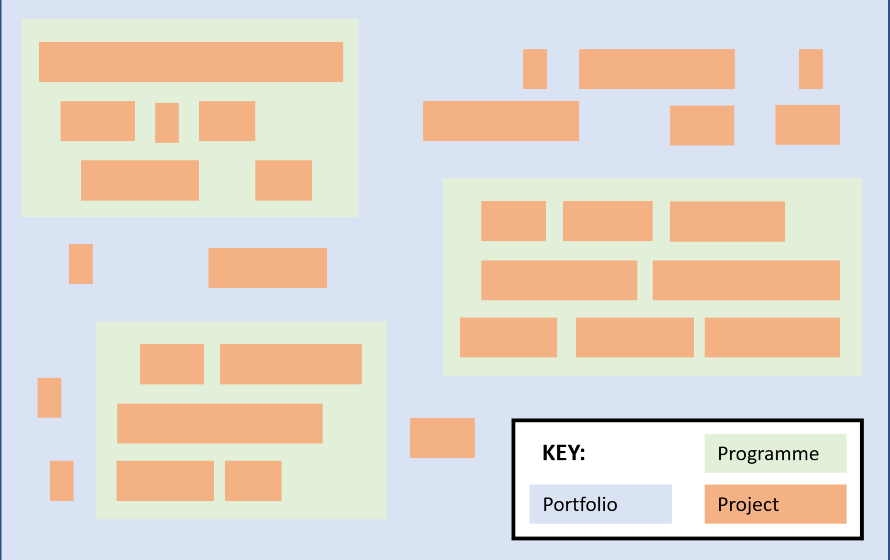
- Portfolio work involves managing a group of projects and programmes to achieve strategic objectives. Portfolio management encompasses the selection and oversight of projects.®£499 +vat
- Project work focuses on the execution of a single project to achieve its specific objectives. Project management involves the execution and delivery of the project itself. Agile, RESILIA
What is the difference between project and portfolio management?®See all dates
, and the Swirl logo are registered trademarks of the PeopleCert group. Used under licence from PeopleCert. All rights reserved. AgilePM ® The technical storage or access that is used exclusively for statistical purposes.The difference between project and portfolio management can be summarised as: and AgileBA
- Project management is the discipline of planning, organizing, and managing resources to successfully complete a specific project. It involves the applying knowledge, skills, tools, and techniques to meet project requirements and deliver desired outcomes within cost, scope, schedule, and quality constraints.®Instructor-ledThe technical storage or access that is used exclusively for anonymous statistical purposes. Without a subpoena, voluntary compliance on the part of your Internet Service Provider, or additional records from a third party, information stored or retrieved for this purpose alone cannot usually be used to identify you.
- Portfolio management is the strategic management of a collection of projects, programmes, subsidiary portfolios, and operations to achieve organizational goals. It involves selecting and prioritizing projects or programmes based on their alignment with strategic objectives, optimizing resource allocation, balancing risk, and maximizing value across the entire portfolio. are registered trademarks of Agile Business Consortium Limited. All rights reserved. The APMG International AgilePM and Swirl Device logo, APMG International AgileBA and Swirl Device Logo, APMG International Change Management and APMG International Better Business Cases and Swirl Device logo are trademarks of The APM Group Limited, used under permission of The APM Group Limited. All rights reserved. Better Business Cases™ is a trademark of Her Majesty’s Treasury. All rights reserved. DevOps FoundationProject Management Essentials
Why is project portfolio management important?®
is a registered mark of the DevOps Institute. “PMI”, “PMBOK£999 +vat ®Why is project portfolio management important? Guide”, “PMP” and “CAPM” are registered marks of Project Management Institute, Inc. Knowledge Train Scrum Essentials™, Business Learning Library (BLL)™, Business Analysis Learning Library (BALL)™, Agile Learning Library (ALL)™, IT Learning Library (ITLL)™, and Compliance Learning Library (CLL)™ are trademarks of Knowledge Train Limited. All rights reserved.See all dates
Project portfolio management is important for 5 main reasons:Knowledge Train Ltd is an Introducer Appointed Representative of NewDay Cards Ltd for the Newpay finance product provided by NewDay Ltd. NewDay Cards Ltd acts as a credit broker, not a lender. We will introduce you exclusively to Newpay finance products provided by NewDay Limited under this Introducer Appointed Representative arrangement. Finance available from other lenders is not covered by this arrangement. NewDay Ltd and Newday Cards Ltd are authorised and regulated by the Financial Conduct Authority (ref nos 690292 and 682417 respectively).Common challenges and solutionsMarketing
Strategic alignment Scope creep
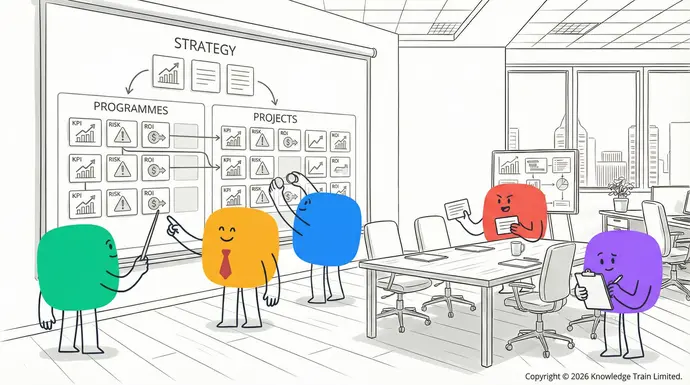
It ensures that projects and programmes are aligned with the organization’s strategic goals and objectives. This alignment ensures that resources are allocated to initiatives that contribute the most value and support the organization’s overall strategy. Scope creep
Optimized resource allocation involves changes or expansion in the project’s scope after it has already started. This can lead to an increase in resources, time, and effort needed to complete the project.
Project portfolio management helps organizations make informed decisions about resource allocation. By assessing project priorities, dependencies, and resource availability, it enables efficient allocation of resources, reducing bottlenecks and maximizing productivity. SolutionsMarketing
Risk Management Establish a formal change control process to manage scope changes effectively.
A portfolio perspective allows organizations to assess and manage risks at a higher level. By evaluating project risks collectively, portfolio managers can identify and address risks that may not be apparent at the individual project level, making informed decisions to mitigate potential negative impacts.SearchClearly define project scope and requirements during the planning phase.
Portfolio performance monitoring Communicate regularly with stakeholders to manage expectations.
Project portfolio management provides a comprehensive view of the performance of projects and programmes. It enables monitoring and tracking of key performance indicators, allowing organizations to assess the progress, make adjustments, and take corrective actions to ensure successful project delivery and desired outcomes. Implement a prioritisation system for new requests and changes.
Optimal decision-making Time constraints
With project portfolio management, organizations can make data-driven decisions regarding project initiation, continuation, or termination. It provides a structured framework to evaluate project proposals, prioritize investments, and select the most valuable projects to pursue. Projects often face