Portfolios and portfolio managementLuxemburg

Key takeaways
Portfolio management connects strategy to delivery by choosing and steering the right mix of initiatives.Instructor-led
- A portfolio groups projects, programmes, and operations to deliver strategic objectives, not just outputs.
- Portfolio management is a continuous cycle of selection, prioritisation, authorisation, and review as conditions change.
- Decisions should balance strategic fit, expected benefits, risk exposure, and constrained resources.
- Strong governance and performance monitoring improve transparency, accountability, and stakeholder confidence.
- PMOs, digital tools, analytics, and automation increase visibility of interdependencies and improve decision-making.

Understanding portfolios
The concepts of portfolios, programmes, and projects are commonly mixed up and frequently lead to confusion. This article aims to untangle these notions, providing insights into their unique characteristics, goals, and management strategies.
By attaining a clearer understanding of these terms, professionals and businesses can make more knowledgeable strategic choices, thus elevating the overall effectiveness of their strategic endeavours. Additionally, it can assist organizations in determining whether embracing specific project management methodologies All major cards accepted. such as Invoice/PO option available in checkout.PRINCE2 for projects, MSP for programmes, and MoP for portfolios can facilitate the efficient management of their projects, programmes, and portfolios.Enrol
Definition of portfolios
Portfolios serve as the apex of organizational investments. A portfolio encompasses all the projects , Overviewprogrammes , and ongoing operational activities that are grouped together to fulfil strategic business goals.
In contrast to projects and programmes, which centre on execution and delivery, portfolios concentrate on the broader perspective. They involve making determinations regarding which initiatives to pursue, guided by considerations such as strategic alignment, risk assessment, return on investment, and other pertinent factors.
Differences between projects, programmes, and portfoliosDelivery
This table shows the differences between projects, programmes, and portfolios.
| Projects | Programmes | PortfoliosCourse | |
| Purpose and objectives | |||
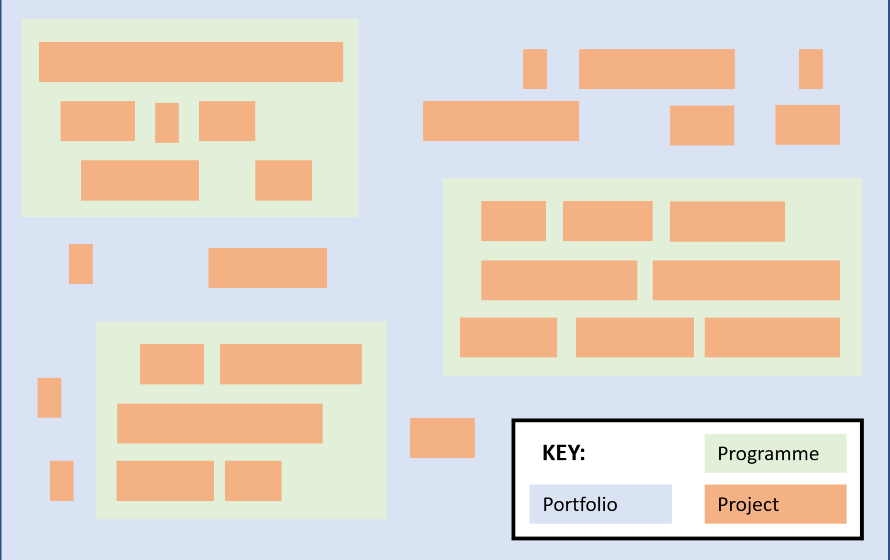
{"@context":"http://schema.org","@type":"EducationEvent","name":"BCS Foundation Certificate in Business Analysis course","startDate":"2026-07-13","endDate":"2026-07-15","description":"BCS Foundation Certificate in Business Analysis course","url":"https://www.knowledgetrain.co.uk/business-analysis/business-analyst-course/bcs-business-analysis-certification/bcs-business-analysis-foundation","eventStatus":"EventScheduled","eventAttendanceMode":"OnlineEventAttendanceMode","audience":{"@type":"Audience","name":" and <p>The BCS Foundation certificate in Business Analysis course is suitable for business analysts, business managers and team members, business change managers, software development professionals, and project managers seeking continuing professional development (CPD), and employees wanting a foundation of business analysis techniques and best practices to call upon.projects>"},"aggregateRating":{"@type":"AggregateRating","ratingValue":"4.8","reviewCount":"227"},"location":{"@type":"VirtualLocation","url":"https://www.knowledgetrain.co.uk/business-analysis/business-analyst-course/bcs-business-analysis-certification/bcs-business-analysis-foundation"},"image":["https://www.knowledgetrain.co.uk/training-courses/res/logos/bcs-accredited-training-partner-logo.svg"],"offers":{"@type":"Offer","url":"https://www.knowledgetrain.co.uk/business-analysis/business-analyst-course/bcs-business-analysis-certification/bcs-business-analysis-foundation","price":"1299.00","priceCurrency":"GBP","availability":"http://schema.org/InStock","validFrom":"2026-05-27"},"performer":{"@type":"Person","name":"Susan Tuttle"},"organizer":{"@type":"Organization","name":"Knowledge Train","url":"https://www.knowledgetrain.co.uk/business-analysis/business-analyst serve as the foundational elements of portfolios. Each programme or project integrated within a portfolio should be in sync with the organization’s strategic objectives. The cumulative performance of these programmes and projects is the yardstick for evaluating the portfolio’s success. Through the delivery of their distinct outputs (projects) and outcomes (programmes), they actively contribute to the realization of the strategic goals encapsulated within the portfolio.
Striking a balance between projects, programmes, and portfolios-course/bcs-business-analysis-certification/bcs-business-analysis-foundation"}}
Striking a balance and aligning projects, programmes, and portfolios is a strategic endeavour that guarantees the collective contribution of all initiatives toward the overarching business objectives. This entails the routinely assessing the portfolio and making requisite adaptations in response to shifts in business strategy, project performance, or the availability of resources.
Effective alignment and balance serve as key enablers for the optimal utilization of resources, the comprehensive management of risks at every level, and the organization’s ability to flexibly adapt to evolving circumstances while remaining steadfast on the path to achieving its strategic objectives.
Effective management of portfolios
Essential skills for portfolio managers07 Sep - 09 Sep
Effective management of portfolios requires a range of skills including:
- Strategic thinking to align initiatives with business strategy.BCS Foundation Certificate in Business Analysis course (Online)
- Leadership to inspire and guide.
- Risk management £1,299 to anticipate and mitigate risks across the portfolio.
- Communication skills to deliver clear, timely information to stakeholders at the highest levels in the organization.£1,599
- Soft skills such as negotiation, prioritization, the ability to see the bigger picture, as well as many other skills.
Proficient Enrol nowportfolio management necessitates a diverse set of skills, including the ones below.
Strategic thinking
The capability to align initiatives with the organization’s overarching business strategy.
Leadership{"@context":"http://schema.org","@type":"EducationEvent","name":"BCS Foundation Certificate in Business Analysis course","startDate":"2026-09-07","endDate":"2026-09-09","description":"BCS Foundation Certificate in Business Analysis course","url":"https://www.knowledgetrain.co.uk/business-analysis/business-analyst-course/bcs-business-analysis-certification/bcs-business-analysis-foundation","eventStatus":"EventScheduled","eventAttendanceMode":"OnlineEventAttendanceMode","audience":{"@type":"Audience","name":"
"},"aggregateRating":{"@type":"AggregateRating","ratingValue":"4.8","reviewCount":"227"},"location":{"@type":"VirtualLocation","url":"https://www.knowledgetrain.co.uk/business-analysis/business-analyst-course/bcs-business-analysis-certification/bcs-business-analysis-foundation"},"image":["https://www.knowledgetrain.co.uk/training-courses/res/logos/bcs-accredited-training-partner-logo.svg"],"offers":{"@type":"Offer","url":"https://www.knowledgetrain.co.uk/business-analysis/business-analyst-course/bcs-business-analysis-certification/bcs-business-analysis-foundation","price":"1299.00","priceCurrency":"GBP","availability":"http://schema.org/InStock","validFrom":"2026-05-27"},"performer":{"@type":"Person","name":"Susan Tuttle"},"organizer":{"@type":"Organization","name":"Knowledge Train","url":"https://www.knowledgetrain.co.uk/business-analysis/business-analyst-course/bcs-business-analysis-certification/bcs-business-analysis-foundation"}}
The ability to convey clear and timely information to stakeholders at the highest echelons of the organization.
Soft skills
This includes competencies like negotiation, prioritization, the aptitude to perceive the broader perspective, and a myriad of other skills that contribute to effective portfolio management.
Risk management02 Nov - 04 Nov
The skill to anticipate and proactively mitigate risks spanning the entire portfolio.
Tools and techniques for portfolio managementBCS Foundation Certificate in Business Analysis course (Online)
An array of tools and techniques are instrumental in portfolio management, including the ones below.
Risk management tools £1,299
These help to identify and mitigate risks within the portfolio, ensuring proactive risk management.
Communication platforms£1,599
PESTLE analysis, and cost-benefit analysis play a pivotal role in supporting strategic decision-making within portfolio management, providing valuable insights and data-driven guidance.
Advantages and challenges in portfolio management{"@context":"http://schema.org","@type":"EducationEvent","name":"BCS Foundation Certificate in Business Analysis course","startDate":"2026-11-02","endDate":"2026-11-04","description":"BCS Foundation Certificate in Business Analysis course","url":"https://www.knowledgetrain.co.uk/business-analysis/business-analyst-course/bcs-business-analysis-certification/bcs-business-analysis-foundation","eventStatus":"EventScheduled","eventAttendanceMode":"OnlineEventAttendanceMode","audience":{"@type":"Audience","name":"
"},"aggregateRating":{"@type":"AggregateRating","ratingValue":"4.8","reviewCount":"227"},"location":{"@type":"VirtualLocation","url":"https://www.knowledgetrain.co.uk/business-analysis/business-analyst-course/bcs-business-analysis-certification/bcs-business-analysis-foundation"},"image":["https://www.knowledgetrain.co.uk/training-courses/res/logos/bcs-accredited-training-partner-logo.svg"],"offers":{"@type":"Offer","url":"https://www.knowledgetrain.co.uk/business-analysis/business-analyst-course/bcs-business-analysis-certification/bcs-business-analysis-foundation","price":"1299.00","priceCurrency":"GBP","availability":"http://schema.org/InStock","validFrom":"2026-05-27"},"performer":{"@type":"Person","name":"Susan Tuttle"},"organizer":{"@type":"Organization","name":"Knowledge Train","url":"https://www.knowledgetrain.co.uk/business-analysis/business-analyst-course/bcs-business-analysis-certification/bcs-business-analysis-foundation"}}
Ensuring that all initiatives are in harmony with the organization’s strategic direction.
Optimized resource utilization
Maximizing the efficient allocation of resources across various projects and programmes.{"@context":"http://schema.org","@type":"Course","name":"BCS Foundation Certificate in Business Analysis course","description":"BCS Foundation Certificate in Business Analysis course","image":"https://www.knowledgetrain.co.uk/training-courses/res/logos/bcs-accredited-training-partner-logo.svg","url":"https://www.knowledgetrain.co.uk/business-analysis/business-analyst-course/bcs-business-analysis-certification/bcs-business-analysis-foundation","provider":{"@type":"Organization","name":"Knowledge Train","logo":{"@type":"ImageObject","url":"https://www.knowledgetrain.co.uk/business-analysis/business-analyst-course/bcs-business-analysis-certification/bcs-business-analysis-foundation"}},"courseCode":"BCSBAFC","coursePrerequisites":"None.","educationalCredentialAwarded":"BCS Foundation Certificate in Business Analysis","audience":{"@type":"Audience","name":"
The BCS Foundation certificate in Business Analysis course is suitable for business analysts, business managers and team members, business change managers, software development professionals, and project managers seeking continuing professional development (CPD), and employees wanting a foundation of business analysis techniques and best practices to call upon.
"},"assesses":"
Learning outcomes
<
ul>Handling the intricate relationships and dependencies among different projects and programmes.<
li>Dealing with uncertainties<
span>The role and competencies of a business analystNavigating through uncertain situations and adapting to unforeseen circumstances.
>Balancing competing demands
>Prioritizing and managing competing demands and constraints within the portfolio.<
li>Ensuring effective communication<
span>How to identify and evaluate options for improving your businessFacilitating cl
>Governance in portfolio management<
li>Robust governance is indispensable for the effective management of portfolios. This entails several key components including the ones below.<
span>Making a business case and assessing feasibilityDefining clear roles and responsibilities
>Establishing unambiguous roles and responsibilities for portfolio management team members and stakeholders.
>Establishing decision-making frameworks<
li>Creating structured decision-making processes to guide portfolio-related choices.<
span>How to document, manage and validate requirements.Implementing performance monitoring mechanisms
>Setting up systems to monitor and evaluate the performance of projects, programmes, and the overall portfolio.
>Ensuring compliance with standards and regulations
>","learningResourceType":"presentation","teaches":"Adhering to relevant industry standards, regulations, and best practices.<
h3>CurriculumStrong governance serves as a pillar of support for transparency, accountability, and consistency. These attributes are instrumental in achieving strategic objectives and bolstering stakeholder confidence in the portfolio management process.
>Integrating with strategy<
li>Modelling business systemsIntegrating projects, programmes, and portfolios into business strategy is a reciprocal process. On one hand, strategic objectives serve as guiding principles, influencing the choice and ranking of projects and programmes within the portfolio.
>Conversely, the outputs from projects, outcomes from programmes, and the achievement of benefits offer valuable insights that can shape and enhance the business strategy.<
li>Modelling business processesThis interconnectedness ensures that strategic objectives are translated into tangible initiatives, and the journey toward these objectives is systematically monitored and assessed for progress.
>Role of leadership<
li>Gathering the requirementsLeadership assumes a pivotal role in cultivating synergy among projects, programmes, and portfolios. Leaders are instrumental in several aspects including the following.
>Setting direction<
li>Documenting and managing requirementsThey establish the course and provide a clear sense of purpose.
>Communicating vision<
li>Modelling requirementsLeaders convey the overarching vision, ensuring alignment and understanding among all stakeholders.
>Fostering collaboration<
They create an environment that encourages cooperation, teamwork, and knowledge-sharing.li>Delivering the requirements
Business case development
","about":"BCS Foundation Certificate in Business Analysis course","abstract":"
","copyrightHolder":"Knowledge Train","keywords":["","",""],"offers":{"@type":"Offer","url":"https://www.knowledgetrain.co.uk/business-analysis/business-analyst-course/bcs-business-analysis-certification/bcs-business-analysis-foundation","price":"1299","priceCurrency":"GBP","availability":"http://schema.org/InStock","category":"Paid","validFrom":"2026-05-27"},"hasCourseInstance":[{"@type":"CourseInstance","name":"BCS Foundation Certificate in Business Analysis course","description":"BCS Foundation Certificate in Business Analysis course","url":"https://www.knowledgetrain.co.uk/business-analysis/business-analyst-course/bcs-business-analysis-certification/bcs-business-analysis-foundation","image":"https://www.knowledgetrain.co.uk/training-courses/res/logos/bcs-accredited-training-partner-logo.svg","courseMode":"Online","maximumAttendeeCapacity":"16","performer":{"@type":"Person","name":"Susan Tuttle"},"location":{"@type":"VirtualLocation","url":"https://www.knowledgetrain.co.uk/business-analysis/business-analy
st-course/bcs-business-analysis-certification/bcs-business-analysis-foundation"},"offers":{"@type":"Offer","url":"https://www.knowledgetrain.co.uk/business-analysis/business-analyst-course/bcs-business-analysis-certification/bcs-business-analysis-foundation","price":"1299.00","priceCurrency":"GBP","availability":"http://schema.org/InStock","validFrom":"2026-05-27"},"courseSchedule":{"@type":"Schedule","startDate":"2026-07-13","endDate":"2026-07-15","repeatCount":3,"repeatFrequency":"Daily"}},{"@type":"CourseInstance","name":"BCS Foundation Certificate in Business Analysis course","description":"BCS Foundation Certificate in Business Analysis course","url":"https://www.knowledgetrain.co.uk/business-analysis/business-analyst-course/bcs-business-analysis-certification/bcs-business-analysis-foundation","image":"https://www.knowledgetrain.co.uk/training-courses/res/logos/bcs-accredited-training-partner-logo.svg","courseMode":"Online","maximumAttendeeCapacity":"16","performer":{"@type":"Person","name":"Susan TuttleEnsuring uniformity and consistency in project and "},"location":{"@type":"VirtualLocation","url":"https://www.knowledgetrain.co.uk/business-analysis/business-analyst-course/bcs-business-analysis-certification/bcs-business-analysis-foundation"},"offers":{"@type":"Offer","url":"https://www.knowledgetrain.co.uk/business-analysis/business-analyst-course/bcs-business-analysis-certification/bcs-business-analysis-foundation","price":"1299.00","priceCurrency":"GBP","availability":"http://schema.org/InStock","validFrom":"2026-05-27"},"courseSchedule":{"@type":"Schedule","startDate":"2026-09-07","endDate":"2026-09-09","repeatCount":3,"repeatFrequency":"Daily"}},{"@type":"CourseInstance","name":"BCS Foundation Certificate in Business Analysis course","description":"BCS Foundation Certificate in Business Analysis course","url":"https://www.knowledgetrain.co.uk/business-analysis/business-analyst-course/bcs-business-analysis-certification/bcs-business-analysis-foundation","image":"https://www.knowledgetrain.co.uk/training-courses/res/logos/bcs-accredited-training-partner-
{"@context":"http://schema.org","@type":"Course","name":"BCS Foundation Certificate in Business Analysis self-paced online","description":"Complete online at your own pace (Self-paced)","image":"https://www.knowledgetrain.co.uk/training-courses/res/logos/bcs-accredited-training-partner-logo.svg","url":"https://www.knowledgetrain.co.uk/business-analysis/business-analyst-course/bcs-business-analysis-certification/bcs-business-analysis-foundation","provider":{"@type":"Organization","name":"Knowledge Train","logo":{"@type":"ImageObject","url":"https://www.knowledgetrain.co.uk/business-analysis/business-analyst-course/bcs-business-analysis-certification/bcs-business-analysis-foundation"}},"assesses":"Technology in management<
h3>Learning outcomesThe advent of digital transformation has significantly improved the coordination and collaboration in the management of portfolios, programmes, and projects. The utilization of 3>project management software<p>This training provides students with a broad understanding of business analysis, including:, collaborative platforms, and cloud-based tools empowers real-time progress tracking, efficient resource allocation, and fosters enhanced communication among team members.
>These innovative tools streamline the management of interdependencies, enhance decision-making processes, and enable seamless teamwork, irrespective of team members’ geographical locations.<
ul>Data-driven decision-making<
li>Digital transformation has ushered in increased data accessibility, making it easier to embrace data-driven decision-making in portfolio, programme, and <span>The role and competencies of a business analystproject management>. Cutting-edge analytics and visualization tools empower managers to evaluate performance, detect trends, forecast potential risks, and arrive at well-informed decisions. >Furthermore, machine learning and artificial intelligence algorithms offer insights and recommendations that elevate strategic decision-making within portfolios and enhance operational decision-making within projects and programmes.< span>How to identify and evaluate options for improving your businessDigital transformation has introduced automation to a multitude of management processes, resulting in heightened efficiency and precision. Activities like updating project statuses, monitoring alterations, scheduling meetings, or allocating resources can now be automated, liberating managers to concentrate on strategic matters. >Moreover, digital platforms enable the efficient documentation and dissemination of knowledge, fostering a culture of learning and continuous improvement in portfolio, programme, and >project management<li>Automation<
4>Case study<
p>These classroom training courses and online training cover all topics from the BCS Foundation Certificate in Business Analysis syllabus. The training focuses on understanding what business analysis is, the business analyst’s role, the business analysis process, and common business analyst techniques.Let’s now look at a case study of a fictional company which is utilizing portfolio management.
>Company overview<
p>The course covers the following topics:ABC Enterprises is a leading global technology company operating in multiple markets. In recent years, the company has experienced rapid growth, expanding its product offerings and geographic reach. However, this growth has also brought about an increased complexity in managing a diverse portfolio of change initiatives.
>The challenge<
ul>As ABC Enterprises continued to grow, the management team faced the challenge of efficiently coordinating and aligning various projects and programmes with the company’s overarching strategic objectives. There was a lack of visibility into resource allocation, and project interdependencies often went unnoticed until issues arose. This resulted in delays, resource bottlenecks, and a potential misalignment with the company’s strategic goals.<
li>What is business analysis?Implementing portfolio management
>Recognizing the need for a structured approach, ABC Enterprises implemented a comprehensive portfolio management framework. They established a Portfolio Management Office (<li>The competencies of a business analystPMO>) responsible for overseeing and optimizing their portfolio of change initiatives. Key steps included:<
li>Strategy analysisStrategic alignment
li>Investigation techniquesResource optimization
li>Modelling business systemsRisk management
li>Gathering the requirementsThe results
>With portfolio management in place, ABC Enterprises achieved remarkable results:<
- li>Documenting and managing requirementsProject delivery> times were reduced by 20%, leading to faster time-to-market for new products.<
- li>Modelling requirementsResource utilization improved by 15%, resulting in cost savings.
- >Improved visibility into interdependencies prevented bottlenecks and delays.<
- li>Delivering the requirementsThe company experienced a 10% increase in customer satisfaction due to more effective >project delivery<li>Making the financial case.
>Conclusion<
li>Business case developmentABC Enterprises’ adoption of portfolio management proved to be a strategic move. By aligning initiatives, optimizing resources, and enhancing >risk management<li>Implementing business change., they not only improved project outcomes but also maintained a sharp focus on their long-term strategic goals. The success of this approach has set a strong foundation for continued growth and innovation.
Final thoughts
Projects, programmes, and portfolios represent unique yet interlinked facets of strategic organizational management. Seamlessly integrating and aligning these components provides organizations with a competitive edge, enabling them to maximize value and enhance returns on investments.>
","about":"BCS Foundation Certificate in Business Analysis self-paced online course","abstract":"
","courseCode":"BCSBAFO","coursePrerequisites":"None.","educationalCredentialAwarded":"BCS Foundation Certificate in Business Analysis","audience":{"@type":"Audience","name":"
Yes, typically a portfolio manager holds a higher-level position than a project manager. A portfolio manager oversees a collection of projects, programmes, and operations, ensuring alignment with strategic business objectives. Stronger analysis skills
Better stakeholder engagement
What are the benefits of a portfolio structure?
Learn techniques to identify, analyse, and manage stakeholders more effectively. Improved requirements qualityWhat are the benefits of a portfolio structure?
A portfolio structure offers 5 main benefits: Understand how to elicit, document, and validate clear, traceable requirements.
The main difference between a programme manager and a portfolio manager is that a programme manager’s role is more tactical and focused on delivering a set of related projects, while a portfolio manager’s role is more strategic, focusing on aligning all projects and programmes with the organization’s strategy.
A programme manager oversees a group of related projects, ensuring they are coordinated and managed in a way that maximizes benefits and controls risks that wouldn’t be possible if the projects were managed individually. They are responsible for achieving the strategic goals set for the programme, managing interdependencies among the projects, and delivering the program’s overall benefits.1 year post-course resources
A portfolio manager oversees an organization’s portfolio, which includes multiple projects and programmes, potentially across different departments or areas of business. The portfolio manager’s role is more strategic, focusing on ensuring the portfolio aligns with the organization’s strategic objectives, managing resource allocation across the portfolio, balancing risks and returns among the different projects and programmes, and maximizing the value of the overall portfolio.
What is the difference between portfolio and project work?Learners who prefer structure & guidance
Live interactive sessions with accredited trainersThe difference between portfolio and project work can be summarised as:
- Portfolio work involves managing a group of projects and programmes to achieve strategic objectives. Portfolio management encompasses the selection and oversight of projects.Self-paced
- Project work focuses on the execution of a single project to achieve its specific objectives. Project management involves the execution and delivery of the project itself.
What is the difference between project and portfolio management?
Interactive online modulesThe difference between project and portfolio management can be summarised as:
- Project management is the discipline of planning, organizing, and managing resources to successfully complete a specific project. It involves the applying knowledge, skills, tools, and techniques to meet project requirements and deliver desired outcomes within cost, scope, schedule, and quality constraints.30 hours
- Portfolio management is the strategic management of a collection of projects, programmes, subsidiary portfolios, and operations to achieve organizational goals. It involves selecting and prioritizing projects or programmes based on their alignment with strategic objectives, optimizing resource allocation, balancing risk, and maximizing value across the entire portfolio.
Why is project portfolio management important?Tutor and technical support via email and phone
Start anytimeWhy is project portfolio management important?
Project portfolio management is important for 5 main reasons:Included
Strategic alignment
It ensures that projects and programmes are aligned with the organization’s strategic goals and objectives. This alignment ensures that resources are allocated to initiatives that contribute the most value and support the organization’s overall strategy.Interactive content
Optimized resource allocation
Project portfolio management helps organizations make informed decisions about resource allocation. By assessing project priorities, dependencies, and resource availability, it enables efficient allocation of resources, reducing bottlenecks and maximizing productivity.12-month access
Risk Management
A portfolio perspective allows organizations to assess and manage risks at a higher level. By evaluating project risks collectively, portfolio managers can identify and address risks that may not be apparent at the individual project level, making informed decisions to mitigate potential negative impacts.Learners who prefer flexibility & self-study
Portfolio performance monitoring
Project portfolio management provides a comprehensive view of the performance of projects and programmes. It enables monitoring and tracking of key performance indicators, allowing organizations to assess the progress, make adjustments, and take corrective actions to ensure successful project delivery and desired outcomes.Engaging, interactive e-learning
Optimal decision-makingAbout our e-learning design
With project portfolio management, organizations can make data-driven decisions regarding project initiation, continuation, or termination. It provides a structured framework to evaluate project proposals, prioritize investments, and select the most valuable projects to pursue. Our business analysis e-learning combines short video lessons, interactive diagrams, and scenario-based questions to make concepts easy to grasp and remember. You can learn in focused bursts, revisit tricky topics, and track your progress towards the exam.