Practitioner

< li>
"},"assesses":"
Projects, programmes, and portfolios Name
Projects and programmes are the foundations of portfolios SCRUM COURSES
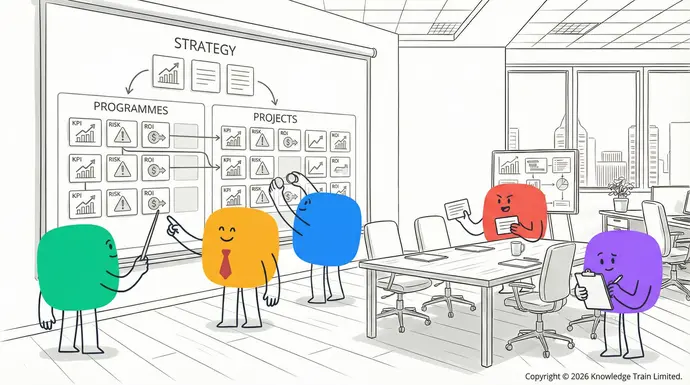
Programmes Requirements Engineering helped me sharpen the way I capture, validate, and manage requirements. It’s made my conversations with stakeholders much more focused.Select your preferred training course below: and PhoneNatalie S., Business Analyst projects Why choose Knowledge Train?LEAN SIX SIGMA COURSES serve as the foundational elements of Accredited BCS providerSelect your preferred training course below:portfoliosEmail . Each programme or project integrated within a portfolio should be in sync with the organization’s strategic objectives. The cumulative performance of these programmes and projects is the yardstick for evaluating the portfolio’s success. Through the delivery of their distinct outputs (projects) and outcomes (programmes), they actively contribute to the realization of the strategic goals encapsulated within the portfolio. Train with an approved BCS provider offering courses aligned to the latest business analysis syllabuses and good practice.BUSINESS ANALYST COURSES
Striking a balance between projects, programmes, and portfolios Experienced trainersSelect your self-paced training course topic.
Striking a balance and aligning projects, programmes, and portfolios is a strategic endeavour that guarantees the collective contribution of all initiatives toward the overarching business objectives. This entails the routinely assessing the portfolio and making requisite adaptations in response to shifts in business strategy, project performance, or the availability of resources.Submit
Effective alignment and balance serve as key enablers for the optimal utilization of resources, the comprehensive management of risks at every level, and the organization’s ability to flexibly adapt to evolving circumstances while remaining steadfast on the path to achieving its strategic objectives. Learn from trainers with real-world business analysis and change experience, not just theoretical knowledge.BCS BUSINESS ANALYST COURSES
Effective management of portfolios Clear learning pathwaysSelect your preferred training course below:
Essential skills for portfolio managers{"@context":"https://schema.org","@type":"FAQPage","mainEntity":[{"@type":"Question","name":"What is a Business Analyst course?","acceptedAnswer":{"@type":"Answer","text":"A Business Analyst Course offers specialized training and certification in business analysis. These courses equip professionals with analysis skills needed for evaluating business needs, identifying solutions, and ensuring project requirements are met efficiently. By enrolling in a business analysis course, you gain comprehensive knowledge in methodologies, tools, and techniques used in the field."}},{"@type":"Question","name":"Who should enrol in a Business Analyst course?","acceptedAnswer":{"@type":"Answer","text":"Business analyst courses are ideal for current business analysts, professionals looking to move into a business analysis role, and candidates seeking further education to boost their career prospects. Whether you are an experienced analyst or new to the field, obtaining certification through business analysis training can significantly improve your career opportunities and enhance your analytical skills."}},{"@type":"Question","name":"What are the benefits of a Business Analyst certification?","acceptedAnswer":{"@type":"Answer","text":"Achieving a business analyst certification offers numerous benefits, including validation of your business analysis skills and improved career growth prospects. A certified business analysis credential demonstrates your commitment to the profession and can lead to better employability. Additionally, business analysis certification programmes provide updated industry knowledge and best practices, making you a valuable asset to any organisation."}},{"@type":"Question","name":"What are the different types of Business Analyst courses?","acceptedAnswer":{"@type":"Answer","text":"Business analyst courses come in various formats, including certification courses and comprehensive training programmes. These courses cover topics such as business process modelling, requirements engineering, and data analysis. Understanding the available course variations and training modules will help you select the most suitable programme for your learning and career goals."}},{"@type":"Question","name":"Should I take instructor-led training or self-paced learning?","acceptedAnswer":{"@type":"Answer","text":"When choosing a training format, you may opt for instructor-led training or self-paced learning. Instructor-led training provides real-time interaction with experienced trainers, offering a structured and engaging learning environment. Self-paced learning allows flexibility and the convenience of studying at your own pace, making it easier to balance work and personal commitments. Both formats have unique benefits, so consider your learning style and schedule when deciding."}},{"@type":"Question","name":"What to expect from virtual classroom training?","acceptedAnswer":{"@type":"Answer","text":"Virtual classroom training combines the benefits of traditional classroom instruction with the flexibility of online learning. These interactive sessions are conducted by expert trainers and offer an engaging learning experience. Participants can expect real-time discussions, practical exercises, and immediate feedback, creating a dynamic and immersive online environment."}},{"@type":"Question","name":"What are the pros and cons of online Business Analyst courses?","acceptedAnswer":{"@type":"Answer","text":"Online business analyst courses offer significant advantages, such as learning flexibility, access to diverse resources, and the ability to study from any location. However, they also come with challenges, including the need for self-discipline and limited face-to-face interaction. Weighing the pros and cons of online courses will help you determine if this mode of training aligns with your learning preferences and professional goals."}},{"@type":"Question","name":"What business analysis certifications do you offer?","acceptedAnswer":{"@type":"Answer","text":"We offer a range of business analysis certifications including BCS International Diploma, ECBA, and more. Each certification provides specific insights and skills to enhance your career."}},{"@type":"Question","name":"Are any of your courses accredited?","acceptedAnswer":{"@type":"Answer","text":"Yes, our courses are accredited by reputable organizations like BCS, ensuring you receive recognised qualifications."}},{"@type":"Question","name":"Do you offer any certified business analysis courses?","acceptedAnswer":{"@type":"Answer","text":"Certainly, we offer certified business analysis courses designed to help you gain the credentials needed to advance in your career."}},{"@type":"Question","name":"Can I gain international diplomas through your training?","acceptedAnswer":{"@type":"Answer","text":"Yes, our courses are designed to help you earn internationally recognized diplomas, such as the BCS International Diploma in Business Analysis."}},{"@type":"Question","name":"What are the different study formats available?","acceptedAnswer":{"@type":"Answer","text":"We provide multiple formats including instructor-led, self-paced, and virtual classroom options to suit your learning preferences."}},{"@type":"Question","name":"Do you have courses focused on specific business analysis concepts?","acceptedAnswer":{"@type":"Answer","text":"Yes, our courses cover a variety of business analysis concepts including strategic frameworks, data analytics, and human-centered design."}},{"@type":"Question","name":"Is there any support for cybersecurity courses?","acceptedAnswer":{"@type":"Answer","text":"While our primary focus is on business analysis, we offer courses that touch on related fields like cybersecurity and data management."}},{"@type":"Question","name":"How can I stay updated with the latest trends in business analysis?","acceptedAnswer":{"@type":"Answer","text":"We regularly host webinars and publish blog posts to keep you informed about the latest trends and best practices in business analysis."}},{"@type":"Question","name":"What job roles can I aim for after completing your courses?","acceptedAnswer":{"@type":"Answer","text":"Our training prepares you for various roles such as business analysis professional, project manager, and data analyst, among others."}},{"@type":"Question","name":"Do you provide financial support or apprenticeships?","acceptedAnswer":{"@type":"Answer","text":"We offer flexible payment options and information about apprenticeships to make our courses accessible to everyone."}},{"@type":"Question","name":"How do I register for a course?","acceptedAnswer":{"@type":"Answer","text":"You can easily register through our website. Just select the course you're interested in and follow the enrollment instructions."}},{"@type":"Question","name":"Are there any discounts or special offers available?","acceptedAnswer":{"@type":"Answer","text":"Yes, we often have special offers and discounts. Check our website regularly or subscribe to our newsletter for updates."}},{"@type":"Question","name":"What if I have more questions or need help?","acceptedAnswer":{"@type":"Answer","text":"Feel free to contact us through our website’s contact form or call our customer service. Our team is dedicated to helping you every step of the way."}},{"@type":"Question","name":"Will I get a certificate upon completion?","acceptedAnswer":{"@type":"Answer","text":"Yes, upon successful completion of our courses, you will receive a professional certification that is widely recognized in the industry."}},{"@type":"Question","name":"Do you offer resources for exam preparation?","acceptedAnswer":{"@type":"Answer","text":"Yes, we provide study guides, practice exams, and additional resources to ensure you are well-prepared for certification exams."}},{"@type":"Question","name":"Can I take courses if I’m from outside the UK?","acceptedAnswer":{"@type":"Answer","text":"Absolutely, our courses are accessible to international students, and we provide location-specific details to cater to a global audience."}}]}
Effective management of portfolios requires a range of skills including: Follow a structured route from Foundation through practitioner modules to the International Diploma, with guidance on which course to take next.CHANGE MANAGEMENT COURSES
- Strategic thinking to align initiatives with business strategy.{"@context":"http://schema.org","@type":"WebPage","headline":"Business Analyst Training Courses and Online Courses","url":"https://www.knowledgetrain.co.uk/business-analysis/business-analyst-course","significantLink":"https://www.bcs.org/qualifications-and-certifications/certifications-for-professionals/business-analysis/","about":[{"@type":"Thing","name":"training","sameAs":["http://en.wikipedia.org/wiki/Training","https://www.google.com/search?&kgmid=/m/014jg3","https://www.wikidata.org/wiki/Q918385"]},{"@type":"Thing","name":"business analyst","sameAs":["http://en.wikipedia.org/wiki/Business_analyst","https://www.google.com/search?&kgmid=/m/05czsl","https://www.wikidata.org/wiki/Q1017553"]}],"mentions":[{"@type":"Thing","name":"online courses","sameAs":["https://en.wikipedia.org/wiki/Educational_technology","https://www.google.com/search?&kgmid=/m/067_f8","https://www.wikidata.org/wiki/Q1068473"]},{"@type":"Thing","name":"online learning","sameAs":["https://en.wikipedia.org/wiki/Educational_technology","https://www.google.com/search?&kgmid=/m/067_f8","https://www.wikidata.org/wiki/Q1068473"]},{"@type":"Thing","name":"business strategy","sameAs":["https://en.wikipedia.org/wiki/Strategic_management","https://www.google.com/search?&kgmid=/m/01jqpl","https://www.wikidata.org/wiki/Q376657"]},{"@type":"Thing","name":"agile","sameAs":["https://en.wikipedia.org/wiki/Agile_software_development","https://www.google.com/search?&kgmid=/m/02zhbn","https://www.wikidata.org/wiki/Q30232"]},{"@type":"Thing","name":"project management","sameAs":["https://en.wikipedia.org/wiki/Project_management","https://www.google.com/search?&kgmid=/m/05_p2","https://www.wikidata.org/wiki/Q179012"]},{"@type":"Thing","name":"bpmn","sameAs":["https://en.wikipedia.org/wiki/Business_Process_Model_and_Notation","https://www.google.com/search?&kgmid=/m/08kq3d","https://www.wikidata.org/wiki/Q1017605"]},{"@type":"Thing","name":"business analysis","sameAs":["https://en.wikipedia.org/wiki/Business_analysis","https://www.google.com/search?&kgmid=/m/07764x","https://www.wikidata.org/wiki/Q1518232"]},{"@type":"Thing","name":"use case","sameAs":["https://en.wikipedia.org/wiki/Use_case","https://www.google.com/search?&kgmid=/m/01rs9z","https://www.wikidata.org/wiki/Q613417"]},{"@type":"Thing","name":"learning","sameAs":["https://en.wikipedia.org/wiki/Learning","https://www.google.com/search?&kgmid=/m/0191f8","https://www.wikidata.org/wiki/Q133500"]},{"@type":"Thing","name":"training","sameAs":["https://en.wikipedia.org/wiki/Training","https://www.google.com/search?&kgmid=/m/014jg3","https://www.wikidata.org/wiki/Q918385"]},{"@type":"Thing","name":"business analysts","sameAs":["https://en.wikipedia.org/wiki/Business_analyst","https://www.google.com/search?&kgmid=/m/05czsl","https://www.wikidata.org/wiki/Q1017553"]},{"@type":"Thing","name":"business analyst","sameAs":["https://en.wikipedia.org/wiki/Business_analyst","https://www.google.com/search?&kgmid=/m/05czsl","https://www.wikidata.org/wiki/Q1017553"]},{"@type":"Thing","name":"swot","sameAs":["https://en.wikipedia.org/wiki/SWOT_analysis","https://www.google.com/search?&kgmid=/m/01q_dt","https://www.wikidata.org/wiki/Q175096"]}]} Flexible study optionsSelect your self-paced training course topic.
- Leadership to inspire and guide.
- Risk management Choose live online classes, self-paced e-learning, or in-house training so you can fit study around work and life.APMG CHANGE MANAGEMENT COURSES to anticipate and mitigate risks across the portfolio. Exam-focused preparationSelect your preferred training course below:
- Communication skills to deliver clear, timely information to stakeholders at the highest levels in the organization.
- Soft skills such as negotiation, prioritization, the ability to see the bigger picture, as well as many other skills. Benefit from exam-style questions, practice activities, and guidance that helps you feel prepared and confident on exam day.PROGRAMME MANAGEMENT COURSES
Proficient Support beyond the courseSelect your self-paced training course topic.portfolio management necessitates a diverse set of skills, including the ones below. Get responsive support from our team before, during, and after your course, including help with booking exams and planning your next step.MSP COURSES
Strategic thinking Select your preferred training course below:
The capability to align initiatives with the organization’s overarching business strategy.
Leadership IT QUALIFICATIONS
The capacity to inspire and provide guidance, driving initiatives toward success. Select your preferred qualification.
Communication skills
The ability to convey clear and timely information to stakeholders at the highest echelons of the organization. ITIL COURSES
Soft skills Select your preferred training course below:
This includes competencies like negotiation, prioritization, the aptitude to perceive the broader perspective, and a myriad of other skills that contribute to effective portfolio management.
Risk management IT QUALIFICATIONS
The skill to anticipate and proactively mitigate risks spanning the entire portfolio. The self-paced materials and live sessions worked perfectly together. I could review the content in my own time, then join the instructor-led classes to clarify any grey areas.Select your preferred qualification.
Tools and techniques for portfolio management Sandeep S., Business Analyst
An array of tools and techniques are instrumental in portfolio management, including the ones below. ITIL COURSES
Risk management tools Select your preferred training course below:
These help to identify and mitigate risks within the portfolio, ensuring proactive risk management.
Communication platforms Business Analysis Practice helped me join the dots between strategy, change initiatives, and detailed analysis work. I now approach assignments with a much clearer framework.LEARNING LIBRARIES
Efficient communication is facilitated through dedicated platforms, fostering seamless information exchange among stakeholders. Laura D., Senior Business AnalystSelect your preferred training course topic.
Business analytical tools and models
Tools like AI QUALIFICATIONS & WORKSHOPSSWOT analysis Select your preferred qualification or workshop., Give us a callThe Knowledge Train support team kept me on track with dates, booking exams, and choosing the right order for modules. It felt like they genuinely cared about my progress. PESTLE analysis Vanessa R., Business Analysis ManagerAIPGF COURSES, and cost-benefit analysis play a pivotal role in supporting strategic decision-making within portfolio management, providing valuable insights and data-driven guidance. Select your preferred training course below:
Advantages and challenges in portfolio management+44 (0)207 148 5985
BCS AI COURSES
The trainer gave practical tips on facilitating workshops and handling conflicting views while modelling current and future states. That’s been gold in my day-to-day work.Select your preferred training course below:
Jonathan W., Business Process Manager
ear and efficient communication across diverse levels and entities within the organization to maintain alignment and understanding.Knowledge Train is a P3O Accredited Training Organization. Knowledge Train
Governance in portfolio management ®Start your business analyst career by learning the basics of business analysis. Plan your business analyst career with BCS Business Analysis qualifications.
Robust governance is indispensable for the effective management of portfolios. This entails several key components including the ones below.Knowledge Train is an AgilePM Accredited Training Organization. is a registered trademark of Knowledge Train Limited.
Defining clear roles and responsibilities 20 Old Bailey, London, EC4M 7AN, England, United Kingdom.Learn new skills to become a better business analyst
Establishing unambiguous roles and responsibilities for portfolio management team members and stakeholders.Knowledge Train is a PRINCE2 Agile Accredited Training Organization. Knowledge Train are experts in project management, PRINCE2, agile and change management training and certification. Choose from a full range of instructor-led and self-paced
Establishing decision-making frameworks project management coursesLearn a range of tools and techniques to enhance your work as a business analyst. Fill your skill gaps using the BCS Business Analysis career pathway.
Czech Republic
Denmark
Estonia
FunctionalFinland
France
Germany
Greece
Ireland
FunctionalItaly
Latvia
Always active Lithuania
Luxemburg
Malta
Netherlands PolandPortugal
Romania
Speak to our team
and AgileBA Marketing®
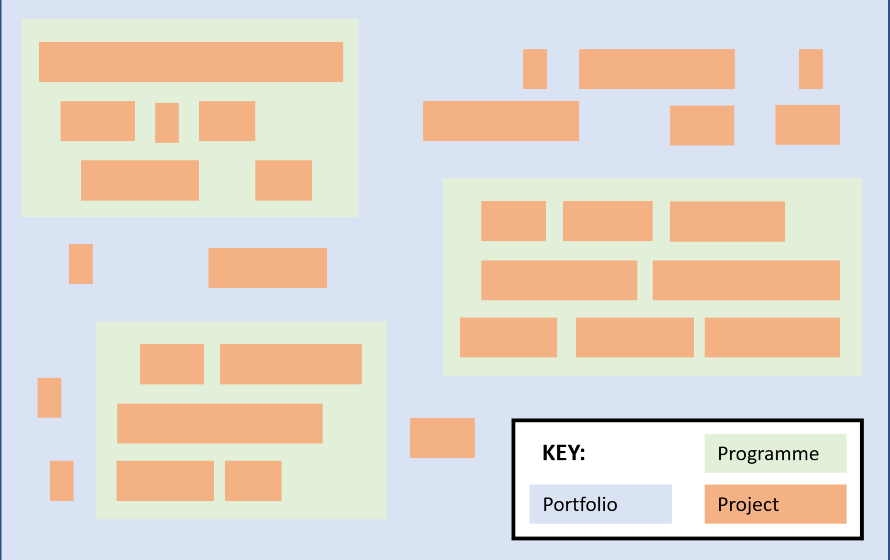
In simple terms, project portfolio management is the process of prioritising, planning, managing, and optimizing a group of projects and programmes to ensure they align with an organization’s strategy, goals, and resources. are registered trademarks of Agile Business Consortium Limited. All rights reserved. The APMG International AgilePM and Swirl Device logo, APMG International AgileBA and Swirl Device Logo, APMG International Change Management and APMG International Better Business Cases and Swirl Device logo are trademarks of The APM Group Limited, used under permission of The APM Group Limited. All rights reserved. Better Business Cases™ is a trademark of Her Majesty’s Treasury. All rights reserved. DevOps Foundation
What is the difference between a programme and a portfolio? ®
Choose your route is a registered mark of the DevOps Institute. “PMI”, “PMBOK Marketing®A programme is a group of related projects managed in a coordinated manner to obtain benefits and control not available from managing them individually. Programmes may contain elements of work outside the scope of the discrete projects in it. Guide”, “PMP” and “CAPM” are registered marks of Project Management Institute, Inc. Knowledge Train Scrum Essentials™, Business Learning Library (BLL)™, Business Analysis Learning Library (BALL)™, Agile Learning Library (ALL)™, IT Learning Library (ITLL)™, and Compliance Learning Library (CLL)™ are trademarks of Knowledge Train Limited. All rights reserved.
A portfolio, on the other hand, is a collection of projects, programmes, subsidiary portfolios, and operations managed as a group to achieve strategic objectives. The projects or programmes within the portfolio may not necessarily be interdependent or directly related. Knowledge Train Ltd is an Introducer Appointed Representative of NewDay Cards Ltd for the Newpay finance product provided by NewDay Ltd. NewDay Cards Ltd acts as a credit broker, not a lender. We will introduce you exclusively to Newpay finance products provided by NewDay Limited under this Introducer Appointed Representative arrangement. Finance available from other lenders is not covered by this arrangement. NewDay Ltd and Newday Cards Ltd are authorised and regulated by the Financial Conduct Authority (ref nos 690292 and 682417 respectively).
A programme is about managing related projects collectively to reap benefits, whereas a portfolio is about selecting and managing the right mix of projects and programmes to align with the organization’s strategic objectives.Compare qualifications
What is the difference between a programme manager and a portfolio manager?
The main difference between a programme manager and a portfolio manager is that a programme manager’s role is more tactical and focused on delivering a set of related projects, while a portfolio manager’s role is more strategic, focusing on aligning all projects and programmes with the organization’s strategy.Business Analysis Learning Library
A programme manager oversees a group of related projects, ensuring they are coordinated and managed in a way that maximizes benefits and controls risks that wouldn’t be possible if the projects were managed individually. They are responsible for achieving the strategic goals set for the programme, managing interdependencies among the projects, and delivering the program’s overall benefits.TMThe technical storage or access is required to create user profiles to send advertising, or to track the user on a website or across several websites for similar marketing purposes.Search
A portfolio manager oversees an organization’s portfolio, which includes multiple projects and programmes, potentially across different departments or areas of business. The portfolio manager’s role is more strategic, focusing on ensuring the portfolio aligns with the organization’s strategic objectives, managing resource allocation across the portfolio, balancing risks and returns among the different projects and programmes, and maximizing the value of the overall portfolio.
What is the difference between portfolio and project work? Manage options
Manage services Why usManage {vendor_count} vendorsThe difference between portfolio and project work can be summarised as: Read more about these purposes
- Portfolio work involves managing a group of projects and programmes to achieve strategic objectives. Portfolio management encompasses the selection and oversight of projects.
- Project work focuses on the execution of a single project to achieve its specific objectives. Project management involves the execution and delivery of the project itself. Accept
What is the difference between project and portfolio management?FAQs
Deny Request a quoteThe difference between project and portfolio management can be summarised as: View preferences
- Project management is the discipline of planning, organizing, and managing resources to successfully complete a specific project. It involves the applying knowledge, skills, tools, and techniques to meet project requirements and deliver desired outcomes within cost, scope, schedule, and quality constraints.Click or scroll
- Portfolio management is the strategic management of a collection of projects, programmes, subsidiary portfolios, and operations to achieve organizational goals. It involves selecting and prioritizing projects or programmes based on their alignment with strategic objectives, optimizing resource allocation, balancing risk, and maximizing value across the entire portfolio.Choose your route Save preferences
Why is project portfolio management important? New to business analysis? Start by choosing the context you want to work in - then compare the best-fit qualification route below.
Business analysis qualifications (BCS) View preferences Build core business analysis knowledge through individual modules, with an optional pathway to the BCS Diploma. {title}Why is project portfolio management important? Agile business analysis (AgileBA) {title}
Project portfolio management is important for 5 main reasons: Learn business analysis techniques designed for agile teams and iterative delivery environments.{title}Manage Consent
Strategic alignmentCompare qualificationsManage consent
It ensures that projects and programmes are aligned with the organization’s strategic goals and objectives. This alignment ensures that resources are allocated to initiatives that contribute the most value and support the organization’s overall strategy.New to business analysis?Manage consentTo provide the best experiences, we use technologies like cookies to store and/or access device information. Consenting to these technologies will allow us to process data such as browsing behavior or unique IDs on this site. Not consenting or withdrawing consent, may adversely affect certain features and functions.
Optimized resource allocation Many learners start with the Business Analysis Foundation module, then build towards specialist practitioner modules and the Diploma route.
Project portfolio management helps organizations make informed decisions about resource allocation. By assessing project priorities, dependencies, and resource availability, it enables efficient allocation of resources, reducing bottlenecks and maximizing productivity.
Risk Management
A portfolio perspective allows organizations to assess and manage risks at a higher level. By evaluating project risks collectively, portfolio managers can identify and address risks that may not be apparent at the individual project level, making informed decisions to mitigate potential negative impacts.
Portfolio performance monitoringBCS Business AnalysisFunctional
Project portfolio management provides a comprehensive view of the performance of projects and programmes. It enables monitoring and tracking of key performance indicators, allowing organizations to assess the progress, make adjustments, and take corrective actions to ensure successful project delivery and desired outcomes.
Optimal decision-making
With project portfolio management, organizations can make data-driven decisions regarding project initiation, continuation, or termination. It provides a structured framework to evaluate project proposals, prioritize investments, and select the most valuable projects to pursue.