P3O: An Overview of Portfolio, Programme and Project Offices

Key takeaways
P3O is a flexible framework for setting up support offices that connect strategy to delivery.Copied!
- P3O links portfolio, programme and project support to improve governance and strategic alignment.Key takeaways
- A workable design can be centralised, distributed, or hybrid, depending on culture, scale and maturity.Strong risk management improves delivery certainty by surfacing threats early and agreeing responses.
- Value comes from decision support: reliable reporting, prioritisation, resource management and risk oversight.Define risks as uncertain events that can help or harm scope, schedule, cost, or quality.
- Successful adoption needs a clear business case, defined roles, and strong executive sponsorship.Classify risks (internal, external, technical, financial, operational, strategic) to avoid blind spots.
- Keep the office outcome-focused, avoid bureaucracy, and use metrics and feedback to drive continual improvement.Use a repeatable cycle: identify, assess likelihood and impact, plan responses, then monitor and adapt.
What is P3O?Infographic
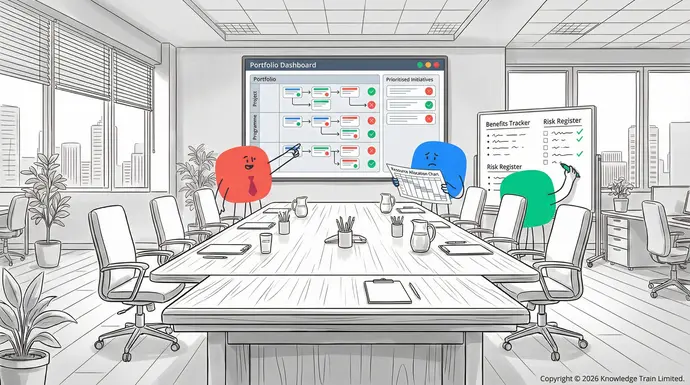
P3OIntroduction stands for Portfolio, Programme and Project Offices. It is a comprehensive Project managementframework is a challenging process that is prone to many possible failures. and Risk managementmethodology is a key aspect of project management that can help increase the likelihood of project success. This involves the process of identifying, assessing, and mitigating risks that can threaten the project. that guides organisations in designing, implementing and operating support structures — often called PMOs (Project Management Offices) — to facilitate effective decision-making, management and alignment of projects, programmes and portfolios with strategic objectives. The P3O model provides principles, processes, and best practices for successful governance and value delivery across all business change activities.In this article, we will explore some of the risks that can arise on projects and how to deal with them effectively. We will discuss the following topics:
What is the P3O model?The definition and importance of understanding project risks
The The different types of common project risksP3O modelThe process of risk management on projects defines a flexible structure for organisational support offices. It can be adapted as a single central PMO, a network of linked offices, or a combination such as a The tools and techniques used in risk managementCentre of ExcellenceThe strategies for effective risk mitigation supported by portfolio, programme and project offices. The purpose is to deliver tailored support for The best practices for successful risk management on projects.portfolio managementBy the end of this article, you will be able to:, Identify potential risks on your projectsprogramme managementApply effective risk management strategies and Improve the chances of your project’s success.project managementYou can also learn about project risk management on a , promoting alignment with strategic goals.project management course
- Portfolio Office such as : Supports portfolio management decisions, resources allocation, risk oversight and alignment with business strategy.PRINCE2 course
- Programme Office or an : Provides coordination, governance and support for programme delivery and benefits realisation.APM course
- Project Office.: Assists Let’s begin and explore the world of project managersproject risk management with planning, reporting, resource management, and controls. and how to protect your projects from potential risks.
The P3O model integrates with other best-practice standards such as Understanding project risksPRINCE2Definition of project risk, A MSPproject risk and MoP, supporting consistent delivery and governance. refers to an uncertain event or condition that, if it occurs, has the potential to either positively or negatively affect the outcome of a project. Risks can impact project objectives such as scope, schedule, cost, or quality. Examples of project risks include changes in customer requirements, budget constraints, delays in schedules, technical issues, resource shortages, and more.
Key components of a P3OTypes of project risks
- Governance frameworksProject risks can be classified into various categories, including: — establish authority, accountability and decision-making structures.Internal risks
- Business case development: These risks originate from within the project or the organisation itself. They can be related to factors such as team dynamics, resource availability, or management decisions. — justifies the investment in support offices and demonstrates measurable value.External risks
- Roles and responsibilities: These risks arise from factors outside the project’s control, such as economic conditions, regulatory changes, natural disasters, or market trends. — define key positions including Portfolio Manager, PMO Head, Analysts, Programme Support Officers and Stakeholder Managers.Technical risks
- Best practices and methodology: Technical risks are associated with the technology or methodologies used in the project. They may involve issues like software glitches, hardware failures, integration challenges, or inadequate technical expertise. — standardise approaches for planning, controls, reporting and stakeholder engagement.Financial risks
What are the benefits of P3O?: Financial risks impact the project’s budget, funding, or financial resources. They can include factors like unexpected cost overruns, currency fluctuations, or inadequate financial planning.
- Improved strategic alignment of change initiativesOperational risks
- Enhanced governance and : Operational risks affect the day-to-day functioning of the project. They can encompass issues like human errors, process inefficiencies, supply chain disruptions, or equipment failures.risk managementStrategic risks
- Optimised resource allocation across portfolios, programmes and projects: Strategic risks influence the project’s alignment with the organisation’s overall business goals. They may involve risks related to changing market demands, competitive pressures, or organisational changes.
- Consistent application of methodologies and best practicesImpact of risks on project success
- Better decision-making through reliable information and analysisRisks can have a variety of impacts on a project’s success:
- Effective stakeholder engagement and communicationPositive effects
- Support for all levels of maturity — from organisations new to PMOs to those seeking continuous improvement: These could include opportunities for innovation or efficiency improvements
How do you implement P3O in an organisation?Negative effects
- Assess the current state: These could lead to delays, cost overruns, or quality issues.: Identify business needs, existing PMO structures, and maturity level.Effective
- Develop the risk managementbusiness case is important for minimising negative impacts and maximising the potential for opportunities and overall project success.: Clearly demonstrate anticipated value and alignment with strategic goals.By identifying and assessing risks,
- Define the vision, objectives and scopeproject managers for the P3O implementation. can develop contingency plans and take proactive steps to mitigate potential problems. This helps increase the chances of achieving project goals and delivering value to stakeholders.
- Design the P3O modelEnhance your skills with our expert-led courses: Select the right structure (central, distributed, hybrid), processes and roles.
- Plan roles, responsibilities and governance mechanisms.
- Implement best practices, tools and methodologiesInstructor-led.Introduction to Project Management course
- Engage stakeholders and communicate planned changes and benefits.£499 +vat
- Monitor, evaluate and evolve the P3O to ensure continued alignment and value delivery.See all dates
P3O roles and responsibilities
Typical roles in a P3O include:
- Head of P3O : Oversees the entire P3O framework and ensures delivery against organisational objectives.Instructor-led
- Portfolio ManagerProject Management Essentials: Responsible for portfolio management£999 +vat and strategic alignment.
- Programme/Project Support OfficerSee all dates: Provides support, analysis and administration for programme and Common project management risksproject deliveryScope creep.Common causes
- Centre of Excellence StaffScope creep: Drives standardisation, training and best practices across the organisation. is the uncontrolled expansion of a project’s scope without corresponding adjustments to time, budget, and resources. Common causes of scope creep include ambiguous initial requirements, lack of change control processes, Stakeholder pressure for additional features, and insufficient stakeholder engagement.
ResponsibilitiesImpact commonly cover:Scope creep can have several impacts on a project:
- Governance, reporting and assuranceIt can increase the project’s duration, require more resources and increase costs
- Resource and capacity managementIt can lead to delays and missed deadlines
- Stakeholder engagement and communicationsIt can cause the project to lose focus and drift away from its original objectives
- Business caseIt can lead to team burnout and demotivation. development and benefits managementTo prevent scope creep, it is crucial to have a clear understanding of the project’s objectives and requirements, and to establish change control processes to manage and approve any changes to the project scope.
- Continuous improvement of practices and performanceBudget overruns
P3O certification and trainingCommon causes
P3O certificationBudget overruns validates expertise in the methodology and its practical application. Training is available at foundation and practitioner levels, covering concepts such as business case, governance, implementation steps, and best practices. Professionals seeking to advance in PMO or portfolio, programme, or project management can pursue occur when the actual cost of a project exceeds the initially allocated budget. Common causes of budget overruns include inaccurate cost estimation, scope changes, unforeseen expenses, and poor resource management.certificationImpact to demonstrate their knowledge and boost their career prospects.Prevent budget problems by performing a detailed cost analysis and ensuring financial reporting is transparent throughout the project.
P3O best practicesSchedule delays
- Align P3O design with organisational strategy and cultureCommon causes
- Establish clear governance and accountability structuresSchedule delays
- Promote use of standard methodologies, templates and controls can occur due to a variety of reasons:
- Engage stakeholders throughout change programmes and projectsUnrealistic time estimates
- Regularly review and improve the P3O model and processesResource unavailability
Example P3ODependency conflicts
| P3O ComponentExternal factors (e.g. weather, supplier delays). | Main FunctionImpact | Area SupportedSchedule delays can lead to missed deadlines and milestones, increased costs due to prolonged project duration, reduced stakeholder satisfaction and potential loss of competitive advantage. |
|---|---|---|
| Portfolio OfficeTo address time-related risks, implement effective project scheduling techniques and regularly monitor project progress. | Strategic oversight, prioritisation, benefits trackingResource constraints | Portfolio managementTypes of resource risks |
| Programme OfficeResource risks | Coordination, governance, reporting can take various forms, such as: | Programme managementSkill shortages |
| Project OfficeEquipment or material unavailability | PM support, controls, administrationInsufficient funding | Project managementLimited time availability. |
| Centre of ExcellenceImpact on project performance | Standards, methodologies, trainingResource constraints can result in reduced productivity, compromised quality of deliverables, increased stress on team members and potential project delays. | All projects/programmesConduct thorough resource planning and maintain open communication with stakeholders to proactively address resource-related issues. |
P3O glossaryCommunication issues
| TermImportance of effective communication | DefinitionEffective communication |
|---|---|
| P3O is vital for project success. It facilitates alignment of project objectives, timely issue resolution, stakeholder engagement and buy-in and efficient team collaboration. | Portfolio, Programme and Project Offices framework supporting business change.Consequences of poor communication |
| Portfolio ManagementPoor communication can lead to misunderstandings and conflicts, missed opportunities for problem-solving, reduced team morale and productivity and stakeholder dissatisfaction. | Optimising, overseeing and aligning all Establish clear communication channels and protocols to promote open and transparent dialogue throughout the project.organisational changeLack of clarity initiatives at the portfolio level.Sources of unclear requirements |
| Programme ManagementUnclear requirements | Coordinating related can stem from ambiguous project objectives, insufficient stakeholder input, lack of detailed documentation and changing business needs.projectsEffects on project outcomes to achieve strategic benefits.Lack of clarity can lead to misaligned expectations, rework and wasted resources, delayed decision-making and compromised project quality. |
| Project ManagementInvest time in gathering and documenting clear requirements and maintain ongoing stakeholder engagement to ensure alignment. | Planning, executing and closing individual change initiatives.Operational changes |
| PMO (Project Management Office)Types of operational risks | Central function for project support and controls.Operational changes |
| Centre of Excellence can include: | Unit promoting best practices, standards and continuous improvement.Organisational restructuring |
| MethodologyProcess modifications | Documented approach for planning, delivering and closing change initiatives.Technology upgrades |
| Business CaseRegulatory changes. | Justification for investment in change, outlining value, costs and risks.Impact on project execution |
| GovernanceOperational changes can affect | Structures for accountability, authority, and effective decision-making.projects |
| Stakeholder Engagement by disrupting established workflows, requiring additional training or resources, altering project priorities and necessitating scope or timeline adjustments. | Active involvement and communication with parties affected by change.Stay informed about potential organisational changes and maintain flexibility in |
FAQs
- Quantitative analysis Traditional PMOs operate hierarchically, while Agile PMOs encourage empowerment and servant leadership.
Is P3O certification worth it?: Assign numerical values to risks
Yes, obtaining Qualitative analysisP3O certification: Categorise risks based on severity. is worthwhile if you aim to advance your career in PMO, portfolio, or programme management. The certification enhances your understanding of how to structure and manage effective support offices and provides insights into implementing best practices across portfolios, Prioritise risks based on their potential impact.programmesRisk response planning, and For each prioritised risk, develop a response strategy. Common responses include:projectsAvoidance.: Eliminate the threat by changing
Is P3O worth it?project plans
Yes, implementing MitigationP3O: Reduce the probability or impact of the risk can be extremely valuable. It improves governance, aligns change initiatives with Transferstrategic objectives: Shift the risk to a third party (e.g. insurance), and ensures resources are optimally allocated across Acceptanceprogrammes: Acknowledge the risk and prepare contingency plans. and projects.Document your response strategies in a risk management plan.
Organisations adopting the P3O model often see measurable improvements in project delivery success, Risk monitoring and controlrisk managementContinuously monitor risks throughout the project lifecycle. This includes:, and stakeholder engagement.Regular risk reviews and updates
Is the P3O exam hard?Tracking risk triggers and early warning signs
The Implementing planned responses when necessaryP3O examEvaluating the effectiveness of risk responses. is moderately challenging, but with focused preparation and a structured study plan, most candidates succeed. Reviewing the official manual and practising with sample questions helps build familiarity with exam terminology and scenario-based questions.Adjust your risk management approach as needed based on new information and changing project conditions.
What are the benefits of P3O?By following this structured process, you can effectively manage risks and increase your project’s chances of success.
The main benefits of adopting Enhance your skills with our expert-led coursesP3O include:
- Improved governance and decision-making
- Better strategic alignment between portfolios and business goalsInstructor-led
- Optimised resource allocation and risk managementIntroduction to Project Management course
- Increased use of best practices and standards
- Enhanced stakeholder communication and engagement
See all datesstrategic goalsTools and techniques for project risk management to enhance organisational performance and value delivery.Risk register
What is P3O?A
P3Orisk register stands for is a document that lists all identified risks along with their potential impact and planned mitigation. Components to include are:Portfolio, Programme and Project OfficesRisk description. It is a best practice framework that helps organisations establish and manage support structures for effective portfolio, programme, and project management. The framework improves governance, decision-making, and alignment with strategic business goals.Probability and impact assessment
What is P3O certification?Risk owner
P3O certificationMitigation strategies validates your ability to apply and manage the framework effectively. It demonstrates understanding of the principles, processes, and techniques required to design and operate a portfolio, programme, or project office.Contingency plans.
P3O certification is available at two levels:Maintain your risk register throughout the project, regularly updating it as needed.
- P3O FoundationSWOT analysis – covers fundamental concepts and terminology.SWOT analysis
- P3O Practitioner is used to identify factors that may impact your project: – focuses on applying and tailoring the P3O model to real-world organisations.Strengths: Project advantages
What is P3O model?Weaknesses: Areas for improvement
The Opportunities: Potential benefitsP3O modelThreats: Possible risks. provides a flexible approach to designing and implementing Performing a SWOT analysis gives you a well-rounded view of your project’s risk landscape.PMOBrainstorming sessions structures. It supports organisations in creating either centralised or distributed offices to provide consistent support for portfolio, programme, and Organise structured project managementbrainstorming sessions. with your team to identify potential risks. Encourage open discussion and creative thinking. Techniques you can use include:
This adaptability allows organisations to scale P3O functions according to their maturity and business needs.Nominal group technique
What is P3O project management?Affinity diagramming
P3O project managementMind mapping. is an integrated framework that helps organisations design governance structures supporting effective delivery of Brainstorming sessions can help identify risks that might be overlooked otherwise.portfoliosProject management software, Project management softwareprogrammes is a valuable tool for helping to streamline your risk management processes. Features to consider include:, and Risk tracking and monitoringprojectsAutomated alerts for risk triggers. It promotes informed decision-making, optimal resource use, and alignment with strategic objectives.Collaboration tools for team communication
By providing a structured model, P3O helps ensure that project outcomes contribute directly to business success.Reporting capabilities for stakeholder updates.
What is the difference between PMO and P3O?Project management software can greatly improve your ability to manage risks throughout your project.
The main difference between a Strategies for mitigating common project risksPMOPreventing scope creep and Clearly define project boundaries and scope during the planning stageP3OImplement a change control process to evaluate and approve scope changes lies in scope. A PMO typically supports individual Communicate the impact of scope changes to all stakeholders.projectsManaging budget risks, while P3O provides an overarching framework that coordinates multiple PMOs and ensures alignment across portfolios and Accurate cost estimation and inclusion of contingency reservesprogrammesRegular budget monitoring and reporting.Cost control measures and prioritisation of expenses.
P3O offers a strategic layer that connects project delivery with business objectives through standardised processes and governance models.Addressing schedule delays
What is the P3O qualification?Utilise
The critical path analysisP3O qualification to identify key milestones and dependencies refers to the formal Build buffer time into Portfolio, Programme and Project Officesproject schedules certifications, which validate knowledge of the framework’s principles and application. Widely recognised in the UK and globally, these certifications are ideal for professionals managing or leading Regularly review and adjust timelines based on progress updates.PMO functionsOptimising resource allocation.Conduct thorough resource planning at the outset of the project
Many organisations integrate P3O into their governance models to improve project consistency, performance, and decision-making.Utilise