Change management: models, steps, and best practicesCzech Republic

Key takeawaysChange management: models, steps, and best practices
Effective change management blends clear planning with sustained support for adoption.
- Use structured frameworks such as Kotter, Lewin, or ADKAR to sequence activities and maintain momentum.Knowledge Train
- Visible leadership sponsorship and consistent communication reduce uncertainty and resistance.23 Apr 2026
- Engage stakeholders early, using influence and impact mapping to target effort where it matters most.
- Integrate change work with project delivery so training, readiness, risks, and benefits stay aligned.
- Measure adoption with KPIs and feedback, then reinforce new behaviours through governance, coaching, and policy.
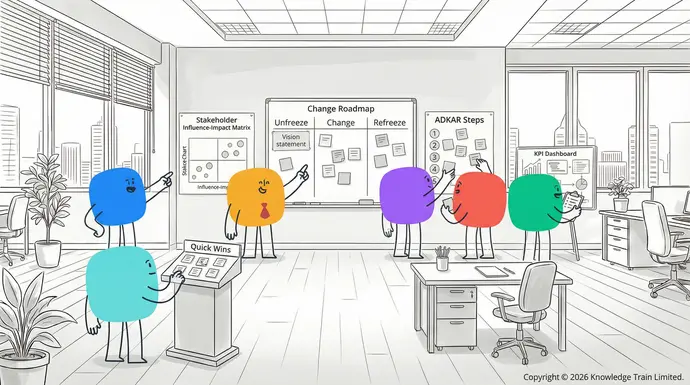
What is change management?
Change management refers to the systematic process of planning, implementing, and overseeing organisational changes to achieve desired business outcomes.Contents
Change management encompasses strategies, techniques, and tools that help organisations prepare for, execute, and sustain change, whether related to processes, technologies, culture, or organisational structure.
Effective change management seeks to minimise disruption, address resistance to change, and strengthen engagement among all stakeholdersContents.
Importance of change managementWhat is change management?
Organisational change is inevitable as businesses adapt to evolving markets, technologies, and regulations. By using structured frameworks and engaging leadership, organisations can minimise risks, foster innovation, and achieve sustainable success.
Effective Importance of change managementchange management ensures smooth transitions, maintains productivity during transformation, increases return on investment, and supports Change management principles
- Communicate the vision to implement changeEmpower broad-based action
- ReinforcementGenerate short-term wins to sustain changeConsolidate gains and produce more change
Example: In a software roll-out, employees learned why the upgrade was essential (Awareness, Desire), received hands-on workshops (Knowledge, Ability), and were rewarded for adoption (Reinforcement).Anchor new approaches in the culture
Change management challengesExample: A retailer launching a new digital platform began with urgency around changing customer expectations, formed a cross-functional team, communicated a compelling vision, and celebrated early improvements to build momentum.
Organisations frequently encounter obstacles when managing change. Common challenges include:Lewin’s Change Model
- Resistance to changeUnfreeze: Employees may fear job loss, uncertainty, or increased responsibilities.: Prepare the organisation to accept change by challenging the status quo.
ChangeSolution: Transition through adoption of new behaviours and processes.: Foster open communication, involve employees in decision-making, and provide adequate support.Refreeze - Poor communication: Stabilise the organisation by embedding changes into everyday practice.: Inadequate information can cause confusion and low morale.Example: A manufacturer seeking to improve quality first destabilised old habits, implemented new protocols, then reinforced behaviours through training and recognition.
ADKAR modelSolutionAwareness: Communicate regularly, using clear and consistent messaging across channels. of the need for change - Lack of leadership commitmentDesire: Without executive support, initiatives may falter. to support the change
KnowledgeSolution of how to change: Gain leadership buy-in and ensure visible commitment throughout the transition.Ability - Cultural misalignment to implement change: Change may conflict with existing organisational culture.Reinforcement
to sustain changeSolutionExample: In a software roll-out, employees learned why the upgrade was essential (Awareness, Desire), received hands-on workshops (Knowledge, Ability), and were rewarded for adoption (Reinforcement).: Integrate change efforts with culture change and organisational development strategies.Change management challenges - Insufficient resources or planningOrganisations frequently encounter obstacles when managing change. Common challenges include:: Poor planning can delay or derail change projects.Resistance to change
: Employees may fear job loss, uncertainty, or increased responsibilities.Solution : Invest in Solutionproject management: Foster open communication, involve employees in decision-making, and provide adequate support., transition planning, and risk assessment.Poor communication
Change management and business functions: Inadequate information can cause confusion and low morale.
- Organisational development : Change management techniques are often a core part of organisational development, aiming for long-term improvement in effectiveness.Solution
- Project management: Communicate regularly, using clear and consistent messaging across channels.: Integrating change management with Lack of leadership commitmentproject management: Without executive support, initiatives may falter. ensures project deliverables are adopted and sustained.
- Business transformationSolution: Large-scale initiatives such as mergers or digitalisation depend on robust change management for success.: Gain leadership buy-in and ensure visible commitment throughout the transition.
- Stakeholder engagementCultural misalignment: Identifying and actively involving key stakeholders is crucial in minimising resistance and ensuring buy-in.: Change may conflict with existing organisational culture.
- Leadership : Strong, credible leadership drives the success of change initiatives through clear direction and support.Solution
Change management best practices: Integrate change efforts with culture change and organisational development strategies.
- Establish clear communication strategiesInsufficient resources or planning tailored to different stakeholder groups.: Poor planning can delay or derail change projects.
- Appoint dedicated change agents to guide and support the change process.Solution
- Use data to inform decisions: Invest in and measure progress through key performance indicators (KPIs).project management
Unfreeze, Change, RefreezeADKAR framework. Each provides a structured approach to planning and implementing change.Preparing, transitioning, embedding
How do you overcome resistance to change?ADKAR
Overcome resistance by communicating benefits clearly, involving stakeholders, offering support and training, addressing concerns promptly, and recognising employee contributions throughout the transition.Awareness, Desire, Knowledge, Ability, Reinforcement
What role do leaders play in change management?Individual adoption stages
Leaders set the direction, communicate the vision, build trust, allocate resources, and provide motivation and support to drive successful change.Related concepts in change management
How can employees be engaged during change initiatives?Organisational development
Engage employees by involving them early, asking for input, addressing worries, providing training, celebrating successes, and continuously seeking feedback to make improvements.: A discipline focused on improving organisations through planned interventions in processes and culture.