
IntroductionBUSINESS SOLUTIONS
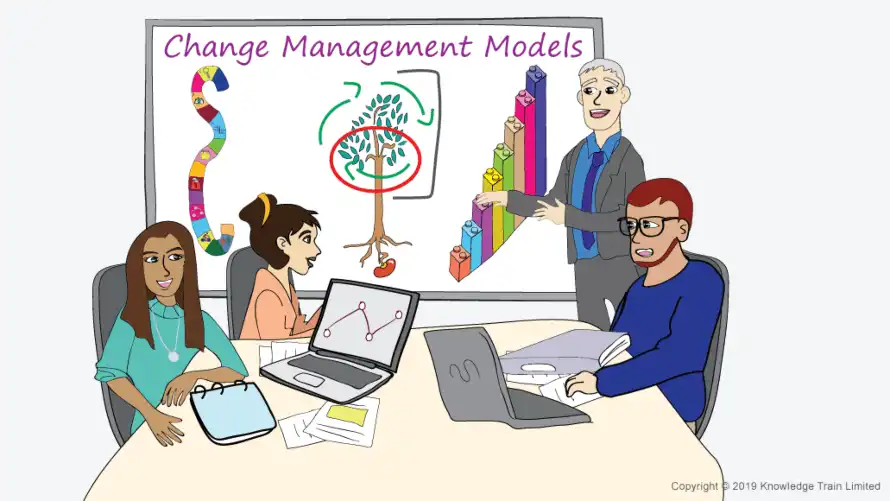
Some change management models can be used to analyse change on an enterprise level. Others are best suited to understanding how change affects individual members of staff.TO HELP ORGANISATIONS IMPROVE
Below, we have information on some of the most popular We offer solutions to help improve team performance including:change modelsConsultancy services. Click to see colourful infographics of each model.Staff development
Lewin change modelCompliance training
Developed by Kurt Lewin in the 19040’s, this model remains a cornerstone of Apprenticeship trainingorganisational changeCustom e-Learning development – using a simple 3-step method to successfully implement change in organisations both large and small.
Read more and see a colourful infographic about the Lewin change management modelFind out more here.
Kotter change model
Kotter’s 8-step model is suitable for large change initiatives in complex organisations. Kotter expanded on the work of Kurt Lewin to develop a more complex, more intricate model for the OUR VALUESmanagement of changeOur 6 core values are everything we do. They include:.Integrity
Read more and see a colourful infographic about the DiversityKotter change management modelFairness here.Quality
Peter Senge modelInnovation
Peter SengeSocial responsibility looked at change in terms of biological and ecological metaphors. Using this perspective, he developed a robust model for the management of change, particularly regarding the effect on individual members of staff.
Read more and see a colourful infographic about the SOCIAL RESPONSIBILITYSenge change management modelSome of the charities we have helped over the years: here.
Satir change model
Virginia Satir was an author and therapist. Satir’s model was made to help therapists understand the human response to death and trauma. Interestingly, this model was quickly appropriated by quick-thinking change managers and repurposed to help reduce the impact of change on businesses.
Read more and see a colourful infographic about the Satir change model here.
ADKAR modelAWARDS
The ADKAR model breaks change into 5 component elements — Awareness, Desire, Knowledge, Ability, and Reinforcement. The ADKAR model is also a key element of the Prosci change management methodology.We don’t go seeking awards, but here are two of the awards we have received for our training.
Read more and see a colourful infographic about the ADKAR model here. Request a quote
, tracking their progress, resolve issues, and facilitate transparent, effective communication.United Kingdom
Read more about the AustriaMcKinsey 7-S modelBelgium here.Bulgaria
Kubler Ross change curveCroatia
Another odd accompaniment to the change managers’ arsenal, the Kubler Ross curve, was designed to model the human reaction to loss and grief. Once again, change managers saw this as a good way to understand the impact of business change on human lives and appropriated the model for their own use.Cyprus
Read more and see a colourful infographic about the Kubler Ross change curve