How ADKAR can revolutionise your change management strategy

- to sustain new behaviours via celebration, metrics, regular reviews, and adaptive improvements.
Introduction to the ADKAR model
Understanding change management
In today’s constantly changing organisational landscape, change management is crucial. Organisations must adapt to remain competitive and relevant. Change management provides a structured approach to transitioning individuals, teams, and whole organisations from a current state to a desired future state. The goal is to minimise resistance and maximise engagement. Here, the ADKAR model shines as a strategic framework. It offers a clear, step-by-step process that leaders can use to guide their teams through change effectively.
Origins and purpose of ADKAR
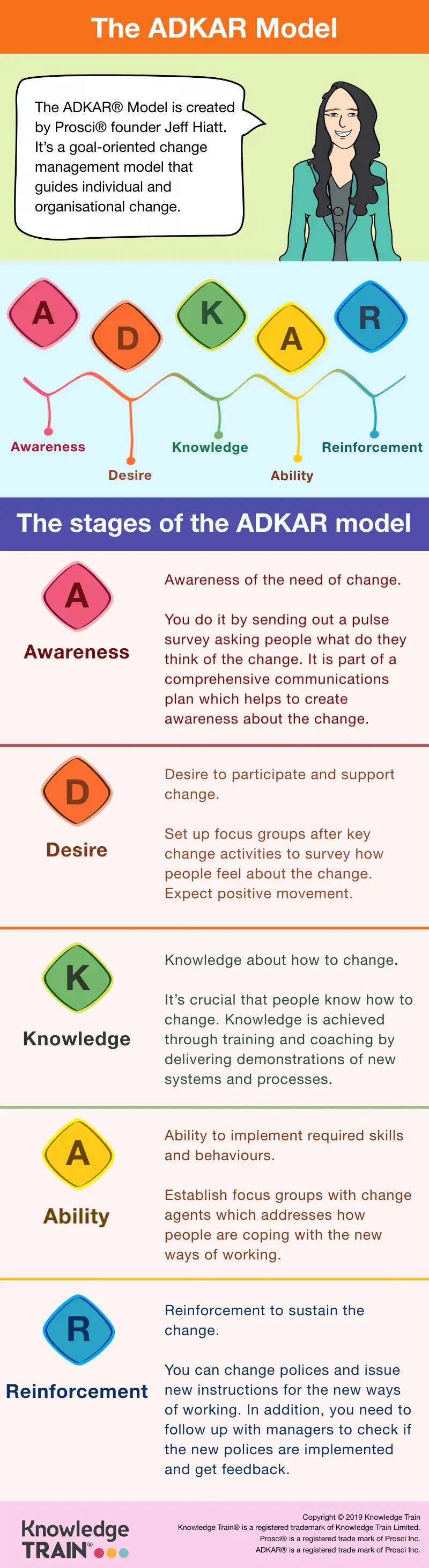
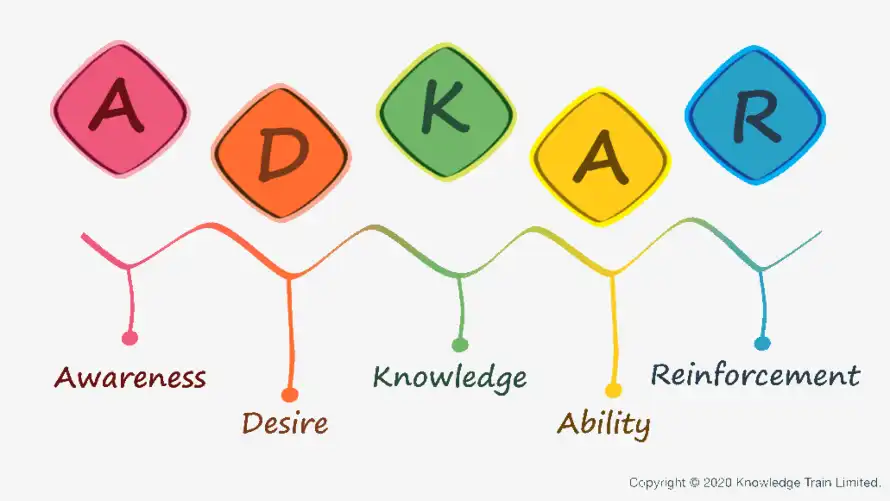
The ADKAR model was developed by Jeff Hiatt, founder of Prosci, through research conducted from 1994 to 2002. This research analysed the change patterns of over 700 organisations, leading to a practical, results-oriented approach to managing change at the individual level. Prosci’s research revealed that successful change occurs when organisational change management and individual change management intersect. It comprises five key elements: Awareness , Desire , Knowledge , Ability , and Reinforcement . Each element represents a milestone that individuals must achieve to embrace and sustain change thoroughly.
- Awareness : Recognising the need for change.
- Desire : Building the motivation to participate.
- Knowledge : Acquiring the necessary information and skills.
- Ability : Implementing new skills and behaviours.
- Reinforcement : Sustaining the change over time.
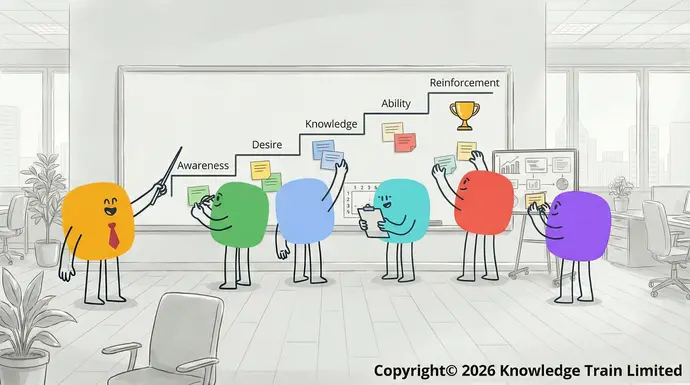
These elements work in sequence, with each building upon the previous ones. For instance, it’s difficult to create genuine desire for change without first establishing awareness of why the change is needed. Similarly, knowledge can only be effectively absorbed once someone has the desire to learn. This sequential nature is crucial for successful implementation.
- : Conduct one-on-one discussions to explore individual concerns and motivations.
Assessing desire helps tailor support and interventions, ensuring greater engagement. It’s crucial to understand that while organisations can create an environment that fosters desire, the ultimate decision to participate in the change is a personal choice that cannot be forced. Leaders can influence desire by addressing the question ‘What’s in it for me?’ (WIIFM) but must recognize that genuine commitment cannot be mandated.
Element 3: Knowledge
The third element of ADKAR addresses the practical aspects of change implementation. The Knowledge element focuses specifically on how to implement the change. This includes two critical types of knowledge: understanding how to change (the required skills, processes, and behaviours) and what to do during the transition state. This goes beyond just sharing information – it requires detailed training on new processes, systems, and roles that will be part of the change.
Knowledge acquisition
To facilitate knowledge acquisition:
- Structured training
- Peer learning : Encourage knowledge sharing through peer networks.
These tools ensure that employees have the required knowledge to succeed.
Element 4: Ability
The Ability element represents the actual execution of the change – turning knowledge into action. Whilst Knowledge is about understanding how to change, Ability is about demonstrating performance in real-world conditions. This element often requires time for practice, coaching, and feedback as people develop proficiency in new skills or behaviours. Success in this element is measured by actual performance rather than just completing training.
Developing ability
Developing ability involves:
- Practical training : Conduct real-world exercises to build confidence.
- Feedback loops : Provide constructive feedback to refine skills.
- Supportive environment : Create a culture that encourages experimentation and learning.
Training and support systems
Training and support systems are vital for ability development:
- Ongoing training : Offer continuous learning opportunities. Request a quote
What tools are effective for knowledge transfer in the ADKAR model?
Effective tools for knowledge transfer include workshops, training sessions, and e-learning platforms. These resources help ensure that employees acquire the necessary information and skills to adapt to change.