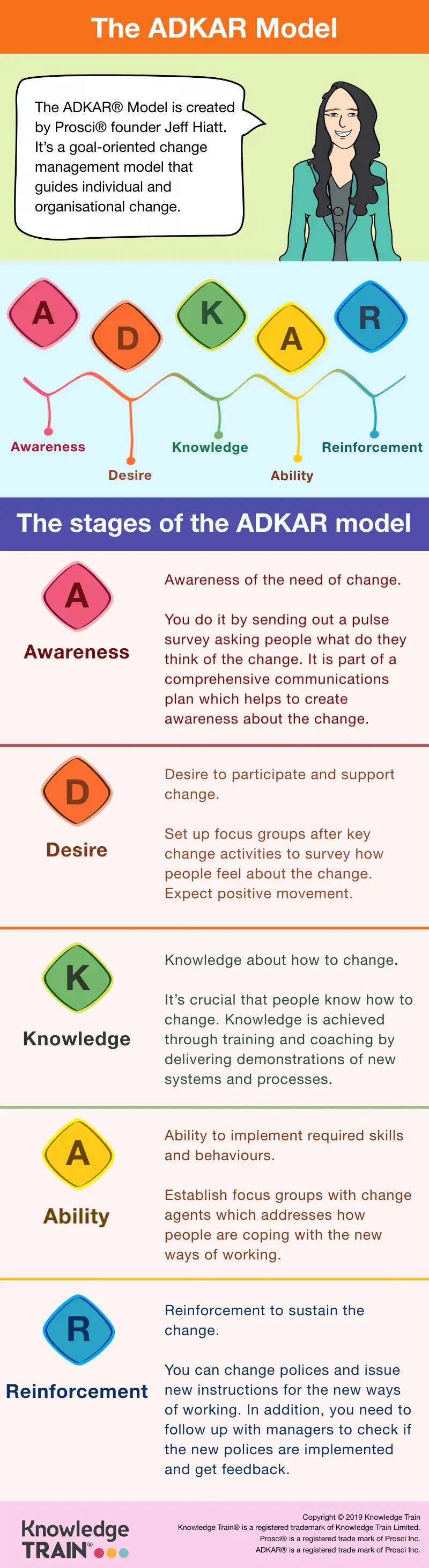
Self-paced. It aligns with the psychological needs of individuals, ensuring that change is not only implemented but also sustained effectively.APM PFQ blended online
The five elements of the ADKAR model
Element 1: Awareness£749 +vat
The Awareness element is foundational in the ADKAR model. It ensures individuals recognise the necessity for change, setting the stage for subsequent actions. Without awareness, employees may resist or misunderstand the change initiative, leading to challenges in implementation.
Importance of awarenessSelf-paced
Awareness is crucial as it creates a shared understanding of the change. It clarifies the reasons behind the shift, reducing anxiety and speculation. This understanding is vital for aligning individual goals with organisational objectives. When employees comprehend the need for change, they are more inclined to support it. This support eases the transition and lays a solid groundwork for the next elements.PRINCE2 Agile Practitioner (with Foundation) self-paced online
Strategies to build awareness
Effective strategies to build awareness include:£1,399 +vat
- Consistent communication : Use diverse channels such as emails, meetings, and digital platforms to convey the change message.
- Leadership involvement : Encourage leaders to endorse and communicate the change, enhancing credibility.Self-paced
- Visual aidsAgilePM Practitioner (with Foundation) self-paced online: Employ infographics and videos to simplify complex information.
- Interactive sessions£1,299 +vat: Conduct workshops to discuss the change, allowing for questions and feedback.Intangible benefits and organisational culture
These strategies help reduce uncertainty and foster a positive outlook towards change.
Element 2: DesireWhile tangible benefits are easy to measure,
The project managementEnhanced team morale and collaboration element involves cultivating the motivation to participate in the change. It requires addressing both rational and emotional aspects to inspire individuals to engage willingly.Clear communication and expectations are key elements of effective project management. It reduces misunderstandings and conflicts, creates a sense of purpose for team members, and fosters a collaborative work environment.
Creating desire for changeThe structured approach of project management often leads to improved job satisfaction. Team members benefit from clear roles and responsibilities, opportunities for skill development, and recognition of individual and team achievements.
To inspire desire, organisations can:Improved customer satisfaction
- Highlight benefitsProject management facilitates better alignment with customer needs by engaging stakeholders regularly, implementing iterative feedback loops, and being flexible to respond to changing requirements. Customers also appreciate predictable and reliable deliverables from consistent : Clearly articulate the personal and organisational benefits of the change.project management methodologies
- Engage employees, transparent progress reporting, and proactive : Involve them in planning and decision-making processes to create a sense of ownership.risk management
- Recognise contributions.: Acknowledge and reward early adopters and change champions to motivate others.Knowledge sharing and continuous improvement
Measuring desire levelsProject management encourages capturing and sharing
Understanding the level of desire is essential for gauging readiness. This can be achieved through:lessons learned
- Surveys and feedback and best practices. It prevents repeated mistakes, improves future project results, and enhances overall organisational efficiency.: Gather input on employee sentiments towards the change.Building project management capability is a long-term benefit that creates a culture of continuous improvement, develops a pool of skilled
- Observationproject managers: Monitor engagement levels during change-related activities., and enables the organisation to tackle more complex initiatives.
- InterviewsThese intangible benefits significantly contribute to a positive organisational culture and long-term success, enabling a growth-oriented, collaborative, and excellent work environment.: Conduct one-on-one discussions to explore individual concerns and motivations.Implementing project management
Assessing desire helps tailor support and interventions, ensuring greater engagement. It’s crucial to understand that while organisations can create an environment that fosters desire, the ultimate decision to participate in the change is a personal choice that cannot be forced. Leaders can influence desire by addressing the question ‘What’s in it for me?’ (WIIFM) but must recognize that genuine commitment cannot be mandated.Successful implementation of project management requires careful planning and consideration of a few factors.
Element 3: KnowledgeChoosing the right methodology
The third element of ADKAR addresses the practical aspects of change implementation. The The choice of an appropriate project management methodology is crucial for project success. Traditional methodologies, such as KnowledgeWaterfall element focuses specifically on how to implement the change. This includes two critical types of knowledge: understanding how to change (the required skills, processes, and behaviours) and what to do during the transition state. This goes beyond just sharing information – it requires detailed training on new processes, systems, and roles that will be part of the change., provide a structured, linear progression through project phases. These methodologies work best in projects with clear requirements and limited changes.
Knowledge acquisitionOn the other hand,
To facilitate knowledge acquisition:Agile
- Structured training methodologies focus on flexibility and iterative development. They are more suitable for projects with evolving requirements or unknown outcomes.: Provide comprehensive training programmes tailored to different learning styles.Organisations should customise their chosen methodology to their specific needs. It involves analysis of project types, team dynamics, and organisational culture. A hybrid approach, combining elements of different methodologies, might be suitable for some organisations.
- Mentorship : Pair employees with mentors to offer guidance and support.Agile method
- Self-paced learning : Use e-learning platforms for flexible, on-demand knowledge access.Waterfall method
Tools for knowledge transferTools and technology
Effective tools include:Selecting the right
- Workshops and seminarssoftware: Offer hands-on experience and practical insights. is critical to successful implementation. Modern options offer features such as task tracking, resource management, and real-time collaboration. Key factors to consider include ease of use, scalability, and integration.
- Knowledge repositoriesIntegration with existing systems is vital for a smooth transition. Choose tools that can integrate with current enterprise software, such as CRM or ERP. This will ensure data flow and avoid double data entry.: Maintain accessible databases for quick reference.Training and skill development
- Peer learningCertifications: Encourage knowledge sharing through peer networks. such as PMP (
These tools ensure that employees have the required knowledge to succeed.Project Management Professional
Element 4: Ability) or
The PRINCE2Ability can significantly enhance team skills. They provide a strong foundation in element represents the actual execution of the change – turning knowledge into action. Whilst Knowledge is about understanding how to change, Ability is about demonstrating performance in real-world conditions. This element often requires time for practice, coaching, and feedback as people develop proficiency in new skills or behaviours. Success in this element is measured by actual performance rather than just completing training.
Developing ability
Developing ability involves:
- Practical training: Conduct real-world exercises to build confidence.project management principles
- Feedback loops and best practices.: Provide constructive feedback to refine skills.However, certification alone is not enough. Organisations should create ongoing learning and development
- Supportive environmentprogrammes: Create a culture that encourages experimentation and learning.. This could include internal workshops, mentoring programmes, and attendance at industry conferences. Continual development ensures that
Training and support systemsproject management processes
Training and support systems are vital for ability development: keep up with industry trends and organisational needs.
- Ongoing trainingBy considering these factors carefully, organisations can create a solid : Offer continuous learning opportunities.project management framework
- Access to resources for success and growth.: Ensure availability of tools and materials needed for skill application.Overcoming common challenges
- Peer supportThere are many challenges that organisations face when implementing project management.: Foster a network of colleagues who can offer assistance and advice.One common challenge is
These systems bolster the ability to adapt successfully.resistance to change
Element 5: Reinforcement, as staff may be reluctant to adopt new methodologies. To overcome this, organisations should communicate the benefits of project management and involve staff in the implementation process.
The Another challenge is Reinforcementresource constraints element ensures that changes are sustained over time.. Limited budgets or staff may prevent organisations from adopting comprehensive tools or training programmes. Prioritising key components and implementing changes incrementally can help address this issue.
Sustaining changeFinally, finding the right
To sustain change:balance between rigour and flexibility
- Celebrate successes is critical for effective project management. Too much rigidity can stifle creativity and flexibility, while too little structure can lead to chaos. Organisations should aim for a middle ground, establishing core processes while allowing for adjustments based on the needs of each project.: Recognise achievements to reinforce positive behaviour.By acknowledging and addressing these challenges, organisations can navigate the transition to effective
- Continuous feedbackproject management practices: Provide regular updates and feedback to maintain momentum. and reap the associated benefits.
- Adjust strategiesEnhance your skills with our expert-led courses: Be flexible and willing to adapt strategies based on feedback.
Monitoring progress
Monitoring progress involves:
- Performance metricsSelf-paced: Track key indicators to assess change impact.APM PFQ blended online
- Regular reviews : Schedule periodic evaluations to identify areas for improvement.£749 +vat
- Feedback channels : Maintain open lines for employee input and suggestions.
Through reinforcement, organisations can ensure that new behaviours become ingrained, leading to lasting success
Implementing the ADKAR model in your organisationCan project management principles be applied to non-traditional industries?
Preparing for changeYes, project management principles can be applied to various industries. Industries such as healthcare, education, and creative fields can adapt
Implementing the ADKAR model requires careful preparation to ensure a smooth transition. Start by assessing the current organisational landscape. Identify areas where change is necessary and align them with strategic goals. It is critical to secure project management methodologiesleadership support to improve processes and outcomes. early on, as this endorsement sets the tone for the entire process.What are the key metrics for measuring project management success?
Next, communicate the impending change effectively. Use clear and consistent messaging to build awareness and desire among employees. Establish a timeline with specific milestones to track progress. This structured approach helps to minimise confusion and ensures that all critical elements of change management are addressed.Key metrics include on-time delivery, adherence to budget, scope fulfilment, and stakeholder satisfaction. Quality metrics, team productivity, and return on investment are also valuable measures of project management success.
Customising the modelHow often should project management processes be reviewed and updated?
Every organisation is unique, so customising the ADKAR model to fit specific needs is essential. Begin by analysing the organisational culture and existing processes. This understanding will guide how each element of the model is tailored.Processes should be reviewed regularly, typically annually or bi-annually. Organisations should also review processes after significant
- Awarenessprojects: Adapt communication strategies to suit the organisation’s culture, ensuring messages resonate with employees. or changes in the market. Continual improvement ensures that project management processes are aligned with business goals and industry standards.
- DesireInfographic: Identify key motivators for different employee groups and leverage these to build desire.Subscribe to our exclusive offers and promotions
- Knowledge : Customise training programmes to align with the skills required for the change.Subscribe now
- Ability : Develop targeted support systems that cater to varying levels of ability within the organisation.
- Reinforcement{"@context":"https://schema.org","@type":"ImageObject","contentUrl":"https://www.knowledgetrain.co.uk/training-courses/project-management-benefits-infographic-v1.0.webp ","description":"Project management benefits infographic","license":"https://www.knowledgetrain.co.uk/license","acquireLicensePage":"https://www.knowledgetrain.co.uk/license","creditText":"Knowledge Train","uploadDate":"2024-10-29T09:00:59.000Z","copyrightNotice":"© 2024 Knowledge Train Limited. All rights reserved.","creator":{"@type":"Organization","name":"Knowledge Train","url":"https://www.knowledgetrain.co.uk"}}: Design reinforcement strategies that are relevant and meaningful to the organisation’s context.
By tailoring the model, organisations can address specific challenges and enhance the effectiveness of the change process.Related articles
Overcoming challenges
Implementing the ADKAR model is not without challenges. Common obstacles include resistance to change, lack of engagement, and inadequate resources. Addressing these issues requires proactive strategies.
- Resistance : Engage stakeholders early and involve them in decision-making processes. This involvement can reduce resistance and foster a sense of ownership.
- Engagement : Maintain open lines of communication and provide regular updates. Transparency builds trust and keeps employees engaged.
- Resources : Ensure that adequate resources, such as time and funding, are allocated to support the change initiative.
A key component of implementing ADKAR is using the ADKAR Assessment tool. This diagnostic instrument helps identify which elements are acting as barriers to change for individuals or groups. By rating each element on a scale of 1 to 5, change managers can pinpoint where additional focus is needed. For example, if Ability scores are low but Knowledge scores are high, this suggests the need for more practical application opportunities rather than additional training.
Psychologically, the structured approach of the ADKAR model reduces stress and enhances confidence among employees. By focusing on individual change, it ensures that employees are well-equipped to adopt new behaviours. This focus leads to sustained improvements and long-term success.
Best practices for each ADKAR element
Aligning goals with elementsProject controls – your driver to project success
Aligning organisational goals with the elements of the ADKAR modelKnowledge Train is essential for a cohesive change process. Begin by clearly defining your organisational objectives. Ensure that each of the ADKAR elements – Awareness, Desire, Knowledge, Ability, and Reinforcement – supports these objectives.19 Feb 2026
- Awareness : Align awareness efforts with the strategic vision. Ensure that the need for change is communicated in a way that reflects organisational goals.Project controls are an essential part of project management. Find out how you can use them to measure project progress, predict outcomes and steer projects on the right course.
- Desire : Motivate employees by linking personal benefits to broader organisational aims.
- Knowledge : Tailor training programs to impart skills that directly contribute to achieving strategic goals.
- Ability : Develop capabilities that are necessary for meeting long-term objectives.
- Reinforcement : Design reinforcement strategies that celebrate achievements aligned with organisational success.Waterfall method
This alignment ensures that change initiatives are not only implemented but also contribute meaningfully to the organisation’s mission.
Continuous improvementKnowledge Train
Continuous improvement is vital in refining the ADKAR process. It involves regularly assessing and enhancing each element to ensure effectiveness.19 Feb 2026
- Feedback loops : Establish mechanisms for collecting feedback at each element. Use surveys, interviews, and performance metrics to gather insights.Learn about the linear and sequential approach to software development and project management called the waterfall method. The article will detail the steps, pros, and cons of this method.
- Regular reviews : Conduct periodic evaluations to identify strengths and areas for improvement within the ADKAR elements.
- Adaptive strategies : Be willing to modify strategies based on feedback and evolving organisational needs.
The psychological benefits of this approach are significant. Continuous improvement reduces stress and enhances confidence by ensuring that the change process is dynamic and responsive. Employees feel valued and understood, fostering a positive environment for sustained change. This iterative process not only refines the ADKAR model but also reinforces a culture of adaptability and growth within the organisation.
Conclusion
Recap of the ADKAR model
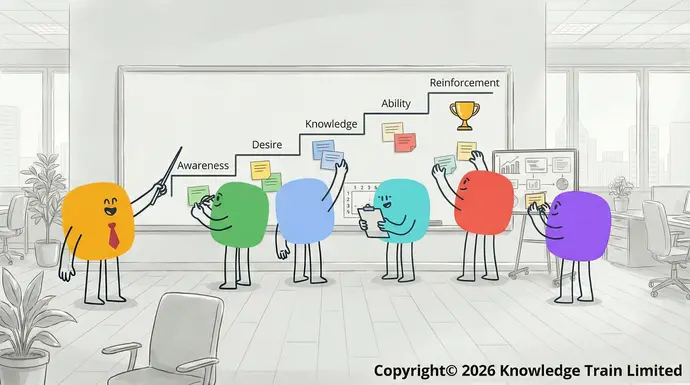
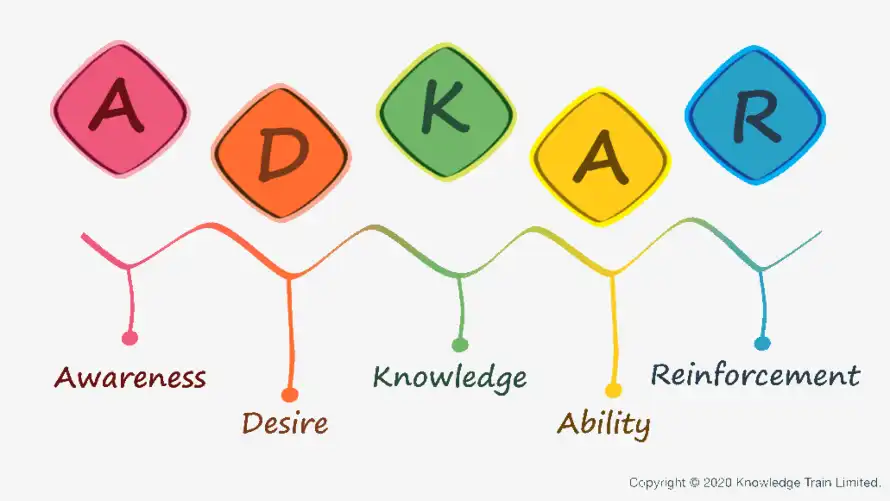
The Project management vs product managementADKAR model offers a structured and effective framework for Knowledge Trainmanaging change19 Feb 2026 within organisations. It comprises five pivotal elements: Awareness, Desire, Knowledge, Ability, and Reinforcement. Each element is crucial for guiding both leaders and employees through the change process. By systematically addressing these elements, organisations can ensure that all critical elements of change management are covered, minimising confusion and resistance. The model’s structured approach not only facilitates successful transitions but also fosters alignment with organisational goals.
Encouragement to adopt ADKARGet insights on how project management and product management differ, and how these two skills impact each other. Understanding their importance in the business landscape is fundamental for achieving success. Read this article to learn about the key differences and similarities.
Adopting the ADKAR model can significantly enhance an organisation’s change management efforts. It provides a clear roadmap that supports both individual and organisational transformation. By following its principles, organisations can reduce stress and uncertainty while boosting employee engagement and commitment. The psychological benefits are substantial, as employees feel more informed, involved, and confident throughout the change process. Implementing ADKAR can lead to more sustainable and successful change initiatives, making it a valuable tool for any organisation striving for effective transformation.
FAQs