Agile project management: Frameworks, benefits and how it works

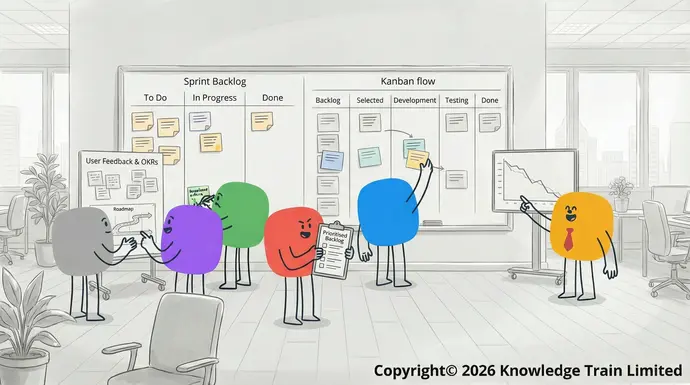
What is Agile project management? A
Agile project managementProject Management Office is an iterative approach to planning, executing, and (PMO) is a department or group that sets, maintains and ensures delivering projectsproject management by breaking work into small, manageable increments known as iterations or sprints. Rather than following a strict linear plan, standards within an organisation.AgileCore Functions: focuses on adaptability, team collaboration, and continuous delivery of value to stakeholders. Governance, methodology, support, standardisation, process improvement.Agile principlesTypes: emphasise close communication, incremental progress, and regular feedback cycles to enhance quality and meet customer needs. Supportive PMO, Controlling PMO, Directive PMO.
The Agile Manifesto: Values and principlesRoles:
The Methodology enforcement, resource management, training, portfolio oversight.Agile ManifestoRelated organisations: underpins Agile project management, defining four core values and twelve guiding principles. These foster a culture of collaboration, adaptability, and response to change. PMI (
Agile Manifesto core valuesProject Management Institute
- Individuals and interactions over processes and tools)
- Working software (or product) over comprehensive documentationCertifications:
- Customer collaboration over contract negotiation PMO Certification, PMP, CAPM
- Responding to change over following a planExamples:
Twelve principles of Agile Corporate IT PMOs, government programme offices.
- Customer satisfaction through early and continuous deliveryRelated terms:
- Welcome changing requirements, even late in development Project Portfolio, Project Manager, Stakeholders, Best Practices, PMO Tools.
- Deliver working products frequentlyLearn more on Wikipedia
- Close, daily cooperation between business people and developersVisit PMI.org
- Build PMO definitionprojectsA Project Management Office (PMO) is an organisational structure that defines and maintains project management standards, supports project teams, and ensures alignment with business objectives. PMOs play a crucial role in enabling successful project, programme and around motivated individualsportfolio management
- Face-to-face conversation as the best form of communication by offering governance, methodology, resource management and oversight.
- Working product as the primary measure of progressThe concept of a PMO has evolved as organisations recognise the need for a dedicated group to enhance consistency, optimise resources, and improve
- Sustainable development paceproject delivery
- Continuous attention to technical excellence and good design outcomes. PMOs may operate at the project, programme, or portfolio level and are commonly found in sectors such as
- Simplicity – the art of maximising the amount of work not done – is essentialIT
- Self-organising teams produce the best results, government, construction, and finance.
- Regular reflections for continuous improvementPMO functions and roles
Key Agile frameworks and methodologiesPMOs perform a wide range of functions, adapting their roles according to organisational needs. The main functions and roles typically include:
AgileGovernance: encompasses various frameworks, each with its own practices and terminology. The most widely used Agile frameworks were designed for more efficient product delivery, rather than Establishing frameworks, processes and controls for effective decision-making and project managementrisk management. They include across the project lifecycle.ScrumStandardisation:, Kanban, Lean, and Extreme Programming (XP): Implementing and maintaining
Scrumproject management methodologies
- Main focus:, best practices, and standards. Team roles, time-boxed sprints, and iterative deliverySupport:
- Core roles: Providing guidance, templates, tools, training and mentoring for Project Managers and teams. Product Owner, Methodology Enforcement:Scrum Master Ensuring consistent application of , Team Membersproject management approaches
- Artefacts: for delivery excellence. Product backlog, sprint backlogResource Management:
- Key events: Coordinating allocation and utilisation of project personnel, tools, and budgets. Sprint planning, daily scrum, sprint review, sprint retrospectivesPortfolio Management
- Advantages:: Well-defined structure, clear accountability, transparency Overseeing and prioritising
Kanbanprojects
- Main focus: to align with strategic objectives and maximise value. Visualisation of workflow, limiting work in progress, continuous flowProcess Improvement:
- Core elements: Reviewing and refining Kanban board, work-in-progress limits, cards/tasksproject delivery
- PMO frameworks are designed for product delivery, not project management establishes and maintains project management standards across the organisation. It supports .Project Managers
- Less suitable when requirements are fixed and well-defined, ensures project governance, and aligns initiatives with business goals. The PMO often oversees project portfolios to prioritise strategic investments and optimise resource use.
- Organisational resistance to cultural changeWhat does PMO stand for?
- Potential for scope creep without disciplined backlog managementPMO
Real-world applications and use cases stands for
Agile project management originated in software development but is now used in industries including marketing, education, manufacturing, and construction. Its Project Management Officecontinuous improvement. It is an organisational function responsible for standardising governance processes, sharing methodologies, and toolsteam collaboration, and principles enhance innovation, adaptiveness, and client-centric outcomes.techniques
- IT, and improving overall project success./software:A PMO may vary in size—from a single individual to an enterprise-wide team—but its purpose remains the same: to improve project performance and ensure alignment with Dynamic product requirements, regular releases, user feedbackbusiness strategy
- Marketing:. Campaigns adapted based on analytics and feedbackWhat is the difference between a PMO and a Project Manager?
- Construction: Early delivery of completed sections, iterative design
Authoritative standards organisations like the Agile Business Consortium, Agile Alliance, Scrum.orgThe difference between a , and PMOProject Management Institute (PMI) and a provide resources, definitions, and Project Managercertifications lies in scope and responsibility. A Project Manager delivers specific for Agile professionals.projects
{"@context":"https://schema.org","@graph":[{"@type":"WebPage","name":"What is a Project Management Office (PMO)? Roles, Types & Benefits","url":"https://www.knowledgetrain.co.uk/project-management/pmo","description":"Discover what a PMO is, its roles, types and benefits. Learn about PMO functions, standards and how PMOs support project success, with real-world examples.","significantLink":"https://en.wikipedia.org/wiki/Project_management_office","mainEntity":[{"@type":"Article","headline":"What is a Project Management Office (PMO)? Roles, Types & Benefits","about":[{"@type":"DefinedTerm","name":"Project Management Office (PMO)","sameAs":["https://en.wikipedia.org/wiki/Project_management_office","https://www.google.com/search?&kgmid=/m/01k6sk","https://www.wikidata.org/wiki/Q7302704"]},{"@type":"DefinedTerm","name":"Project Manager","sameAs":["https://en.wikipedia.org/wiki/Project_manager","https://www.google.com/search?&kgmid=/m/02y_w9","https://www.wikidata.org/wiki/Q7243378"]},{"@type":"DefinedTerm","name":"Project Portfolio","sameAs":["https://en.wikipedia.org/wiki/Project_portfolio_management","https://www.google.com/search?&kgmid=/m/0l1218y","https://www.wikidata.org/wiki/Q7226149"]},{"@type":"DefinedTerm","name":"Governance","sameAs":["https://en.wikipedia.org/wiki/Governance","https://www.google.com/search?&kgmid=/m/02vs1j","https://www.wikidata.org/wiki/Q1234823"]},{"@type":"DefinedTerm","name":"Supportive PMO","sameAs":["https://en.wikipedia.org/wiki/Project_management_office","https://www.google.com/search?&kgmid=/g/12hs3rl7x","https://www.wikidata.org/wiki/Q7302704"]},{"@type":"DefinedTerm","name":"Controlling PMO","sameAs":["https://en.wikipedia.org/wiki/Project_management_office","https://www.google.com/search?&kgmid=/g/1234testcontrol","https://www.wikidata.org/wiki/Q7302704"]},{"@type":"DefinedTerm","name":"Directive PMO","sameAs":["https://en.wikipedia.org/wiki/Project_management_office","https://www.google.com/search?&kgmid=/g/1234testdirect","https://www.wikidata.org/wiki/Q7302704"]},{"@type":"DefinedTerm","name":"Project Methodology","sameAs":["https://en.wikipedia.org/wiki/Project_management","https://www.google.com/search?&kgmid=/m/06c1s","https://www.wikidata.org/wiki/Q167067"]},{"@type":"DefinedTerm","name":"Stakeholders","sameAs":["https://en.wikipedia.org/wiki/Stakeholder_(corporate)","https://www.google.com/search?&kgmid=/m/025kcl","https://www.wikidata.org/wiki/Q745782"]},{"@type":"DefinedTerm","name":"PMI (Project Management Institute)","sameAs":["https://en.wikipedia.org/wiki/Project_Management_Institute","https://www.google.com/search?&kgmid=/m/04gjjn","https://www.wikidata.org/wiki/Q662929"]},{"@type":"DefinedTerm","name":"Portfolio Management","sameAs":["https://en.wikipedia.org/wiki/Project_portfolio_management","https://www.google.com/search?&kgmid=/m/0l1218y","https://www.wikidata.org/wiki/Q7226149"]},{"@type":"DefinedTerm","name":"Program Management","sameAs":["https://en.wikipedia.org/wiki/Program_management","https://www.google.com/search?&kgmid=/m/0405ykd","https://www.wikidata.org/wiki/Q7243378"]},{"@type":"DefinedTerm","name":"Best Practices","sameAs":["https://en.wikipedia.org/wiki/Best_practice","https://www.google.com/search?&kgmid=/m/01k6kd","https://www.wikidata.org/wiki/Q5369514"]},{"@type":"DefinedTerm","name":"PMO Tools","sameAs":["https://en.wikipedia.org/wiki/List_of_project_management_software","https://www.google.com/search?&kgmid=/g/11g_zdl9y8","https://www.wikidata.org/wiki/Q2142039"]},{"@type":"DefinedTerm","name":"Resource Management","sameAs":["https://en.wikipedia.org/wiki/Resource_management","https://www.google.com/search?&kgmid=/m/020lg1","https://www.wikidata.org/wiki/Q133134"]},{"@type":"DefinedTerm","name":"Standards","sameAs":["https://en.wikipedia.org/wiki/Standardization","https://www.google.com/search?&kgmid=/m/012n6","https://www.wikidata.org/wiki/Q229098"]},{"@type":"DefinedTerm","name":"Process Improvement","sameAs":["https://en.wikipedia.org/wiki/Process_improvement","https://www.google.com/search?&kgmid=/m/0c4fl6","https://www.wikidata.org/wiki/Q6193052"]},{"@type":"DefinedTerm","name":"Project Lifecycle","sameAs":["https://en.wikipedia.org/wiki/Project_life_cycle","https://www.google.com/search?&kgmid=/m/068n_j","https://www.wikidata.org/wiki/Q7243474"]},{"@type":"DefinedTerm","name":"PMO Certification","sameAs":["https://www.pmi.org/certifications","https://www.google.com/search?&kgmid=/g/11f63n5_7f","https://www.wikidata.org/wiki/Q662929"]},{"@type":"DefinedTerm","name":"Change Management","sameAs":["https://en.wikipedia.org/wiki/Change_management","https://www.google.com/search?&kgmid=/m/01jps2","https://www.wikidata.org/wiki/Q609056"]}],"mentions":[{"@type":"DefinedTerm","name":"Organizational Structure","sameAs":["https://en.wikipedia.org/wiki/Organizational_structure","https://www.google.com/search?&kgmid=/m/09gyp","https://www.wikidata.org/wiki/Q853035"]},{"@type":"DefinedTerm","name":"Project Management","sameAs":["https://en.wikipedia.org/wiki/Project_management","https://www.google.com/search?&kgmid=/m/06c1s","https://www.wikidata.org/wiki/Q167067"]}]},{"@type":"FAQPage","mainEntity":[{"@type":"Question","name":"Can a PMO be one person?","acceptedAnswer":{"@type":"Answer","text":"Agile<p>Yes, a Project Management Office (PMO) can consist of just one person. In smaller organisations or teams, a single PMO professional may handle essential functions such as tracking project performance, standardising documentation, and supporting Project Managers. is iterative and flexible, allowing change at any stage, while >waterfall<p>Although capacity is limited, even a one-person PMO can significantly improve project consistency and governance by establishing clear standards and frameworks. follows a strict, linear process where each phase must be completed before the next begins. Agile encourages frequent feedback and continuous delivery of value, whereas waterfall often delivers only at the end.
>"}},{"@type":"Question","name":"How does a PMO add value?","acceptedAnswer":{"@type":"Answer","text":"What are the main stages of an Agile project?<
p>A PMO adds value by improving project success rates, optimising resource allocation, and ensuring projects align with organisational objectives. It also enhances communication across teams, enforces compliance with methodologies, and provides transparency on project performance through dashboards and reporting.Typical stages of an Agile project include vision and roadmap creation, backlog development, sprint planning, execution (iteration), review, and retrospectives. Continuous improvement occurs at every stage.
>What are the key frameworks of Agile project management?<
p>Ultimately, a well-functioning PMO ensures that project investments deliver measurable business benefits.Key Agile frameworks are >"}},{"@type":"Question","name":"Is PMO a stressful job?","acceptedAnswer":{"@type":"Answer","text":"Scrum<p>Whether a PMO role is stressful depends on the organisation’s structure and culture. When supported by leadership and empowered to influence project decisions, PMO professionals typically thrive. However, if the PMO is under-resourced or lacks authority, managing multiple priorities without visible impact can create pressure and stress., Kanban, Lean, and Extreme Programming (XP). Each offers a unique structure for managing roles, processes, and workflow.
>What are the benefits and challenges of Agile project management?<
p>Strong governance, clear goals, and management support help minimise stress and enable PMO teams to work effectively.Advantages include adaptability, stakeholder engagement, and high product quality. Challenges may include initial resistance, need for team discipline, and less suitability for projects with fixed, unchanging requirements.
>"}},{"@type":"Question","name":"What are the 4 P’s of PMO?","acceptedAnswer":{"@type":"Answer","text":"Where is Agile project management commonly used?<
p>The 4 P’s of a PMO are While most common in software development, Agile is used in industries such as marketing, manufacturing, construction, and education wherever flexible, iterative approaches add value.<