Strategic project management

| Enhanced decision-making skills | |
| Better alignment with business goalsMarketing | Increased strategic influence |
| Higher return on investment | Career advancement opportunities |
| Enterprise | $30+ per user/month |
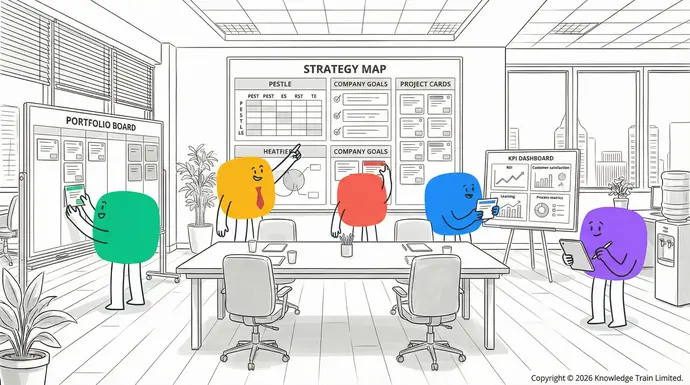
Strategic project management ensures that projects are properly aligned with the business strategies of organisations. This in turn guarantees the meaningful contributions of projects to the success of an organisation. By utilising strategic project management, project managers can acquire skills in strategic thinking and leading an organisation, thus becoming top performers for the organisation.The technical storage or access is required to create user profiles to send advertising, or to track the user on a website or across several websites for similar marketing purposes.
Core components of strategic project management
The three main components of strategic project management include strategic analysis , Functionalstrategic choice and strategic implementation .
1. Strategic analysisFunctional
- Aligning projects with organisational mission Always active
- Assess how each project advances the company’s goals
- Ensure project outcomes contribute to long-term business success.
- External factors analysis using tools like PESTLE :
- Political, Economic, Social, Technological, Legal, and Environmental factors
- Identify potential risks and opportunities affecting project success.The technical storage or access is strictly necessary for the legitimate purpose of enabling the use of a specific service explicitly requested by the subscriber or user, or for the sole purpose of carrying out the transmission of a communication over an electronic communications network.
2. Strategic choice
- Selecting the right projects
- Prioritise initiatives based on their strategic value
- Consider resource availability and organisational capabilities.Preferences
- Balancing stakeholder expectations and organisational strengths
- Align project selection with key stakeholder interests
- Leverage existing expertise and resources within the organisation.
3. Strategic implementationPreferences
- Setting long-, medium- and short-term goals
- Develop a clear roadmap for project execution
- Establish measurable milestones to track progress.
- Resource allocation and collaborative tools
- Optimise resource distribution across projects
- Utilise project management software for efficient collaboration.The technical storage or access is necessary for the legitimate purpose of storing preferences that are not requested by the subscriber or user.
Taken together, these components provide a framework through which an organisation can make sure that its projects are strategically aligned, well-chosen and effectively executed to derive maximum value from the project result and contribute to the success of the business.
Implementing strategic project management
To effectively implement strategic project management, several key aspects should be considered. Firstly, it is crucial to establish a robust project management process . This process serves as the backbone of your organisation’s project management efforts, ensuring that tasks are executed consistently and efficiently.Statistics
Practice portfolio management to manage multiple projects at a time. This will help in allocating resources effectively and ensuring all projects align with strategic goals. Assemble and manage high-performingStatistics teams to achieve success. This involves bringing together diverse skill sets and creating a collaborative environment that promotes innovation and problem-solving.
Measuring success in strategic project managementRead more about these purposes
Effective measurement of strategic project management success relies on comprehensive Key Performance IndicatorsAccept (KPIs). These KPIs span four critical areas:
misalignment. To address these, emphasise clear communication, stakeholder engagement, and ongoing training. Secure top-level support and gradually integrate strategic principles into existing processes. Regularly review and adapt practices for long-term success.
Conclusion
Strategic project management aligns projects with organisational goals, driving overall success. By combining analysis, choice, and implementation, companies can maximise project value. We encourage you to embrace these principles, fostering a culture of strategic thinking and continuous improvement within your organisation.
FAQs
How does strategic project management differ from traditional project management?
Strategic project management differs from traditional project management by focusing on how projects can help the organisation achieve its goals and be more successful in the long term. Strategic project management considers the external environment and how the project can fit into it. In traditional project management, the focus is on completing the specific project goals within the given time and budget constraints.
What skills are essential for a strategic project manager?
A strategic project manager needs to have both high-level and tactical skills. They should be able to think strategically, analyse data, and make decisions that are in line with the project’s goals. They also need to be able to communicate effectively with their team and other stakeholders. Some other essential skills for a strategic project manager include leadership, adaptability, problem-solving, stakeholder management, and business acumen.
How can organisations align their projects with overall business strategy?
Organisations can align their projects with the overall business strategy by first, clearly defining and communicating the strategic objectives, then evaluating projects against these strategic goals before approval and review progress regularly. By prioritising and selecting projects based on their strategic fit, organisations ensure that all projects work towards the same overall goal. This also helps avoid duplication of effort and resources and can also help improve employee engagement. Involving key stakeholders in project selection and prioritisation is another way to help align projects with business strategy.
What tools can help implement strategic project management effectively?
Tools that can facilitate the effective implementation of strategic project management include portfolio management software, strategic analysis tools (e.g., PESTLE, SWOT), Balanced Scorecard, collaborative project management platforms, and data analytics and reporting tools. These tools support decision-making, alignment, and performance tracking.
How often should strategic project management processes be reviewed and updated?
Strategic project management processes should be reviewed and updated at least annually. More dynamic industries may need more frequent reviews to keep up with changes. Regular review and updates are essential to ensure continued alignment with the business strategy and market dynamics.
Infographic
