Key takeaways
Strong risk management improves delivery certainty by surfacing threats early and agreeing responses.
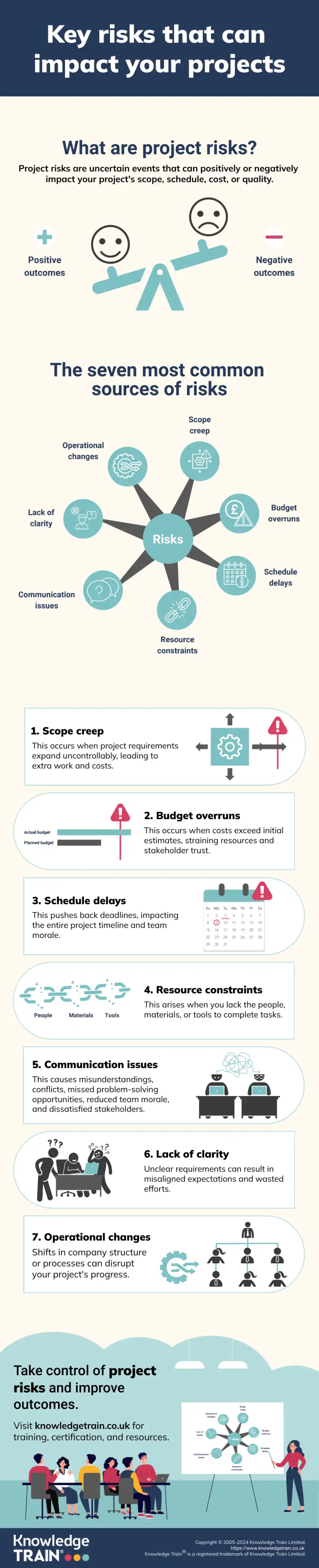
- Define risks as uncertain events that can help or harm scope, schedule, cost, or quality.
- Classify risks (internal, external, technical, financial, operational, strategic) to avoid blind spots.
- Use a repeatable cycle: identify, assess likelihood and impact, plan responses, then monitor and adapt.
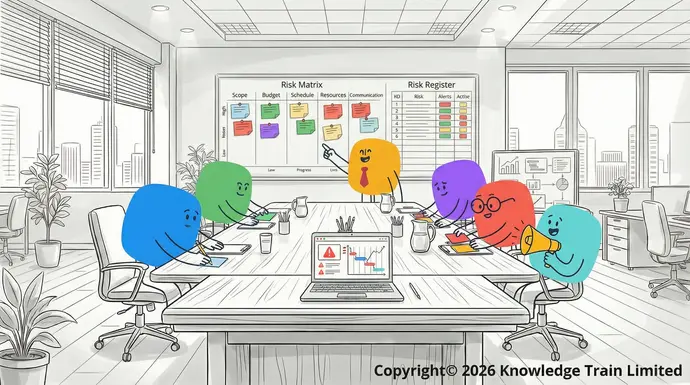
- Maintain a live risk register, supported by tools such as a risk matrix, SWOT, and project software alerts.
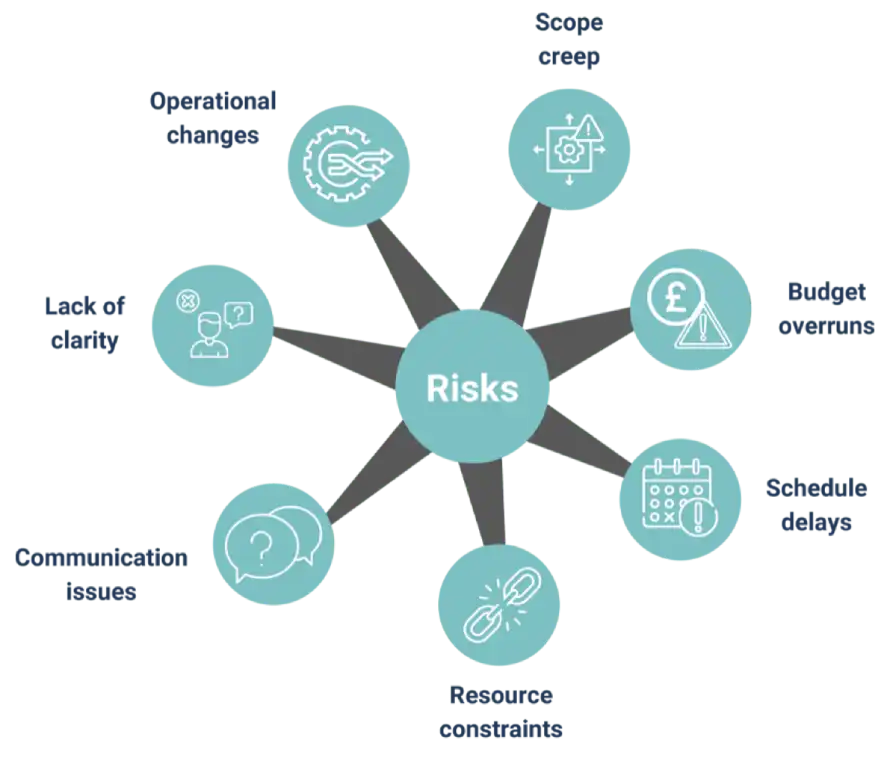
- Prevent common failures by controlling scope changes, monitoring budgets, managing dependencies, and planning resources.
- Keep stakeholders engaged with clear communication so risks are understood, owned, and acted on.
- Includes Foundation & Practitioner combined option.: Operational risks affect the day-to-day functioning of the project. They can encompass issues like human errors, process inefficiencies, supply chain disruptions, or equipment failures.P3O
- Strategic risks®: Strategic risks influence the project’s alignment with the organisation’s overall business goals. They may involve risks related to changing market demands, competitive pressures, or organisational changes.Foundation
Impact of risks on project successLearn the fundamentals of the P3O project management office.
Risks can have a variety of impacts on a project’s success:Practitioner
- Positive effectsIncludes Foundation & Practitioner combined option.: These could include opportunities for innovation or efficiency improvementsWorkshops
- Negative effectsIntroduction to Project Management
Tools and techniques for project risk management BUSINESS ANALYSIS QUALIFICATIONS
Risk register Select your preferred qualification.
A risk register BCS BUSINESS ANALYSIS COURSES is a document that lists all identified risks along with their potential impact and planned mitigation. Components to include are: Select your preferred training course below:
- Risk description
- Probability and impact assessment AGILE BUSINESS ANALYSIS COURSES
- Risk owner Select your preferred training course below:
- Mitigation strategies
- Contingency plans. CHANGE MANAGEMENT QUALIFICATIONS
Maintain your risk register throughout the project, regularly updating it as needed. Select your preferred qualification.
SWOT analysis
SWOT analysis APMG CHANGE MANAGEMENT COURSES is used to identify factors that may impact your project:Select your preferred training course below:
- Strengths: Project advantages
- Weaknesses: Areas for improvementPROGRAMME MANAGEMENT QUALIFICATIONS
- Opportunities: Potential benefitsSelect your preferred qualification.