Key takeawaysUse a small set of strong UK job sites, then work them consistently with clear targeting.
Strong risk management improves delivery certainty by surfacing threats early and agreeing responses.Use both specialist project management boards and broad job sites to widen your options across industries.
- Define risks as uncertain events that can help or harm scope, schedule, cost, or quality.Choose sites with clear, well presented listings, easy navigation, and career resources you will actually use.
- Classify risks (internal, external, technical, financial, operational, strategic) to avoid blind spots.Set up job alerts and check listings regularly so you apply early to new roles.
- Use a repeatable cycle: identify, assess likelihood and impact, plan responses, then monitor and adapt.Keep profiles and CVs updated, and tailor each application to the job description.
- Maintain a live risk register, supported by tools such as a risk matrix, SWOT, and project software alerts.Highlight relevant certifications and soft skills, and use filters to find remote or flexible roles.
- Prevent common failures by controlling scope changes, monitoring budgets, managing dependencies, and planning resources.
- Keep stakeholders engaged with clear communication so risks are understood, owned, and acted on.
Introductionproject managers
Project management to fill these roles. is a challenging process that is prone to many possible failures. Why use job sites for project management rolesRisk managementThe job sites on this list include: is a key aspect of project management that can help increase the likelihood of project success. This involves the process of identifying, assessing, and mitigating risks that can threaten the project.Specific project management job boards
In this article, we will explore some of the risks that can arise on projects and how to deal with them effectively. We will discuss the following topics:Jobs sites which feature a good project management jobs section
- The definition and importance of understanding project risksSpecific to industries that feature good project management roles.
- The different types of common project risksCriteria for selecting job sites
- The process of risk management on projectsThe sites we chose for our list had all the following features.
- The tools and techniques used in risk managementJobs that were well presented and high quality
- The strategies for effective risk mitigationReasonably easy to use interfaces
- The best practices for successful risk management on projects.Good reputations
By the end of this article, you will be able to:Good resources for developing your career.
- Identify potential risks on your projectsUsing these 10 job sites means you have access to many
- Apply effective risk management strategiesproject management roles
- Improve the chances of your project’s success. available across the UK. The list is large enough to cover different areas, both in terms of the size of employers and in the industries that employers are in. This means you will be able to find a project management role to suit your skills and interests, whether you are in construction and
You can also learn about project risk management on a ITproject management course or even health care and finance. such as Enhance your skills with our expert-led coursesPRINCE2 course or an APM course .Instructor-led
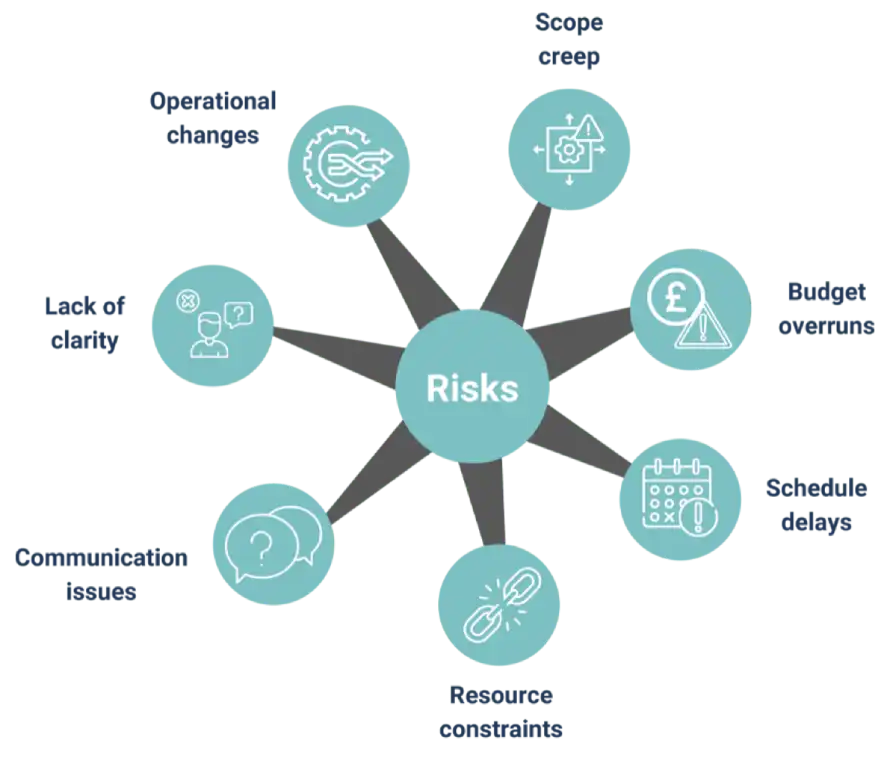
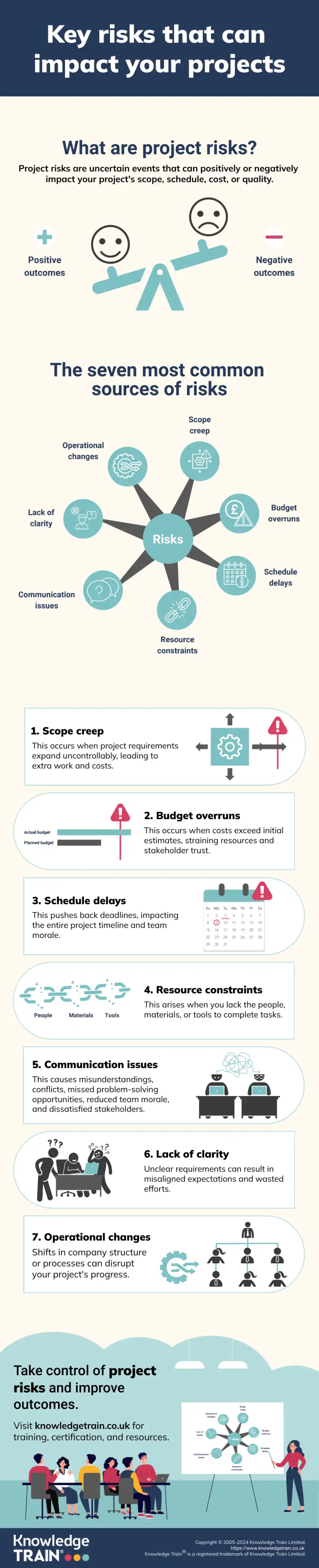
Unclear requirements can stem from ambiguous project objectives, insufficient stakeholder input, lack of detailed documentation and changing business needs.
Effects on project outcomes
Lack of clarity can lead to misaligned expectations, rework and wasted resources, delayed decision-making and compromised project quality.
Invest time in gathering and documenting clear requirements and maintain ongoing stakeholder engagement to ensure alignment.
Operational changes
Types of operational risksRelated articles
Operational changes can include:
- Organisational restructuring
- Process modifications
- Technology upgrades
- Regulatory changes.
Impact on project execution
Operational changes can affect projects by disrupting established workflows, requiring additional training or resources, altering project priorities and necessitating scope or timeline adjustments.
Stay informed about potential organisational changes and maintain flexibility in project planning to accommodate operational shifts.
By knowing about common project management risks, you can make specific plans to help prevent or overcome them. In addition, proactive risk management involves:Project management benefits
- Project management podcastsprojects
- Conducting stakeholder interviewsKnowledge Train
- Analysing project documentation.19 Feb 2026
Create a
Performing a SWOT analysis gives you a well-rounded view of your project’s risk landscape.
Brainstorming sessions
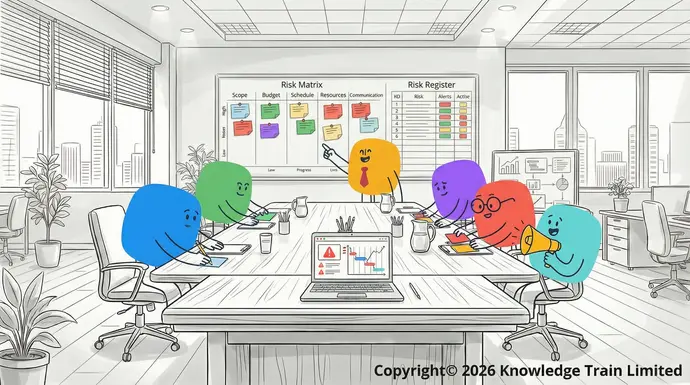
Organise structured brainstorming sessions with your team to identify potential risks. Encourage open discussion and creative thinking. Techniques you can use include:
- Nominal group techniquePRINCE2 Agile glossary
- Affinity diagramming
- Mind mapping.Simon Buehring
Brainstorming sessions can help identify risks that might be overlooked otherwise.19 Feb 2026
Project management software
- Contact us with questions about the courses on this page, or about which project management certification or training is best for you.Keep stakeholders informed of risk management plans and progress
- Seek stakeholder input on risk mitigation strategies.Finance FAQs
Continuous learning and improvementContact
- Record lessons learnt from risk management successes and failuresCookies
- Share information with other project teams to improve organisational risk managementPrivacy
- Invest in ongoing training and development of risk management skills.Terms
Follow these tips to help you establish a positive risk management culture and improve project success.Customer Support
ConclusionPRINCE2
Recap of key points®
Effective project risk management is a multi-faceted approach that involves identifying and assessing potential risks, developing mitigation strategies, utilising appropriate tools and techniques, and implementing best practices for continuous improvement., MSP
These elements form a comprehensive framework for managing uncertainties in project management.®
Importance of ongoing risk management, ITIL
Risk management® is an ongoing process that requires constant vigilance, regular reassessment and adaptation to changing project conditions., P3O
By prioritising risk management throughout the project lifecycle, you increase the likelihood of project success. Remember, proactive risk management is an investment in your project’s future, safeguarding its objectives and deliverables.®
FAQs, PRINCE2
What is the difference between internal and external project risks?®