Risk management on projectsNetherlands

Key takeaways
Strong risk management improves delivery certainty by surfacing threats early and agreeing responses.
- Define risks as uncertain events that can help or harm scope, schedule, cost, or quality.Business analysis courses
- Classify risks (internal, external, technical, financial, operational, strategic) to avoid blind spots.Compare business analysis qualifications and choose the best route for your role – from core BA skills to agile business analysis.
- Use a repeatable cycle: identify, assess likelihood and impact, plan responses, then monitor and adapt.
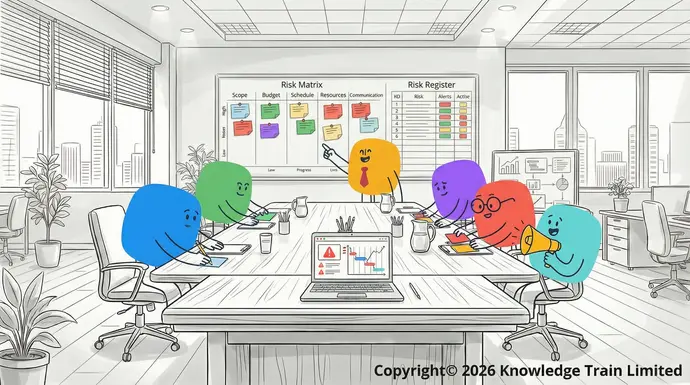
- Maintain a live risk register, supported by tools such as a risk matrix, SWOT, and project software alerts.
- Prevent common failures by controlling scope changes, monitoring budgets, managing dependencies, and planning resources.Experienced trainers
- Keep stakeholders engaged with clear communication so risks are understood, owned, and acted on.
IntroductionWhy us
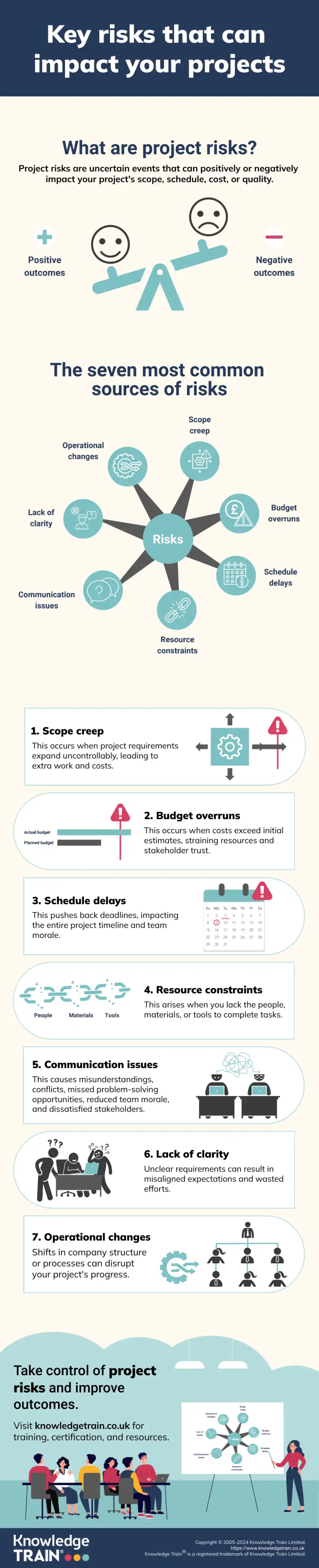
Project management is a challenging process that is prone to many possible failures. Risk management is a key aspect of project management that can help increase the likelihood of project success. This involves the process of identifying, assessing, and mitigating risks that can threaten the project.FAQs
In this article, we will explore some of the risks that can arise on projects and how to deal with them effectively. We will discuss the following topics:
- The definition and importance of understanding project risks
- The different types of common project risks
- The process of risk management on projectsClick or scroll
- The tools and techniques used in risk managementChoose your route
- The strategies for effective risk mitigation New to business analysis? Start by choosing the context you want to work in - then compare the best-fit qualification route below.
- The best practices for successful risk management on projects. Business analysis qualifications (BCS)
By the end of this article, you will be able to: Build core business analysis knowledge through individual modules, with an optional pathway to the BCS Diploma.
- Identify potential risks on your projects Agile business analysis (AgileBA)
- Apply effective risk management strategies Learn business analysis techniques designed for agile teams and iterative delivery environments.
- Internal risks : These risks originate from within the project or the organisation itself. They can be related to factors such as team dynamics, resource availability, or management decisions.BCS Business Analysis courses
- External risks : These risks arise from factors outside the project’s control, such as economic conditions, regulatory changes, natural disasters, or market trends.AgileBA
- Technical risks : Technical risks are associated with the technology or methodologies used in the project. They may involve issues like software glitches, hardware failures, integration challenges, or inadequate technical expertise.
- Financial risks : Financial risks impact the project’s budget, funding, or financial resources. They can include factors like unexpected cost overruns, currency fluctuations, or inadequate financial planning.Best for
- Operational risksBusiness analysts and aspiring analysts working in agile environments, or collaborating closely with agile delivery teams.: Operational risks affect the day-to-day functioning of the project. They can encompass issues like human errors, process inefficiencies, supply chain disruptions, or equipment failures.
- Strategic risksChoose this if…: Strategic risks influence the project’s alignment with the organisation’s overall business goals. They may involve risks related to changing market demands, competitive pressures, or organisational changes.You need BA techniques that fit iterative delivery - exploring needs, shaping requirements, and supporting prioritisation as work evolves.
Impact of risks on project success
Risks can have a variety of impacts on a project’s success:You’ll leave with
- Positive effectsAn AgileBA qualification route and practical approaches for effective business analysis in agile teams.: These could include opportunities for innovation or efficiency improvements
- Negative effectsAgileBA courses: These could lead to delays, cost overruns, or quality issues.Preparing for PMI-PBA?
Effective We also offer risk managementPMI Professional in Business Analysis (PMI-PBA) exam preparation is important for minimising negative impacts and maximising the potential for opportunities and overall project success. for candidates planning to sit the PMI exam.
Common project management risks Quality learning materials
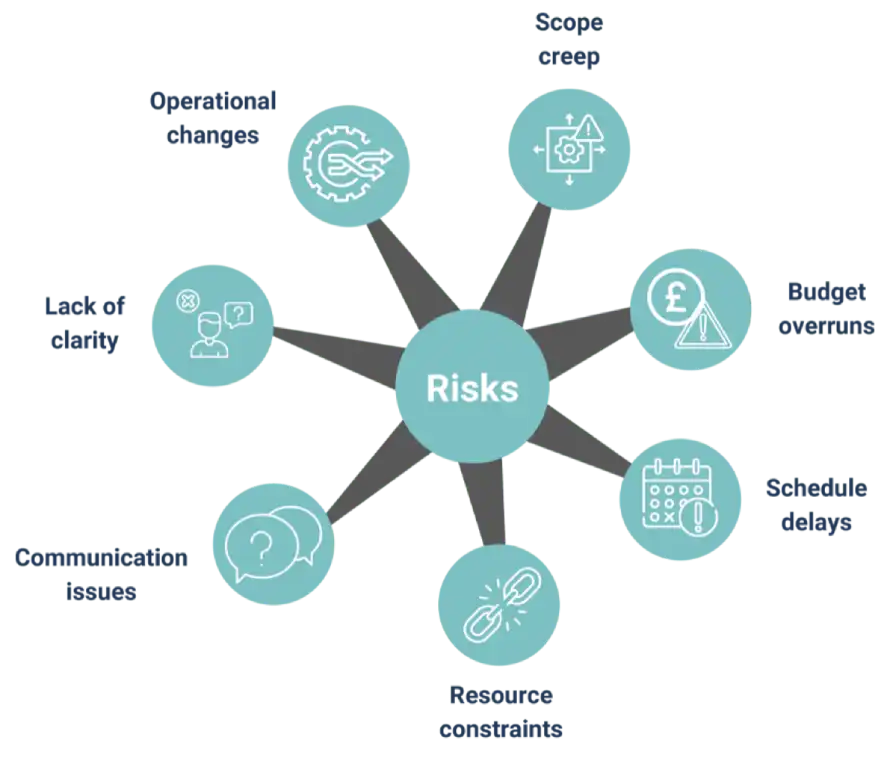
Scope creep
Common causes Use learning resources designed to build understanding quickly and help you apply what you learn.
Scope creep Team training for organisations is the uncontrolled expansion of a project’s scope without corresponding adjustments to time, budget, and resources. Common causes of scope creep include ambiguous initial requirements, lack of change control processes, Stakeholder pressure for additional features, and insufficient stakeholder engagement.
Impact Run private BA training for your team, aligned to your context, goals and timeline.
Scope creep can have several impacts on a project:
- It can increase the project’s duration, require more resources and increase costsTrusted by professionals at
- It can lead to delays and missed deadlines
- It can cause the project to lose focus and drift away from its original objectives
- It can lead to team burnout and demotivation.
To prevent scope creep, it is crucial to have a clear understanding of the project’s objectives and requirements, and to establish change control processes to manage and approve any changes to the project scope.
Budget overruns
- Avoidance : Eliminate the threat by changing project plans
- Mitigation : Reduce the probability or impact of the risk
- Transfer : Shift the risk to a third party (e.g. insurance)Give us a call
- Acceptance : Acknowledge the risk and prepare contingency plans.
Document your response strategies in a risk management plan.+44 (0)207 148 5985
Risk monitoring and control
Continuously monitor risks throughout the project lifecycle. This includes:Or chat with us using the link at the bottom of the screen.
- Regular risk reviews and updatesContact us with questions about the courses on this page, or about which project management certification or training is best for you.
- Tracking risk triggers and early warning signsFinance FAQs
- Implementing planned responses when necessaryContact
- Evaluating the effectiveness of risk responses.Cookies
Adjust your risk management approach as needed based on new information and changing project conditions.Privacy
By following this structured process, you can effectively manage risks and increase your project’s chances of success.Terms
Tools and techniques for project risk management to boost your career.
Risk registerPRINCE2
A ®risk register, MSP is a document that lists all identified risks along with their potential impact and planned mitigation. Components to include are:®
- Risk description, ITIL
- Probability and impact assessment®
- Risk owner, P3O
- Mitigation strategies®
- Contingency plans., PRINCE2
Maintain your risk register throughout the project, regularly updating it as needed.®
SWOT analysis Agile, RESILIA
SWOT analysis® is used to identify factors that may impact your project:, and the Swirl logo are registered trademarks of the PeopleCert group. Used under licence from PeopleCert. All rights reserved. AgilePM