
Introductionprojects
Project management and product managementClear, fixed requirements are two essential aspects of any business that are often used interchangeably, even though they are distinct from each other. Both play a critical role in the success of any organisation, but they have different functions and responsibilities.Key roles and concepts in Agile projects
Project managers are typically responsible for the successful delivery of specific projects within a defined timeframe. Product managers, on the other hand, oversee the entire lifecycle of a product, from inception to delivery, and are responsible for driving its success.Product Owner:
It is important to understand the differences between the two to make informed decisions regarding resource allocation, optimise decision-making processes, and foster effective collaboration across teams. Represents stakeholders, manages product backlog, prioritises features
As Scrum Masterproject: and product management become increasingly important in today’s business environment, it is critical to understand their respective roles and how they complement each other to tackle complex challenges effectively. This article will explore the key differences between the two, including specific responsibilities, skills and traits required, career paths, and other aspects. Facilitates
By understanding these distinctions, individuals and organisations can make informed decisions about how to best leverage both disciplines to achieve their objectives and drive success.Scrum
Defining project management and product management process, removes impediments
What is project management?User stories
Project management: is a discipline of planning, implementing, and controlling a project with specific goals and a timeline. Short, simple descriptions of a feature told from the perspective of the userProject managersBacklog: oversee various tasks, including planning and scheduling the project tasks, allocating resources, Ordered list of project tasks and featuresriskSprint/Iteration: and issue management Short, time-boxed development cycles, and ensuring the project is delivered on time and within budget. The key objectives of project management are to meet the project’s deadlines and milestones, ensure quality control, promote team collaboration, and report on the progress to stakeholders.Stakeholders:
What is product management? Individuals or groups with interests in project outcomes
Product management, on the other hand, is responsible for the entire lifecycle of a product, from its initial concept to its retirement. The role of a Retrospectives:product manager Regular meetings to assess and improve processes includes defining the product’s vision and strategy, conducting market research and analysis, prioritising product features and improvements, and working with cross-functional teams to ensure the successful delivery of the product. Product management’s main objectives are to understand customer needs and pain points, align product development with business objectives, optimise product value and market fit, and drive product adoption and revenue growth.Deliverables:
Common misconceptions and overlaps Outputs produced at the end of each iteration
While project and product management serve different functions, there are overlaps that can lead to misunderstandings. Some common misconceptions include believing that Continuous Improvement:project managers Commitment to reflect and implement enhanced ways of working have authority over product decisions, expecting product managers to handle day-to-day project tasks, and assuming the roles are interchangeable.Benefits of Agile project management
Both roles are distinct but complementary. Project managers are often focused on execution and delivery, while product managers provide strategic guidance and have a long-term vision for the product. The two roles need to work together in successful organisations to leverage their unique skill sets and achieve the best outcomes.Accelerated delivery of value through iterative increments
Key differences between project managers and product managers principles enhance innovation, adaptiveness, and client-centric outcomes.
Role focus and scopeIT
Project managers/software: are primarily focused on execution and delivery. They drive the implementation of specific projects and are responsible for managing the team to deliver project goals within constraints. Project managers focus on getting the job done. Dynamic product requirements, regular releases, user feedback
Product managersMarketing:, on the other hand, are responsible for strategy and vision. They are tasked with defining what should be built and why, shaping the product roadmap and ensuring alignment with business objectives. In essence, product managers think about the product’s life cycle and market position, while project managers are more concerned with the day-to-day activities. Campaigns adapted based on analytics and feedback
Timeline and lifecycle involvementConstruction:
Project managers Early delivery of completed sections, iterative design work within defined start and end dates, whereas product managers are involved in a product’s lifecycle indefinitely. A project manager guides a project from initiation to closure and then transitions to the next project or opportunity. On the other hand, a product manager’s responsibilities continue as long as the product exists in the market. They manage updates, improvements and adapt to market needs, so their involvement is ongoing.Authoritative standards organisations like the
Decision-making authorityAgile Business Consortium
Project managers are tactical decision-makers, operating within project constraints. They are responsible for decisions about task prioritisation, resource allocation, and risk management, but they typically don’t have authority to make decisions about the overall project’s scope or direction. In contrast, product managers have strategic decision-making power. They decide what features the product should have, how it should be positioned in the market, and when to pivot based on customer feedback or market changes. Product managers make decisions that have long-term implications for the product.,
Stakeholder managementAgile Alliance
Project managers primarily work with internal teams and stakeholders directly involved in project execution. They coordinate between team members, manage project-related communication, and report to project sponsors or department heads. Product managers interact with a wider range of stakeholders. This includes not only internal teams like engineering, design, marketing and sales but also external ones. They gather insights from customers, understand market trends and work with multiple departments to ensure product-market fit.,
These differences in roles, responsibilities and operational focus highlight the unique contributions of both project managers and product managers to an organisation. While project managers are essential for executing specific initiatives, product managers play a pivotal role in setting strategic direction, thus guiding the overall product development and market success.Scrum.org
Skills and qualifications, and
Project manager skillsProject Management Institute (PMI)
Project managers provide resources, definitions, and need to possess a range of skills to lead certificationsprojects for Agile professionals. effectively. Some of the key skills include:Related resources
- Planning and schedulingApply: : Project managers should be skilled in developing realistic timelines, managing project milestones, and keeping projects on track.Agile Project Management (AgilePM)
- Risk managementSee also: : Identifying and proactively addressing potential risks and developing strategies to mitigate them.Agile methodology
- Resource allocationLearn more: : Ensuring optimal use of team members, budget, and materials throughout the project.Scrum
- Communication and leadership, : Project managers should be able to clearly communicate project goals, delegate tasks, and motivate team members to achieve objectives. These skills also help with stakeholder management and reporting.Kanban in project management
Product manager skillsExplore:
Product managersAgile vs waterfall models, on the other hand, require a different skill set to guide product development and strategy. Key skills for product managers include:FAQs
- Market research and analysisWhat is the difference between Agile and waterfall project management?: Product managers should be able to conduct thorough market research, identify customer needs, and understand market trends.The main difference is that
- Strategic thinkingAgile: Developing product roadmaps, making informed decisions, and prioritising features based on market demands and business goals. is iterative and flexible, allowing change at any stage, while
- User experience and customer focuswaterfall: Product managers need to have a strong understanding of their target audience and create products that resonate with them. follows a strict, linear process where each phase must be completed before the next begins. Agile encourages frequent feedback and continuous delivery of value, whereas waterfall often delivers only at the end.
- Technical understandingWhat are the main stages of an Agile project?: While coding skills may not be essential, product managers should have a basic understanding of technology and development processes to communicate effectively with development teams and make informed product decisions.Typical stages of an Agile project include vision and roadmap creation, backlog development, sprint planning, execution (iteration), review, and retrospectives. Continuous improvement occurs at every stage.
Overlapping skills for both rolesWhat are the key frameworks of Agile project management?
In addition to the distinct skills mentioned above, there are also skills that are important for both project and product managers. These skills include:Key Agile frameworks are
- Problem-solvingScrum: Both roles often involve solving complex problems, whether during project execution or product development., Kanban, Lean, and Extreme Programming (XP). Each offers a unique structure for managing roles, processes, and workflow.
- Stakeholder managementWhat are the benefits and challenges of Agile project management?: Navigating complex organisational structures and maintaining support for initiatives.Advantages include adaptability, stakeholder engagement, and high product quality. Challenges may include initial resistance, need for team discipline, and less suitability for projects with fixed, unchanging requirements.
- CommunicationWhere is Agile project management commonly used?: The ability to convey complex information clearly, facilitate collaboration, and present ideas persuasively to various stakeholders is crucial for both project and product managers.While most common in software development, Agile is used in industries such as marketing, manufacturing, construction, and education wherever flexible, iterative approaches add value.
The contexts in which these skills are applied might be different between project and product management, but those skills are useful and necessary in both roles. If you are working as a professional in either of these areas, the skills required might form part of a pathway to moving from one to another.Subscribe to our exclusive offers and promotions
Tools and methodologies
Project management tools and frameworksSubscribe now
Project managers use a variety of tools and frameworks to plan, execute, and monitor projects effectively. Some common tools and frameworks include:
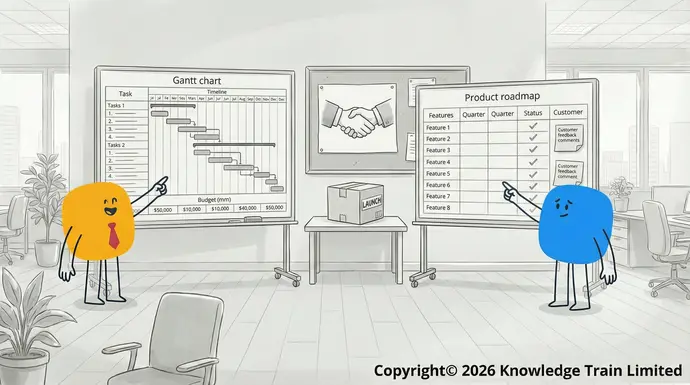
- Gantt charts{"@context":"http://schema.org","@type":"WebPage","headline":"What is Agile Project Management? Frameworks & How It Works","url":"https://www.knowledgetrain.co.uk/agile/agile-project-management","significantLink":"https://apm.org.uk/resources/find-a-resource/agile-project-management/","about":[{"@type":"Thing","name":"agile project management","sameAs":["http://en.wikipedia.org/wiki/Agile_software_development","https://www.google.com/search?&kgmid=/m/02zhbn","https://www.wikidata.org/wiki/Q30232"]}],"mentions":[{"@type":"Thing","name":"agile","sameAs":["https://en.wikipedia.org/wiki/Agile_software_development","https://www.google.com/search?&kgmid=/m/02zhbn","https://www.wikidata.org/wiki/Q30232"]},{"@type":"Thing","name":"agile project management","sameAs":["https://en.wikipedia.org/wiki/Agile_software_development","https://www.google.com/search?&kgmid=/m/02zhbn","https://www.wikidata.org/wiki/Q30232"]},{"@type":"Thing","name":"agile project managers","sameAs":["https://en.wikipedia.org/wiki/Agile_software_development","https://www.google.com/search?&kgmid=/m/02zhbn","https://www.wikidata.org/wiki/Q30232"]},{"@type":"Thing","name":"agile methodologies","sameAs":["https://en.wikipedia.org/wiki/Agile_software_development","https://www.google.com/search?&kgmid=/m/02zhbn","https://www.wikidata.org/wiki/Q30232"]},{"@type":"Thing","name":"agile methodology","sameAs":["https://en.wikipedia.org/wiki/Agile_software_development","https://www.google.com/search?&kgmid=/m/02zhbn","https://www.wikidata.org/wiki/Q30232"]},{"@type":"Thing","name":"change management","sameAs":["https://en.wikipedia.org/wiki/Change_management","https://www.google.com/search?&kgmid=/m/05qb9n6","https://www.wikidata.org/wiki/Q116348"]},{"@type":"Thing","name":"project management","sameAs":["https://en.wikipedia.org/wiki/Project_management","https://www.google.com/search?&kgmid=/m/05_p2","https://www.wikidata.org/wiki/Q179012"]},{"@type":"Thing","name":"programme management","sameAs":["https://en.wikipedia.org/wiki/Program_management","https://www.google.com/search?&kgmid=/m/01pqtb","https://www.wikidata.org/wiki/Q603948"]},{"@type":"Thing","name":"scrum","sameAs":["https://en.wikipedia.org/wiki/Scrum_(software_development)","https://www.google.com/search?&kgmid=/m/0ck_p8","https://www.wikidata.org/wiki/Q460387"]},{"@type":"Thing","name":"management","sameAs":["https://en.wikipedia.org/wiki/Management","https://www.google.com/search?&kgmid=/m/04_tv","https://www.wikidata.org/wiki/Q2920921"]},{"@type":"Thing","name":"manager","sameAs":["https://en.wikipedia.org/wiki/Management","https://www.google.com/search?&kgmid=/m/04_tv","https://www.wikidata.org/wiki/Q2920921"]},{"@type":"Thing","name":"project management institute","sameAs":["https://en.wikipedia.org/wiki/Project_Management_Institute","https://www.google.com/search?&kgmid=/m/03ngvz","https://www.wikidata.org/wiki/Q1545010"]},{"@type":"Thing","name":"business analysis","sameAs":["https://en.wikipedia.org/wiki/Business_analysis","https://www.google.com/search?&kgmid=/m/07764x","https://www.wikidata.org/wiki/Q1518232"]},{"@type":"Thing","name":"dsdm atern","sameAs":["https://en.wikipedia.org/wiki/Dynamic_systems_development_method","https://www.google.com/search?&kgmid=/m/031748","https://www.wikidata.org/wiki/Q2335896"]},{"@type":"Thing","name":"waterfall methodologies","sameAs":["https://en.wikipedia.org/wiki/Waterfall_model","https://www.google.com/search?&kgmid=/m/0867l","https://www.wikidata.org/wiki/Q478175"]},{"@type":"Thing","name":"continuous improvement","sameAs":["https://en.wikipedia.org/wiki/Continual_improvement_process","https://www.google.com/search?&kgmid=/m/03cq4qt","https://www.wikidata.org/wiki/Q1318104"]},{"@type":"Thing","name":"agile management","sameAs":["https://en.wikipedia.org/wiki/Agile_management","https://www.google.com/search?&kgmid=/m/0chpky","https://www.wikidata.org/wiki/Q556396"]}]}: Visual representations of project timelines, dependencies, and milestones. Project management softwareRelated articles like Microsoft Project or Asana can provide comprehensive solutions for task assignment, progress tracking, and resource management.
- Agile and Scrum : Agile and Scrum methodologies have become increasingly popular in project management, particularly in software development. These approaches emphasise flexibility, iterative development, and continuous improvement. Scrum boards and Sprint planning tools are commonly used to support these methodologies.
Product management tools and frameworks
Product managers utilise specialised tools to define and communicate product strategy effectively. Some tools and frameworks commonly used by product managers include:
- Product road mapping software : Tools like ProductPlan or Aha! help create visual roadmaps that outline product vision, features, and timelines. These tools are used to align stakeholders and guide development efforts.
- User story mapping and prioritisation : Techniques such as the MoSCoW method or story mapping workshops can assist product managers in organising and prioritising features based on user needs and business value. These approaches ensure that product development focuses on delivering maximum value to customers.What is Agile?
Shared tools and methodologies
Project managers and product managers both rely on collaboration and communication platforms such as Slack, Microsoft Teams, or Zoom to facilitate real-time communication and information sharing among team members and stakeholders. These tools allow both types of managers to keep everyone aligned and informed, and to quickly address any issues that may arise.Knowledge Train
- Scrum is an agile framework tproject plans
- Cultivate a culture of respect and appreciation for the value each role brings.
By following these guidelines, organisations can harness the strengths of both roles and work together toward successful product outcomes.
Measuring success: Metrics and KPIshat empowers teams to deliver complex projects through collaboration, transparency, and iterative progress. Discover how Scrum supports adaptive software development and effective teamwork.
Project management success metrics
Project managers often define success using a mix of quantitative and qualitative metrics:
- On-time delivery : This is a critical measure, indicating whether a project meets its milestones and deadlines. It can often be linked to efficient planning and risk management .
- Budget adherenceScrum Master: Staying within the pre-planned budget is a common KPI for project managersSimon Buehring. It reflects efficient resource allocation and the ability to handle unforeseen expenses. Deviations from the budget should be minimal and justified.20 Mar 2026
- Stakeholder satisfaction : This is a more qualitative metric but is just as important. It includes the satisfaction of team members, clients, and any other stakeholders. High levels of satisfaction can often be a sign of well-executed project management and communication.Understand what makes a successful Scrum Master and how to motivate your team effectively. Read on for insights.
Product management success metrics
Product managers , on the other hand, often use different metrics to measure success:
- User adoption and engagement : These metrics help understand how well a product is meeting customer needs and how often it’s being used. They can include daily active users, feature usage, or time spent on the product.
- Revenue and market share : For a product manager, these are key indicators of a product’s commercial success. They show the product’s financial contribution and its position in the market relative to competitors. Growth in these areas can indicate a successful product strategy and a good market fit.
- Customer satisfaction and retentionHow to become an Agile project manager: These metrics offer insights into a product’s long-term viability. Measures like Net Promoter Score (NPS) or churn rate fall into this category. High satisfaction and retention rates suggest that the product continues to meet users’ needs over time.
In conclusion, while there are some overlaps, project and product managers often focus on different success metrics that are specific to their roles and responsibilities.Simon Buehring
Project management and product management are two different but equally important skills and roles for any organisation. Project managers are focused on execution, timeline, and resource management, while product managers are focused on strategy, market fit, and long-term vision for a product. Both roles require strong communication skills and the ability to manage stakeholders.
While project and product managers have different responsibilities, they work towards the same goal of delivering value to the organisation. Collaboration between project and product managers is essential to ensure that the product vision is translated into a successful outcome. In today’s fast-paced and complex digital landscape, the importance of both project and product management is becoming increasingly critical, and organisations that can effectively leverage the strengths of both roles are more likely to innovate, adapt, and succeed in competitive markets.
FAQs
Can a project manager become a product manager?
Yes. With additional training in market analysis, strategy, and user experience, project managers can transition into product management roles. Their organisational and leadership skills are valuable assets in product management.
What are the main challenges faced by project managers and product managers?
Project managers commonly face challenges such as scope creep and resource constraints. Product managers often grapple with prioritising features and balancing stakeholder expectations with user needs.
How do Agile methodologies impact the roles of project and product managers?
Agile methodologies blur the traditional boundaries of project and product managers. Project managers may take on the role of Scrum Masters, focusing on team processes. Product managers often assume the responsibilities of Product Owners, managing the product backlog.