IntroductionProject management career path
Project management plays a crucial role in the success of organisational initiatives. It involves the efficient coordination of resources, tasks, and people to achieve specific goals within defined constraints.Best project management software
Central to effective project management is the understanding of the diverse roles that contribute to the project’s success. From project managersFAQs and team members to stakeholders and sponsors, each position holds unique responsibilities and expectations.What is project management?
This article delves into ten essential Project managementproject management roles is the application of knowledge, skills, tools, and techniques to project activities to meet project requirements (source: , their key responsibilities, and their impact on project outcomes. Gaining a clear grasp of these roles will empower professionals to:Project Management Institute
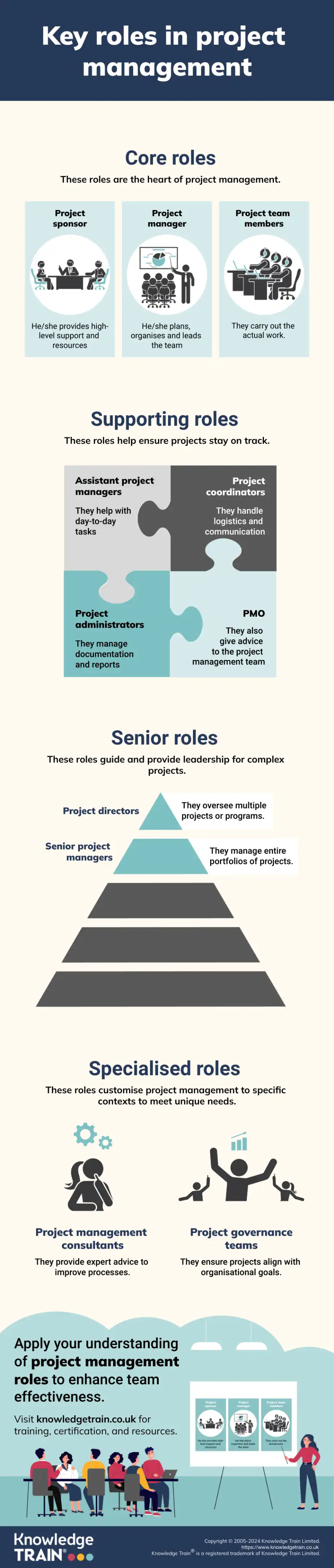
Core project management rolesproject
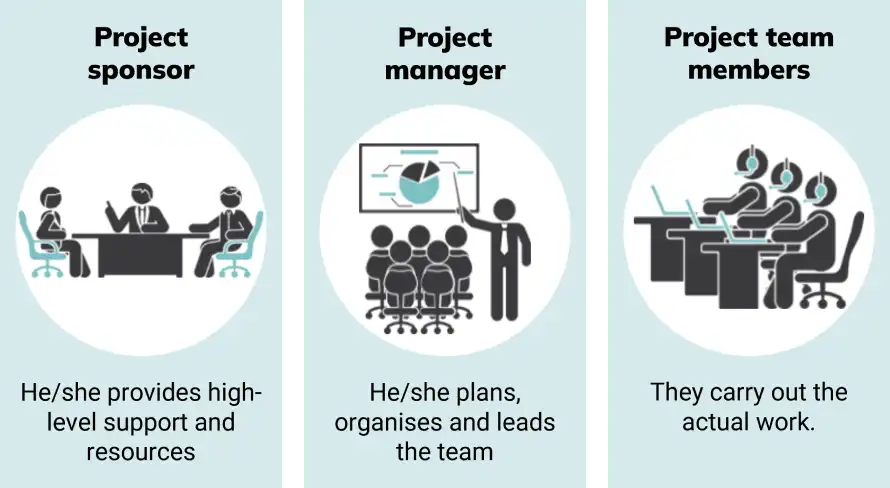
Project manager (PM) is a temporary endeavour with a specific goal, differing from routine operations. Project management ensures successful delivery through systematic processes and best practices.
This role serves as the central hub of any project, assuming responsibility for its successful execution. This pivotal role involves the coordination of resources, people, and tasks to ensure that the project stays on track and meets its predefined objectives. Some of the core responsibilities that fall under this role include:Project life cycle phases
- Planning and defining the project scopeThe
- Project roles and responsibilities
- Quality assurance (QA) testersProjects rely on well-defined roles and accountability:
- Business analystsProject manager
- Subject matter experts.: Oversees planning, execution, monitoring, control and closing; manages risks, stakeholders, schedule, and budget.
Project team members’ primary responsibilities include:Stakeholders
- Completing the tasks assigned to them within the specified timelines: Individuals or groups affected by the project or who can impact its outcome, such as clients, suppliers, and team members.
- Maintaining quality standards throughout the project
- Reporting progress and any challenges encountered to the PMProject team
- Contributing ideas to problem-solving and innovative solutions.: Specialists responsible for delivering project tasks and deliverables.
CollaborationProject sponsor plays a significant role in the success of any project. Team members are expected to:: Provides financial resources and strategic guidance.
- Communicate effectively and consistently with all stakeholders and team membersProject board/steering committee
- Share knowledge and resourcesEffective stakeholder management and clear team communication are essential for project success. The project manager must align interests, resolve conflicts, and support collaborative team dynamics.
- Help their colleagues succeedEssential project management skills
- Be adaptable to the changing project requirements.The
By promoting open communication, trust, and respect, project team members can overcome project challenges more effectively. This kind of collaboration boosts productivity, creativity, and ultimately, the success of the project, thereby contributing to the achievement of the organisation’s strategic goals.skills required by project managers
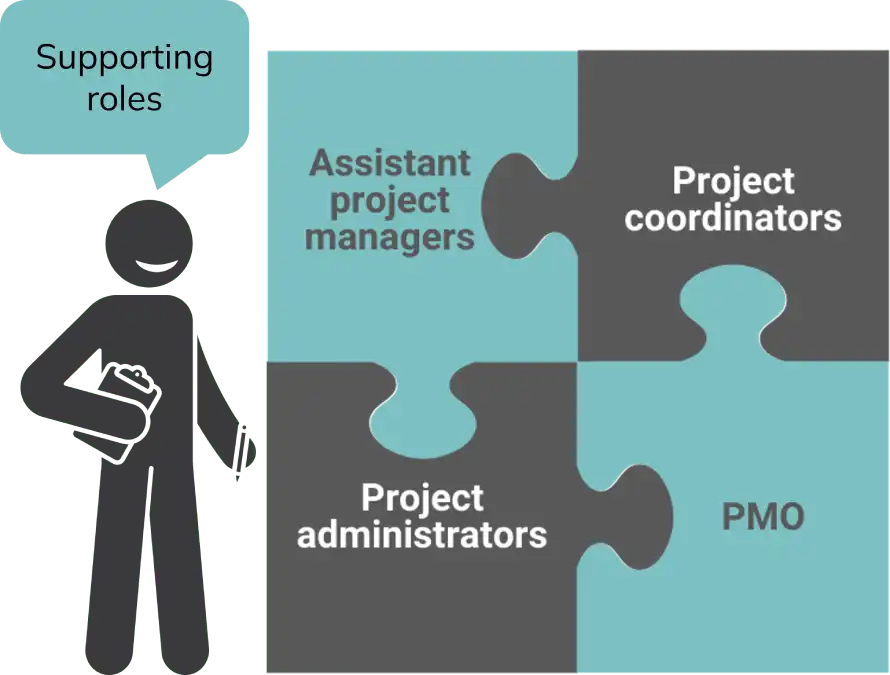
Supporting project management rolesNegotiation
Assistant PMReaching agreement among parties to resolve issues.
An Critical thinkingAssistant PMEvaluating situations and implications for decision making. is a second manager or someone who is directly underneath the main PM and they help them out; they do the same job as a regular PM but on smaller or less important projects.Project management tools & techniques
For example, if you are working on a huge project and it’s starting to get a lot of tasks, you may ask an Assistant PM to take over and get it done and they will, if it’s small enough! In summary, the assistant is a great help and acts as a mini PM. The responsibilities of an assistant include:Project management software
- Planning the project: (e.g., Microsoft Project, Asana, Trello) aids collaboration, scheduling, task assignment, budgeting, and document management.
- Monitoring the project and its workGantt chart
- Overseeing the allocated budget: Visual timeline for planning and tracking progress.
- Communicating with the stakeholdersWork Breakdown Structure (WBS)
- Assisting the PM.: Divides project into manageable sections.
Working under the PM, the assistant:Critical Path Method (CPM)
- Learns high-level : Identifies sequence of crucial tasks that determine project duration.project management skillsProject portfolio management
- Gets first-hand experience of making top-level decisions: Prioritising, balancing, and overseeing multiple
- Builds leadership experience for his/her own future career development.projects
This relationship enables effective delegation of tasks as well as broader project supervision. The role of Assistant PM is particularly important for big or complex projects, offering extra management resources and helping to ensure that no detail is missed. aligning with organisational strategy.
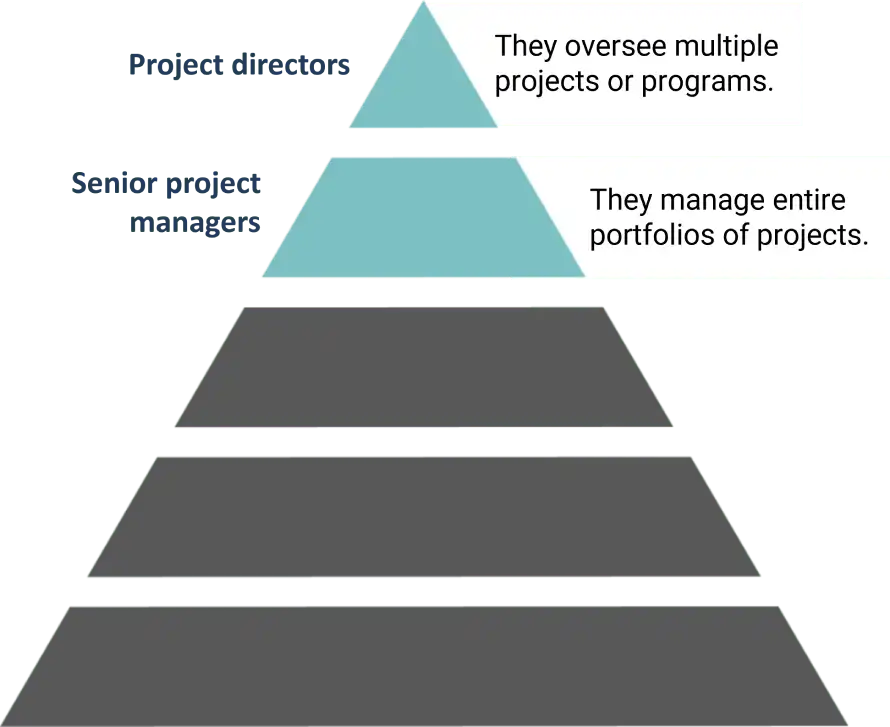
enior PMPRINCE2 Agile certifications
A .Senior PMFoundation takes on more senior and advanced project management responsibilities, often based on extensive experience and a proven track record in handling complex initiatives. Their role may include: and
- Managing multiple interconnected Practitionerprojects level or AgilePM certificationsprogrammes from APMG
- Designing and implementing strategic Certifications are valued globally and support career advancement.project management methodologiesProject management career path
- Mentoring and developing junior PMs and team membersCareer progression
- Managing high-level stakeholder relationships. often starts with project coordinator or assistant roles, advancing to project manager, senior project manager, programme manager, and portfolio manager positions. Skilled practitioners are in high demand in industries such as
Such professionals typically have:IT
- A history of successful project deliveries, construction, engineering, healthcare, and finance.
- Advanced Best project management softwarecertificationsSoftware tools support scheduling, resource allocation, collaboration, documentation, (e.g. PMP, risk managementPRINCE2 Practitioner, and reporting – common options include Microsoft Project, Jira, Trello, Asana, Smartsheet, and Monday.com.)FAQs
- Deep industry-specific knowledge.What are the five stages of project management?
In leading The five standard stages are Initiating, Planning, Executing, Monitoring and Controlling, and Closing. Each phase plays a vital role in ensuring project objectives are met efficiently.complex initiativesWhat does a project manager do?, Senior PMs:A
- Align projects with organisational goalsproject manager
- Oversee significant budgets and resources is responsible for planning, executing, and closing
- Address risks across diverse project domainsprojects
- Promote innovation and process improvements.. They coordinate tasks, manage the project team, oversee scheduling and budgeting, handle risks, and communicate with stakeholders to ensure successful delivery.
Their strategic vision and leadership enable them to navigate intricate project landscapes effectively. By prioritising tasks, balancing competing interests, and optimising resource allocation, Senior PMs significantly contribute to enhancing an organisation’s project management capabilities and overall performance.What is the difference between Agile and waterfall in project management?
Project directorAgile
Project directors is an iterative approach that emphasises flexibility, frequent feedback and continuous improvement, best for evolving projects. hold senior leadership roles and are responsible for managing entire project portfolios within an organisation. Key responsibilities include:Waterfall
- Aligning project portfolios with strategic business objectives is a linear, sequential model suited to projects with well-defined requirements.
- Optimising resource allocation across multiple projectsHow do I become a project manager?
- Establishing project management standards and methodologiesStart by gaining experience in team-based roles, develop relevant skills, and pursue
- Evaluating and reporting on overall portfolio performance.project management certifications
Project directors play a critical role in managing resources and stakeholder relationships: such as
- Coordinating cross-functional teams and departmentsPRINCE2
- Negotiating with senior executives and external partners,
- Balancing competing priorities and resource demandsAgilePM
- Identifying and mitigating portfolio-wide risks. or CAPM. Practical experience and networking are valuable for career advancement.
Project directors contribute to:What are effective project management tools?
- Maximising return on investment for project initiativesPopular tools include
- Fostering a culture of continuous improvementproject management software
- Mentoring and developing project management talent. (Microsoft Project, Asana), Gantt charts,
Their strategic vision and leadership skills are essential for driving organisational success through effective project portfolio management. By optimising resource utilisation and stakeholder engagement, project directors significantly enhance an organisation’s project delivery capabilities.WBS
FAQsProject management vs programme management
What’s the difference between a project manager and coordinator?
A PM is responsible for the overall planning, execution, and closure of a project. They make strategic decisions and manage the team. A project coordinator, on the other hand, primarily handles administrative tasks and supports the PM in their duties.Knowledge Train
How does a project sponsor contribute to success?19 Feb 2026
A project sponsor provides resources for the project, removes organisational obstacles, and ensures the project aligns with the company’s strategic goals. They also champion the project at executive levels, influencing its success.
What skills are essential for becoming a successful project manager?Dive into the differences between project and programme management to determine which is best suited for your organisation and can improve your project delivery. Read on to find out more.
Successful PMs typically possess leadership, communication, problem-solving, organisation, and adaptability skills. Technical knowledge relevant to the project’s field is also important.
How can I start a career in project management?
You can start with entry-level roles such as a project coordinator or assistant. Acquiring certifications like PRINCE2 or PMP can also be beneficial. Gain experience in project-based work and continue to develop both technical and soft skills.
Infographic