Core project management roles.
Project manager (PM)Enhance your skills with our expert-led courses
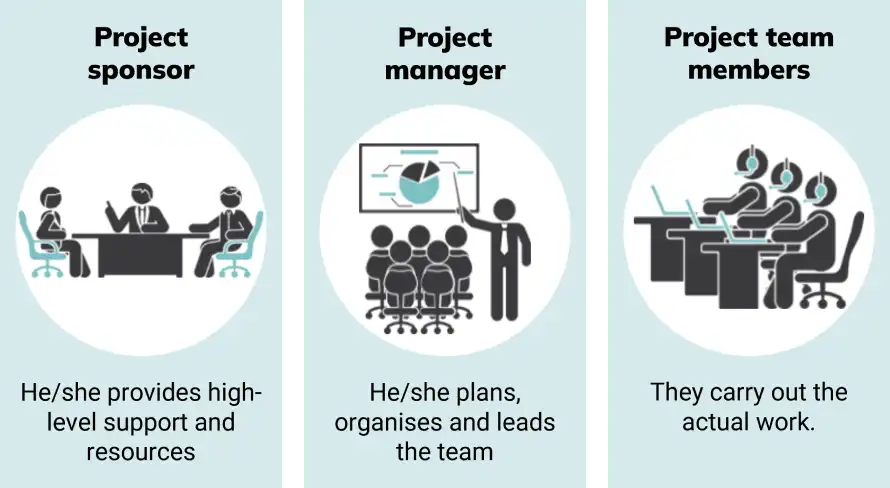
This role serves as the central hub of any project, assuming responsibility for its successful execution. This pivotal role involves the coordination of resources, people, and tasks to ensure that the project stays on track and meets its predefined objectives. Some of the core responsibilities that fall under this role include:
- Planning and defining the project scope
- Creating and managing budgets
- Developing schedules and timelinesInstructor-led
- Allocating resources efficientlyMSP Practitioner (with Foundation) course
- Mitigating risks and resolving issues
- Communicating with stakeholders.£1,899 +vat
Successful PMsSee all dates possess a unique set of technical and interpersonal skills:
- Leadership : Inspiring and motivating team members to perform at their best
- CommunicationSelf-paced: Clearly conveying ideas, expectations, and instructions to all parties involvedMSP Practitioner (with Foundation) self-paced online
- Problem-solving : Addressing and resolving challenges and obstacles efficiently£1,399 +vat
- Adaptability : Adjusting strategies and plans as necessary to meet changing circumstances
- Organisation : Managing multiple tasks and priorities simultaneously without losing focus.Instructor-led
This role is crucial to the success of any project. It acts as the glue that holds the project together and maintain the entire process moving in the right direction. This role keeps the project aligned with organisational goals, ensure deadlines are met, and foster collaboration and communication among team members. By expertly balancing constraints such as time, budget, and scope, this role significantly increase the chances of achieving the desired project outcomes and delivering value to all stakeholders.MSP Foundation course
Project sponsor
The £1,299 +vatproject sponsor plays an important part in starting and supporting See all datesprojectsDifferences between programmes and projects from initiation through completion. This role, typically held by someone at an executive or senior management level, champions the project and ensures it is in alignment with organisational objectives. Some of the key responsibilities that fall under the project sponsor’s domain include:Table showing the differences between programmes and projects.
- Securing funding and resources for the projectProjects
- Approving the project charter and project scopeProgrammes
- Making high-level decisions related to the projectPurpose and objectives
- Providing resolution to any escalated issues.Deliver specific, outputs within a set time and cost.
Project sponsors act as the connection between the project team and senior-level stakeholders. They are responsible for clearly communicating the value and progress of the project to these stakeholders. The project sponsor is also the final person with accountability for the project budget and results.Achieve a broader set of strategic outcomes by managing a group of interrelated projects.
The relationship between the sponsor and the PM is vital to the success of the project. This role oversees the day-to-day operations of the project, while the sponsor provides strategic guidance and support by:Scope and timeframe
- Offers strategic directionHave a defined scope and timescale.
- Provides political supportHave a broader scope, comprising multiple related projects. Their timescale continues until all the desired outcomes are achieved.
- Eliminates organisational barriers.Management approach
This strong partnership guarantees that the project is on track, has enough resources and is well aligned with business goals. By actively engaging with and supporting project sponsors, the PM increases the likelihood of project success and stakeholder satisfaction.Focuses on the delivery of specific outputs,
Project team membersmanaging risks
Project team members are a collection of skilled and experienced professionals who apply their specialised knowledge to help projects meet their goals. These team members can take on many different titles or roles, including:, issues, quality, and stakeholders.
- Developers and engineersFocuses on coordinating multiple related projects to achieve a common outcome. Also focuses on managing project interdependencies and realizing benefits.
- Designers and other creative specialistsBenefits of programmes
- Quality assurance (QA) testersThere are multiple benefits to an organization if it manages its change initiatives as programmes.
- Business analystsStrategic alignment
- Subject matter experts.Programme management
Project team members’ primary responsibilities include: ensures that all projects within a programme align with the broader organizational goals, ensuring resources are channelled towards initiatives that match the strategic vision.
- Completing the tasks assigned to them within the specified timelinesOptimized resource allocation
- Maintaining quality standards throughout the projectResources, including time, manpower, and finances, are allocated and utilized more efficiently across various projects, preventing redundancy and waste.
- Reporting progress and any challenges encountered to the PMRisk management
- Contributing ideas to problem-solving and innovative solutions.By looking at a collection of projects, programme management can identify, mitigate, and manage risks that might not be visible at the individual project level.
CollaborationEnhanced stakeholder engagement plays a significant role in the success of any project. Team members are expected to:Provides a structured framework for consistent and effective communication with all stakeholders, fostering trust and collaboration.
- Communicate effectively and consistently with all stakeholders and team membersManagement of interdependencies
- Share knowledge and resourcesEnables efficient handling of dependencies between projects, ensuring that the progress or outcome of one project doesn’t adversely impact another.
- Help their colleagues succeedImproved decision-making
- Be adaptable to the changing project requirements.Offers a holistic view of all projects, leading to better-informed decisions based on comprehensive data and insights.
By promoting open communication, trust, and respect, project team members can overcome project challenges more effectively. This kind of collaboration boosts productivity, creativity, and ultimately, the success of the project, thereby contributing to the achievement of the organisation’s strategic goals.Benefits realization
Supporting project management roles
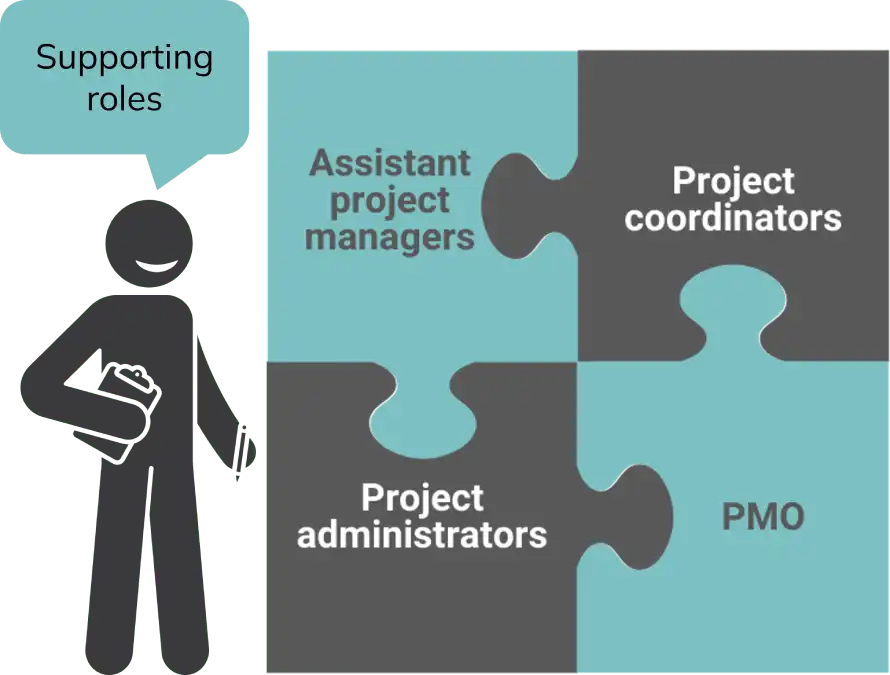
Assistant PM
An Assistant PMInstructor-led is a second manager or someone who is directly underneath the main PM and they help them out; they do the same job as a regular PM but on smaller or less important projects.MSP Practitioner (with Foundation) course
For example, if you are working on a huge project and it’s starting to get a lot of tasks, you may ask an Assistant PM to take over and get it done and they will, if it’s small enough! In summary, the assistant is a great help and acts as a mini PM. The responsibilities of an assistant include:
- Planning the project£1,899 +vat
- Monitoring the project and its work
- Overseeing the allocated budgetSee all dates
- Communicating with the stakeholders
- Assisting the PM.
Working under the PM, the assistant:
- Learns high-level Self-pacedproject management skillsMSP Practitioner (with Foundation) self-paced online
- Gets first-hand experience of making top-level decisions
- Builds leadership experience for his/her own future career development.£1,399 +vat
This relationship enables effective delegation of tasks as well as broader project supervision. The role of Assistant PM is particularly important for big or complex projects, offering extra management resources and helping to ensure that no detail is missed.
Project coordinator
A project coordinatorInstructor-led, or as we will be using to describe it, a coordinator. They work on the team as a supporting role. Some of the responsibilities of a coordinator include:MSP Foundation course
- Meeting and calendar management
- Project record keeping£1,299 +vat
- Project logistics
- Project tracking and reporting.See all dates
Project coordinators, supporting the PM and team, may:Summary
- Serve as a central point of communicationProgrammes represent unique yet interrelated aspects of strategic organizational management. Managing and integrating programmes within broader
- Support resource allocation and managementportfolios
- Monitor and control project budgets and expenses provides organizations with a competitive edge, amplifying benefits realization and enhancing investment returns.
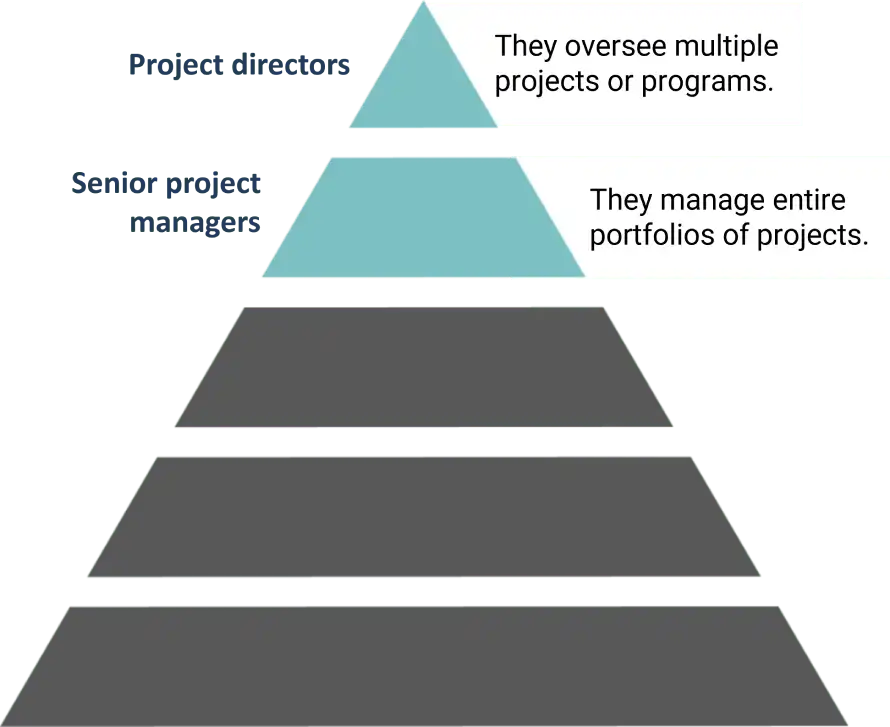
Their strategic vision and leadership enable them to navigate intricate project landscapes effectively. By prioritising tasks, balancing competing interests, and optimising resource allocation, Senior PMs significantly contribute to enhancing an organisation’s project management capabilities and overall performance.
Project directorSimon Buehring
Project directors19 Feb 2026 hold senior leadership roles and are responsible for managing entire project portfolios within an organisation. Key responsibilities include:
- Aligning project portfolios with strategic business objectivesGain insights into portfolio management from expert Ipek Sahra Özgüler and its strategic importance. Read the interview for deep insights.
- Optimising resource allocation across multiple projects
- Establishing project management standards and methodologies
- Evaluating and reporting on overall portfolio performance.
Project directors play a critical role in managing resources and stakeholder relationships:
- Programmes and programme managementIdentifying and mitigating portfolio-wide risks.