- Organise information
- : Structure the data under the relevant categories in the template.Evaluate Impact
: Assess how each factor might present opportunities or threats.Review and update: Regularly revisit the template to incorporate new developments.
By following these steps, you can ensure your PESTLE analysis remains relevant and actionable. This structured approach not only aids strategic planning but also reduces uncertainty, fostering a stable environment for decision-making. In turn, this can enhance workplace morale by clarifying organisational priorities and aligning them with external realities.
Real-world examples of PESTLE analysis
Case study 1: Industry application
In the automotive industry, PESTLE analysis has been instrumental in shaping strategic decisions. For instance, the shift towards electric vehicles (EVs) is influenced by several PESTLE factors. Governments worldwide are implementing stricter emissions regulations and offering subsidies to promote EV adoption. These political and environmental factors create opportunities for car manufacturers to innovate. Organisations that proactively adapt to these changes by investing in R&D and expanding their EV offerings can gain a competitive edge, aligning with both consumer demands and regulatory pressures.
Case study 2: Country analysis
PESTLE analysis is also valuable for assessing national economic conditions, as demonstrated in the case of India. The country presents diverse market opportunities and challenges, with varying economic conditions across different regions and sectors. However, challenges such as complex legal regulations and environmental concerns persist. By applying PESTLE, businesses can navigate India’s dynamic market landscape. Understanding these factors helps organisations tailor their strategies to leverage economic opportunities while addressing social and legal challenges, ultimately facilitating successful market entry and expansion. This approach reduces strategic uncertainty, leading to enhanced organisational confidence and stability.
ConclusionPESTLE analysis is a crucial tool in strategic planning and decision-making. It provides a comprehensive view of external factors influencing an organisation, enabling businesses to identify opportunities and mitigate threats. By integrating PESTLE with other analytical tools, organisations can develop informed strategies that align with both internal strengths and external realities. This approach not only enhances operational effectiveness but also reduces strategic uncertainty. In workplace settings, the use of PESTLE instils confidence and clarity, contributing to stress reduction and improved decision-making. Ultimately, PESTLE analysis supports sustainable growth and competitive advantage in a complex business environment.FAQsWhat is the difference between PEST and PESTLE analysis?
- PEST analysis stands for Political, Economic, Social, and Technological factors. PESTLE expands this framework by including Legal and Environmental factors. This expansion provides a more comprehensive view of external influences on a business.How frequently should organisations conduct PESTLE analysis?
- Organisations should review their PESTLE analysis quarterly to monitor changes in external factors and adjust strategies accordingly.Can PESTLE analysis be used for small businesses?
- Yes, PESTLE analysis is valuable for small businesses. It helps them understand the external environment, identify opportunities, and mitigate risks. This knowledge is crucial for strategic planning and competitive positioning. What are the limitations of PESTLE analysis?
- PESTLE analysis can be subjective, relying on the accuracy of available data and the analyst’s interpretation. It may not capture rapid changes, and its broad scope can make it challenging to focus on specific business needs.
- CONTACT US
Name
- How can we help?
- Submit
Explore how to start a career in business analysis with no prior experience. Read on for pathways to enter the field.
Key Performance Indicators (KPIs)
Selecting appropriate KPIs
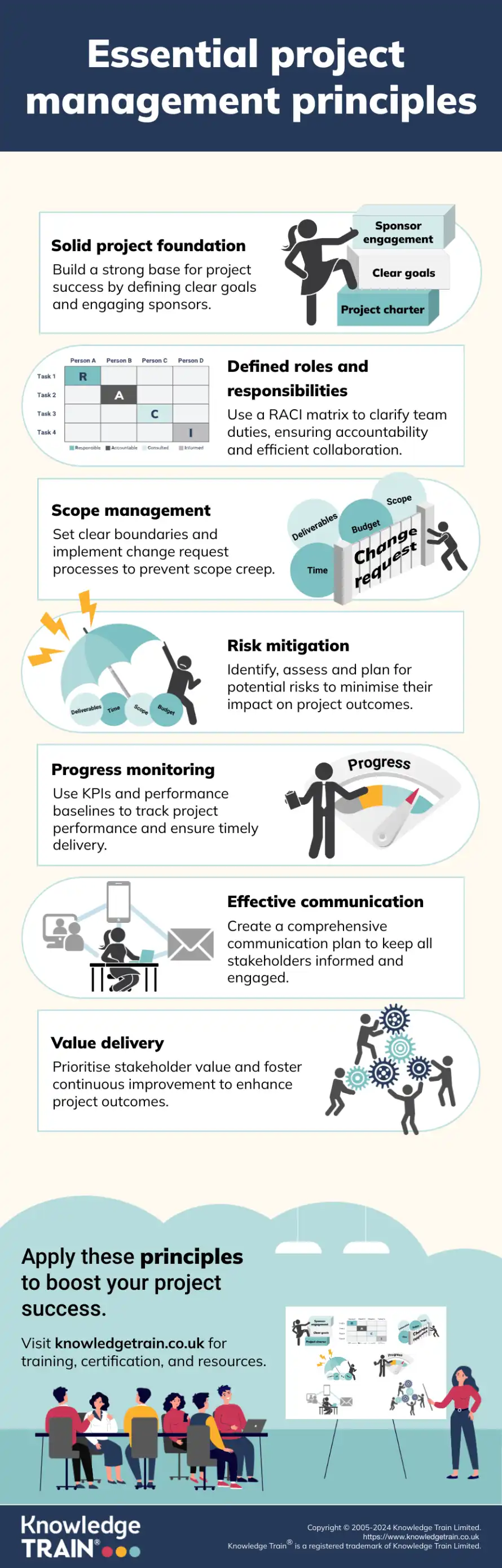
Selecting the right KPIs is important to ensure effective monitoring and measuring of project progress. The KPIs should be aligned with the project objectives and should provide insights into the project’s performance. Some of the commonly used KPIs include:
- Schedule Performance Index (SPI)
- Cost Performance Index (CPI)
- Quality metricsUnlocking potential with SMART goals in goal setting
- Stakeholder satisfaction scores Copied!.Simon Buehring Key takeaways
Tracking and reporting methods19 Feb 2026 An effective project plan aligns scope, time, cost, resources, and communication into one workable roadmap.
Once the KPIs are selected, it is important to have effective tracking and reporting mechanisms in place. This can include: Start with an executive summary that clarifies purpose, outcomes, timing, budget, and headline risks.
- Regular status meetingsExplore the power of SMART goals to boost productivity and success. This comprehensive guide offers practical advice and tips. Scroll down to start transforming your goal-setting process today. Define scope and acceptance criteria early to prevent scope creep and manage expectations.
- Automated dashboards Use a WBS and a timeline with dependencies to make work, milestones, and the critical path visible.
- Earned Value Management (EVM) Allocate resources realistically, including skills, tools, contractors, and contingency budget.
- Milestone tracking. Manage risk and change proactively with owners, mitigation actions, and a clear approval process.
Performance management baseline Review and update the plan regularly, supported by consistent stakeholder communication.
Integrating cost, schedule, and scope
Develop an integrated baseline that blends the projects:
- Work Breakdown Structure (WBS) Business analyst certification: What it is and how to get certifiedContents
- Schedule
- Budget. Simon Buehring
| Element 30 Apr 2026Contents | Integration method |
| Cost Discover the essentials of business analyst certification, from leading qualification types to preparation, costs, and career benefits. Start your path to professional recognition and new business analysis opportunities.Introduction | Map budget to WBS elements |
| Schedule Project planning process | Link timeline to WBS deliverables |
| Scope Essential elements of a project plan | Align WBS Steps to create a project plan with project objectives |
Using baselines for decision-making Project planning tools and templates
Utilise baselines to:
- Spot variances early Best practices for effective project planning
- Predict project results
- Rationale corrective actions Common challenges and how to overcome them
- Assess change requests.
Setting clear KPIs and performance baselines enables project managers to track progress and make data-driven decisions. Conclusion
- ® Agile
- Foundation
- Learn the fundamentals of the PRINCE2 Agile method.
- Practitioner
Includes Foundation & Practitioner combined option.
AI Project Governance Framework (AIPGF)
- Foundation
- Learn the fundamentals of the governance framework.
- Practitioner
- Includes Foundation & Practitioner combined option.
Better Business CasesKnowledge Train Ltd is an Introducer Appointed Representative of NewDay Cards Ltd for the Newpay finance product provided by NewDay Ltd. NewDay Cards Ltd acts as a credit broker, not a lender. We will introduce you exclusively to Newpay finance products provided by NewDay Limited under this Introducer Appointed Representative arrangement. Finance available from other lenders is not covered by this arrangement. NewDay Ltd and Newday Cards Ltd are authorised and regulated by the Financial Conduct Authority (ref nos 690292 and 682417 respectively).
™
Foundation
Learn the fundamentals of Better Business cases.
Practitioner Includes Foundation & Practitioner combined option. P3OSearch
®
Foundation
Learn the fundamentals of the P3O project management office.
Practitioner
Includes Foundation & Practitioner combined option.
Workshops
Introduction to Project Management 1-day workshop to learn the basics of project management. Project Management Essentials 2-day workshop to learn how to manage projects without getting certified.Request a quoteWriting Business Cases
Half-day workshop to learn to write robust business cases.
AI in Project Management Learn how to use AI tools in everyday project work. ARTIFICIAL INTELLIGENCE (AI)
BCS AI
The technical storage or access is strictly necessary for the legitimate purpose of enabling the use of a specific service explicitly requested by the subscriber or user, or for the sole purpose of carrying out the transmission of a communication over an electronic communications network.
Preferences
Preferences