br/>It bridges the gap between purely Agile approaches such as Scrum and structured project-management frameworks like PRINCE2. Request a quoteProvide a fast-track project support service;BUSINESS ANALYST COURSES
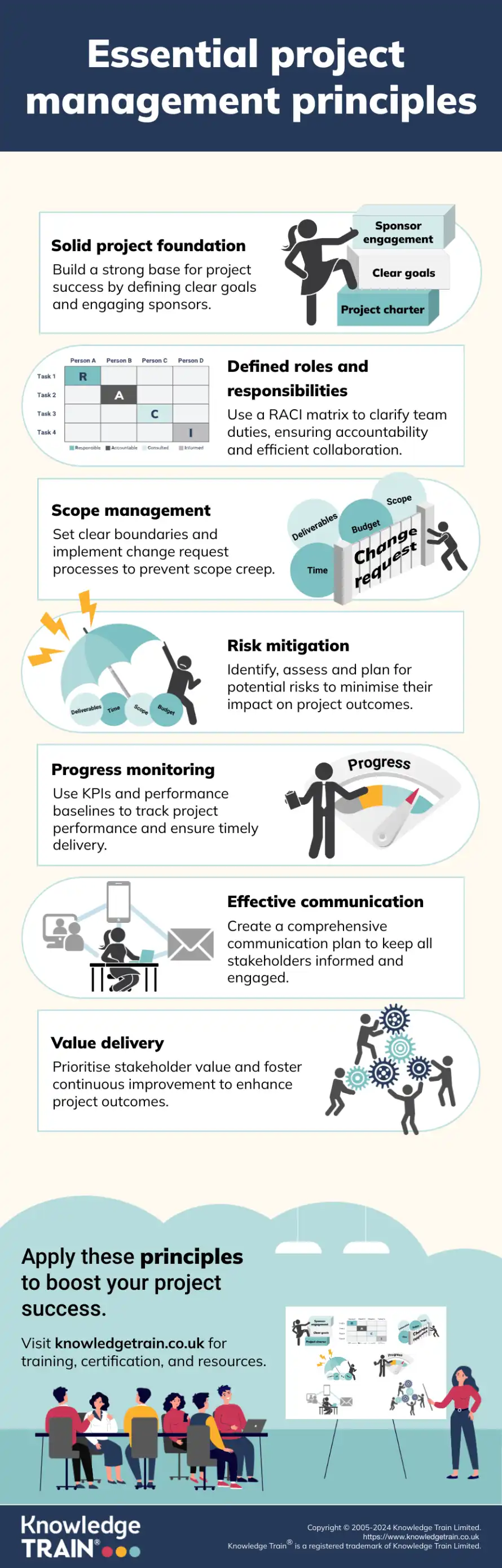
Strong delivery comes from clear foundations, disciplined control, and continuous learning. Learn about DSDM principles through our visual guide and see their response to traditional process flaws. Scroll for more insights.
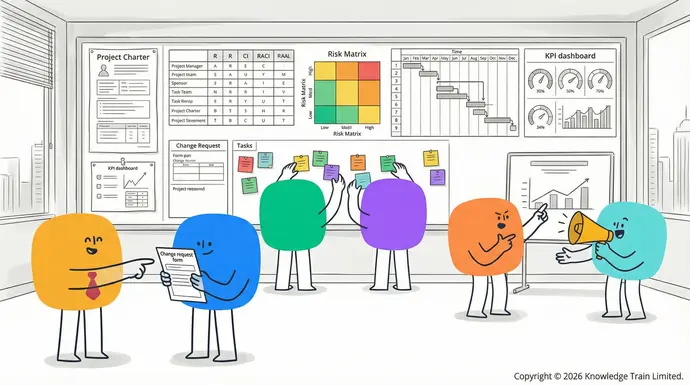
Start with a formal project structure, agreed objectives, and an engaged sponsor who removes roadblocks.
Define responsibilities early using tools like a RACI or RASCI matrix and a stakeholder register.
Prevent scope creep by setting clear boundaries, acceptance criteria, and a documented change control process.
Identify and mitigate risks early using structured assessment and practical contingency planning.
Track performance with aligned KPIs, baselines, and regular reporting to support data-driven decisions.
Improve outcomes through tailored communication, collaboration tools, value-led prioritisation, and post-project reviews.
Agile, RESILIA®, and the Swirl logo are registered trademarks of the PeopleCert group. Used under licence from PeopleCert. All rights reserved. AgilePM
®
and AgileBA
®
are registered trademarks of Agile Business Consortium Limited. All rights reserved. The APMG International AgilePM and Swirl Device logo, APMG International AgileBA and Swirl Device Logo, APMG International Change Management and APMG International Better Business Cases and Swirl Device logo are trademarks of The APM Group Limited, used under permission of The APM Group Limited. All rights reserved. Better Business Cases™ is a trademark of Her Majesty’s Treasury. All rights reserved. DevOps Foundation
®
is a registered mark of the DevOps Institute. “PMI”, “PMBOK
®
Guide”, “PMP” and “CAPM” are registered marks of Project Management Institute, Inc. Knowledge Train Scrum Essentials™, Business Learning Library (BLL)™, Business Analysis Learning Library (BALL)™, Agile Learning Library (ALL)™, IT Learning Library (ITLL)™, and Compliance Learning Library (CLL)™ are trademarks of Knowledge Train Limited. All rights reserved.
Knowledge Train Ltd is an Introducer Appointed Representative of NewDay Cards Ltd for the Newpay finance product provided by NewDay Ltd. NewDay Cards Ltd acts as a credit broker, not a lender. We will introduce you exclusively to Newpay finance products provided by NewDay Limited under this Introducer Appointed Representative arrangement. Finance available from other lenders is not covered by this arrangement. NewDay Ltd and Newday Cards Ltd are authorised and regulated by the Financial Conduct Authority (ref nos 690292 and 682417 respectively).
Search
Request a quote
EXPLORE SUBJECTS
Request a quoteCopied!
Key takeaways
A PMO improves delivery by combining governance, support, and portfolio visibility. A PMO sets standards and decision controls so projects stay aligned to business strategy and risk is managed early.
PMO definitionFunctional PMO functions and roles Types of PMOs Always active PMO certification & standards PMO in practice PMO vs. project manager
FAQsThe technical storage or access is strictly necessary for the legitimate purpose of enabling the use of a specific service explicitly requested by the subscriber or user, or for the sole purpose of carrying out the transmission of a communication over an electronic communications network.PMO fact sheet
Definition: A Project Management Office (PMO) is a department or group that sets, maintains and ensures Preferencesproject management standards within an organisation. Core Functions: Governance, methodology, support, standardisation, process improvement. Supportive PMO, Controlling PMO, Directive PMO. Roles: Methodology enforcement, resource management, training, portfolio oversight. Related organisations: PMI ( Project Management Institute
)The technical storage or access is necessary for the legitimate purpose of storing preferences that are not requested by the subscriber or user.Certifications:
PMO Certification, PMP, CAPM Examples: Corporate IT PMOs, government programme offices. Related terms:Statistics Project Portfolio, Project Manager, Stakeholders, Best Practices, PMO Tools. Learn more on Wikipedia Visit PMI.org PMO definition portfolio management by offering governance, methodology, resource management and oversight. The concept of a PMO has evolved as organisations recognise the need for a dedicated group to enhance consistency, optimise resources, and improve project delivery outcomes. PMOs may operate at the project, programme, or portfolio level and are commonly found in sectors such as IT
, government, construction, and finance.The technical storage or access that is used exclusively for statistical purposes.
Governance: Implementing and maintaining , best practices, and standards. Providing guidance, templates, tools, training and mentoring for Project Managers and teams. Methodology Enforcement: Ensuring consistent application of project management approaches for delivery excellence. Resource Management:
Coordinating allocation and utilisation of project personnel, tools, and budgets.The technical storage or access is required to create user profiles to send advertising, or to track the user on a website or across several websites for similar marketing purposes.Portfolio Management
To provide the best experiences, we use technologies like cookies to store and/or access device information. Consenting to these technologies will allow us to process data such as browsing behavior or unique IDs on this site. Not consenting or withdrawing consent, may adversely affect certain features and functions. standards and methodologies. Has moderate control—enforces processes and reviews adherence.
Directive PMO: Directly manages projects and assigns Project Managers. Exercises high control and is responsible for project delivery and outcomes.FunctionalOrganisations may adapt their PMO model based on size, maturity, and strategic needs. A PMO may evolve from supportive to controlling or directive as project management capability matures. PMO best practices Implementing a PMO involves defining objectives, selecting the right PMO type, securing stakeholder support, setting up governance structures, and continuously reviewing processes. Best practices for successful PMO implementation include: Aligning PMO objectives with organisational strategy. Engaging stakeholders and securing executive sponsorship. PMI Always active ). Investing in PMO tools for tracking, reporting, and collaboration. Developing competency through PMO certification and staff training. Emphasising process improvement and change management .
PMO certification & standardsThe technical storage or access is strictly necessary for the legitimate purpose of enabling the use of a specific service explicitly requested by the subscriber or user, or for the sole purpose of carrying out the transmission of a communication over an electronic communications network.Professional recognition is available for PMO practitioners through PMO certification programmes. The Project Management Institute (PMI), a leading standards organisation, offers certifications such as the
Project Management Professional (PMP) and Certified Associate in Project Management (CAPM). PMO-specific certifications such as the PMO-CP (PMO Certified Practitioner) are also available. Certifications validate competency in project, programme, and portfolio management, enhancing PMO effectiveness and credibility. Learn more about certification options on PreferencesPMI.org . PMO in practice Corporate IT PMO: Government Programme Office:
and : People: Define clear roles and responsibilities for the project team. Product:
Ensure the right deliverables reach the right stakeholders.The technical storage or access is required to create user profiles to send advertising, or to track the user on a website or across several websites for similar marketing purposes.Process:
Implement consistent procedures to manage and control delivery.