
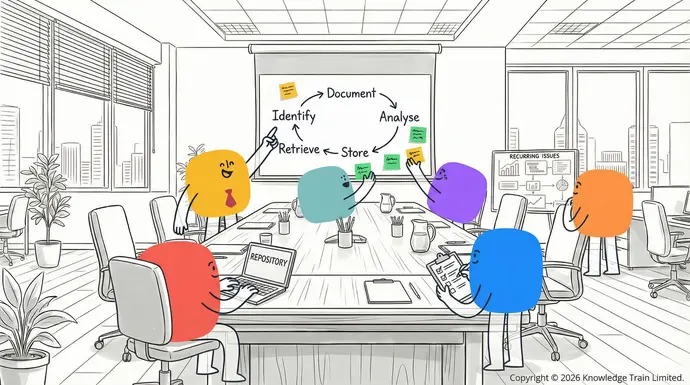
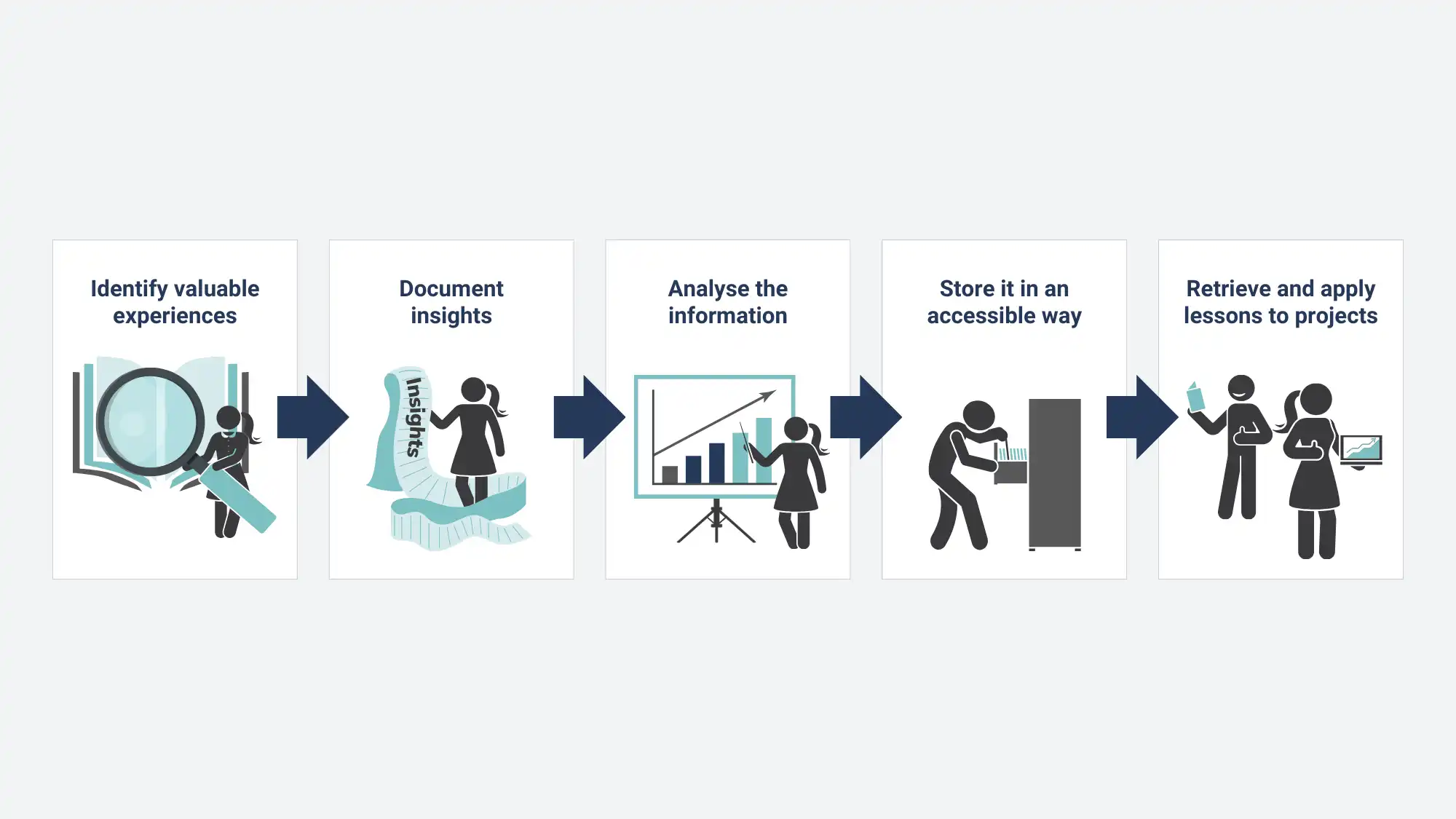
Capturing lessons learned is most effective when done at the following times:
- End of project : Conducting a comprehensive review at the conclusion of the project allows for a holistic evaluation of the entire project life cycle. This timing can provide valuable insights into overall project performance and outcomes.
- End of each phase : Reviews at the end of each project phase enable teams to capture fresh insights and lessons while the information is still clear in everyone’s minds.
- Real-time learning : Encouraging the ongoing capture of lessons as they occur can help prevent valuable insights from being lost due to time lapses or fading memories.AWARDS
Key questions to ask
Facilitating deliberations can be guided by using the following essential questions:
- What went well in the project?
- What challenges did we face?
- How did we overcome these challenges?United Kingdom
- What would we do differently next time?Austria
- What unexpected events occurred, and how did we handle them?Belgium
By focusing on these questions, you can elicit valuable insights from your team members. Remember to create an environment where all participants feel comfortable and safe to share their experiences and observations.Bulgaria
By investing time and effort into thoroughly preparing and skilfully facilitating lessons learned sessions, you will be able to generate a wealth of valuable insights and information. This knowledge, when properly documented and analysed, can significantly enhance future project performance and organisational knowledge.Croatia
While projects zero in on specific deliverables, Make sure that lessons are easily discoverable. This can be done by implementing a good search function with filters based on project type, date, and category. Use a tagging system to identify key themes and topics, which will allow users to find relevant information quickly. You can also add an option for users to rate the usefulness of a lesson to help surface the most valuable insights. These features will help increase the accessibility and usefulness of the stored knowledge.
Measuring the impact of lessons learnedBenefits of programmes
Ensuring the effectiveness of your lessons learned process requires you to measure its impact on project performance and organisational growth. This section will focus on key performance indicators and evaluation methods for assessing the value of your lessons learned initiatives.There are multiple benefits to an organization if it manages its change initiatives as programmes.
Key performance indicators for lessons learned processesStrategic alignment
Consider tracking the following Programme managementKPIs ensures that all projects within a programme align with the broader organizational goals, ensuring resources are channelled towards initiatives that match the strategic vision. to measure the success of your lessons learned efforts:Optimized resource allocation
- Number of lessons captured per projectResources, including time, manpower, and finances, are allocated and utilized more efficiently across various projects, preventing redundancy and waste.
- Percentage of lessons applied to subsequent projectsRisk management
- Reduction in recurring issues across projectsBy looking at a collection of projects, programme management can identify, mitigate, and manage risks that might not be visible at the individual project level.
- Improvement in project success ratesEnhanced stakeholder engagement
- Time saved through application of lessons learned.Provides a structured framework for consistent and effective communication with all stakeholders, fostering trust and collaboration.
Methods for evaluating the effectiveness of lessons learned initiativesManagement of interdependencies
To evaluate the impact of your lessons learned programme, try the following techniques:Enables efficient handling of dependencies between projects, ensuring that the progress or outcome of one project doesn’t adversely impact another.
- Conduct surveys to measure team members’ perceived value of the processImproved decision-making
- Compare project outcomes before and after implementing lessons learned initiativesOffers a holistic view of all projects, leading to better-informed decisions based on comprehensive data and insights.
- Track the frequency of accessed lessons in your repositoryBenefits realization
- Analyse the correlation between applied lessons and project success metricsGoes beyond just completing
- Perform regular audits to ensure lessons are being consistently captured and utilised.projects
By measuring the impact of your lessons learned process systematically, you can demonstrate its value to stakeholders and identify areas for improvement. This data-driven approach ensures that your organisation continues to refine and enhance its knowledge management practices. on time and budget, focusing on achieving the desired outcomes and ensuring that the anticipated benefits are realized and sustained.
ConclusionIncreased flexibility
The Provides a framework that can adapt to changes in the business environment or organizational strategy, ensuring projects remain relevant and aligned.lessons learned processConsistency and standardization is a vital component for organisational improvement and project success. By implementing a structured approach to identifying, documenting, analysing, storing, and retrieving valuable insights, organisations can significantly enhance their By adopting a standardized approach, organizations can ensure consistency in the delivery and quality of projects across the board.project management practicesContinuous improvement and drive continuous improvement.Facilitates a culture of learning and improvement by regularly reviewing performance, capturing
A culture of lessons learnedcontinuous learning, and implementing best practices across all projects. is paramount for the success of lessons learned activities. Cultivating an environment that encourages open communication, values experiential knowledge, and promotes sharing and applying insights across Value for moneyprojectsEnsures that investments in individual projects culminate in the desired benefits, yielding a positive return on investment for the organization. and teams will maximise the potential benefits of this process.Boosted morale and team cohesion
To unlock the full power of lessons learned, organisations must commit to making these activities an integral part of the project lifecycle and create a blame-free environment where team members feel safe to reflect honestly. Additionally, investing in user-friendly systems for capturing and accessing lessons, as well as regularly measuring and evaluating the effectiveness of lessons learned initiatives, will ensure the sustainability and continuous improvement of this valuable practice.With clear objectives and coordinated efforts, teams have a clearer sense of purpose, leading to increased motivation and collaboration.
By embracing the principles and implementing effective lessons learned processes discussed in this guide, organisations can drive continuous improvement, reduce the recurrence of issues, and ultimately achieve greater project success. Start improving your lessons learned practices today to secure a more efficient and effective In essence, project managementprogramme management future. offers organizations a structured and strategic approach to managing multiple projects, ensuring not just their successful delivery but also the realization of broader business objectives and benefits.
FAQs
How often should lessons learned sessions be conducted?£1,299 +vat
Ideally, at the end of each project phase and upon project completion. For longer projects, consider quarterly sessions to capture insights while they’re fresh.
What’s the difference between lessons learned and project post-mortems?See all dates
Lessons learned focus on ongoing improvement throughout the project lifecycle. Post-mortems typically occur at project end and may have a broader scope, including overall project performance evaluation.Summary
How can we encourage team members to actively participate in lessons learned sessions?Programmes represent unique yet interrelated aspects of strategic organizational management. Managing and integrating programmes within broader
Create a blame-free environment, emphasise the value of learning, and demonstrate how insights are applied. Consider using anonymous submission methods for sensitive topics.portfolios
What are some effective tools for capturing lessons learned in real-time? provides organizations with a competitive edge, amplifying benefits realization and enhancing investment returns.
Project management softwareEnterprises that prioritize with built-in features, dedicated mobile apps, or simple shared documents. The key is accessibility and ease of use for team members.programme management
How can we ensure lessons learned are actually applied to future projects? and adopt standardized methodologies are best positioned to garner superior advantages in a progressively competitive landscape.
sed on learnings, and assign responsibility for implementing specific lessons.
What role does leadership play in promoting a culture of lessons learned?
Leaders should actively participate in sessions, allocate resources for the process, and visibly apply insights in decision-making to demonstrate the value of lessons learned.{"@context":"http://schema.org","@type":"WebPage","headline":"Programmes | Programme Definition | What is Programme?","url":"https://www.knowledgetrain.co.uk/programme-management/programmes","significantLink":"https://www.apm.org.uk/resources/what-is-project-management/what-is-programme-management/","about":[{"@type":"Thing","name":"programmes","sameAs":["http://en.wikipedia.org/wiki/Program_management","https://www.google.com/search?&kgmid=/m/01pqtb"]}],"mentions":[{"@type":"Thing","name":"governance","sameAs":["https://en.wikipedia.org/wiki/Governance","https://www.google.com/search?&kgmid=/m/02_tns","https://www.wikidata.org/wiki/Q1553864"]},{"@type":"Thing","name":"programme management","sameAs":["https://en.wikipedia.org/wiki/Program_management","https://www.google.com/search?&kgmid=/m/01pqtb","https://www.wikidata.org/wiki/Q603948"]},{"@type":"Thing","name":"project management","sameAs":["https://en.wikipedia.org/wiki/Project_management","https://www.google.com/search?&kgmid=/m/05_p2","https://www.wikidata.org/wiki/Q179012"]},{"@type":"Thing","name":"public policy","sameAs":["https://en.wikipedia.org/wiki/Public_policy","https://www.google.com/search?&kgmid=/m/01400v","https://www.wikidata.org/wiki/Q546113"]},{"@type":"Thing","name":"change management","sameAs":["https://en.wikipedia.org/wiki/Change_management","https://www.google.com/search?&kgmid=/m/05qb9n6","https://www.wikidata.org/wiki/Q116348"]},{"@type":"Thing","name":"leadership","sameAs":["https://en.wikipedia.org/wiki/Leadership","https://www.google.com/search?&kgmid=/m/025rt2s","https://www.wikidata.org/wiki/Q484275"]},{"@type":"Thing","name":"risk management","sameAs":["https://en.wikipedia.org/wiki/Risk_management","https://www.google.com/search?&kgmid=/m/06k_y","https://www.wikidata.org/wiki/Q189447"]},{"@type":"Thing","name":"management","sameAs":["https://en.wikipedia.org/wiki/Management","https://www.google.com/search?&kgmid=/m/04_tv","https://www.wikidata.org/wiki/Q2920921"]},{"@type":"Thing","name":"managers","sameAs":["https://en.wikipedia.org/wiki/Management","https://www.google.com/search?&kgmid=/m/04_tv","https://www.wikidata.org/wiki/Q2920921"]},{"@type":"Thing","name":"training","sameAs":["https://en.wikipedia.org/wiki/Training","https://www.google.com/search?&kgmid=/m/014jg3","https://www.wikidata.org/wiki/Q918385"]},{"@type":"Thing","name":"stakeholder engagement","sameAs":["https://en.wikipedia.org/wiki/Stakeholder_engagement","https://www.google.com/search?&kgmid=/m/0fpjz9q","https://www.wikidata.org/wiki/Q2930198"]},{"@type":"Thing","name":"cmi","sameAs":["https://en.wikipedia.org/wiki/Chartered_Management_Institute","https://www.google.com/search?&kgmid=/m/01x_ff","https://www.wikidata.org/wiki/Q5086844"]},{"@type":"Thing","name":"work programme","sameAs":["https://en.wikipedia.org/wiki/Work_Programme","https://www.google.com/search?&kgmid=/m/0n4cjyg","https://www.wikidata.org/wiki/Q8034586"]},{"@type":"Thing","name":"resource allocation","sameAs":["https://en.wikipedia.org/wiki/Resource_allocation","https://www.google.com/search?&kgmid=/m/01njxn","https://www.wikidata.org/wiki/Q287260"]}]}
How can we make lessons learned sessions more engaging and productive?
Use varied formats like workshops or gamification, focus on specific themes, and ensure sessions result in actionable outcomes to maintain engagement.{"@context":"https://schema.org","@type":"ImageObject","contentUrl":"https://www.knowledgetrain.co.uk/training-courses/pmp-vs-prince2.png","description":"Relationships between projects, programs, and portfolios.","license":"https://www.knowledgetrain.co.uk/license","acquireLicensePage":"https://www.knowledgetrain.co.uk/license","creditText":"Knowledge Train","uploadDate":"2023-10-16T06:32:55.000Z","copyrightNotice":"© 2023 Knowledge Train Limited. All rights reserved.","creator":{"@type":"Organization","name":"Knowledge Train","url":"https://www.knowledgetrain.co.uk"}}
What are some common pitfalls to avoid when implementing a lessons learned process?
Avoid treating it as a checkbox exercise, neglecting to follow up on actions, or allowing sessions to become blame games. Ensure the process is consistently applied across all projects.Some related articles
Infographic
