
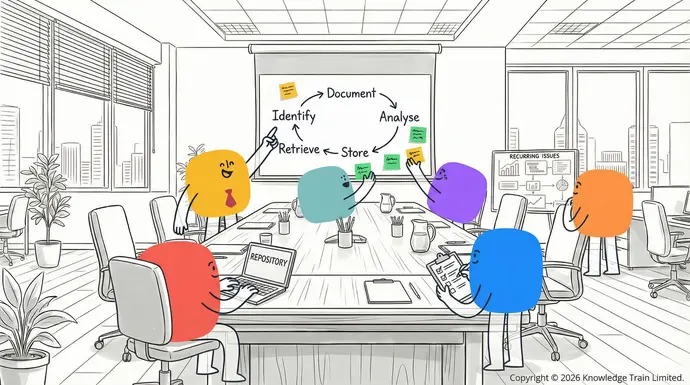
IntroductionUnderstanding project scheduling
In the world of project management, one key element that often distinguishes success from failure is the ability to extract and apply valuable insights from past experiences. This practice, known as What is a project schedule?lessons learnedA , involves the identification, analysis, and subsequent utilisation of experiences to better inform future actions and decision-making.project schedule
By leveraging the knowledge gained from past mistakes and successes, organisations and project managers can significantly improve their project outcomes, reduce risks, enhance team performance, and increase overall efficiency. In this article, we will embark on a is a detailed document that outlines the timeline of tasks and milestones that must be completed to accomplish the project. It acts as a roadmap for project execution and monitoring.comprehensive explorationComponents of a project schedule of lessons learned, delving into the process of their identification, documentation, analysis, storage, and application, as well as best practices and potential challenges..Tasks and activities
After completing this reading, you will have a complete understanding of how to successfully incorporate a lessons learned system into your organisation, paving the way for continuous improvement and Duration and deadlinesprojectResource allocation success.Dependencies and constraints
The lessons learned processMilestones and deliverables.
The lessons learned process is a structured approach designed to help project teams capture, document, analyse, and utilise valuable insights from past experiences. By adhering to this methodical process, project managers and their teams can enhance their project performance, learn from past mistakes, and increase the probability of project success.Difference between project schedule and project plan
Five steps of the lessons learned processA
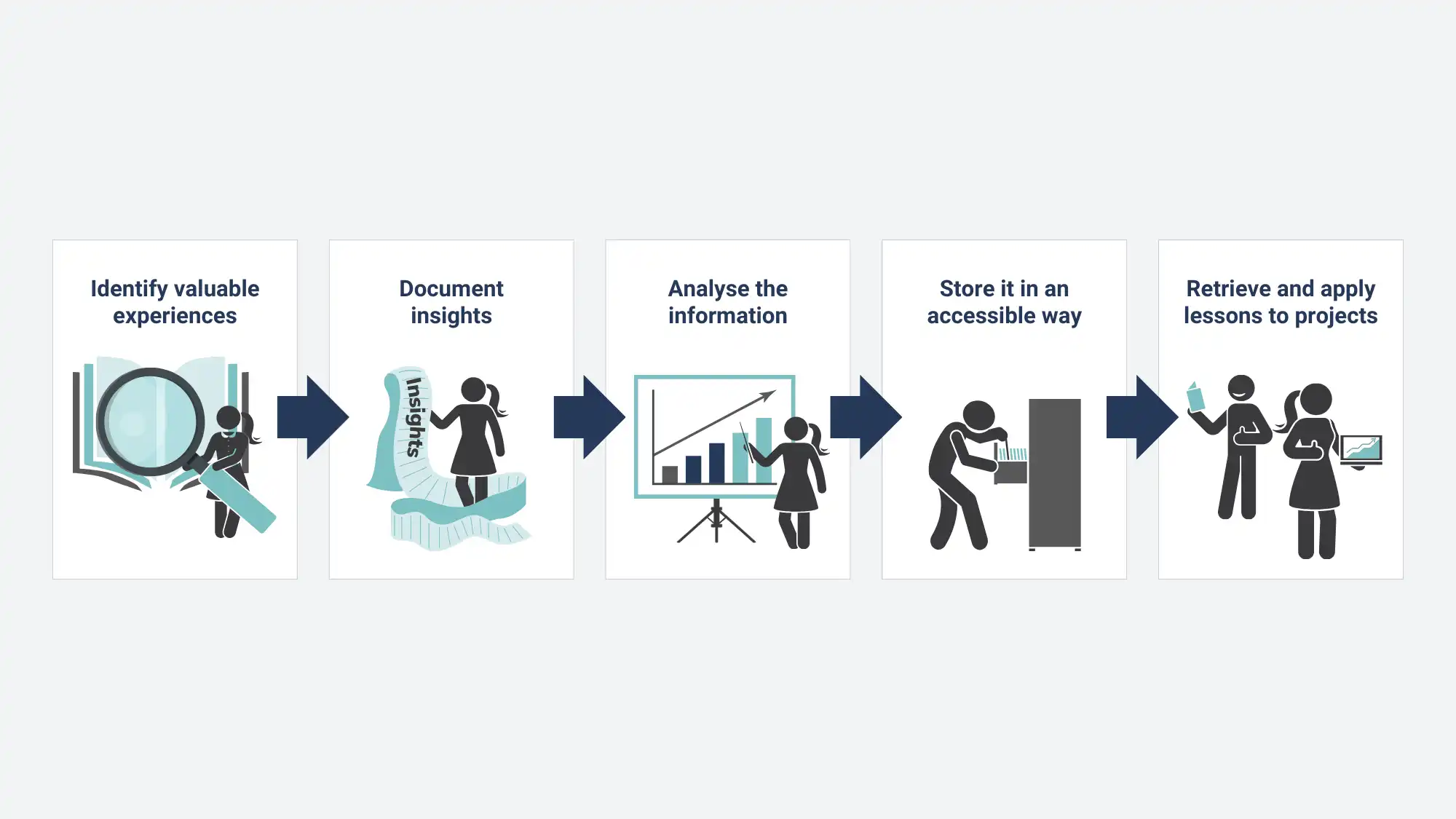
projectLessons learned process diagram
- Identifyplan: The first step in the process involves recognising and pinpointing valuable experiences and insights throughout the project life cycle. It is crucial to encourage team members to note successes and challenges as they occur. is a more comprehensive document that encompasses the schedule, as well as other project aspects such as scope, budget, and resources. The project schedule, on the other hand, focuses on the time aspect, including task sequencing and deadlines.
- DocumentBenefits of using a project schedule: Once identified, these lessons must be recorded in a clear, concise, and accessible manner, usually by using standardised templates or forms.Provides clarity and direction
- Analyse: A project schedule offers a clear path for project execution, ensuring that all team members are aware of their responsibilities and deadlines.: The documented lessons should then be examined to understand the root causes, identify patterns, and determine potential implications for future Improves time managementprojects: A schedule helps to prioritise tasks and allocate time efficiently, reducing the risk of missing deadlines..Allows efficient resource allocation
- Store: A project schedule enables the optimal distribution of personnel, equipment, and materials across project tasks.: The analysed lessons should be stored in a centralised, easily accessible location, such as a database, shared drive, or specialised knowledge management system.Helps in effective risk management
- Retrieve: A project schedule helps to identify potential bottlenecks, and resource conflicts in advance, allowing for timely risk mitigation.: Finally, the lessons should be retrieved and applied to current or future projects as needed. This step is essential to ensure the full value of the lessons learned process is realised.By utilising these advantages,
When to capture lessons learnedproject managers
Capturing lessons learned is most effective when done at the following times: can significantly improve the chances of project success and timely delivery.
- End of projectSix steps to create a project schedule: Conducting a comprehensive review at the conclusion of the project allows for a holistic evaluation of the entire project life cycle. This timing can provide valuable insights into overall project performance and outcomes.A project schedule is a comprehensive document that outlines a project’s timeline. It is one of the most important project management tools. Scheduling is one of the key tasks in project management. To help you along, here are six steps that will allow you to create a solid schedule for your project.
- End of each phase1. Define tasks and milestones: Reviews at the end of each project phase enable teams to capture fresh insights and lessons while the information is still clear in everyone’s minds.List all the tasks that are necessary to complete the project. Then determine the
- Real-time learningproject milestones: Encouraging the ongoing capture of lessons as they occur can help prevent valuable insights from being lost due to time lapses or fading memories., and group tasks that make up each milestone into work packages. The process of preparing a comprehensive list of project tasks is known as
By adhering to this structured approach and capturing lessons at these strategic moments, project teams can establish a robust knowledge base. This resource will be invaluable for improving project management practices, enhancing decision-making, and increasing the likelihood of project success.Work Breakdown Structure
Remember, the lessons learned process is not a one-time event but a continuous cycle of improvement. Regularly practising and refining this process can lead to substantial advancements in (WBS).project management capabilitiesList all required tasks and overall organisational performance.Determine project milestones
Identifying lessons learnedGroup related tasks into work packages.
Effective identification of lessons learned is a crucial step in capitalising on the value of project experiences. This process requires careful preparation and skilled facilitation of lessons learned sessions.2. Sequence activities
Preparing for lessons learned sessionsSequence the tasks, establishing the order in which the work will be performed. Use a
Project surveysnetwork diagram
Before the session, team members should be asked to complete to visualise the dependencies and the critical path.project surveys3. Estimate task durations. These surveys are designed to encourage reflection on project experiences and gather initial thoughts on successes, challenges, and other aspects of the project. They will also provide a foundation for more in-depth conversations during the lessons learned session.Estimate the time required for each task, then assign the estimates to each task. For more accurate results, ask your team members to help, and make use of the historical data for tasks of a similar nature to the ones in the current project. As a rule of thumb, provide
Categorising lessons learnedthree-point estimates
Lessons should be organised into specific categories to help with analysis and future retrieval. Common lesson categories include::
- Project management processesOptimistic estimate
- Technical challengesMost likely estimate
- CommunicationPessimistic estimate.
- Resource allocation4. Assign resources
- Risk managementIdentify the resources needed for each task, then assign them to the relevant tasks. Be sure to consider team members’ skills and experience, availability and current workloads..5. Finalise the schedule
Conducting lessons learned sessionsConfirm the draft schedule with the stakeholders and finalise it. Be sure that the schedule is realistic and it meets the project’s objectives and constraints and use the scheduling software to create a
Facilitation techniquesGantt chart
Facilitating productive lessons learned sessions can be achieved by using the following techniques: (or another visual representation).
- Employ a neutral facilitator to maintain objectivity6. Share and monitor progress
- Encourage open and honest communicationShare the finalised schedule with the team members and stakeholders and track and report on the progress. Consider using
- Use brainstorming techniques to generate ideasproject management software
- Utilise visual aids such as mind maps or whiteboards to stimulate discussion and ideation. for real-time updates and collaboration.
Key questions to askSet up regular progress meetings
Facilitating deliberations can be guided by using the following essential questions:Encourage team members to report the task completions as soon as they are done
- What went well in the project?Update the schedule if necessary to account for the actual progress.
- What challenges did we face?With these steps, you can create a comprehensive project schedule that will guide your team to successful project completion.
- How did we overcome these challenges?Enhance your skills with our expert-led courses
- What would we do differently next time?
- What unexpected events occurred, and how did we handle them?
By focusing on these questions, you can elicit valuable insights from your team members. Remember to create an environment where all participants feel comfortable and safe to share their experiences and observations.
By investing time and effort into thoroughly preparing and skilfully facilitating lessons learned sessions, you will be able to generate a wealth of valuable insights and information. This knowledge, when properly documented and analysed, can significantly enhance future project performance and organisational knowledge.Self-paced
Documenting lessons learnedA
Effective documentation is critical for capturing and sharing lessons learned. This section focuses on methods for producing well-structured reports and utilising tools for efficient documentation.Gantt chart
Creating effective lessons learned reports is a type of bar chart that is commonly used in project management to visually represent a project schedule. It shows the start and end dates of project tasks, as well as their duration, as horizontal bars along a timeline. Gantt charts can also be used to display the dependencies between tasks.
Detailed reportsAdvantages and limitations
Detailed reports offer an in-depth look at lessons learned. Ensure these reports include:Advantages
- Project overview and backgroundProvides a visual representation of task dependencies
- Lessons gathering methodologySimplifies the identification of the critical path
- Categorised lessons learnedCapable of showing progress against the planned schedule.
- Root cause analysisLimitations
- Recommendations for future Can become cluttered and difficult to read for larger projects with many tasksprojectsCan be time-consuming to create and maintain.Limited ability to show detailed task dependencies and resource allocation.
These reports should be well-organised, concise, and easily searchable.Task lists
Executive summariesWhen to use task lists
Executive summaries provide a concise overview of key lessons. They should highlight significant findings, present actionable recommendations, and be tailored to the needs of senior management and decision-makers.Task lists are often used in project management as a basic tool for organising and tracking project activities. They can be useful in the early stages of a project, or as a supplement to more advanced scheduling techniques. Task lists are appropriate to use when the project is relatively simple, and the team members are familiar with the tasks.
Tools for documenting lessons learnedBenefits for small projects
Lessons learned input formsSimple to develop and maintain
Input formsFacilitate clear communication of responsibilities help standardise lessons collection. Design a form that captures:Allow quick changes and revisions.
- Project name and dateCalendars
- Category of the lessonUses in project scheduling
- Description of the situation or issueCalendars are often used in project management to help visualise and plan the timeline of a project. They can be used to track important project dates, such as milestones, deadlines, and deliverables. Calendars can also be used to provide an overall view of the project’s timeline.
- Impact on the projectLimitations of calendar-based scheduling
- Recommendations for future reference.Inadequate representation of task dependencies
Templates and checklistsMay lack necessary detail for more intricate projects
Templates and checklists ensure consistency in documentation across projects. Provide team members with a template for the detailed report structure, a checklist of key areas to cover during lessons learned sessions, and a standardised format for documenting recommendations.Challenges in depicting tasks with varying durations.
By implementing these tools and techniques, you can develop a streamlined approach to documenting lessons learned. This system will help you capture valuable insights effectively and ensure they can be easily accessed and applied to future Project scheduling techniques are an essential aspect of project management and choosing the right technique can greatly impact the success of a project. By understanding the advantages and limitations of each technique, as well as when and where to use them, projectsproject managers. can effectively create and manage project schedules. Combining multiple techniques, such as using a Gantt chart to track progress and a calendar to visualise the timeline, can also be a useful strategy for managing project schedules.
Remember, the key is to create documentation that is both comprehensive and user-friendly to facilitate knowledge transfer throughout your organisation.Advanced scheduling concepts
Analysing lessons learnedThe more complex the
Analysis involves transforming lessons learned data into insights. It includes examining the information, identifying patterns, and formulating recommendations for future use.project
Techniques for analysing lessons learned data, the more benefit can be gained from advanced scheduling techniques. CPM and CCPM are methods to take your project planning to the next level.
There are various approaches to maximise the value from your lessons learned data. Consider these techniques:Critical Path Method (CPM)
- Root cause analysisDefinition and importance: Delve deep to uncover the underlying reasons for successes and failures.The
- SWOT analysisCritical Path Method: Identify Strengths, Weaknesses, Opportunities, and Threats that the lessons highlight. (CPM) is a project management technique used to identify the longest path of dependent tasks in a project schedule. The critical path determines the minimum project duration.
- Pareto analysisIdentifying the critical path: Prioritise the 20% of factors that led to 80% of results.To identify the critical path, follow these steps:
- Affinity diagrammingList all tasks and their dependencies: Group related lessons to identify common themes.Estimate the duration of each task
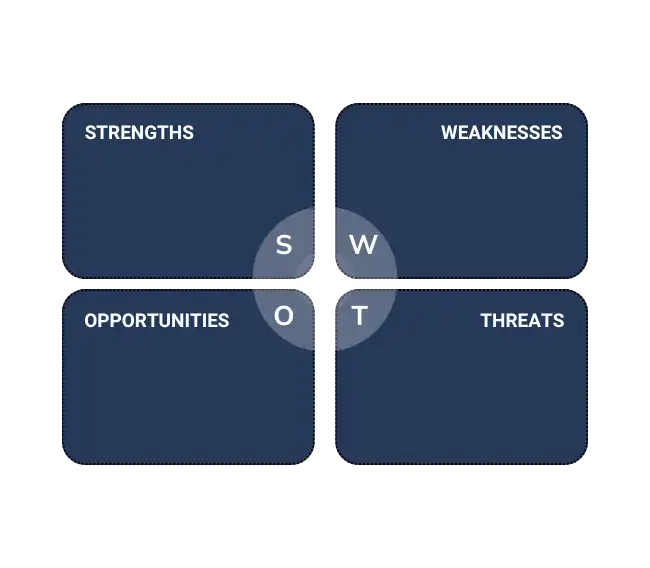
Calculate the earliest start and finish times for each taskSWOT analysis diagramDetermine the latest start and finish times without delaying the project
Identifying trends and patternsIdentify tasks with zero float (slack time).
Search for recurring themes across several projects or stages. This can include comparing lessons from similar project types, looking at lessons across different timeframes, or analysing lessons by project role or department.Critical Chain Project Management (CCPM)
Consider using data visualisation tools like charts or heat maps to make these patterns more visible.Resource-based approach
Generating actionable insightsCritical Chain Project Management (CCPM) is a method that focuses on resource-based scheduling. It considers both task dependencies and resource constraints to optimise project schedules.
Once you’ve done the analysis, turn those insights into actionable recommendations:Differences from Critical Path Method
- Prioritise insights based on potential impact and ease of implementation.CCPM considers resource constraints, while CPM focuses solely on task dependencies
- Create specific, measurable actions to address issues or replicate successes.CCPM uses buffer time at the project level, rather than padding individual tasks
- Map the insights to existing processes or methodologies in your organisation.CCPM aims to reduce multitasking and encourage early task completion.
- Set up a feedback loop to monitor how effective the implemented recommendations are.Both methods can provide useful insights for optimising project schedules and enhancing overall project management efficiency.
Remember that the point of the analysis is not just to understand what happened, but to shape future decisions. By using these techniques, you can take lessons learned from past projects and turn them into tools for improvement. This level of analysis and critical thinking will allow your organisation to continually adapt its Tools for project schedulingproject management approachIf you’re going to be doing project scheduling on a regular basis, you might find it useful to consider using specialist software to help you with this. A quick search online will pull up a range of tools. Some popular options include: based on real-life experiences.Project management software options
Storing and retrieving lessons learnedJira
To effectively use lessons learned, you must have a system for storing and retrieving them. This section provides guidance on setting up an efficient process.:
Creating a centralised lessons learned repositoryAgile project management
A software with customisable workflows and reporting.central repositoryMicrosoft Project should be the single source of truth for all lessons learned in your organisation. When building this repository, it’s important to choose a platform that works well with your existing : Software for creating detailed project schedules and resource management.
Continuous improvement through lessons learnedSelf-paced
Continuous improvement is key to organisational growth and development. Implement a feedback loop to track the effectiveness of applied lessons learned. Regularly review and update your lessons learned repository to ensure it remains relevant and useful. Encourage teams to challenge existing practices and standards based on new insights and insights to promote innovation and adaptation.PRINCE2 Agile Practitioner (with Foundation) self-paced online
Organisationally, use lessons learned data to inform strategic decision-making, ensuring that the company’s direction is shaped by real-world experiences and outcomes.
By actively leveraging lessons learned, you can turn past experiences into valuable assets for future success. This proactive approach to project management not only improves individual project outcomes but also cultivates a culture of continuous learning and improvement throughout the organisation.£1,399 +vat
Remember, collecting lessons is just the first step; the real value lies in how you apply them systematically to drive tangible improvements in project practices and outcomes.
Challenges and best practicesreviews
Implementing an effective lessons learned process can be difficult, but being aware of the common challenges and best practices can help organisations overcome these issues and get the most value from their experiences. are a critical part of the overall scheduling process and can help you to identify potential problems early on.
Common obstacles in implementing lessons learned processesFollowing these best practices will help you to create better project schedules and ultimately lead to better project outcomes.
Many organisations face challenges such as time constraints, which often relegate lessons learned to a low-priority task. Common challenges in project schedulingCultural resistanceNo matter how hard we try, it’s unlikely that we won’t encounter a few bumps when planning and managing a schedule. By being aware of the following common issues that typically affect project schedules, we will be more prepared and able to identify and address any we might encounter along the way. to admitting mistakes or sharing failures can also impede the process. Inconsistent documentation and poor knowledge management systems frequently lead to lost or inaccessible lessons.Inaccurate time estimates
Strategies for overcoming challengesThe biggest and most common cause for schedule slippage is making incorrect estimates, both too optimistically and too conservatively. As with all estimates, we should refer to
To overcome these obstacles, organisations should integrate lessons learned activities into project timelines and allocate dedicated resources. Promoting a historicblame-free culture that values learning and improvement can encourage more open sharing of experiences. Standardising documentation processes and implementing user-friendly knowledge management systems can also help capture and retrieve lessons more effectively.data
Best practices for maximising the value of lessons learned, as well as include the team and subject matter experts to provide an input on time estimates.
To maximise the value of your lessons learned process, consider making it a continuous activity throughout the project lifecycle, rather than a one-time event. Involve all stakeholders in the lessons learned process, not just the project team, to gain a more comprehensive perspective. Use a variety of methods to collect lessons, such as surveys, interviews, and workshops, to capture a diverse range of insights. Ensure that documented lessons are specific, actionable, and relevant to future Scope creepprojectsScope creep can easily affect the schedule by adding new requirements into a project that are not fully evaluated and understood, that require uncommitted resources, or that are not approved. to increase their utility. Regularly review and update your lessons learned repository to keep it relevant and valuable over time.Resource conflicts
Measuring the impact of lessons learnedResource allocation problems are common on projects where the same resources are shared among multiple projects and activities. To resolve resource overallocation or conflicts, we can use
Ensuring the effectiveness of your lessons learned process requires you to measure its impact on project performance and organisational growth. This section will focus on key performance indicators and evaluation methods for assessing the value of your lessons learned initiatives.resource levelling
Key performance indicators for lessons learned processes techniques to smoothen the demand for resources.
Consider tracking the following Unexpected risks and issuesKPIsIssues can unexpectedly appear despite your best-planned schedules. Prepare a detailed to measure the success of your lessons learned efforts:risk management plan
- Number of lessons captured per project that will help you address potential problems and issues on time.
- Percentage of lessons applied to subsequent projectsIf you identify these issues and incorporate the ways to mitigate them into your project management process, you will become a better scheduler, and your projects will reach completion more successfully.
- Reduction in recurring issues across projectsConclusion
- Improvement in project success ratesProject scheduling
- Time saved through application of lessons learned. is a vital aspect of successful
Methods for evaluating the effectiveness of lessons learned initiativesproject management
To evaluate the impact of your lessons learned programme, try the following techniques:. By grasping key concepts, using the right tools and following best practices, project managers can create effective schedules. Developing strong scheduling skills will lead to better resource allocation,
- Conduct surveys to measure team members’ perceived value of the processrisk
- Compare project outcomes before and after implementing lessons learned initiativesmanagement
- Track the frequency of accessed lessons in your repository and overall project success. Keep refining your techniques and you’ll be well on your way to learning the art of project scheduling.
- Analyse the correlation between applied lessons and project success metricsEnhance your skills with our expert-led courses
- Perform regular audits to ensure lessons are being consistently captured and utilised.
By measuring the impact of your lessons learned process systematically, you can demonstrate its value to stakeholders and identify areas for improvement. This data-driven approach ensures that your organisation continues to refine and enhance its knowledge management practices.
Conclusion
The Self-pacedlessons learned processAPM PFQ blended online is a vital component for organisational improvement and project success. By implementing a structured approach to identifying, documenting, analysing, storing, and retrieving valuable insights, organisations can significantly enhance their project management practices£749 +vat and drive continuous improvement.
A culture of continuous learning is paramount for the success of lessons learned activities. Cultivating an environment that encourages open communication, values experiential knowledge, and promotes sharing and applying insights across Self-pacedprojectsPRINCE2 Agile Practitioner (with Foundation) self-paced online and teams will maximise the potential benefits of this process.
To unlock the full power of lessons learned, organisations must commit to making these activities an integral part of the project lifecycle and create a blame-free environment where team members feel safe to reflect honestly. Additionally, investing in user-friendly systems for capturing and accessing lessons, as well as regularly measuring and evaluating the effectiveness of lessons learned initiatives, will ensure the sustainability and continuous improvement of this valuable practice.£1,399 +vat
By embracing the principles and implementing effective lessons learned processes discussed in this guide, organisations can drive continuous improvement, reduce the recurrence of issues, and ultimately achieve greater project success. Start improving your lessons learned practices today to secure a more efficient and effective project management future.
