Project management lessons learnedProject management tools

Key takeaways
A structured lessons learned cycle turns project experience into repeatable improvements.
- Capture lessons in real time, at phase ends, and at project close to avoid losing detail.
- Use neutral facilitation, surveys, and focused questions to surface honest insights without blame.
- Standardise documentation with templates, input forms, and executive summaries so lessons stay usable.
- Analyse for root causes and patterns, then convert findings into specific, measurable actions.Copied!
- Store lessons in a central, searchable repository and review them at project kick-off to ensure reuse.Key takeaways
- Track impact with KPIs such as reuse rates, fewer repeat issues, and improved delivery outcomes.Pick tools based on how your team works today, and how it needs to work tomorrow.
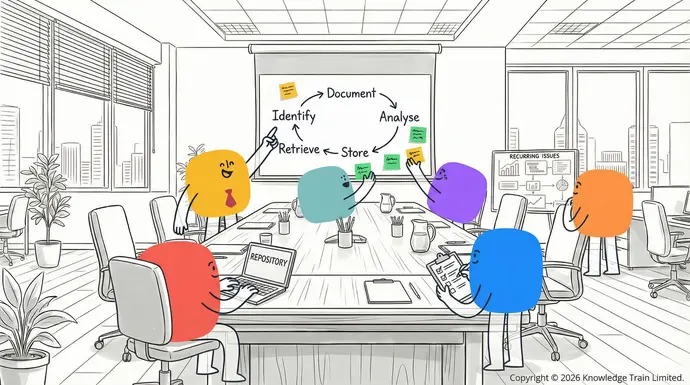
Introduction
In the world of project management, one key element that often distinguishes success from failure is the ability to extract and apply valuable insights from past experiences. This practice, known as FAQslessons learnedIntroduction, involves the identification, analysis, and subsequent utilisation of experiences to better inform future actions and decision-making.Project management software
By leveraging the knowledge gained from past mistakes and successes, organisations and project managers can significantly improve their project outcomes, reduce risks, enhance team performance, and increase overall efficiency. In this article, we will embark on a has become an integral part of any modern business setting. These tools offer a centralised platform for teams to plan, organise, and track their work more effectively. The landscape of project management is constantly evolving, especially as workforces continue to grow more complex and remote teams become increasingly prevalent.comprehensive explorationEfficient project management tools offer the following benefits: of lessons learned, delving into the process of their identification, documentation, analysis, storage, and application, as well as best practices and potential challenges..Streamlined collaboration and communication
After completing this reading, you will have a complete understanding of how to successfully incorporate a lessons learned system into your organisation, paving the way for continuous improvement and Better task tracking and deadline managementprojectResource allocation success.Real-time progress tracking
The lessons learned processImproved productivity and efficiency.
The lessons learned process is a structured approach designed to help project teams capture, document, analyse, and utilise valuable insights from past experiences. By adhering to this methodical process, project managers and their teams can enhance their project performance, learn from past mistakes, and increase the probability of project success.Project management tools
Five steps of the lessons learned process help organisations optimise their workflows, eliminate bottlenecks, and complete projects on time and on budget. This guide is designed to provide you with the necessary information to help you select the right project management tools in 2025. In the following guide, we will cover the following topics:
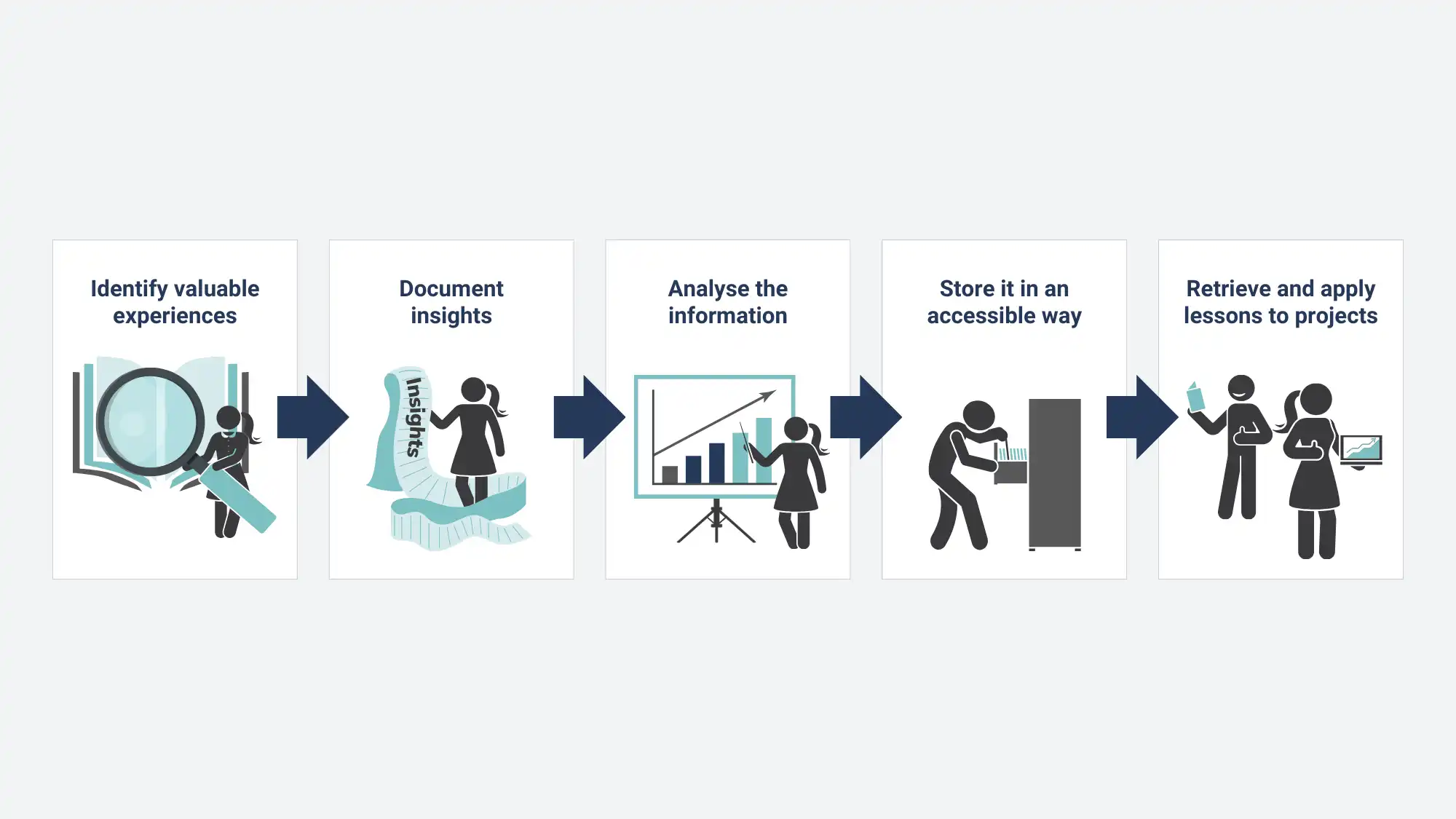
The basics of project management toolsLessons learned process diagramThe best tools to use depending on your business needs and budget
- IdentifyKey considerations to help you make an informed decision: The first step in the process involves recognising and pinpointing valuable experiences and insights throughout the project life cycle. It is crucial to encourage team members to note successes and challenges as they occur.Implementation and adoption best practices
- DocumentFuture trends that are going to take over the market.: Once identified, these lessons must be recorded in a clear, concise, and accessible manner, usually by using standardised templates or forms.No matter if you’re the owner of a small business, a freelancer, or part of a large-scale enterprise, this article will help you find the right project management solution for your needs. We’ll look at the best free tools, paid options, and carefully compare all these tools to the following criteria: features, ease of use, scalability and more.
- AnalyseBy the end of the article, you should be able to select and implement a project management tool that will help your team reach new levels of success and take all your to the next level.projectsUnderstanding project management software.Definition and key features
- StoreProject management software refers to a suite of digital tools and applications that enable teams to plan, execute, and monitor projects in an efficient and organised manner. These software solutions provide a centralised platform for collaboration, task management, resource allocation, and tracking project progress. Some key features commonly found in project management software include:: The analysed lessons should be stored in a centralised, easily accessible location, such as a database, shared drive, or specialised knowledge management system.Task management
- Retrieve: Allows users to create, assign, and track tasks or activities throughout the project lifecycle.: Finally, the lessons should be retrieved and applied to current or future projects as needed. This step is essential to ensure the full value of the lessons learned process is realised.Scheduling
When to capture lessons learned: Enables users to set deadlines, create timelines, and manage project milestones and dependencies.
Capturing lessons learned is most effective when done at the following times:Resource allocation
- End of project: Helps teams assign team members or resources to specific tasks and monitor their workloads.: Conducting a comprehensive review at the conclusion of the project allows for a holistic evaluation of the entire project life cycle. This timing can provide valuable insights into overall project performance and outcomes.Collaboration tools
- End of each phase: Facilitates communication, file sharing, and document collaboration among team members.: Reviews at the end of each project phase enable teams to capture fresh insights and lessons while the information is still clear in everyone’s minds.Reporting and analytics
- Real-time learning: Offers reporting capabilities and analytics to generate insights on project performance, progress, and resource utilisation.: Encouraging the ongoing capture of lessons as they occur can help prevent valuable insights from being lost due to time lapses or fading memories.Time tracking
By adhering to this structured approach and capturing lessons at these strategic moments, project teams can establish a robust knowledge base. This resource will be invaluable for improving project management practices, enhancing decision-making, and increasing the likelihood of project success.: Allows users to monitor the time spent on tasks or projects for time management and billing purposes.
Remember, the lessons learned process is not a one-time event but a continuous cycle of improvement. Regularly practising and refining this process can lead to substantial advancements in Budget managementproject management capabilities: Provides tools to track expenses, manage project finances, and compare against budget estimates. and overall organisational performance.Benefits of using project management tools
Identifying lessons learnedProject management tools offer numerous benefits for organisations, teams, and individual project managers. Some of the key advantages include:
Effective identification of lessons learned is a crucial step in capitalising on the value of project experiences. This process requires careful preparation and skilled facilitation of lessons learned sessions.Enhanced productivity
Preparing for lessons learned sessions: Project management tools help streamline workflows, automate tasks, and eliminate inefficiencies, leading to increased productivity.
Project surveysImproved communication
Before the session, team members should be asked to complete : These tools facilitate seamless communication and information sharing among team members, reducing misunderstandings and delays.project surveysBetter resource utilisation. These surveys are designed to encourage reflection on project experiences and gather initial thoughts on successes, challenges, and other aspects of the project. They will also provide a foundation for more in-depth conversations during the lessons learned session.: Project management software assists in optimising the allocation of personnel, budgets, and other resources, leading to more efficient use of resources.
Categorising lessons learnedIncreased accountability
Lessons should be organised into specific categories to help with analysis and future retrieval. Common lesson categories include:: Clearly defining roles, responsibilities, and tasks within projects helps increase accountability among team members.
- Project management processesReal-time visibility
- Technical challenges: Project management tools provide real-time visibility into project progress, enabling teams to track milestones, identify bottlenecks, and address issues proactively.
- CommunicationData-driven decision making
- Resource allocation: Access to analytics and reporting capabilities allows teams to make informed decisions based on data and insights.
- Risk managementStandardised processes.: Project management tools help establish standardised methodologies and processes across projects, improving consistency and efficiency.
Conducting lessons learned sessionsRemote work support
Facilitation techniques: These tools enable effective collaboration and project management, even for distributed teams or remote workers.
Facilitating productive lessons learned sessions can be achieved by using the following techniques:Types of project management software
- Employ a neutral facilitator to maintain objectivityCloud-based vs on-premise solutions
- Encourage open and honest communicationProject management software can be classified into two main categories based on their deployment models:
- Use brainstorming techniques to generate ideasCloud-based solutions
- Utilise visual aids such as mind maps or whiteboards to stimulate discussion and ideation.Hosted on remote servers and accessed through web browsers.
Key questions to askAdvantages: Low initial costs, automatic updates and maintenance, accessibility from any device with an internet connection.
Facilitating deliberations can be guided by using the following essential questions:Disadvantages: Dependence on internet connectivity, potential security and privacy concerns.
- What went well in the project?On-premise solutions
- What challenges did we face?Installed and maintained on local servers within an organisation’s own infrastructure.
- How did we overcome these challenges?Advantages: Greater control over data security and customisation, offline access and usage, compliance with specific industry requirements.
- What would we do differently next time?Disadvantages: Higher upfront costs, in-house IT support and maintenance required, limited scalability.
- What unexpected events occurred, and how did we handle them?Industry-specific vs general-purpose tools
By focusing on these questions, you can elicit valuable insights from your team members. Remember to create an environment where all participants feel comfortable and safe to share their experiences and observations.Project management software can also be categorised based on its intended target audience and industry:
Analysing lessons learnedTeam collaboration and communication tools
Analysis involves transforming lessons learned data into insights. It includes examining the information, identifying patterns, and formulating recommendations for future use.Mobile apps for iOS and Android.
Techniques for analysing lessons learned dataPros
There are various approaches to maximise the value from your lessons learned data. Consider these techniques:Easy-to-use interface with customisable workflows
- Root cause analysisRobust free plan for up to 15 team members: Delve deep to uncover the underlying reasons for successes and failures.Extensive integration options with other tools and services.
- SWOT analysisCons: Identify Strengths, Weaknesses, Opportunities, and Threats that the lessons highlight.Advanced features have a learning curve
- Pareto analysisSome features not available in the free version: Prioritise the 20% of factors that led to 80% of results.Some users may find the interface busy or cluttered.
- Affinity diagrammingClickUp: Group related lessons to identify common themes.ClickUp
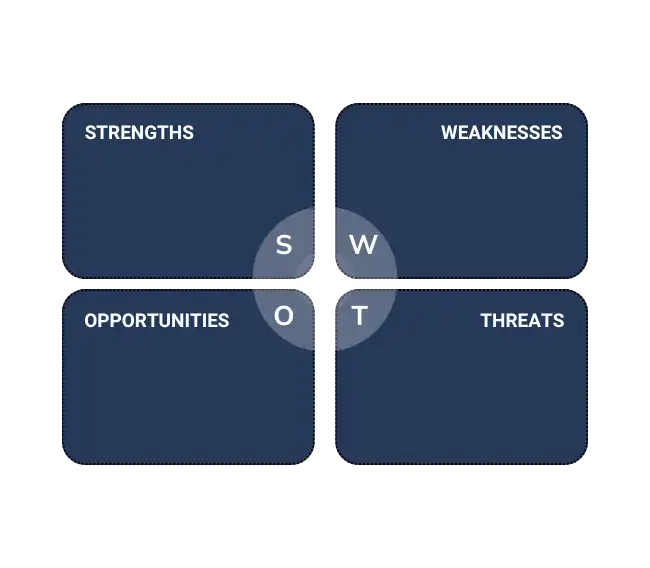
is a full-featured project management software that is not lacking in its free plan. It offers a lot of functionality and works with various SWOT analysis diagramproject management methodologies
Identifying trends and patterns.
Search for recurring themes across several projects or stages. This can include comparing lessons from similar project types, looking at lessons across different timeframes, or analysing lessons by project role or department.Features
Consider using data visualisation tools like charts or heat maps to make these patterns more visible.Multiple view options (list, board, Gantt, calendar, and more)
Generating actionable insightsCustom fields and statuses
Once you’ve done the analysis, turn those insights into actionable recommendations:Time tracking and workload management
- Prioritise insights based on potential impact and ease of implementation.Docs and wikis for knowledge sharing
- Create specific, measurable actions to address issues or replicate successes.Advanced automation capabilities.
- Map the insights to existing processes or methodologies in your organisation.Pros
- Set up a feedback loop to monitor how effective the implemented recommendations are.Very feature-rich for the free version
Remember that the point of the analysis is not just to understand what happened, but to shape future decisions. By using these techniques, you can take lessons learned from past projects and turn them into tools for improvement. This level of analysis and critical thinking will allow your organisation to continually adapt its Highly customisable to fit your workflowproject management approachRegular updates and new feature releases. based on real-life experiences.Cons
Storing and retrieving lessons learnedCan be confusing and complex for new users
To effectively use lessons learned, you must have a system for storing and retrieving them. This section provides guidance on setting up an efficient process.Some features may seem redundant or unnecessary
Creating a centralised lessons learned repositoryPerformance issues can occur with very large projects.
A Wrikecentral repositoryWrike should be the single source of truth for all lessons learned in your organisation. When building this repository, it’s important to choose a platform that works well with your existing is a flexible project management software that is a great option for small teams with its solid free plan and balance of features between simplicity and more advanced functionality.project management toolsFeatures. Use a consistent structure and categorisation system, so the lessons are well-organised. Plan for the repository to be scalable so you can add new projects and insights over time.Interactive Gantt charts
Implementing effective search and retrieval systemsCustom workflows and
Make sure that lessons are easily discoverable. This can be done by implementing a good search function with filters based on project type, date, and category. Use a tagging system to identify key themes and topics, which will allow users to find relevant information quickly. You can also add an option for users to rate the usefulness of a lesson to help surface the most valuable insights. These features will help increase the accessibility and usefulness of the stored knowledge.
Ensuring accessibility and usability of stored lessons
Encourage everyone to use the lessons learned repository by making it accessible and easy to use. This includes creating user-friendly interfaces on both desktop and mobile platforms. Role-based access control can help protect sensitive information while still providing appropriate access. Regularly curate the content to keep it up-to-date and valuable. Conduct training sessions on how to use the repository so that everyone can get the most out of this resource.
Creating a well-organised, easily searchable, and accessible repository will ensure your organisation can effectively leverage past experiences. This will turn lessons learned from being static records into resources that actively improve decision-making and project outcomes across your organisation.
Leveraging lessons learned for future projects
The real power of lessons learned lies in how they are applied to future projects. In this part, we’ll explore strategies and techniques for leveraging lessons learned effectively to improve project outcomes and drive organisational success.
Incorporating lessons learned into project planning
ActiveCollab
Organisationally, use lessons learned data to inform strategic decision-making, ensuring that the company’s direction is shaped by real-world experiences and outcomes. is a project management software that is catered to freelancers and small teams that need basic project tracking functionality. The free plan offers many basic features useful for smaller projects.
By actively leveraging lessons learned, you can turn past experiences into valuable assets for future success. This proactive approach to project management not only improves individual project outcomes but also cultivates a culture of continuous learning and improvement throughout the organisation.Features
Remember, collecting lessons is just the first step; the real value lies in how you apply them systematically to drive tangible improvements in Task management and team collaborationproject practicesTime tracking and workload management and outcomes.Basic invoicing capabilities
Challenges and best practicesScalable and adaptable for different team sizes and industries
Implementing an effective lessons learned process can be difficult, but being aware of the common challenges and best practices can help organisations overcome these issues and get the most value from their experiences.Strong automation and integration capabilities.
Common obstacles in implementing lessons learned processesCons
Many organisations face challenges such as time constraints, which often relegate lessons learned to a low-priority task. Can become expensive for larger teamsCultural resistanceSome users may find the interface too “busy” or colorful to admitting mistakes or sharing failures can also impede the process. Inconsistent documentation and poor knowledge management systems frequently lead to lost or inaccessible lessons.Learning curve for more complex customisations.
Strategies for overcoming challengesPricing
To overcome these obstacles, organisations should integrate lessons learned activities into project timelines and allocate dedicated resources. Promoting a Plans start at $8 per user per month (annual billing).blame-free cultureSmartsheet that values learning and improvement can encourage more open sharing of experiences. Standardising documentation processes and implementing user-friendly knowledge management systems can also help capture and retrieve lessons more effectively.Smartsheet
Best practices for maximising the value of lessons learned is a collaborative work platform that is designed to look and function like a spreadsheet. It is a popular choice for teams that are already familiar with spreadsheet software.
To maximise the value of your lessons learned process, consider making it a continuous activity throughout the project lifecycle, rather than a one-time event. Involve all stakeholders in the lessons learned process, not just the project team, to gain a more comprehensive perspective. Use a variety of methods to collect lessons, such as surveys, interviews, and workshops, to capture a diverse range of insights. Ensure that documented lessons are specific, actionable, and relevant to future Key featuresprojectsSpreadsheet-like interface with project management features to increase their utility. Regularly review and update your lessons learned repository to keep it relevant and valuable over time.Gantt charts and critical path analysis
Measuring the impact of lessons learnedResource management and capacity planning
Ensuring the effectiveness of your lessons learned process requires you to measure its impact on project performance and organisational growth. This section will focus on key performance indicators and evaluation methods for assessing the value of your lessons learned initiatives.Automated workflows and approvals
