Project management lessons learnedSocial responsibility

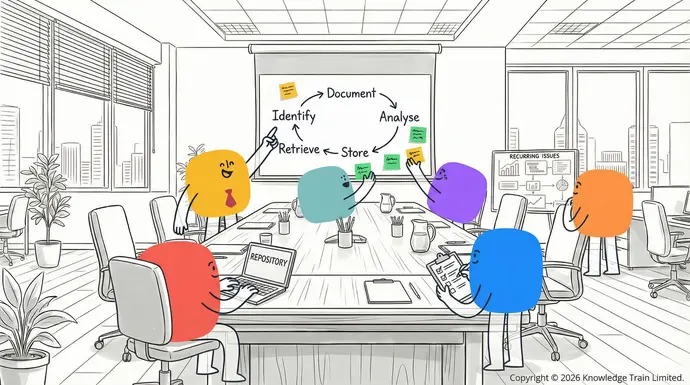
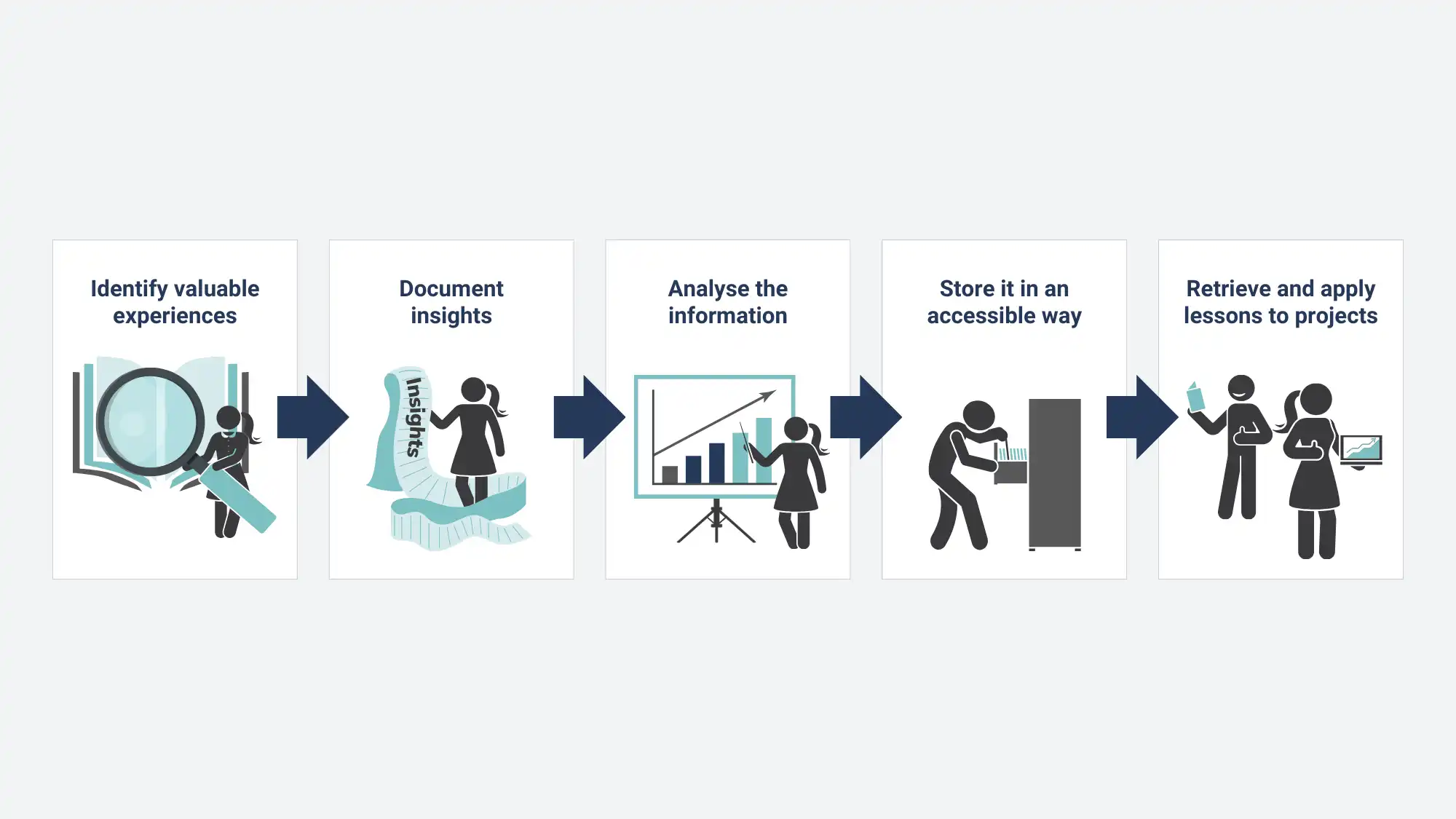
- End of each phase : Reviews at the end of each project phase enable teams to capture fresh insights and lessons while the information is still clear in everyone’s minds.
- Real-time learning : Encouraging the ongoing capture of lessons as they occur can help prevent valuable insights from being lost due to time lapses or fading memories.Contents
Documenting lessons learnedOptimising resource allocation.
Effective documentation is critical for capturing and sharing lessons learned. This section focuses on methods for producing well-structured reports and utilising tools for efficient documentation.You can effectively use RACI matrix in the following situations:
Creating effective lessons learned reportsProjects
Detailed reports with many stakeholders
Detailed reports offer an in-depth look at lessons learned. Ensure these reports include:Cross-functional teams working together
- Project overview and backgroundUnclear or overlapping roles/responsibilities
- Lessons gathering methodologyOrganisational change or restructuring
- Categorised lessons learnedNew team formation. Assigning a Responsible person.
- Root cause analysisIn practice, the RACI matrix helps
- Recommendations for future project managersprojects to clearly assign each task to one or more Responsible persons. This helps to avoid confusion and ensure that everyone knows who is doing what. The matrix also helps in .stakeholder engagement
These reports should be well-organised, concise, and easily searchable. by identifying who needs to be consulted or informed at each stage of the project.
Executive summariesThe RACI matrix is not always required, for example, for small and short-term projects or projects with a small team of stakeholders. In such cases, communication and coordination can be achieved in a less formal way. However, for most projects of medium and larger size, the use of a RACI matrix is a simple and effective way to organise work and improve communication.
Executive summaries provide a concise overview of key lessons. They should highlight significant findings, present actionable recommendations, and be tailored to the needs of senior management and decision-makers.Creating a RACI matrix
Tools for documenting lessons learnedSix steps guide to building a RACI chart
Lessons learned input formsThe following are the steps to create a RACI matrix:
Input formsIdentify the tasks help standardise lessons collection. Design a form that captures:: List all the tasks and milestones of the project in the left column of the RACI matrix.
- Project name and dateDefine the stakeholders
- Category of the lesson: List all the project stakeholders in the top row of the matrix.
- Description of the situation or issueAssign the roles
- Impact on the project: For each task, assign one of the four roles (R, A, C, I) to each stakeholder.
- Recommendations for future reference.Review and refine
Templates and checklists: Check that each task has at least one R and one A, and that there are no conflicts or ambiguities in the assignments.
Templates and checklists ensure consistency in documentation across projects. Provide team members with a template for the detailed report structure, a checklist of key areas to cover during lessons learned sessions, and a standardised format for documenting recommendations.Validate
By implementing these tools and techniques, you can develop a streamlined approach to documenting lessons learned. This system will help you capture valuable insights effectively and ensure they can be easily accessed and applied to future : Confirm the RACI matrix with the team members and stakeholders to ensure accuracy and agreement.projectsDistribute.: Share the RACI matrix with all the stakeholders and make it accessible for reference and updates.
Remember, the key is to create documentation that is both comprehensive and user-friendly to facilitate knowledge transfer throughout your organisation.Best practices for assigning roles
Analysing lessons learnedThe following are some tips for assigning roles in a RACI matrix:
Analysis involves transforming lessons learned data into insights. It includes examining the information, identifying patterns, and formulating recommendations for future use.Make sure that all the team members understand the RACI definitions and agree on the roles.
Techniques for analysing lessons learned dataAssign roles based on the skills, authority, and availability of the team members, and not just on their positions.
There are various approaches to maximise the value from your lessons learned data. Consider these techniques:Avoid assigning too many Consulted and Informed roles, as this can lead to information overload and unnecessary communication.
- Root cause analysisConsider the scope and complexity of the project when defining the tasks and assigning the roles.: Delve deep to uncover the underlying reasons for successes and failures.Update the RACI matrix as the project progresses or as changes occur in the team or the tasks.
- SWOT analysisCommon mistakes to avoid: Identify Strengths, Weaknesses, Opportunities, and Threats that the lessons highlight.The following are some common mistakes to avoid when creating a RACI matrix:
- Pareto analysisIncluding too many tasks or too many stakeholders: Prioritise the 20% of factors that led to 80% of results.: Focus on the most important tasks and stakeholders and avoid unnecessary details.
- Affinity diagrammingAssigning multiple Rs or As to the same task: Group related lessons to identify common themes.: This can create confusion and conflict over responsibility. Ensure that each task has one and only one A and at least one R.
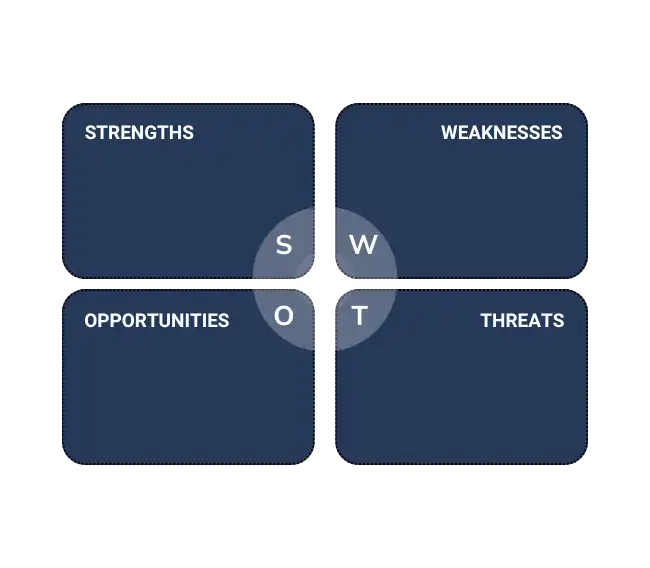
Not getting buy-in from the stakeholdersSWOT analysis diagram: Ensure that all the stakeholders agree on the roles and responsibilities assigned to them or to others.
Identifying trends and patternsNot updating the RACI matrix
Search for recurring themes across several projects or stages. This can include comparing lessons from similar project types, looking at lessons across different timeframes, or analysing lessons by project role or department.: The RACI matrix should be a living document, not a static one. Review and update it as needed.
Consider using data visualisation tools like charts or heat maps to make these patterns more visible.Not using the RACI matrix consistently
Generating actionable insights: Ensure that all the team members use the RACI matrix as a reference and respect the roles and responsibilities assigned.
Once you’ve done the analysis, turn those insights into actionable recommendations:RACI matrix templates and tools
- Prioritise insights based on potential impact and ease of implementation.A RACI matrix can be created using different tools and templates. Here are some of them:
- Create specific, measurable actions to address issues or replicate successes.Spreadsheet software
- Map the insights to existing processes or methodologies in your organisation.: You can use a simple Excel or Google Sheets template to create a RACI matrix, which allows you to customise and format the chart.
- Set up a feedback loop to monitor how effective the implemented recommendations are.Project management software
Remember that the point of the analysis is not just to understand what happened, but to shape future decisions. By using these techniques, you can take lessons learned from past projects and turn them into tools for improvement. This level of analysis and critical thinking will allow your organisation to continually adapt its : Many project management tools, such as Monday.com, offer built-in RACI matrix features, which allow you to create, share, and update the matrix along with other project elements.project management approachRACI matrix software based on real-life experiences.: There are some specialised software that focus on creating and managing RACI matrices, which offer advanced features and integrations.
Storing and retrieving lessons learnedVisual collaboration tools
To effectively use lessons learned, you must have a system for storing and retrieving them. This section provides guidance on setting up an efficient process.: There are some visual collaboration platforms, such as Miro, which offer interactive RACI matrix templates, which allow you to create and collaborate on the matrix visually.
Creating a centralised lessons learned repositoryChoose the tool that best suits your team’s needs and preferences, and that integrates well with your existing
A project management processescentral repository. Remember that a RACI matrix is only as good as its clarity and consistency, so make sure that you use it correctly and regularly. should be the single source of truth for all lessons learned in your organisation. When building this repository, it’s important to choose a platform that works well with your existing Enhance your skills with our expert-led coursesproject management tools . Use a consistent structure and categorisation system, so the lessons are well-organised. Plan for the repository to be scalable so you can add new projects and insights over time.
Implementing effective search and retrieval systems
Make sure that lessons are easily discoverable. This can be done by implementing a good search function with filters based on project type, date, and category. Use a tagging system to identify key themes and topics, which will allow users to find relevant information quickly. You can also add an option for users to rate the usefulness of a lesson to help surface the most valuable insights. These features will help increase the accessibility and usefulness of the stored knowledge.Self-paced
Ensuring accessibility and usability of stored lessonsAPM PFQ blended online
Encourage everyone to use the lessons learned repository by making it accessible and easy to use. This includes creating user-friendly interfaces on both desktop and mobile platforms. Role-based access control can help protect sensitive information while still providing appropriate access. Regularly curate the content to keep it up-to-date and valuable. Conduct training sessions on how to use the repository so that everyone can get the most out of this resource.
Creating a well-organised, easily searchable, and accessible repository will ensure your organisation can effectively leverage past experiences. This will turn lessons learned from being static records into resources that actively improve decision-making and project outcomes across your organisation.£749 +vat
Leveraging lessons learned for future projects
The real power of lessons learned lies in how they are applied to future projects. In this part, we’ll explore strategies and techniques for leveraging lessons learned effectively to improve project outcomes and drive organisational success.
Incorporating lessons learned into project planning
PRINCE2 Agile Practitioner (with Foundation) self-paced onlineproject planning process is a crucial step in ensuring that past experiences inform future work. To do this, review relevant lessons learned when starting a new project. Make a £1,399 +vatlessons learned review a standard part of project kick-off meetings and assign team members to research and present applicable lessons to the group. This practice ensures that lessons learned are not just documented but actively inform your project strategies.
Update project templates and checklists based on lessons learned to embed these insights into your standard operating procedures.
Sharing lessons learned across the organisationSelf-paced
Maximising the value of lessons learned involves creating a culture that values AgilePM Practitioner (with Foundation) self-paced onlineknowledge sharing and continuous learning. Establish regular forums or platforms for teams to exchange and disseminate key lessons learned. Integrate lessons learned into training programmes and new employee onboarding processes to spread valuable insights across the organisation.£1,299 +vat
Encourage and reward individuals and teams that actively apply and share lessons learned to reinforce their importance.Implementing RACI in project management
Continuous improvement through lessons learnedIntegrating RACI with project lifecycles
Continuous improvement is key to organisational growth and development. Implement a feedback loop to track the effectiveness of applied lessons learned. Regularly review and update your lessons learned repository to ensure it remains relevant and useful. Encourage teams to challenge existing practices and standards based on new insights and insights to promote innovation and adaptation.To effectively integrate RACI into your project management approach, align it with the project lifecycle phases. Here’s how you can do it:
Organisationally, use lessons learned data to inform strategic decision-making, ensuring that the company’s direction is shaped by real-world experiences and outcomes.Initiation
By actively leveraging lessons learned, you can turn past experiences into valuable assets for future success. This proactive approach to project management not only improves individual project outcomes but also cultivates a culture of continuous learning and improvement throughout the organisation.: Identify key stakeholders and establish their high-level RACI roles for the project.
Remember, collecting lessons is just the first step; the real value lies in how you apply them systematically to drive tangible improvements in Planningproject practices: Develop a detailed RACI matrix for all identified tasks and deliverables. and outcomes.Execution
Challenges and best practicesScrum
Implementing an effective lessons learned process can be difficult, but being aware of the common challenges and best practices can help organisations overcome these issues and get the most value from their experiences., RACI can be used to define roles and responsibilities for each Scrum ceremony, epic, and user story. For example:
Common obstacles in implementing lessons learned processesA Product Owner is Accountable for prioritising and approving the product backlog items.
Many organisations face challenges such as time constraints, which often relegate lessons learned to a low-priority task. A Cultural resistanceScrum Master to admitting mistakes or sharing failures can also impede the process. Inconsistent documentation and poor knowledge management systems frequently lead to lost or inaccessible lessons.is Responsible for facilitating the Scrum process and addressing impediments.
Strategies for overcoming challengesThe Development Team is Responsible for delivering potentially shippable product increments.
To overcome these obstacles, organisations should integrate lessons learned activities into project timelines and allocate dedicated resources. Promoting a By using RACI in Scrum, teams can achieve a balance between structure and flexibility.blame-free cultureRACI matrix variations and alternatives that values learning and improvement can encourage more open sharing of experiences. Standardising documentation processes and implementing user-friendly knowledge management systems can also help capture and retrieve lessons more effectively.In addition to the standard RACI matrix, there are several variations and alternatives that can be used for specific project needs. Here are a few examples:
Best practices for maximising the value of lessons learnedRASCI (adding the ‘supportive’ role)
To maximise the value of your lessons learned process, consider making it a continuous activity throughout the project lifecycle, rather than a one-time event. Involve all stakeholders in the lessons learned process, not just the project team, to gain a more comprehensive perspective. Use a variety of methods to collect lessons, such as surveys, interviews, and workshops, to capture a diverse range of insights. Ensure that documented lessons are specific, actionable, and relevant to future Supportiveprojects: People who support the Responsible person in completing the task. to increase their utility. Regularly review and update your lessons learned repository to keep it relevant and valuable over time.This could be useful for
Measuring the impact of lessons learnedprojects
Ensuring the effectiveness of your lessons learned process requires you to measure its impact on project performance and organisational growth. This section will focus on key performance indicators and evaluation methods for assessing the value of your lessons learned initiatives. that have resource needs and specialist help.
Key performance indicators for lessons learned processesCARS (Communicate, Approve, Responsible, Support)
Consider tracking the following CARS is a simplified version of RACI that uses only four roles:KPIs
sed on learnings, and assign responsibility for implementing specific lessons.project management
What role does leadership play in promoting a culture of lessons learned? tool that aids in coordination, not a rigid set of rules to be strictly followed.
Leaders should actively participate in sessions, allocate resources for the process, and visibly apply insights in decision-making to demonstrate the value of lessons learned.Enhance your skills with our expert-led courses
How can we make lessons learned sessions more engaging and productive?
Use varied formats like workshops or gamification, focus on specific themes, and ensure sessions result in actionable outcomes to maintain engagement.
What are some common pitfalls to avoid when implementing a lessons learned process?
