Project management lessons learned{"@context":"http://schema.org","@type":"BreadcrumbList","itemListElement":[{"@type":"ListItem","position":1,"name":"Home","item":"https://www.knowledgetrain.co.uk/"},{"@type":"ListItem","position":2,"name":"Project Management","item":"https://www.knowledgetrain.co.uk/project-management"},{"@type":"ListItem","position":3,"name":"Project management principles","item":"https://www.knowledgetrain.co.uk/project-management/project-management-principles"}]}Denmark

Key takeaways
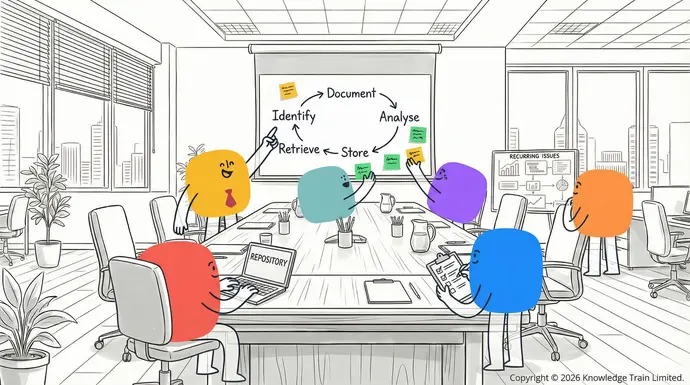
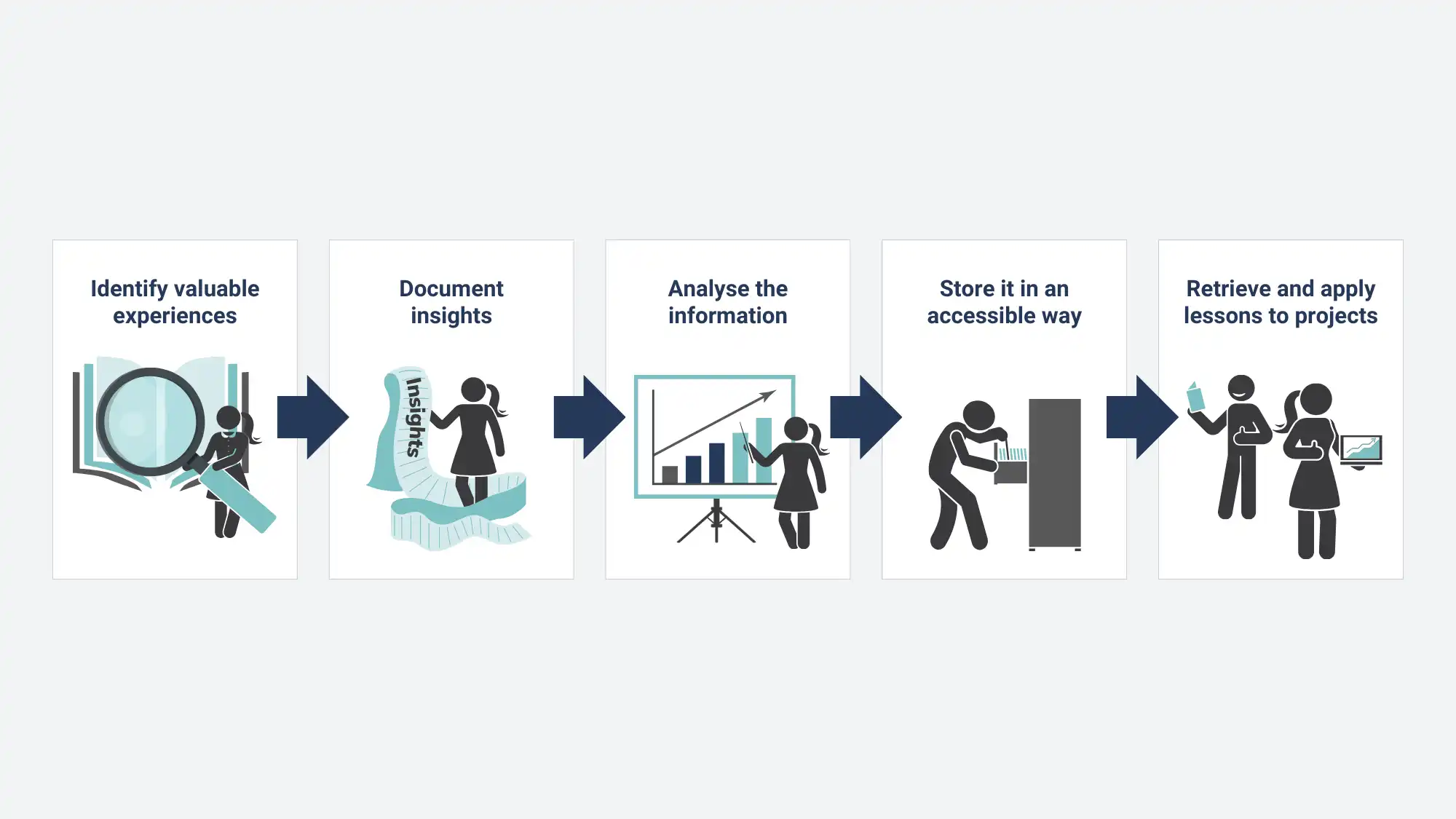
A structured lessons learned cycle turns project experience into repeatable improvements.
- Capture lessons in real time, at phase ends, and at project close to avoid losing detail.
- Use neutral facilitation, surveys, and focused questions to surface honest insights without blame.Copied!Project management vs product management
- Standardise documentation with templates, input forms, and executive summaries so lessons stay usable.Key takeaways
- Analyse for root causes and patterns, then convert findings into specific, measurable actions.Strong delivery comes from clear foundations, disciplined control, and continuous learning.Knowledge Train
- Store lessons in a central, searchable repository and review them at project kick-off to ensure reuse.Start with a formal project structure, agreed objectives, and an engaged sponsor who removes roadblocks.19 Feb 2026
- Track impact with KPIs such as reuse rates, fewer repeat issues, and improved delivery outcomes.Define responsibilities early using tools like a RACI or RASCI matrix and a stakeholder register.
InfographicIntroductionProject management
is the application of knowledge, skills, tools and techniques to meet project requirements. It’s a critical discipline that enables organisations to deliver value.Project management principles are fundamental guidelines and approaches that underpin effective project management practices. These principles provide a framework for project planning, execution and control. They are applicable across various industries and project types.
In this article, we’ll cover:Key project management principlesHow to apply these principles
How to overcome common project management challenges.
Project management principles are essential for successful project outcomes. By understanding and applying these principles,
project managers
can enhance their effectiveness and deliver greater value to stakeholders. After reading this article, you may be interested in learning about the PRINCE2 principles
- and what this widely used project management methodology says.Establishing a solid project foundation
- A successful project starts with a strong foundation. Let’s look at three elements that will set the stage for success: formal project structure, clear goals and objectives, and sponsor engagement.Formal project structure
- The first element is a well-defined project structure, which provides a framework for project execution:Project charter: This document outlines the project purpose, scope and stakeholders.Project plan
- : This is a detailed plan that covers timelines, resources and expected deliverables.Team
- : Designate the team who will carry out the work and ensure they understand their roles and responsibilities.Clear goals and objectives
Precise requirements are essential for successful project execution:
Importance of clear goals
- : Clear objectives help prevent misunderstandings, reduce the risk of scope creep and keep the project focused.Alignment with company objectives
- : It’s important to ensure project goals support the broader goals and objectives of the company.Documentation and approval
- : Requirements should be documented and formally approved by all relevant stakeholders.Benefit
Description
FocusGuides team efforts towards specific outcomesMeasurement
Provides benchmarks for assessing progress
Clarity
Reduces ambiguity in project execution
Project sponsor engagement
The engagement of a project sponsor can be vital in delivering project success:Role: Acts as the overall champion and supporter of the project
Benefits
: Ensures the availability of resources, removes roadblocks and promotes the project.
- Strategies
- : Stay updated, communicate clearly and involve the sponsor in key decisions.
- Defining these important fundamentals,
- project managers
- can lay a strong foundation for project success and delivery.By effectively managing scope and changes, project managers can ensure projects remain on track while accommodating necessary adjustments. This balance promotes project success and stakeholder satisfaction.
Defining roles and responsibilities
Clearly defining roles and responsibilities within a project is essential for its success. This section will delve into aspects of team accountability and the role of the project manager.
Team accountability
- Creating accountability structures is important to ensure that each team member understands their responsibilities and expectations.
- RACI/RASCI matrix
- RACI
- (Responsible, Accountable, Consulted, Informed) or
RASCI
(with Sign-off) matrices are useful tools to clearly define roles and responsibilities for each task or decision in a project:
- Responsible
- : Who will do the task?
- Accountable
- : Who is ultimately responsible for task completion?
- Consulted
: Whom should be consulted?
Informed
Techniques for analysing lessons learned dataImpact assessment (time, cost, resources)Gantt charts
There are various approaches to maximise the value from your lessons learned data. Consider these techniques:Stakeholder review and approval: Visual representations of project timelines, dependencies, and milestones.
- Root cause analysisDocumentation of approved changes.Project management software: Delve deep to uncover the underlying reasons for successes and failures.Adaptability in project management like Microsoft Project or Asana can provide comprehensive solutions for task assignment, progress tracking, and resource management.
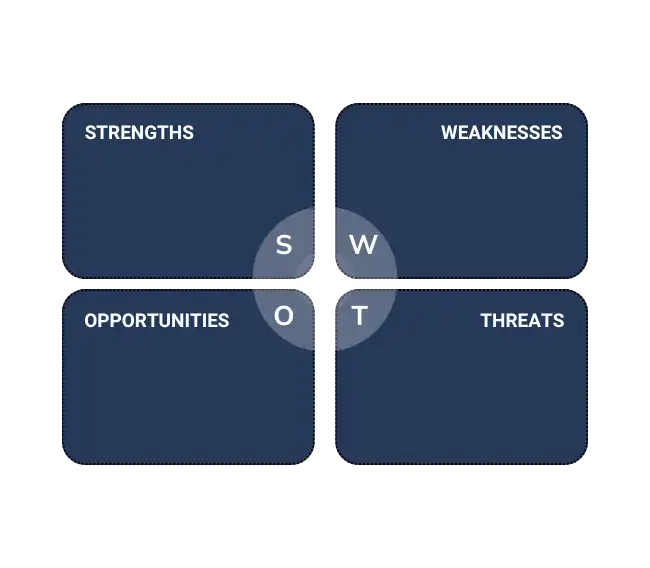
- SWOT analysisFlexibility in project lifecycleAgile: Identify Strengths, Weaknesses, Opportunities, and Threats that the lessons highlight.Flexibility should be built into the project lifecycle to allow for necessary changes: and
- Pareto analysisUse Scrum: Prioritise the 20% of factors that led to 80% of results.iterative methods: Agile and Scrum methodologies have become increasingly popular in project management, particularly in software development. These approaches emphasise flexibility, iterative development, and continuous improvement. Scrum boards and Sprint planning tools are commonly used to support these methodologies.
Challenges and best practices often define success using a mix of quantitative and qualitative metrics:Tracking and reporting methods
Implementing an effective lessons learned process can be difficult, but being aware of the common challenges and best practices can help organisations overcome these issues and get the most value from their experiences.On-time deliveryOnce the KPIs are selected, it is important to have effective tracking and reporting mechanisms in place. This can include:
Common obstacles in implementing lessons learned processes: This is a critical measure, indicating whether a project meets its milestones and deadlines. It can often be linked to efficient planning and Regular status meetings
Many organisations face challenges such as time constraints, which often relegate lessons learned to a low-priority task. risk managementAutomated dashboardsCultural resistance.Earned Value Management (EVM) to admitting mistakes or sharing failures can also impede the process. Inconsistent documentation and poor knowledge management systems frequently lead to lost or inaccessible lessons.Budget adherenceMilestone tracking.
Strategies for overcoming challenges: Staying within the pre-planned budget is a common KPI for Performance management baseline
To overcome these obstacles, organisations should integrate lessons learned activities into project timelines and allocate dedicated resources. Promoting a project managersIntegrating cost, schedule, and scopeblame-free culture. It reflects efficient resource allocation and the ability to handle unforeseen expenses. Deviations from the budget should be minimal and justified.Develop an integrated baseline that blends the projects: that values learning and improvement can encourage more open sharing of experiences. Standardising documentation processes and implementing user-friendly knowledge management systems can also help capture and retrieve lessons more effectively.Stakeholder satisfactionWork Breakdown Structure
Best practices for maximising the value of lessons learned: This is a more qualitative metric but is just as important. It includes the satisfaction of team members, clients, and any other stakeholders. High levels of satisfaction can often be a sign of well-executed project management and communication. (WBS)
To maximise the value of your lessons learned process, consider making it a continuous activity throughout the project lifecycle, rather than a one-time event. Involve all stakeholders in the lessons learned process, not just the project team, to gain a more comprehensive perspective. Use a variety of methods to collect lessons, such as surveys, interviews, and workshops, to capture a diverse range of insights. Ensure that documented lessons are specific, actionable, and relevant to future Product management success metricsScheduleprojectsProduct managersBudget. to increase their utility. Regularly review and update your lessons learned repository to keep it relevant and valuable over time., on the other hand, often use different metrics to measure success:Element
Measuring the impact of lessons learnedUser adoption and engagementIntegration method
: These metrics help understand how well a product is meeting customer needs and how often it’s being used. They can include daily active users, feature usage, or time spent on the product.
Revenue and market share
: For a product manager, these are key indicators of a product’s commercial success. They show the product’s financial contribution and its position in the market relative to competitors. Growth in these areas can indicate a successful product strategy and a good market fit.Customer satisfaction and retention: These metrics offer insights into a product’s long-term viability. Measures like Net Promoter Score (NPS) or churn rate fall into this category. High satisfaction and retention rates suggest that the product continues to meet users’ needs over time.
- In conclusion, while there are some overlaps, project and product managers often focus on different success metrics that are specific to their roles and responsibilities.
- Enhance your skills with our expert-led courses
Instructor-led
Introduction to Project Management course
