
Key takeawaysMSP COURSES
A strong kick-off creates alignment, energy, and a practical plan for execution.Select your preferred training course below:
- Use the kick-off to align stakeholders on objectives, scope, success measures, and constraints.
- Prepare properly with the right attendees, a shared agenda, and essential documents like the charter and timeline.PMI COURSES
- Clarify roles, decision rights, and responsibilities, using a RACI where helpful.Select your preferred training course below:
- Agree communication channels, meeting cadence, tools, and a single source of truth for project information.
- Surface risks, conflicting expectations, and scope change rules early, then track action items with owners and deadlines.PMI COURSES
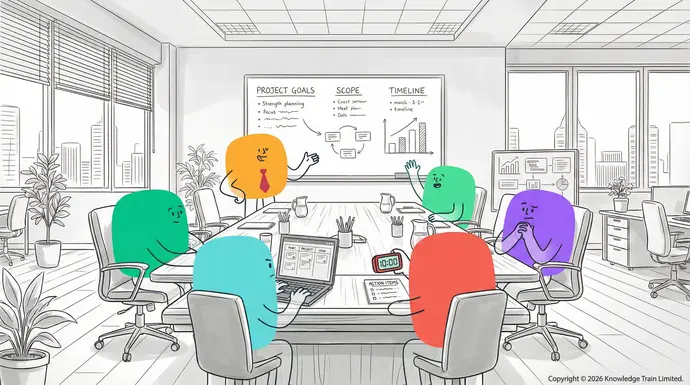
A LEAN SIX SIGMA COURSESproject kick-off meetingSelect your preferred training course below: is an event that formally initiates a new project. It is a chance for all the project team members and stakeholders to come together, discuss the project’s objectives and goals, and ensure that everyone is on the same page. This meeting is an important opportunity to set the tone and direction for the project.
Kick-off meetings are important for several reasons. First, they help to ensure that all the stakeholders are aware of and understand the project goals and objectives. Second, they provide an opportunity for everyone involved to get acquainted and begin building relationships. Third, they allow the project team to review the project plan and ensure that everyone is clear on their roles and responsibilities. Finally, kick-off meetings help to generate excitement and enthusiasm for the BUSINESS ANALYST COURSESprojectSelect your self-paced training course topic..
In this guide, we will discuss how to plan and facilitate effective kick-off meetings, as well as provide tips for engaging participants and ensuring a successful outcome. We will also cover some variations of kick-off meetings that may be more appropriate for different types of projects or teams. By following the advice in this guide, you can help set the stage for a successful project kick-off meeting.BCS BUSINESS ANALYST COURSES
Understanding project kick-off meetingsSelect your preferred training course below:
Purpose and goals of kick-off meetings
Project kick-off meetings are the starting points of new projects. They aim to align all participants with the project’s objectives, scope, and expectations. The main goals of such meetings are to build team unity, clarify roles and responsibilities, and establish a shared vision of success.CHANGE MANAGEMENT COURSES
Types of kick-off meetingsSelect your self-paced training course topic.
- Internal project kick-off meetings : These meetings focus on aligning the core project team. They cover project details, timelines, and individual responsibilities.APMG CHANGE MANAGEMENT COURSES
- Executive sponsor kick-off meetingsSelect your preferred training course below:: Tailored for high-level stakeholders, these meetings emphasise strategic goals and business impact. They provide a broader context for the project’s importance.
- External or client-facing kick-off meetingsPROGRAMME MANAGEMENT COURSES: These involve both the internal team and external clients or partners. They aim to set expectations, confirm deliverables, and establish communication protocols.Select your self-paced training course topic.
- Agile project kick-off meetings : Specific to MSP COURSESAgile methodologiesSelect your preferred training course below:, these meetings set the stage for sprints and iterations. They focus on short-term goals and adaptability.
Key benefits of effective kick-off meetingsIT QUALIFICATIONS
Well-executed kick-off meetings offer numerous advantages:Select your preferred qualification.
- Enhanced team alignment and motivation
- Clearer understanding of project goals and constraintsITIL COURSES
- Early identification of potential risks or challengesSelect your preferred training course below:
- Improved stakeholder engagement and buy-in
- Established communication channels and expectations.IT QUALIFICATIONS
By investing time in thorough kick-off meetings, Select your preferred qualification.project managers create a solid foundation for success. These sessions set the tone for collaboration and provide a roadmap for the work ahead.ITIL COURSES
- Self-paced online training courses (e-learning) include:
- Tools and processesCertification exam(s) where applicable: Introduce the tools and software that will be used for Accredited training course materialsproject managementSupport from expert, experienced trainers and collaboration.Latest educational technology.
- Meeting cadence : Set expectations for regular project meetings, including frequency, duration, and participants.BUSINESS SOLUTIONS
Risk and issue management
Address potential risks and challenges, encouraging team input on mitigation strategies.
Question and answer sessionTO HELP ORGANISATIONS IMPROVE
Allocate time for participants to ask questions and seek clarification on any aspect of the project.We offer solutions to help improve team performance including:
Next steps and action itemsConsultancy services
Conclude by summarising key decisions and assigning actionable tasks with clear owners and deadlines.Staff development
By following this structured agenda, you ensure comprehensive coverage of all crucial project elements. This approach promotes clarity, alignment, and engagement among team members and stakeholders. Remember to remain flexible and adapt the agenda as needed to suit your specific project requirements and team dynamics.Compliance training
Best practices for running an effective kick-off meetingApprenticeship training
Setting the right tone and energyCustom e-Learning development
Begin your kick-off meeting with enthusiasm and positivity. Your attitude sets the stage for the entire project. Demonstrate confidence in the team’s abilities and the project’s potential for success. Use inclusive language to foster a sense of unity and shared purpose among participants.Find out more
Encouraging participation and engagement
valued.CONTACT US
Managing time effectively
Respect everyone’s time by adhering to the agenda and keeping meetings on track. Assign a timekeeper to monitor each section’s duration. If conversations veer off-topic, gently guide them back to the agenda items. Be prepared to table lengthy conversation for follow-up meetings if necessary, ensuring the kick-off remains focused and productive.
Addressing concerns and potential roadblocks
Encourage open dialogue about potential challenges. Create a safe space for team members to voice concerns without fear of judgment. Address issues proactively and collaboratively, focusing on solutions rather than dwelling on problems. This approach helps build trust and demonstrates a commitment to overcoming obstacles as a team.Name
Ensuring clarity on project goals and expectations
Post-kick-off meeting activities
Distributing meeting notes and recordings
Share comprehensive meeting minutes and, if applicable, meeting recordings or links to them with all attendees and relevant stakeholders as soon as possible after the kick-off meeting. This allows everyone, including those who were unable to attend, to be up to date and serves as a reference for future discussions. Detailed documentation ensures transparency and alignment among team members and stakeholders.AWARDS
Following up on action itemsWe don’t go seeking awards, but here are two of the awards we have received for our training.
Compile a list of action items identified during the kick-off meeting and assign them to team members with clear deadlines. Check in with everyone to verify their understanding and commitment to completing the assigned tasks. Following up early on ensures accountability and sets the stage for project progress from day one. Request a quote
Establishing a central source of truth for project information
Set up a centralised location for all project-related information, such as the project charter, timeline, and resource allocation. This could be a shared drive, project management tool+44 (0)207 148 5985, or a dedicated intranet page. Ensure that all team members have access and are familiar with navigating the system. Having a single source of truth reduces confusion and enhances collaboration.
Setting up regular check-ins and status updates[email protected]
Establish a communication plan for ongoing project updates. This may include weekly team meetings, bi-weekly stakeholder briefings, or monthly executive summaries. Define the format, frequency, and participants for each type of update to ensure a consistent flow of information throughout the project lifecycle. Regular check-ins help address issues early and keep the project on track.
Tailoring kick-off meetings for different project types
Adapting the agenda for internal vs external projects
Internal project kick-offs often focus more on team alignment and organisational goals. In contrast, external project kick-offs should emphasise client expectations, deliverables, and communication protocols. When working with external stakeholders, clarify roles and responsibilities between your team and the client’s representatives.
Considerations for Agile project kick-offs
Agile project kick-offs should highlight the importance of United Kingdomflexibility and iterative development . Instead of focusing on detailed long-term plans, Agile kick-offs concentrate on high-level project goals and the first sprint’s objectives. Agile-specific concepts like user stories , sprint planning, and daily stand-ups can be introduced during the kick-off meeting.
Scaling the kick-off process for different project sizesSearch
Small projects may benefit from a more concise kick-off meeting that covers the essentials like project goals, timelines, and team roles. For larger and more complex projects, it may be useful to conduct multiple kick-off meetings, each catering to a different stakeholder group or project phase. Consider holding separate kick-off meetings for:
- Executive-level : Focus on high-level overview and strategic alignment
- Team-level : Detailed planning and role assignments take place
- Technical-levelUnited Kingdom: In-depth discussion of tools and methodologies.Austria
Regardless of project size, it is essential to maintain a focus on project objectives and team alignment. The level of detail and meeting duration should be adjusted according to the project’s complexity and stakeholder requirements. Tailoring your kick-off process to the specific project type and size ensures that each project has the right foundation for success.Belgium
Common challenges and how to overcome themBulgaria
Dealing with absent stakeholdersCroatia
When key stakeholders are unable to attend the kick-off meeting, record the meeting and provide detailed meeting minutes to them. Follow up with individual meetings or calls to brief them and solicit their input. Ensure their perspectives are considered in project decisions.Cyprus
Managing conflicting priorities or expectationsCzech Republic
Resolve disagreements early in the kick-off meeting. Encourage open discussion to identify common ground and establish clear project priorities. If necessary, escalate issues to higher-level decision-makers to align conflicting expectations.Denmark
Addressing scope creep early onEstonia
Clearly define the project scope and deliverables in the kick-off meeting. Establish a Finlandchange management processFrance for addressing new requests or changes. Educate stakeholders about the impact of scope changes on timelines and resources. Regularly review and reaffirm the project scope throughout its lifecycle.Germany
In each case, anticipating these challenges allows you to proactively develop solutions to minimise their impact. Open communication, clear documentation, and consistent follow-up are key to overcoming obstacles and maintaining project momentum.Greece
Conclusion28 Apr 2026
A successful project kick-off meeting sets the stage for project success. By planning, structuring, and tailoring your kick-off meeting, you can ensure that your team and stakeholders are aligned from the outset. Remember to focus on clear communication, team engagement, and addressing potential challenges as early as possible.
Continuous improvement is key; refine your kick-off process based on feedback and project outcomes. Each kick-off meeting provides an opportunity for improvement, allowing you to adapt to your organisation’s evolving needs.
We encourage you to implement these strategies and techniques in your next project kick-off meeting. With practice and refinement, you’ll see significant improvements and create more effective meetings that contribute to the success of your projects . Your team and stakeholders will appreciate the clarity, direction, and momentum that a well-crafted kick-off provides.
FAQs
How long should a project kick-off meeting last?
The ideal length of a project kick-off meeting is between 60 to 90 minutes. For complex projects, it may be more effective to conduct multiple sessions rather than holding a single meeting exceeding two hours. Adjust the duration according to the project’s scope and the number of participants, covering all essential topics without overwhelming the attendees.
What’s the difference between a project charter and a kick-off meeting?
A project charter is a formal document that outlines the project’s objectives, scope, stakeholders, and high-level requirements. On the other hand, the kick-off meeting is an interactive event where team members discuss the charter’s details, clarify roles, and align on project goals and objectives. While the project charter provides a foundational understanding of the project, the kick-off meeting builds on that information, facilitating a clear understanding and engagement among team members and stakeholders.
Should we have a kick-off meeting for every sprint in Agile projects?
It is not necessary to conduct a kick-off meeting for every sprint in Agile projects. Sprints are typically short iterations focused on delivering specific features or improvements. However, it is advisable to hold kick-off meetings for major project phases or when implementing significant changes that affect the project’s scope or direction. Regular sprint planning meetings are usually sufficient for ongoing Agile projects.
How can I ensure stakeholder engagement during virtual kick-off meetings?
Maintaining stakeholder engagement in virtual kick-off meetings can be challenging but manageable with the right techniques. Use interactive tools such as polls or virtual whiteboards to foster engagement. Encourage participants to use video during the meeting to maintain a sense of connection. Consider scheduling regular check-ins and allocate time for questions and discussions. Break up longer meetings into shorter, focused sessions to avoid screen fatigue.
What should I do if key information is missing during the kick-off meeting?
If you realise that important information is missing during the meeting, it is better to acknowledge the gap and assign someone the task of finding it rather than trying to cover it up. Agree on a time frame for this information to be supplied and a person responsible for sharing it with the team. Do not let a gap in information derail the entire meeting.
How can I make my kick-off meetings more interactive and engaging?
Kick-off meetings can be made more interactive and engaging by incorporating team-building exercises, using visual aids to illustrate key points, and encouraging open discussions. Another effective approach is to assign tasks to team members before the meeting and involve them in a discussion to check their understanding. You can also use storytelling techniques to present project goals and challenges in a more captivating manner.
Infographic
