
Knowledge Train is an AgilePM Accredited Training Organization. Knowledge Train is a PRINCE2 Agile Accredited Training Organization. Knowledge Train is a Better Business Cases Accredited Training Organization. .Accredited training course materials Agile Learning Library (ALL)™ use them to identify and address production process inefficienciesKnowledge Train is an AgilePM Accredited Training Organization.
This article compares PRINCE2 and Agile methods and approaches and explains how PRINCE2 Agile can bridge the gap between the two.Expert, experienced trainers to support you Business Analysis Learning Library (BALL)™Healthcare organisations
PRINCE2 vs AgileCourse manual where applicable. Compliance Learning Library (CLL)™ use them to improve patient care by analysing procedural issuesKnowledge Train is a PRINCE2 Agile Accredited Training Organization.
PRINCE2 IT Learning Library (ITLL)™Service industries
PRINCE2 is the world’s most widely used project management methodology. SELF-PACED ONLINE TRAINING COURSES Business solutions use them to enhance customer satisfaction by resolving service concerns.Knowledge Train is a Lean Six Sigma Accredited Training Organization.PRINCE2 qualificationsSelf-paced online training courses (e-learning) include: Request a quote_blankIn essence, fishbone diagrams not only aid in identifying the root causes of problems but also promote a culture of systematic analysis and continuous improvement. By applying this method, organisations can ensure that they address issues comprehensively, leading to more effective and lasting solutions. are also a standard feature of project management job specifications in the UK and have grown in popularity since Certification exam(s) where applicable AboutUnderstanding fishbone diagram componentsBCS accredited training partner for Business Analysis.PRINCE2Accredited training course materials _blankBasic structure of a fishbone diagram was launched in 1996.Support from expert, experienced trainers[email protected]BlogA Knowledge Train is a Change Management Accredited Training Organization.
Currently, over 100,000 Latest educational technology. fishbone diagram PRINCE2 exams +44 (0)207 148 5985EXPLORE SUBJECTS is a visual tool that helps teams identify and categorise the root causes of a problem. The diagram resembles the skeleton of a fish, making it intuitive and straightforward to use. At the ‘head’ of the diagram, you place the Knowledge Train is an MSP Accredited Training Organization. are sat somewhere in the world every year.BUSINESS SOLUTIONSCoursesSelect your preferred subject.problem statement
Agile PROJECT MANAGEMENT – the issue that needs addressing. This serves as the focal point of the analysis.AXELOS Peoplecert accredited training organisation for ITIL (IT Infrastructure Library).
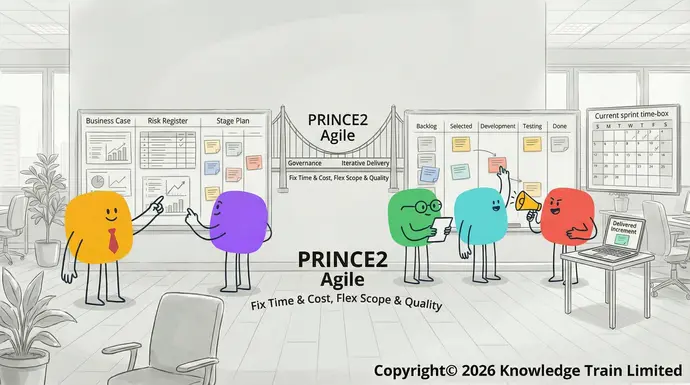
‘Agile’ is an umbrella term used to refer to numerous product delivery methods, frameworks and techniques used by development teams. PRINCE2PROJECT MANAGEMENT QUALIFICATIONS & WORKSHOPSBranching off from the spine are the ‘bones,’ which represent potential
Agile approaches emerged from the software industry in the 1990’s, to try to overcome many of the problems which had beset traditional software projects. They were often delivered late, over budget, and with low quality.TO HELP ORGANISATIONS IMPROVE®Select your preferred qualification or workshop.causesAXELOS Peoplecert accredited training organisation for ITIL (IT Infrastructure Library).
There are different We offer solutions to help improve team performance including:Foundation of the problem. These are organised into various categories, allowing teams to explore different angles of the issue systematically. Each ‘bone’ signifies a distinct cause or factor, and further branching can detail sub-causes. This structured layout not only clarifies complex problems but also encourages comprehensive brainstorming and analysis. Agile approachesConsultancy servicesLearn the fundamentals of the PRINCE2 method.PRINCE2 COURSESCategories in fishbone diagramsKnowledge Train is an AIPGF Accredited Training Organization., the most famous being Staff developmentPractitioner Standard categoriesSelect your preferred training course below: ScrumCompliance trainingIncludes Foundation & Practitioner combined option.Fishbone diagrams Knowledge Train is an AIPGF Accredited Training Organization., Apprenticeship trainingAssociation for Project Management (APM) often use standard categories to organise potential causes, especially in APM COURSES KanbanCustom e-Learning developmentProject Fundamentals Qualification (PFQ) quality managementSelect your preferred training course below: Start your APM project management career. and engineering contexts. These categories help ensure a comprehensive analysis by covering different aspects of the problem. Commonly used categories include: Project Management Qualification (PMQ) MethodsAGILE PROJECT MANAGEMENT COURSESFind out moreAdvance your APM project management expertise.: Processes or procedures that might contribute to the issueSelect your preferred training course below: Project Risk Single Certificate Level 1 Materials Enhance your project risk management skills.: Raw materials or components involved in the processPRINCE2 AGILE COURSES
PRINCE2: External conditions or settings that could affect outcomes.
®These categories offer teams a structured approach to explore potential causes.WORKSHOPSName AgileCustom categoriesSelect your preferred workshop below: Foundation While standard categories are useful, organisations often benefit from tailoring categories to their specific needs or industries. Custom categories allow teams to focus on the unique aspects of their problem domain. For instance, a software development team might include categories like
Learn the fundamentals of the PRINCE2 Agile method.user experienceAGILE QUALIFICATIONS
EmailPractitioner or Select your preferred qualification.
Includes Foundation & Practitioner combined option.software architecture
AI Project Governance Framework (AIPGF). Meanwhile, a retail business might focus on AGILE PROJECT MANAGEMENT COURSESPhoneFoundation customer feedbackSelect your preferred training course below: Learn the fundamentals of the governance framework. or
Practitioner supply chainPRINCE2 AGILE COURSESHow can we help?Includes Foundation & Practitioner combined option..Select your preferred training course below: Better Business CasesThe flexibility to customise categories ensures that the fishbone diagram remains relevant and effective for any given context. By adapting the diagram to suit their specific needs, organisations can enhance the accuracy and usefulness of their analysis, leading to more targeted and effective solutions. ™Enhance your skills with our expert-led coursesSubmitFoundation
Learn the fundamentals of Better Business cases.
Practitioner OUR VALUESIncludes Foundation & Practitioner combined option.Self-pacedOur 6 core values are everything we do. They include:P3OBCS Foundation Certificate in Business Analysis self-paced online
Integrity®
DiversityFoundation £499 +vatFairnessLearn the fundamentals of the P3O project management office. QualityPractitioner
Includes Foundation & Practitioner combined option. WorkshopsSelf-pacedIntroduction to Project Management BCS International Diploma in Business Analysis self-paced online
1-day workshop to learn the basics of project management.
PRINCE2After brainstorming, organise the identified causes into
®relevant categories
Agile. These categories can be standard ones like Methods, Materials, and Manpower, or custom ones tailored to your specific context. Proper categorisation helps in visualising the problem from different angles and ensures no potential cause is overlooked.
Foundation Analysing and prioritising causes
Learn the fundamentals of the PRINCE2 Agile method.The final step is to
Practitioner analyse and prioritise the causes
Includes Foundation & Practitioner combined option.. Evaluate each potential cause in terms of its impact on the problem. Use techniques such as voting or ranking to identify the most critical causes for further investigation. Focusing on these key factors will help in developing targeted and effective solutions.
ScrumPractical applications and case studies
Scrum Essentials Real-world applications of fishbone diagrams
Self-paced training course to learn the essentials of Scrum.Fishbone diagrams are widely used across various industries to identify and resolve complex issues. In
Scrum Master manufacturingChoose Scrum Alliance or Scrum.org Scrum Master training courses., these diagrams help pinpoint inefficiencies in production processes, leading to improved efficiency and reduced waste. By systematically analysing potential causes, manufacturers can address issues such as equipment malfunctions or material defects.Scrum Product Owner In the
Choose Scrum Alliance or Scrum.org Product Owner training courses.healthcare
AgileBA sector, fishbone diagrams are instrumental in enhancing patient safety and care quality. They allow healthcare professionals to identify factors contributing to medical errors or delays in treatment, leading to better patient outcomes.®In the – Agile Business Analysisservice
Foundation industry, companies employ fishbone diagrams to improve customer satisfaction. By analysing complaints and service delivery processes, businesses can identify root causes of customer dissatisfaction and implement effective solutions. This results in enhanced service quality and customer loyalty.
Learn the fundamentals of Agile Business Analysis.Case studies showcasing success
Practitioner Several organisations have successfully employed fishbone diagrams to tackle complex challenges. A notable example is a 4-day course including Foundation.manufacturing companyLean Six Sigma that faced frequent production line stoppages. By using a fishbone diagram, the team identified multiple contributing factors, including outdated machinery and insufficient staff training. Addressing these issues led to a significant reduction in downtime and increased productivity.
Yellow Belt In
Self-paced training course to gain LSS Yellow Belt.healthcare
PMI, a hospital used fishbone diagrams to analyse the root causes of high patient waiting times. The analysis revealed several factors, such as inefficient scheduling and understaffed departments. Implementing targeted solutions based on these findings resulted in reduced waiting times and improved patient satisfaction.
®A PMI-ACP service companySelf-paced course to prepare you for the exam (exam not included). dealing with high complaint rates used fishbone diagrams to investigate recurring issues. The analysis highlighted problems such as inadequate staff training and poor communication channe
- KanbanEstimating for Agile FoundationAgile Learning Library (ALL)™
- BUSINESS ANALYSIS
- BCS Business Analysis
Business Analysis Foundation
Learn the fundamentals of business analysis.Modelling Business Processes Gain practitioner certificate in modelling business processes.
Business Analysis Practices
Gain practitioner certificate in business analysis practices.
Requirements Engineering
Gain practitioner certificate in requirements engineering.
Business Analysis International Diploma
All 4 courses bundled into this Diploma certification package.
Components of PESTLE
Application of PESTLE
Creating a PESTLE template Real-world examples Conclusion FAQs
InfographicIntroduction to PESTLE analysisDefinition and purpose
PESTLE analysis
is a strategic tool used to identify and assess the external factors that can impact a business. It stands for Political, Economic, Social, Technological, Legal, and Environmental factors. The primary purpose of PESTLE analysis is to provide a comprehensive understanding of the macro-environmental conditions affecting an organisation. By evaluating these external forces, businesses can anticipate changes and adapt their strategies accordingly. This proactive approach aids in mitigating risks and capitalising on potential opportunities.Evolution from PEST to PESTLEThe framework began as ETPS, created by Francis Aguilar in 1967, before being rearranged to PEST, focusing on Political, Economic, Social and Technological aspects. Over time, the need to address Legal and Environmental factors led to the evolution of PEST into PESTLE analysis. This expansion reflects the growing complexity of the business environment, where legal compliance and
sustainability
have become crucial considerations. The incorporation of these additional factors allows organisations to build a more robust strategic plan. PESTLE analysis complements
SWOT analysis
, offering insights into external factors whilst SWOT examines both external and internal elements. This combined approach enhances decision-making by aligning organisational strengths with external opportunities while addressing potential threats.
Components of PESTLE analysis
Political factorsGovernment policies and stabilityGovernment policies are a significant influence on business environments. Changes in taxation, labour laws, or trade restrictions can alter market dynamics. Political stability is equally important, as it fosters a predictable environment for investment. Businesses must monitor policy changes to maintain compliance and align strategies with governmental priorities.