Agile PMO, and Agile Learning Library (ALL)™

Key takeawaysAPMG Change ManagementSupporting sprint planning and documentation
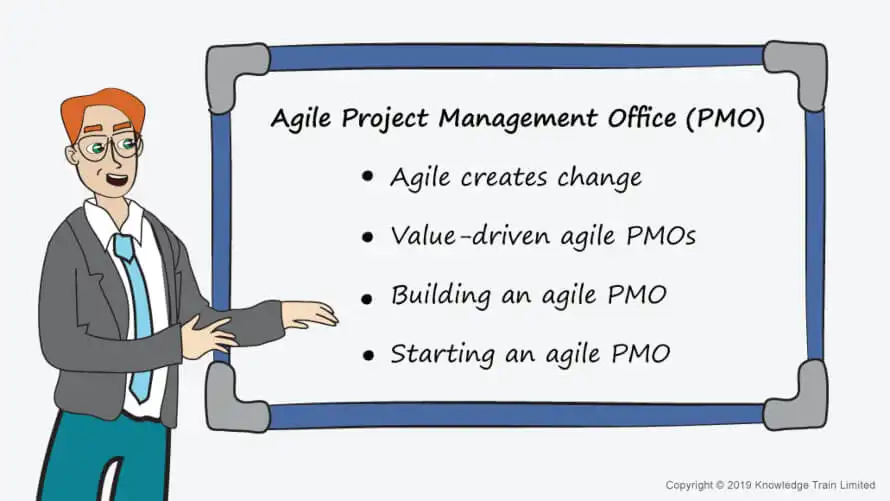
An agile PMO succeeds by enabling value delivery and organisational change, not by enforcing process.Foundation Facilitating collaboration using techniques such as Story MappingAccreditation:
- Agile adoption is an organisation-wide change programme, so the PMO must adapt its role and skills.Learn the fundamentals of enterprise change management.Continuous feedback, validation, and improvementThe APM Group International (APMG).
- Focus PMO support on value to the right stakeholders at the right time, tailored to each project’s needs.Practitioner How Agile Business Analysts add value at each Agile lifecycle stage
- Avoid mandating one set of practices; build pull by making support attractive and easy to access.Includes Foundation & Practitioner combined option.Discovery/Initiation:
- Start with a small, willing project and measure progress by frequent delivery of working products.PROGRAMME MANAGEMENT Clarify business goals, identify Stakeholders, outline initial requirements.
- Develop centre-of-excellence services: standards, capability development, multi-project coordination, and stakeholder support.MSPBacklog Development:APMG Agile Project Management Courses London

_blankDo you need a business analyst in Agile?
Free toolsHaving a Aboutbusiness analyst in an Agile environment_blank is essential. They act as facilitators of clear communication between business and technical teams, ensuring everyone understands the project goals and the best path to achieve them. Their skill in translating business requirements into actionable insights helps ensure the success of BlogAgile projects .EXPLORE SUBJECTSYou can learn more about the Select your preferred subject.business analyst role in Agile environments by taking an
PROJECT MANAGEMENT QUALIFICATIONS & WORKSHOPSAgile BA course
Select your preferred qualification or workshop..
How do Agile Business Analysts contribute to backlog grooming?
PRINCE2 COURSESAgile Business Analysts help clarify, refine, and prioritise backlog items so the development team understands each
Select your preferred training course below:user story before implementation. They ensure stories meet the definition of ready, facilitate stakeholder feedback, and support the Product Owner in maintaining a balanced, value-driven backlog. This improves sprint planning and ensures business goals are consistently met.APM COURSESHow is the Agile BA role different from a traditional BA?Select your preferred training course below:Agile Business Analysts work iteratively and collaboratively, focusing on delivering incremental business value
AGILE PROJECT MANAGEMENT COURSES through short development cycles. Traditional Select your preferred training course below:Business Analysts often document all requirements upfront and manage change via formal processes. In contrast, Agile BAs embrace change, encourage ongoing feedback, and continuously reprioritise work to align with evolving business needs.
PRINCE2 AGILE COURSESHow to become an Agile business analyst?
Supporting sprint reviews and retrospectives
SCRUM COURSESEnsuring alignment between business goals and technical deliverySelect your preferred training course below:What is an Agile business analyst? An
AGILE BUSINESS ANALYSIS COURSESAgile business analyst
Select your preferred training course below: bridges the gap between business needs and technical delivery. They ensure that Agile teams deliver high-value outcomes aligned with organisational objectives while adhering to
Agile principlesBUSINESS ANALYSIS QUALIFICATIONS.Select your preferred qualification.They prioritise collaboration, transparency, and responsiveness, helping teams adapt to change and continuously improve. You can learn more about the
Agile BA role
BCS BUSINESS ANALYSIS COURSES by enrolling in an
Select your preferred training course below:Agile Business Analyst certification course
.
AGILE BUSINESS ANALYSIS COURSESWhat is the role of a business analyst in Agile?
Select your preferred training course below:The role of a business analyst in AgileCHANGE MANAGEMENT QUALIFICATIONS is to connect business goals with technical solutions. They ensure requirements are clear, testable, and prioritised to deliver maximum value. Unlike in traditional
Select your preferred qualification.projects
, Agile BAs collaborate continuously with Product Owners and teams throughout delivery cycles.
APMG CHANGE MANAGEMENT COURSESYou can learn more about this role through an Select your preferred training course below:Agile Business Analyst certification course . PMO structurePROGRAMME MANAGEMENT QUALIFICATIONSWhat is the value of continuous improvement in Agile Business Analysis? provides some of these services:Select your preferred qualification.Continuous improvement is central to Agile Business Analysis. It ensures teams regularly assess performance, gather feedback, and make iterative adjustments to improve efficiency and outcomes.
Developing and implementing standards For Agile BAs, continuous improvement means refining processes, facilitating retrospectives, and identifying opportunities to deliver higher value. This culture of learning helps maintain alignment between project goals and evolving business needs.
Providing agile templates e.g. for MSP COURSESWhat tools do Agile BAs use?Request a quoteuser storiesSelect your preferred training course below:Agile Business Analysts use various tools to collaborate, document, and manage work efficiently. Common tools include: , test cases), and standardizing the use of agile toolsets. Jira
PMI COURSES – for backlog management and sprint tracking
Select your preferred training course below:Confluence – for documentation and collaborationPMI COURSESTrello
Select your preferred training course below: – for lightweight visual task management
Miro
PRINCE2 COURSES – for virtual whiteboarding and workshop facilitation
Select your preferred training course below:These tools enable Agile BAs to maintain transparency, streamline communication, and support continuous feedback loops within teams.
Which certifications are relevant for Agile BAs?
APM COURSESSeveral
SCRUM COURSES{"@context":"https://schema.org","@type":"WebPage","name":"Agile Business Analysis: Definition, Roles & Best Practices","url":"https://www.knowledgetrain.co.uk/agile/agile-business-analysis","description":"Explore Agile Business Analysis, its roles, frameworks, techniques and how BAs add value in Agile environments. Compare Agile and traditional business analysis.","significantLink":"https://www.iiba.org/certification/agile-analysis-certification-endorsement/","mainEntity":[{"@type":"Article","headline":"Agile Business Analysis explained","about":[{"@type":"DefinedTerm","name":"Agile Business Analysis","sameAs":["https://en.wikipedia.org/wiki/Agile_business_analysis","https://www.google.com/search?&kgmid=/g/11h_h7r8x7","https://www.wikidata.org/wiki/Q57496180"]},{"@type":"DefinedTerm","name":"Business Analyst","sameAs":["https://en.wikipedia.org/wiki/Business_Analyst","https://www.google.com/search?&kgmid=/m/0b1txf4","https://www.wikidata.org/wiki/Q2970349"]},{"@type":"DefinedTerm","name":"Scrum","sameAs":["https://en.wikipedia.org/wiki/Scrum_(software_development)","https://www.google.com/search?&kgmid=/m/01rfwj","https://www.wikidata.org/wiki/Q15900473"]},{"@type":"DefinedTerm","name":"Kanban","sameAs":["https://en.wikipedia.org/wiki/Kanban","https://www.google.com/search?&kgmid=/m/0131j1","https://www.wikidata.org/wiki/Q1146727"]},{"@type":"DefinedTerm","name":"Product Owner","sameAs":["https://en.wikipedia.org/wiki/Product_owner","https://www.google.com/search?&kgmid=/g/121xfpw0","https://www.wikidata.org/wiki/Q21660523"]},{"@type":"DefinedTerm","name":"Scrum Master","sameAs":["https://en.wikipedia.org/wiki/Scrum_master","https://www.google.com/search?&kgmid=/g/11c1wwjfcw","https://www.wikidata.org/wiki/Q21098157"]},{"@type":"DefinedTerm","name":"Stakeholder","sameAs":["https://en.wikipedia.org/wiki/Stakeholder_(corporate)","https://www.google.com/search?&kgmid=/m/02k0y4","https://www.wikidata.org/wiki/Q2380010"]},{"@type":"DefinedTerm","name":"Backlog","sameAs":["https://en.wikipedia.org/wiki/Product_backlog","https://www.google.com/search?&kgmid=/g/1219vjg1","https://www.wikidata.org/wiki/Q7605156"]},{"@type":"DefinedTerm","name":"User Stories","sameAs":["https://en.wikipedia.org/wiki/User_story","https://www.google.com/search?&kgmid=/m/0c6q5pr","https://www.wikidata.org/wiki/Q509695"]},{"@type":"DefinedTerm","name":"Requirements","sameAs":["https://en.wikipedia.org/wiki/Requirements_analysis","https://www.google.com/search?&kgmid=/m/01ypk_","https://www.wikidata.org/wiki/Q467915"]},{"@type":"DefinedTerm","name":"Requirements Elicitation","sameAs":["https://en.wikipedia.org/wiki/Requirements_elicitation","https://www.google.com/search?&kgmid=/g/121z4ljy","https://www.wikidata.org/wiki/Q7312824"]},{"@type":"DefinedTerm","name":"Prioritization","sameAs":["https://en.wikipedia.org/wiki/Priority_(project_management)","https://www.google.com/search?&kgmid=/m/09g5y_q","https://www.wikidata.org/wiki/Q3508070"]},{"@type":"DefinedTerm","name":"Sprint","sameAs":["https://en.wikipedia.org/wiki/Sprint_(software_development)","https://www.google.com/search?&kgmid=/g/1td1gpft","https://www.wikidata.org/wiki/Q3841694"]},{"@type":"DefinedTerm","name":"Agile Principles","sameAs":["https://en.wikipedia.org/wiki/Agile_software_development","https://www.google.com/search?&kgmid=/m/05jff","https://www.wikidata.org/wiki/Q1009523"]},{"@type":"DefinedTerm","name":"Iteration","sameAs":["https://en.wikipedia.org/wiki/Iterative_and_incremental_development","https://www.google.com/search?&kgmid=/m/05f_8c","https://www.wikidata.org/wiki/Q783076"]},{"@type":"DefinedTerm","name":"Acceptance Criteria","sameAs":["https://en.wikipedia.org/wiki/Acceptance_criteria","https://www.google.com/search?&kgmid=/g/11bwyznvj0","https://www.wikidata.org/wiki/Q10326466"]},{"@type":"DefinedTerm","name":"Agile Techniques","sameAs":["https://en.wikipedia.org/wiki/Agile_software_development","https://www.google.com/search?&kgmid=/m/05jff","https://www.wikidata.org/wiki/Q1009523"]},{"@type":"DefinedTerm","name":"Story Mapping","sameAs":["https://en.wikipedia.org/wiki/User_story_mapping","https://www.google.com/search?&kgmid=/g/11c6kg16l0","https://www.wikidata.org/wiki/Q98627867"]},{"@type":"DefinedTerm","name":"Continuous Improvement","sameAs":["https://en.wikipedia.org/wiki/Continual_improvement_process","https://www.google.com/search?&kgmid=/g/122q9g94","https://www.wikidata.org/wiki/Q784522"]},{"@type":"DefinedTerm","name":"Collaboration","sameAs":["https://en.wikipedia.org/wiki/Collaboration","https://www.google.com/search?&kgmid=/m/0162wm","https://www.wikidata.org/wiki/Q5438"]}],"mentions":[{"@type":"DefinedTerm","name":"Backlog Grooming","sameAs":["https://en.wikipedia.org/wiki/Product_backlog#Backlog_grooming","https://www.google.com/search?&kgmid=/g/1219vjg1","https://www.wikidata.org/wiki/Q7605156"]},{"@type":"DefinedTerm","name":"Agile Team","sameAs":["https://en.wikipedia.org/wiki/Agile_software_development#Agile_teams","https://www.google.com/search?&kgmid=/m/05jff","https://www.wikidata.org/wiki/Q1009523"]},{"@type":"DefinedTerm","name":"Product Increment","sameAs":["https://en.wikipedia.org/wiki/Product_increment","https://www.google.com/search?&kgmid=/g/11j99nt2nt","https://www.wikidata.org/wiki/Q107434386"]},{"@type":"DefinedTerm","name":"IIBA Agile Certification","sameAs":["https://www.iiba.org/certification/agile-analysis-certification-endorsement/","https://www.wikidata.org/wiki/Q105861915"]}]},{"@type":"FAQPage","mainEntity":[{"@type":"Question","name":"Do you need a business analyst in Agile?","acceptedAnswer":{"@type":"Answer","text":"Select your preferred training course below:p>Having a business analyst in an Agile environment is essential. They act as facilitators of clear communication between business and technical teams, ensuring everyone understands the project goals and the best path to achieve them. Their skill in translating business requirements into actionable insights helps ensure the success of Agile projects. >
LEAN SIX SIGMA COURSESp>You can learn more about the business analyst role in Agile environments by taking an Agile BA course.Select your preferred training course below:>"}},{"@type":"Question","name":"How do Agile Business Analysts contribute to backlog grooming?","acceptedAnswer":{"@type":"Answer","text":" p>Agile Business Analysts help clarify, refine, and prioritise backlog items so the development team understands each user story before implementation. They ensure stories meet the definition of ready, facilitate stakeholder feedback, and support the Product Owner in maintaining a balanced, value-driven backlog. This improves sprint planning and ensures business goals are consistently met.
>"}},{"@type":"Question","name":"How is the Agile BA role different from a traditional BA?","acceptedAnswer":{"@type":"Answer","text":"BUSINESS ANALYST COURSES