What is PMP Certification? | How to Get Project Management Professional Certified

Key takeaways
PMP certification validates real project leadership and requires structured preparation and ongoing maintenance.
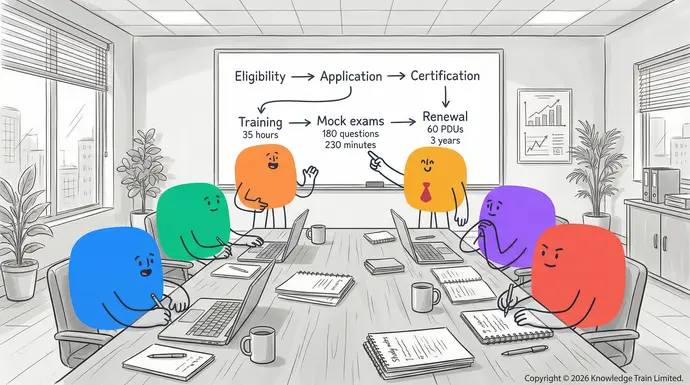
- Confirm eligibility early by matching your education and months of project leadership experience to PMI routes.Contents
- Complete 35 contact hours through recognised training, then support learning with targeted self-study and mock exams.
- Prepare for a 180-question, 230-minute exam that tests predictive, Agile and hybrid judgement, not memorisation.Introduction to PMP Certification
- Use the exam content outline to build a study plan, track weak areas, and practise timed pacing and review.
- Maintain the credential with 60 PDUs every three years and keep evidence ready for audits and renewals.Key Facts: PMP Certification at a Glance
Introduction to PMP CertificationKey Facts: PMP Certification at a Glance
The Project Management Professional (PMP) certification is an advanced credential awarded by the Certifying BodyProject Management InstituteProject Management Institute (PMI) (PMI) to project managers who demonstrate skills in leading and directing projects. Recognised globally, PMP certification verifies expertise in Exam Lengthproject management methodologies230 minutes (3 hours, 50 minutes), including predictive, Number of Exam Questionsagile180 (multiple choice, multiple response, hotspot, and limited fill-in-the-blank), and hybrid approaches. PMI’s standards, guided by the Exam FeePMBOK GuideUSD $555 (non-member), USD $405 (PMI member), ensure the knowledge stays aligned with industry best practices. Eligibility Requirements(Source: PMI.org)Education, work experience, project management education hours
Key Facts: PMP Certification at a GlanceRenewal Period
| Certifying BodyEvery 3 years | Project Management Institute (PMI)PDUs Required for Renewal |
|---|---|
| Exam Length60 PDUs | 230 minutes (3 hours, 50 minutes)Global Recognition |
| Number of Exam QuestionsWidely recognised in over 200 countries | 180 (multiple choice, multiple response, hotspot, and limited fill-in-the-blank)PMP Certification Process: Step by Step |
| Exam FeeConfirm PMP Eligibility: | USD $555 (non-member), USD $405 (PMI member) Check the necessary education, project management experience, and project management education hours (see table below). |
| Eligibility RequirementsGather Documentation: | Education, work experience, project management education hours Collect details of your work experience and project management education. |
| Renewal PeriodPMP Application Process: | |
- Utilise exam preparation resources, such as PMI-authorised training partners (ATP), Collect details of your work experience and project management education.
- PMP Application Process:online courses Submit your application via the PMI website. , study groups, and the PMIPMBOK Guide may request documentation or select you for audit..
- Application Review:Sit the PMP Exam: PMI reviews your submission, typically within 5 business days. Complete the 180-question, computer-based test within 230 minutes.
- Schedule Your Exam:Achieve Once approved, pay the PMP exam fee and schedule at an authorised test centre or online.Certification
- Prepare for the Exam:: Utilise exam preparation resources, such as PMI-authorised training partners (ATP), Upon passing, agree to the PMI Code of Ethics and accept your PMP credential.online coursesCertification Renewal:, study groups, and the Earn 60 Professional Development Units (PDUs) every 3 years and pay the renewal fee to maintain your credential under PMI’s Continuing Certification Requirements (CCR).PMBOK GuidePMP Eligibility Requirements.To apply for the PMP exam, you must satisfy criteria for education, work experience, and project management education. The table below outlines the two main qualification routes:
- Sit the PMP Exam:Educational Background Complete the 180-question, computer-based test within 230 minutes.Project Management Experience
- Achieve Project Management EducationCertificationBachelor’s degree or global equivalent:Minimum 36 months leading projects Upon passing, agree to the PMI Code of Ethics and accept your PMP credential.35 contact hours (or a CAPM certification)
- Certification Renewal:Secondary degree (A-levels, NVQ, or equivalent) Earn 60 Professional Development Units (PDUs) every 3 years and pay the renewal fee to maintain your credential under PMI’s Continuing Certification Requirements (CCR).Minimum 60 months leading projects
PMP Eligibility Requirements35 contact hours
To apply for the PMP exam, you must satisfy criteria for education, work experience, and project management education. The table below outlines the two main qualification routes:The 35 contact hours of project management education can be achieved through classroom, online, or self-paced courses from PMI-authorised training partners or other reputable providers.
| Educational BackgroundPMP Exam Structure and Details | Project Management ExperienceFormat: | Project Management Education 180 questions (multiple choice, multiple response, hotspot, and fill-in-the-blank) |
|---|---|---|
| Bachelor’s degree or global equivalentExam Duration: | Minimum 36 months leading projects 230 minutes | 35 contact hours (or a CAPM certification)Question Allocation: |
| Secondary degree (A-levels, NVQ, or equivalent) Approximately 50 percent predictive | Minimum 60 months leading projectsproject management approaches | 35 contact hours, 50 percent |
The 35 contact hours of project management education can be achieved through classroom, online, or self-paced courses from PMI-authorised training partners or other reputable providers.agile
PMP Exam Structure and Details or hybrid approaches
- Format:Reference Guide: 180 questions (multiple choice, multiple response, hotspot, and fill-in-the-blank)
- Exam Duration:PMBOK Guide 230 minutes (
- Question Allocation:Project Management Body of Knowledge Approximately 50 percent predictive )project management approachesPass Rate:, 50 percent PMI does not publish official pass rates; average estimates from training partners suggest around 60–70 percentagileLanguages: or hybrid approaches Offered in English and multiple other languages
- Reference Guide:How to Prepare for the PMP Exam Read the latest PMBOK GuidePMBOK Guide ( from PMIProject Management Body of KnowledgeEnrol in a course from a PMI-authorised training partner (ATP)
| Recognised Value of PMP CertificationEntry-level project professionals | Secondary degree + PM educationThe PMP credential is widely regarded as the gold standard in | Project management fundamentalsproject management | Medium. It demonstrates a commitment to professional excellence, adherence to PMI’s Code of Ethics, and proficiency in running complex | ||
| PRINCE2projects | AXELOS. PMP holders typically earn higher salaries and have better career prospects, according to various salary surveys and employment data. | Project managers (global, with UK focus)FAQs | None for Foundation; experience for PractitionerCan anyone do a PMP? | Process-based methodologyTo obtain a | High in UK, EuropePMP® certification |
Recognised Value of PMP Certification, you must meet specific eligibility requirements set by the
The PMP credential is widely regarded as the gold standard in Project Management Institute (PMI)®project management. Candidates with a four-year degree need at least 36 months of project management experience and 35 hours of project management education or a CAPM certification. Those with a secondary degree require 60 months of experience plus the same 35 contact hours.. It demonstrates a commitment to professional excellence, adherence to PMI’s Code of Ethics, and proficiency in running complex These prerequisites ensure candidates have both the theoretical knowledge and practical project leadership experience necessary for the PMP® exam.projectsCan I pass PMP without reading PMBOK?. PMP holders typically earn higher salaries and have better career prospects, according to various salary surveys and employment data.Yes, you can
FAQspass the PMP® exam
Can anyone do a PMP? without reading the
To obtain a PMBOK® GuidePMP® certification. Many successful candidates rely on authorised training courses and exam preparation materials instead. While the PMBOK® Guide remains a valuable reference, it is not mandatory reading for passing the exam., you must meet specific eligibility requirements set by the That said, familiarising yourself with its terminology and structure can enhance your understanding of PMI’s framework and increase your confidence on exam day.Project Management Institute (PMI)®Can I self-study for PMP certification?. Candidates with a four-year degree need at least 36 months of project management experience and 35 hours of project management education or a CAPM certification. Those with a secondary degree require 60 months of experience plus the same 35 contact hours.No, self-study alone does not fulfil the 35 contact hour requirement for
These prerequisites ensure candidates have both the theoretical knowledge and practical project leadership experience necessary for the PMP® exam.PMP® certification
Can I pass PMP without reading PMBOK?. You must complete either classroom or
Yes, you can online trainingpass the PMP® exam from a recognised provider to meet this criterion. However, many candidates find self-study useful to reinforce topics learned in formal courses. without reading the How difficult is the PMP exam?PMBOK® GuideThe . Many successful candidates rely on authorised training courses and exam preparation materials instead. While the PMBOK® Guide remains a valuable reference, it is not mandatory reading for passing the exam.PMP® exam
That said, familiarising yourself with its terminology and structure can enhance your understanding of PMI’s framework and increase your confidence on exam day. is widely considered challenging. It requires mastery of
Can I self-study for PMP certification?project management principles
No, self-study alone does not fulfil the 35 contact hour requirement for , terminology, and real-world application. The average pass rate is estimated between PMP® certification60% and 70%. You must complete either classroom or , reflecting the need for rigorous study and practice.online trainingThorough preparation using mock exams, study guides, and PMI-approved training courses can greatly improve your success rate. from a recognised provider to meet this criterion. However, many candidates find self-study useful to reinforce topics learned in formal courses.How hard is the PMP exam?
How difficult is the PMP exam?Many candidates find the
The PMP® examPMP® exam tough due to its breadth and depth. Only around 60% pass on their first attempt. Success depends largely on your is widely considered challenging. It requires mastery of project managementproject management principles background, how well you study, and how familiar you are with both Agile and predictive methodologies., terminology, and real-world application. The average pass rate is estimated between How is the PMP maintained after passing?60% and 70%To maintain your , reflecting the need for rigorous study and practice.PMP® certification
Thorough preparation using mock exams, study guides, and PMI-approved training courses can greatly improve your success rate., you must earn
How hard is the PMP exam?60 Professional Development Units (PDUs)
Many candidates find the every three years through PMI’s Continuing Certification Requirements (CCR) programme. PDUs can be gained through professional education, volunteering, or practising PMP® examproject management tough due to its breadth and depth. Only around 60% pass on their first attempt. Success depends largely on your .project managementAfter earning the PDUs, you must submit them along with a renewal fee via PMI’s online system to retain your credential. background, how well you study, and how familiar you are with both Agile and predictive methodologies.How long does PMP certification last?
How is the PMP maintained after passing?PMP® certification
To maintain your is valid for three years. To maintain your credential, earn 60 PDUs within that time through ongoing professional development activities. Renewal ensures you remain current with evolving best practices in PMP® certificationproject management, you must earn .60 Professional Development Units (PDUs)How long does it take to get a PMP? every three years through PMI’s Continuing Certification Requirements (CCR) programme. PDUs can be gained through professional education, volunteering, or practising The time required to achieve project managementPMP® certification. typically ranges from
After earning the PDUs, you must submit them along with a renewal fee via PMI’s online system to retain your credential.8 to 12 weeks
How long does PMP certification last?
How many PMP are there in the UK?PMP® certification
The number of certified Project Management Professionals (PMP)® in the UK changes over time. The Project Management Institute (PMI)® publishes global certification statistics but does not always disclose country-specific figures. For the most accurate and current data, visit PMI.org or contact the UK PMI chapter.
PRINCE2 is highly valuable and recognised globally. It demonstrates advanced project management competence and is associated with better job opportunities, higher salaries, and enhanced professional credibility. Many employers view it as a benchmark of excellence in project management. and
Is PMI recognised in the UK?APM
Yes, the certifications are more widely used domestically. The Project Management Institute (PMI)®PMP® certification is recognised in the UK and has a strong professional presence through local chapters. PMI’s standards, including the remains highly regarded globally and particularly valuable for professionals working with international organisations or global projects.PMP® certificationIs PMP better than APM?, are respected by UK employers, particularly in multinational and technology-driven sectors.Whether
Is PMP accepted in the UK?PMP®
Yes, PMP® is accepted in the UK, but is better than PRINCE2APM and depends on the industry. APM qualifications are common in construction and engineering, whereas PMP® is more recognised in IT, finance, and global industries. Both demonstrate professional capability, but PMP® has stronger international recognition.APMIs PMP recognised in the UK? certifications are more widely used domestically. The Yes, PMP® is recognised in the UK, although PMP® certificationPRINCE2 remains highly regarded globally and particularly valuable for professionals working with international organisations or global projects. remains the most widely adopted methodology. The
Is PMP better than APM?APM PMQ
Whether is also respected among UK employers. PMP® tends to be favoured by international companies operating within the UK.PMP®Is PMP certification worth it in the UK? is better than Yes, APMPMP® certification depends on the industry. APM qualifications are common in construction and engineering, whereas PMP® is more recognised in IT, finance, and global industries. Both demonstrate professional capability, but PMP® has stronger international recognition. is worth pursuing in the UK if you aspire to work on global projects or with multinational organisations. Although it requires a significant investment of time and money, it offers strong career advantages, particularly in sectors such as IT, consulting, and finance.
Is PMP recognised in the UK?Is the PMP exam multiple choice?
Yes, PMP® is recognised in the UK, although Yes, the PRINCE2PMP® exam
and PMP® examPMP® costs lies in their approach. AgilePM focuses on adaptability and iterative delivery, whereas PMP® follows PMI’s structured, process-driven framework. Both certifications complement each other and are valuable in hybrid project environments.USD $555What is the difference between PMP and PMBOK? for non-PMI members and The USD $405PMP® certification for PMI members. Additional expenses may include PMI membership, training courses, and study resources. is an exam-based credential demonstrating mastery of
What is the difference between AgilePM and PMP?project management
The main difference between principles, whereas the AgilePMPMBOK® Guide and is a reference book that outlines PMI’s standard framework of best practices and terminology.PMP®What is the difference between PMP and PMI-PBA? lies in their approach. AgilePM focuses on adaptability and iterative delivery, whereas PMP® follows PMI’s structured, process-driven framework. Both certifications complement each other and are valuable in hybrid project environments.The
What is the difference between PMP and PMBOK?PMP®
The certification validates broad project management leadership skills, while the PMP® certificationPMI-PBA® certification is an exam-based credential demonstrating mastery of focuses specifically on project managementbusiness analysis principles, whereas the and requirements management within projects. Professionals managing both strategy and execution may benefit from holding both.PMBOK® GuideWhat is the UK equivalent of PMP? is a reference book that outlines PMI’s standard framework of best practices and terminology.There is no direct UK equivalent to
What is the difference between PMP and PMI-PBA?PMP®
The . However, the closest alternatives are PMP®APM PMQ certification validates broad project management leadership skills, while the and PMI-PBA® certificationPRINCE2 focuses specifically on . While PMP® is more globally recognised, PRINCE2 remains the preferred framework for business analysisproject management and requirements management within projects. Professionals managing both strategy and execution may benefit from holding both. in the UK.
What is the UK equivalent of PMP?What percentage of PMP exam is Agile?
There is no direct UK equivalent to The PMP®PMP® exam. However, the closest alternatives are content is split approximately APM PMQ50% and AgilePRINCE2 and hybrid. While PMP® is more globally recognised, PRINCE2 remains the preferred framework for methods and project management50% traditional ( in the UK.waterfall
What percentage of PMP exam is Agile?)
The approaches. Understanding both methodologies is critical to success.PMP® exam content is split approximately 50% Agile