

For business organisations, justification for a project usually takes a commercial form i.e. evaluating how much money could be made from the investment. For example, investing money in developing a new software app to bring first to market, might be deemed to bring certain monetary benefits (in terms of sales) which exceeds the costs of investment.
ContentsWho uses a business case?
Refining goalsTimescales
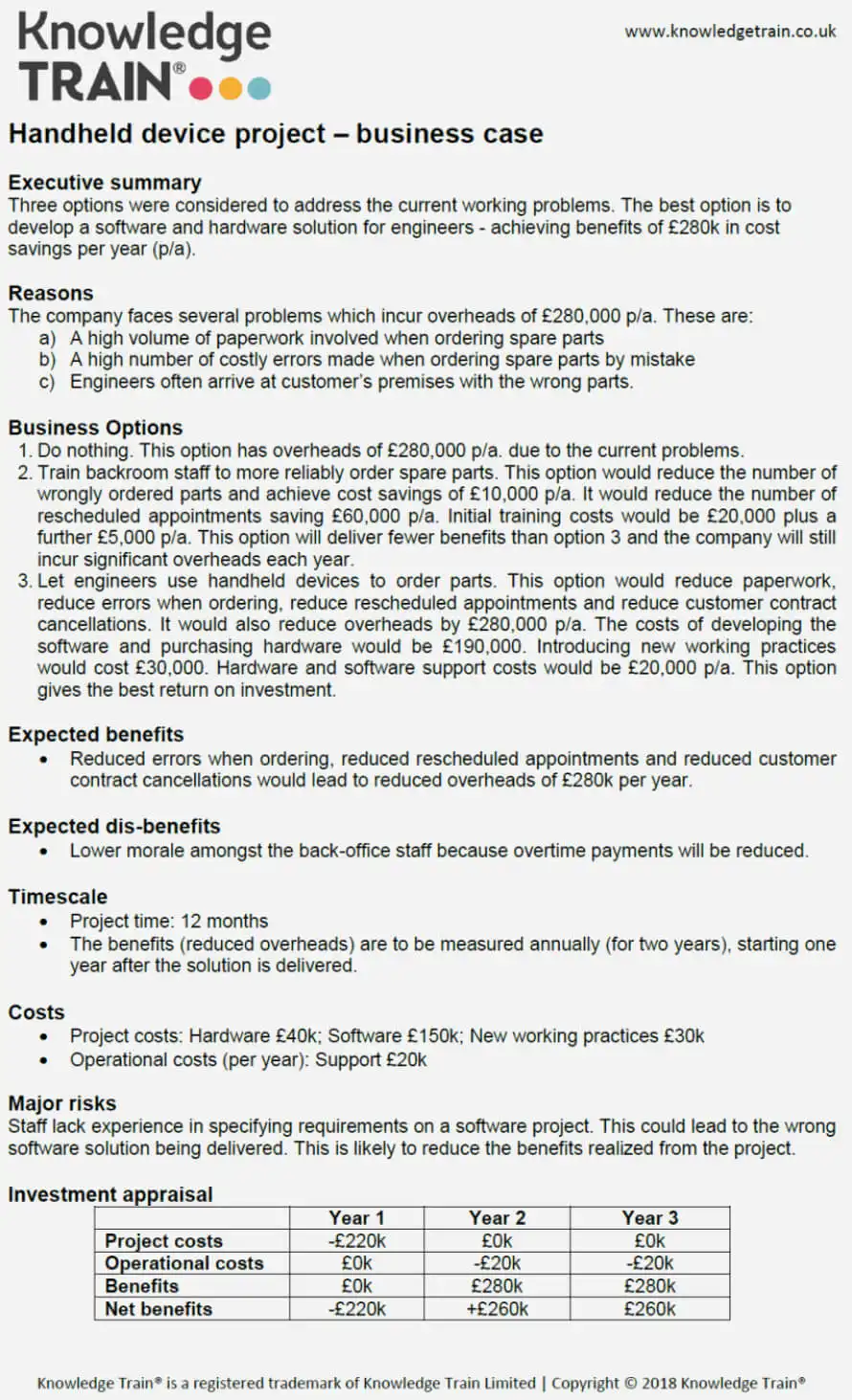
Just as we saw in the previous example, the business case contains 2 timescales – the project timescales (i.e. the time it will take to complete the project) and the benefits realization timescales (i.e. the time over which benefits are expected to be realized).
Costs
Again, there are 2 costs – project costs and the ongoing operational costs over the benefits realization timescale. When the decision is taken whether to invest in this project, the total costs (i.e. project costs and ongoing operational costs) are weighed against the expected benefits over the same time period.
Risks
One major risk has been identified in this example, but on your project, there could be many risks.
Investment appraisal
The final section is the investment appraisal. The investment technique used in this example is called net benefits. As you can see from the table, the project and operational costs are recorded for each year of the investment.
The project lasts 1 year which is why the project costs are zero after year 1. Of course, the benefits won’t be realized until the solution is in place and the company starts to use the handheld devices.
The net benefits are simply the total benefits minus the total costs. This shows that the company will start to get a return on its investment sometime towards the end of year 2. This knowledge is vital if the decision-makers are to take a sensible decision about whether to invest in the project.: Once you’ve identified potential goals, refine them to align with the
Business case templateSMART
This simple criteria. Assess each goal’s specificity, measurability, achievability, relevance, and time frame. This iterative process helps to ensure each goal is clear and feasible, ready for implementation.business case templateFinalisation is free to download.: With refined goals, proceed to finalise them. Prioritise based on relevance and urgency. Write a concise statement for each goal, encapsulating its essence and intended outcome. This step formalises your commitment and sets the stage for action.
Business case FAQsEducational contexts
Who approves a business case?In
Usually on a project, the project sponsor (the person or people who are committing the funds) will approve a business case. Before approving it, they need to have confidence that the problems have been addressed and the right solution has been selected, that the benefits are achievable and realistic, when the investment will pay off, and how big will the return on investment be.educational settings
What makes a good business case?, SMART goals can benefit both students and teachers. For students, a goal like “Improve mathematics grades by one letter by the end of the semester” can provide motivation and a clear focus. Teachers might set goals to “Integrate three new teaching technologies into the curriculum by year-end,” ensuring continuous professional development and enhanced educational delivery.
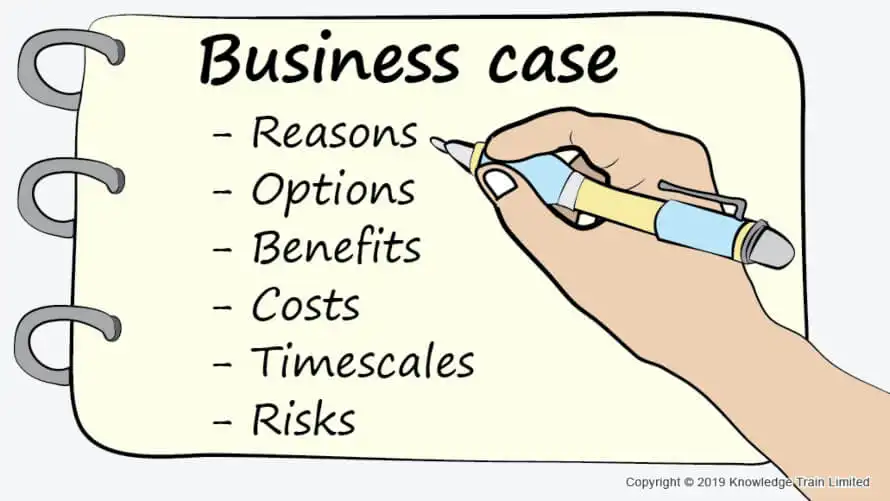
As you have seen in this article, there’s several important bits of information which goes into a business case. Don’t spend unnecessary time though adding information which isn’t required. Your project sponsor will have to read your business case before they approve it, and you don’t want to make their job any harder than it already is!Health and fitness
There are several things you can use to check whether your business case is adequate or not. Here’s a checklist of 13 questions to ask yourself before you submit your business case to your sponsor for approval:SMART goals are particularly effective in the realm of
- Are the reasons for the project consistent with the corporate, health and fitnessportfolio. Setting objectives such as “Run 5 kilometres in under 30 minutes within two months” provides clarity and motivation. By being specific, measurable, and time-bound, such goals encourage individuals to follow structured training plans, leading to tangible improvements in fitness levels. or The application of SMART goals across various contexts not only enhances focus and accountability but also reduces stress. By providing a structured approach to goal setting, individuals and organisations can embark on meaningful pursuits with confidence and clarity.programme managementConclusion